Yoga for ibs
A yoga practice for IBS that eases digestive symptoms by calming the gut-brain axis and nervous system.

Key Takeaways
- Addresses gut-brain axis dysregulation linked to IBS
- Calms autonomic nervous system imbalance and hypersensitivity
- Backed by clinical trials showing meaningful symptom relief
- Guided by senior instructor Saurabh Bothra's structured sessions
- Supports digestion alongside stress reduction
Transform Your Gut Health with Yoga for IBS

Irritable Bowel Syndrome affects over 14% of Indians — the cramping, bloating, alternating constipation and diarrhoea, and the unpredictable gut discomfort that disrupts daily life, work, and social confidence. IBS is classified as a functional gut disorder: the gut is structurally normal but dysregulated — the gut-brain axis, visceral hypersensitivity, and autonomic nervous system imbalance producing the symptoms that no single medication reliably resolves.
Yoga for IBS addresses exactly these root mechanisms — the gut-brain axis dysregulation, the nervous system overactivation, and the abdominal tension patterns that IBS perpetuates. Yoga for IBS works through parasympathetic nervous system activation; vagal nerve stimulation; abdominal muscle release; and breathwork. Over 50,000+ Habuild members include practitioners who have meaningfully reduced IBS symptom frequency, severity, and the anxiety that IBS perpetuates.
Can Yoga for IBS Really Help?
Yes — yoga for IBS is one of the most comprehensively evidence-supported complementary interventions for IBS management, with multiple randomised controlled trials demonstrating meaningful symptom reduction and quality-of-life improvement.
A systematic review published in the European Journal of Gastroenterology & Hepatology found that yoga practice produced significant reductions in IBS symptom severity, anxiety, and quality-of-life impairment compared to control groups. The mechanisms are well-established: yoga reduces psychological stress and autonomic overactivation that consistently worsen IBS symptoms; improves vagal tone; reduces visceral hypersensitivity through parasympathetic dominance; and improves gut motility dysregulation.
While IBS requires individual management across its subtypes (IBS-C, IBS-D, IBS-M), the core yoga approach to gut-brain axis regulation, parasympathetic activation, and abdominal tension release is beneficial across all IBS subtypes when practised with appropriate modifications.
Benefits of Yoga for IBS
1.Regulates the Gut-Brain Axis
The gut-brain axis, the bidirectional communication network between the central nervous system and the enteric nervous system of the gut, is the primary site of IBS dysfunction. Yoga's combined effect on the autonomic nervous system and the gut's enteric nervous system directly addresses this core IBS mechanism.
2.Reduces the Stress That Drives IBS Flares
Stress is the most consistent IBS flare trigger, the sympathetic nervous system activation of stress directly worsening gut motility, visceral sensitivity, and gut microbiome balance. Yoga's stress reduction through pranayama, progressive relaxation, and the parasympathetic shift of sustained practice is the most directly relevant mechanism for IBS symptom management.
3.Relieves Abdominal Cramping and Bloating
Specific yoga asanas for IBS, particularly abdominal compression and release postures, gentle twists, and forward folds, directly stimulate intestinal motility, release the abdominal muscle tension that IBS cramping produces, and reduce the bloating that impaired gut motility accumulates.
4.Improves Gut Motility and Bowel Regularity
Yoga's parasympathetic activation normalises dysregulation, activating the rest-and-digest motility for IBS-C, and calming the excessive sympathetic-driven motility of IBS-D.
5.Reduces Visceral Hypersensitivity and Pain
IBS's defining feature, visceral hypersensitivity, is directly reduced by the parasympathetic nervous system dominance that yoga practice establishes. The calmer the nervous system, the lower the gain on the gut-brain signalling pathway that amplifies sensations into pain.
6.Improves the IBS-Anxiety Cycle
IBS and anxiety are bidirectionally linked, anxiety worsens IBS; IBS worsens anxiety. Yoga uniquely addresses both simultaneously.
7.Strengthens the Pelvic Floor for IBS-D
Yoga's pelvic floor awareness practices (Mula Bandha, seated postures, and pelvic floor release sequences) directly improve pelvic floor coordination for diarrhoea-predominant IBS.
Best Yoga Poses and Exercises for IBS
1.Pawanmuktasana (Wind-Relieving Pose) — The most directly therapeutic yoga pose for IBS, compressing the ascending and descending colon and providing systematic colonic massage.
Difficulty Level: Beginner.
2.Ardha Matsyendrasana (Seated Spinal Twist) — Sequentially compresses the ascending and descending colon, providing a complete colonic massage that directly stimulates motility.
Difficulty Level: Intermediate.
3.Balasana (Child's Pose) — Gently compresses the lower abdomen, activates the parasympathetic nervous system, and releases chronic pelvic floor tension. The most immediately comforting position during an acute IBS cramping episode.
Difficulty Level: Beginner.
4.Malasana (Garland Pose / Deep Squat) — Creates the anatomically optimal position for bowel evacuation and directly stimulates the recto-anal reflex. Specifically beneficial for IBS-C.
Difficulty Level: Beginner.
5.Paschimottanasana (Seated Forward Fold) — Stimulates the entire abdominal tract through the compression of the forward-folded position, producing both digestive stimulation and nervous system calming.
Difficulty Level: Beginner to Intermediate.
6.Supta Matsyendrasana (Supine Spinal Twist) — Provides colonic compression and release in a completely passive, gravity-assisted position.
Difficulty Level: Beginner.
7.Viparita Karani (Legs Up the Wall) — Reduces sympathetic nervous system activation and provides the deep parasympathetic calming that IBS symptom amplification requires.
Difficulty Level: Beginner.
8.Diaphragmatic Breathing — Activates the vagal nerve through the downward movement of the diaphragm, directly improving the vagal tone that IBS dysregulates.
Difficulty Level: Beginner.
9.Nadi Shodhana Pranayama — Bilateral nervous system balancing and vagal activation addressing the gut-brain axis dysregulation at IBS's neurological core.
Difficulty Level: Beginner.
How Habuild's Online Yoga Classes Help with IBS
1.IBS-Type-Specific Practice Design
IBS-C requires the stimulating, motility-activating sequences of twists, forward folds, and abdominal exercises; IBS-D requires the calming, parasympathetic sequences of restorative postures, extended exhale breathing, and gentle abdominal release. Habuild's instructor guides the appropriate emphasis for each IBS type within the live sessions.
2.Breathwork as IBS Treatment — Not Just Warm-Up
The IBS breathing techniques taught at Habuild, diaphragmatic breathing, Nadi Shodhana, extended exhale ratios, are the most directly evidence-supported components of yoga's IBS benefit. Habuild integrates 10–15 minutes of targeted pranayama into every session as the primary IBS treatment tool.
3.Gut-Brain Axis Focus Throughout Practice
Every Habuild yoga for IBS session maintains the gut-brain axis as the therapeutic target, the sequencing, breathwork, and relaxation all chosen for their specific relevance to IBS's neurological mechanisms.
4.Community of IBS Practitioners
Habuild's community of 50,000+ members includes thousands of IBS practitioners who share their symptom improvement progress, dietary discoveries, and practice adaptations, providing the peer support that IBS management's long-term nature requires.
Flexible Batch Timing
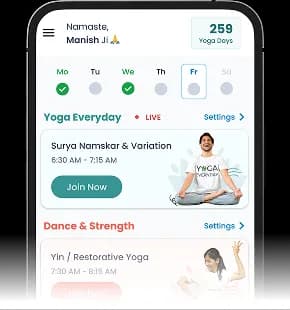
Choose morning or evening classes and join the slot that suits your day.
Morning
6:30 am - 7:15 am
7:30 am - 8:15 am
8:30 am - 9:15 am

Evening
5pm - 5:45pm
6pm - 6:45pm
7pm - 7:45pm

Meet Your Yoga for Ibs Instructor: Saurabh Bothra

Saurabh Bothra
Founder, Habuild
Your yoga for ibs journey is guided by one of India's most qualified instructors—Saurabh Bothra. Saurabh's online yoga class for ibs sessions combine traditional yoga wisdom with practical techniques for modern lifestyles. His best yoga for ibs methods have helped thousands achieve sustainable results.
Choose Your Membership Plan
Continue after the trial with membership options designed for long-term consistency support.
Continue your habit on the Habuild app
Use the Habuild app for reminders, live access, progress support, and habit tracking.