
How Many Push-Ups per Day to Build Muscle: the Honest Answer
Push-up volume for real muscle growth depends on training age, current strength, rep range, and whether progressive overload is actually being applied — not a round number. See the evidence-based answer.

Key Takeaways
- Standard push-ups under 80% of your max effort produce minimal muscle-building stimulus.
- Research found push-ups match bench press hypertrophy at equivalent relative training intensity.
- The real driver is proximity to failure, not the raw number of repetitions performed.
- Simultaneously develops core stabilisers and rotator cuff muscles alongside chest and triceps.
- Volume alone is the wrong question – working near failure with progression is what matters.
- Pectoralis major, triceps brachii, and anterior deltoid are the three primary muscles targeted.
The question of how many push-ups per day it takes to build muscle is one of the most searched strength training questions — and the answer is more nuanced than the round numbers most sources provide. Push-up volume for muscle growth depends on training age, current strength level, rep range, rest, and whether progressive overload is being applied. This guide gives the honest, evidence-based answer and the specific push-up programme that produces genuine hypertrophy rather than endless endurance with no growth.
How many push-ups per day to build muscle is one of the most searched bodyweight training questions — and the answer is more nuanced than a simple number. The actual driver of muscle building is not the number of push-ups performed but the progressive overload principles applied: the difficulty and volume must be challenging enough to create the muscular stimulus for adaptation. This guide provides the honest answer to how many push-ups per day to build muscle, when push-ups alone are sufficient for muscle building, and when additional strategies are required.
Are push-ups a good way to build muscle? Yes — for the chest, triceps, anterior deltoids and core stabilisers, push-up training produces genuine muscle hypertrophy when applied with progressive overload principles. The key qualification is that standard push-ups at a volume you can easily complete (under 80% of your maximum) do not produce significant muscle building stimulus. How many push-ups per day to build muscle effectively requires working near or to failure, using progressive variations, and applying the same intensity principles that make weighted resistance training effective — not simply accumulating repetitions.
Benefits of Push-Ups for Muscle Building
- Chest, Triceps and Shoulder Muscle Development — The pectoralis major, triceps brachii and anterior deltoid are the primary muscles developed by push-up training. Are push-ups a good way to build muscle in these three regions? Yes — research documents that progressive push-up training produces comparable pectoral and triceps hypertrophy to bench press training at equivalent relative intensities. The key phrase is equivalent relative intensity — push-ups performed at 50% of your maximum provide minimal muscle building stimulus regardless of absolute repetition count.
- Core and Shoulder Stability Alongside Chest Muscle Building — Push-ups build the chest with push-ups while simultaneously developing the core stabilisers and rotator cuff muscles that support the shoulder joint — a comprehensive upper body functional benefit that isolated chest press machines do not provide. Building arm strength for push-ups through progressive volume and variation produces the integrated upper body stability that transfers to sport and daily physical tasks.
- The Progressive Overload Required to Build Muscle with Push-Ups — How many push-ups per day to build muscle is the wrong question if the push-ups are too easy. The correct question is: how to make push-ups hard enough to produce muscle building stimulus? The answer is progressive difficulty: slow tempo (3-5 second lowering phase), reduced rest between sets, progression to decline and archer push-up variations, and consistently working within 2-5 repetitions of your current maximum capacity. Regular resistance exercise reduces cardiovascular disease risk by up to 35%.
- How Many Push-Ups per Day to Build Muscle: the Honest Numbers — For a beginner who can do 10-15 push-ups: 3-4 sets of 8-12 push-ups per session, 4-5 days per week, constitutes the muscle-building stimulus. For an intermediate who can do 30+ push-ups: standard push-ups no longer provide sufficient stimulus — progression to decline push-ups, archer push-ups or Chaturanga with a 4-second lowering phase is required to maintain muscle building stimulus. Build muscle push-ups only requires this ongoing difficulty progression, not simply more repetitions of the same exercise at the same difficulty.
Progressive push-up training produces comparable pectoral and triceps hypertrophy to bench press training at equivalent relative intensities — confirming that build muscle push-ups only is achievable when progressive overload principles are correctly applied.
Regular resistance training reduces cardiovascular disease risk by up to 35% — and push-up training that progressively builds muscle mass contributes to both the muscular and cardiovascular health benefits of consistent exercise.
How to Get Started Building Muscle with Push-Ups
What You Need to Begin
Only a floor surface. Building arm strength for push-ups and chest development with push-ups requires zero equipment — making push-up muscle building the most accessible resistance training available.
Setting Realistic Goals for Push-Up Muscle Building
Visible chest and arm muscle development at 8-10 weeks of consistent progressive push-up training. Best push-up for muscle gain results in visible upper body composition change at 3-4 months. Build muscle push-ups only is achievable for most fitness goals with the correct progressive variation programming.
Start with These Basics for How Many Push-Ups per Day to Build Muscle
Week 1-2: 4 x 8-10 standard push-ups (2 seconds down, 1 second up). Week 3-4: 4 x 12-15 with 3-second lowering. Week 5-8: introduce decline push-ups for upper chest and Chaturanga for increased load. This progression is the answer to how many push-ups per day to build muscle effectively — it is about progressive difficulty, not raw number.
Best Push-Up Variations for Muscle Building
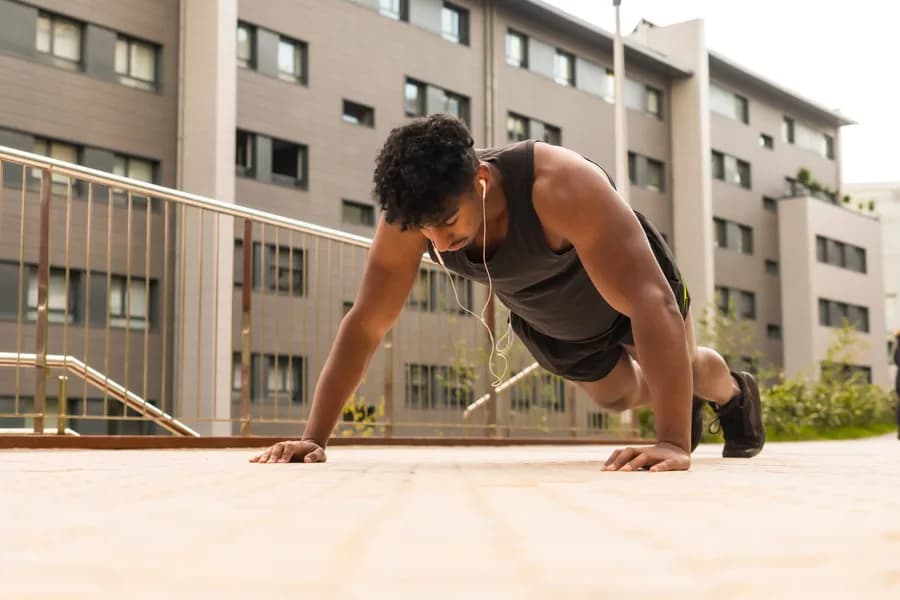
Slow Eccentric Push-Up — Best Push-Up for Muscle Gain
Standard push-up with a 4-5 second lowering phase — the best push-up for muscle gain because the extended eccentric phase produces 2-3 times greater muscle damage and hypertrophic stimulus than standard-tempo push-ups at the same repetition count. Build arm strength for push-ups most efficiently through this slow variation. Sets/reps: 3-4 x 8-10. See also: chest-workout-at-home-without-equipment
Decline Push-Up — Build Chest with Push-Ups Upper Pectoral
Feet elevated on a chair, performing push-ups — shifts loading to the upper pectoral fibres (clavicular head) that standard push-ups underdevelop. The most important push-up variation to build chest with push-ups comprehensively. Sets/reps: 3-4 x 10-15. Difficulty: Intermediate. See also: resistance-exercises
Chaturanga Dandasana — Build Muscle Push-Ups Only Yoga Version
The yoga push-up with a 3-4 second lowering and 2-second hold at 90 degrees — the highest-intensity and most complete push-up variation for building muscle with push-ups only, producing greater pectoral and triceps time-under-tension than any standard push-up variation. Sets/reps: 3 x 6-8. See also: surya-namaskara
Archer Push-Up — Advanced How Many Push-Ups to Build Muscle
Wide-stance push-up loading primarily through one arm while the other provides minor assistance — approaches the single-arm loading that makes bodyweight push-ups produce the maximum available muscle building stimulus. Sets/reps: 3 x 6-8 each side. Difficulty: Advanced. See also: back-workout-at-home-without-equipment
Diamond Push-Up — Build Arm Strength for Push-Ups Triceps
Hands in a diamond shape below the sternum — shifts primary loading from chest to triceps, producing the maximum triceps muscle-building stimulus of any push-up variation for building arm strength for push-ups. Sets/reps: 3 x 8-12. See also: yoga-for-beginners
Common Mistakes When Using Push-Ups to Build Muscle
- Mistake 1: Performing Too Many Easy Push-Ups Instead of Progressive Difficulty — How many push-ups per day to build muscle if they are all easy: the answer is that no number of easy push-ups produces meaningful muscle building stimulus. 100 easy push-ups produces less muscle building than 3 sets of 10 push-ups performed within 2-3 repetitions of failure.
- Mistake 2: Partial Range Push-Ups That Reduce Muscle Activation — Partial push-ups (not reaching chest to floor) use only 50-60% of the available range of motion — dramatically reducing pectoral activation and the muscle building stimulus. Full range — chest to floor every repetition — is required for the maximum muscle building benefit of push-ups.
- Mistake 3: Not Pairing Push-Ups with Pulling Exercises — Build muscle push-ups only for the anterior chain — but without pulling exercises (Inverted Row, Shalabhasana) this creates the anterior-posterior imbalance that produces rounded shoulders and impaired posture. Always balance push-up muscle building with equal pulling volume.
- Mistake 4: Insufficient Recovery between Push-Up Sessions — How many push-ups per day to build muscle for maximum 7-day volume: not daily heavy sessions — the pectoral and triceps require 48 hours of recovery between maximum-intensity sessions. 4-5 sessions per week with 48-hour gaps between heavy push-up days produces better muscle building than 7 daily maximum sessions.
Who Should Try Push-Ups to Build Muscle?
- Beginners Learning to Build Arm Strength for Push-Ups — Wall and knee push-ups provide the accessible entry point for building arm strength for push-ups — the foundational phase before floor push-up muscle building becomes the primary training focus.
- Women Seeking Upper Body Muscle Building Without Gym Access — Are push-ups a good way to build muscle for women? Yes — push-up training produces the lean, defined upper body muscle that women seek through bodyweight resistance training without any equipment investment or gym access.
- Athletes Building Functional Upper Body Strength — Build muscle push-ups only programmes using Chaturanga, Archer and decline variations produce the functional upper body strength that transfers to sport and athletic movement in ways that bench press cannot replicate.
- Anyone Wanting to Build Chest with Push-Ups at Home — The complete push-up variation programme — standard, decline, Chaturanga and archer — provides the comprehensive pectoral and triceps stimulus to build chest with push-ups that produces the upper body transformation most people seek.
Build a Healthier Life with a Routine That Actually Works
Building upper body strength and muscle development is not about doing random workouts — it is about consistency, guidance and following a structured plan. With the right support, you can train effectively from home and see real progress over time.
- Daily live guided sessions — 45 minutes, 6 days a week
- Beginner to advanced progression built in
- No equipment required
- Expert guidance for correct form every session
- Community of 1.5 Crore+ members for daily accountability
There's no single magic rep count that builds muscle on its own — what matters is whether those push-ups sit inside a progressive plan that increases the challenge as you adapt. Training age, rest and progressive overload all count for more than the number itself, and a well-built programme accounts for all three. Habuild's Strong Everyday program is built around that kind of intelligent progression rather than an arbitrary daily target.
Frequently Asked Questions
Related Articles
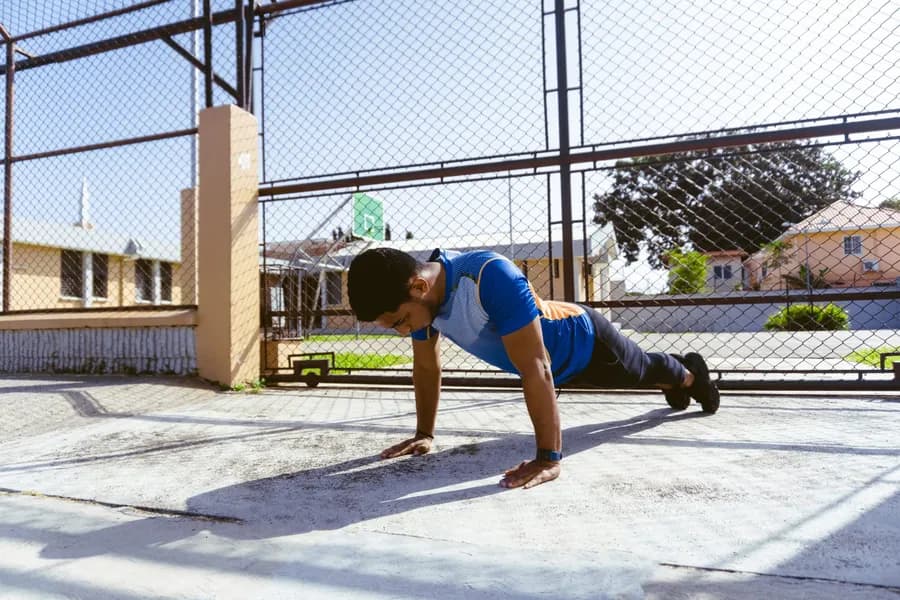
How to Do Push Ups: Step-by-Step Guide for All Levels
Done correctly, the push-up builds chest, shoulder, tricep, and core strength at once with no equipment — done incorrectly, it strains the wrists and neck. See every variation with precise form cues.
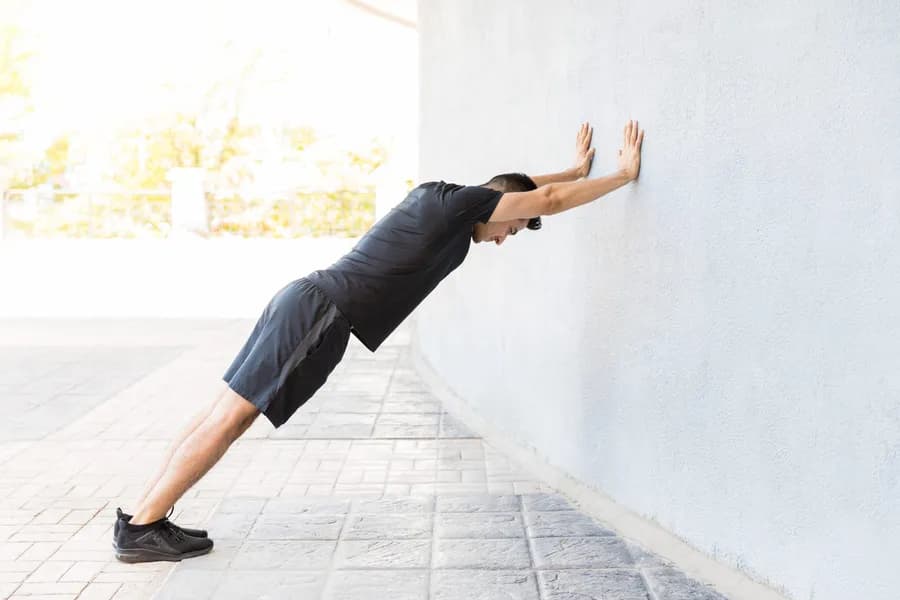
How to Do Push Ups for Beginners: Step-by-Step from Zero to 20 Reps
The correct progression runs wall push-ups to incline to knee to standard, taking most beginners from zero to 20 consecutive reps in 6-8 weeks. See the step-by-step guide.

How to Do a Plank Properly: Step-by-Step Guide for Beginners
A correctly done plank activates the core, shoulders, glutes, and back muscles at once, but most people make form errors that eliminate the benefit entirely. See the step-by-step guide.
How Many Jumping Jacks to Burn 500 Calories: the Honest Calculation
The number depends on body weight, exercise intensity, and metabolic efficiency in ways most online calculators ignore. See the weight-adjusted calculation.

What Are the Benefits of Strength Training? 7 Evidence-Based Benefits That Transform Health
Strength training reduces all-cause mortality risk, prevents age-related disability, and builds bone density across every age group and sex within 8-12 weeks. See all 7 evidence-based benefits.