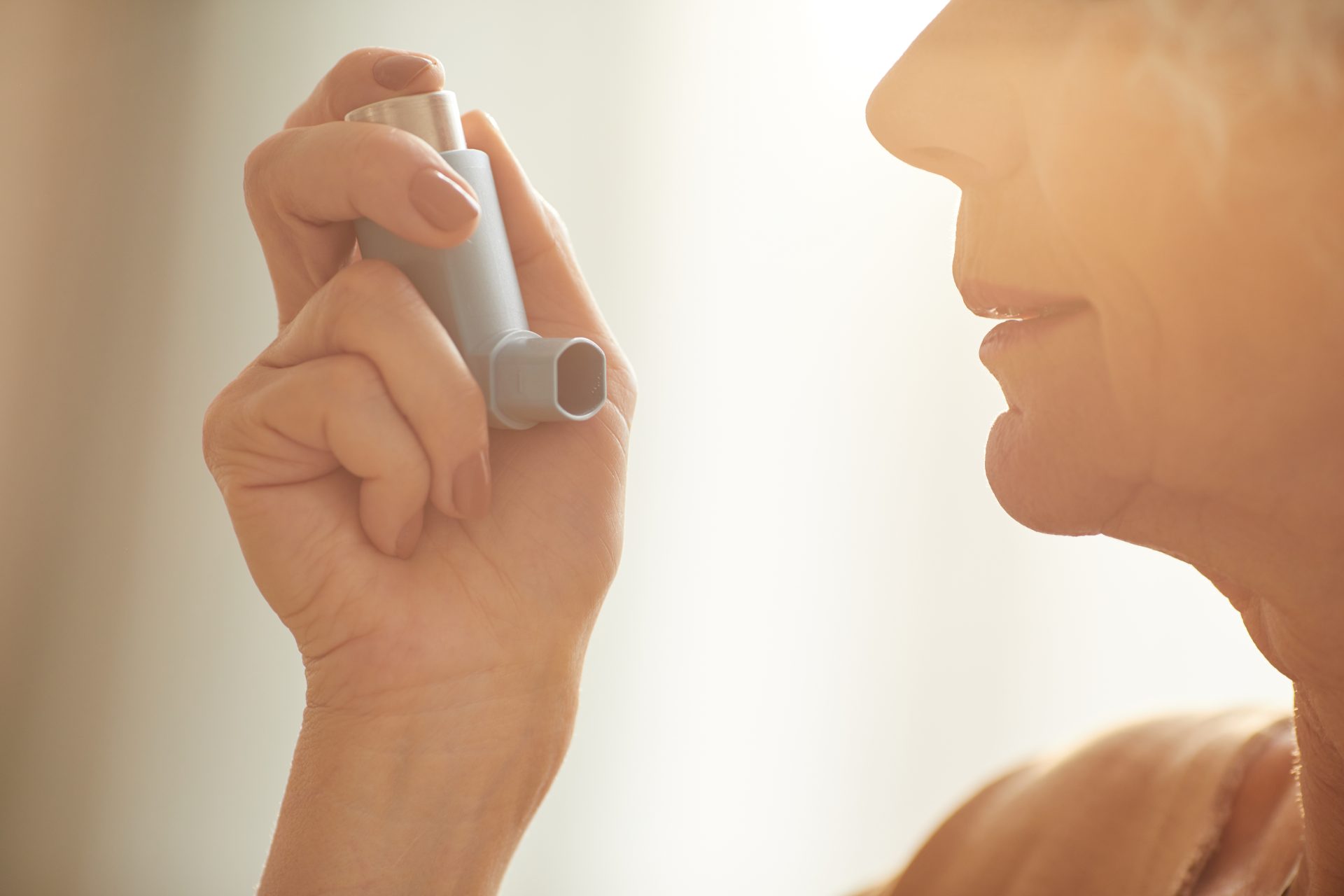
Exercises for asthma are specifically selected breathing practices and gentle physical movements designed to improve the respiratory mechanics of asthmatic airways — not general fitness exercises that may trigger bronchospasm.
The distinction matters: a vigorous HIIT workout can trigger an asthmatic episode; targeted breathing exercises for wheezing and diaphragmatic training instead build the respiratory resilience that reduces those episodes over time.
The mechanism: diaphragmatic breathing exercises for asthma strengthen the primary breathing muscle, reducing the compensatory shallow chest-breathing that worsens airway hyperreactivity.
Anulom Vilom pranayama balances airway tone between left and right bronchial trees.
Bhramari (humming breath) produces nitric oxide in the nasal sinuses — a potent bronchodilator.
Gentle chest-opening backbends mechanically expand thoracic volume and stretch intercostal muscles.
Together, these practices address the respiratory muscle weakness, airway inflammation, and nervous system hyperreactivity that drive asthmatic symptoms.
Improved Lung Capacity and Breathing Efficiency Research consistently shows that 12 weeks of regular pranayama and chest-opening yoga increases vital capacity, peak expiratory flow rate, and diaphragmatic excursion in asthmatic practitioners. These improvements translate to reduced breathlessness in daily activity. Clinical trial (Thorax, 2000): 12 weeks of integrated yoga
breathing exercises for asthma + gentle asana — produced significant improvement in peak expiratory flow and reduced reliever medication use in mild-to-moderate asthmatic patients. Reduced Airway Inflammation and Wheezing Episodes Bhramari pranayama’s nitric oxide production directly reduces bronchial inflammation. Consistent parasympathetic activation through yoga reduces the sympathetic hyperreactivity that triggers bronchospasm in response to exercise, stress, and environmental triggers. Stronger Heart and Reduced Cardiovascular Strain Asthma chronically increases the cardiovascular effort of breathing. As respiratory muscle strength and efficiency improve through targeted exercises for asthma, the heart’s work-per-breath decreases — reducing resting heart rate and improving overall cardiovascular function. WHO recommendation: 150 minutes per week of moderate breathing-appropriate exercise produces cardiovascular benefit even in those with respiratory conditions — when exercise type and intensity are matched to the condition.
Reduced Anxiety
The Primary Asthma Trigger Anxiety is one of the most reliable asthma triggers. Yoga’s comprehensive anxiety management — the most evidence-supported benefit of pranayama — directly reduces the anxiety-driven component of asthmatic episodes, breaking the anxiety-bronchospasm cycle.
Protein — The Foundation of Asthma Training
Aim for 1.6–2.0g of protein per kg of bodyweight per day. Best sources include eggs, paneer, lentils (dal), chicken, Greek yoghurt, and whey protein. Distribute protein evenly across 3–4 meals rather than loading it all in one sitting. Adequate protein is non-negotiable — without it, training effort produces minimal adaptation regardless of programme quality.
Carbohydrates — Fuel for Asthma Performance
Complex carbohydrates (oats, brown rice, sweet potato, whole wheat roti) should form 40–50% of total calories. Consume a carbohydrate-containing meal 60–90 minutes before your exercises for asthma session to ensure glycogen availability. Post-session carbohydrates restore muscle glycogen within the critical 30-minute recovery window.
Anti-Inflammatory Foods for Recovery
Include turmeric (with black pepper for bioavailability), ginger, and omega-3 rich foods (flaxseeds, walnuts, fatty fish) daily. These directly reduce the systemic inflammation that accumulates with consistent training, speeding recovery between sessions.
Hydration — Often Underestimated
Aim for 35–40ml of water per kg of bodyweight daily. Add an additional 500ml for every 30 minutes of active training. Even mild dehydration (2% body weight) measurably reduces strength output and exercise capacity.
Before You Begin — Setting Your Baseline
Before beginning, assess your current fitness level honestly. Can you complete 10 bodyweight squats with good form? Can you hold a plank for 20 seconds? These are the practical baselines for this programme. Set a specific, measurable goal — not just ‘get stronger’ but ‘complete all sessions consistently for 8 weeks’. Identify what space and equipment you have available.
Week 1–2: Foundation and Form
Focus entirely on movement quality, not load or intensity. Every exercise should be performed through full range of motion with controlled tempo. Use this phase to build the motor patterns that make exercises for asthma training safe and effective long-term. 3 sessions per week is the optimal starting frequency — enough stimulus for adaptation, enough recovery to avoid overuse.
Week 3–4: Building Progressive Load
Once form is consistent, introduce progressive overload by adding 1–2 reps per set or a small increase in resistance each week. Track your sessions in a simple log — date, exercises, sets, reps. This data tells you exactly when to progress and prevents both undertraining and overtraining.
Ongoing: Consistency Over Intensity
The single biggest determinant of asthma results is session consistency over 8–12 weeks. Missing one session is inconsequential; missing two consecutive weeks disrupts adaptation. Habuild’s live daily sessions are specifically designed to remove the decision-making barrier — the session is always there, always structured.

Anulom Vilom Pranayama
Bilateral Airway Balance — 10 minutes daily Target: Respiratory nervous system, bilateral bronchial tone. Why it works: Alternate nostril breathing balances the autonomic nervous system control of both bronchial trees, reducing the airway hyperreactivity asymmetry documented in many asthmatic patients.
Nasal breathing exclusively
never mouth breathing. Sets/duration: 10 minutes daily, never during an active episode. Beginner modification: Begin with 4-count inhale, 8-count exhale only — no retention until 3+ months of practice.
Bhramari Pranayama
Humming Breath — 10 rounds twice daily Target: Nasal sinuses, bronchial inflammation. Why it works: The humming vibration produces nitric oxide in the nasal passages — a natural bronchodilator that reduces airway inflammation within minutes. The best exercise for asthma for immediate bronchodilation. Sets/duration: 10 rounds, twice daily. Beginner modification: Simply hum on the exhale without finger placement initially.
Fish Pose (Matsyasana)
Thoracic Expansion — Hold 5–10 breaths × 3 Target: Anterior thoracic cage, intercostal muscles, thyroid. Why it works: Matsyasana directly expands the rib cage, stretches the intercostal muscles, and maximises the available lung volume — addressing the thoracic restriction that worsens asthmatic breathing. Beginner modification: Supported fish with a rolled blanket under the thoracic spine — same benefit at reduced demand.
Exercising During Active Episodes Attempting breathing exercises or yoga during an acute asthmatic flare can worsen bronchospasm and delay appropriate medical treatment.
Fix:
Practise exercises for asthma only when baseline respiratory function is stable.
During episodes, use prescribed medication and rest.
Resume only after full resolution of acute symptoms.
Introducing Kapalbhati Too Early Vigorous forceful breathing exercises for asthma beginners — particularly Kapalbhati — can trigger bronchospasm in sensitised airways without adequate preparation.
Fix:
Practise only Anulom Vilom and Bhramari for the first 3 months.
Introduce Kapalbhati modified (30 per minute) only after measurable lung function improvement and under medical supervision.
Mouth Breathing During Exercise Mouth breathing bypasses the nasal filtration and humidification that protects asthmatic airways from cold, dry air and particulate triggers — directly increasing bronchospasm risk.
Fix:
Exclusive nasal breathing throughout all exercises for asthma. If nasal breathing becomes difficult during a movement, reduce intensity until it can be maintained comfortably. Start Breathing Better with Expert Daily Guidance — First 7 Days ₹1
Complete Beginners Starting from Zero
No prior experience with exercises for asthma is required to start. Every movement is taught from its most foundational form, with modifications for those who cannot yet perform the standard version. Live instructor feedback prevents the form errors that cause beginners to plateau or get injured before results arrive.
Intermediate Trainees Who Have Hit a Plateau
If you have been exercising inconsistently or without structured progressive overload, exercises for asthma delivers the systematic load progression that general fitness classes do not. The programme targets the specific weaknesses and imbalances holding you back, producing results that months of unstructured training have failed to achieve.
Individuals Managing Asthma Through Lifestyle
For those using exercise as part of a broader health management plan for asthma, consistency and proper technique are non-negotiable. Habuild’s daily live sessions provide the structure and expert guidance that turns sporadic effort into a measurable health habit.
Circulation-Specific Programming — Respiratory-First Sequencing Every session opens with Anulom Vilom (airway preparation), progresses through gentle chest-opening movements (thoracic expansion), and closes with Bhramari (anti-inflammatory close). This specific respiratory sequencing is not found in generic fitness classes.
Live Daily Sessions with Real-Time Breath Correction
Incorrect Anulom Vilom technique and mouth-breathing during movement are correctable only through real-time observation. Saurabh Bothra provides live corrections that prevent the technique errors that make breathing exercises counterproductive for asthmatic practitioners.
Progressive Overload Built into Every Session
Breath-hold duration, pranayama pace, and movement complexity are systematically increased week by week — so members never plateau and never progress faster than is safe for their respiratory condition.
Accountability, Streaks and Community
Asthma management requires sustained practice over months to produce measurable lung function improvement. Habuild’s daily structure and community accountability sustains practice through the patience this requires.
I really enjoyed the Strength Session with Trishala — the timing fit perfectly into my routine.
The classes are easy to follow, perfectly suited to my fitness level, and always leave me feeling positive.


Practice Strong Everyday with Trishala Bothra, an IIT-B and London School of Business alumni
Trishala is focused on making movement feel lighter, more engaging, and something you actually look forward to.
In just 3 years, over 50,000 people began their strength journey, and 10,000+ join every week to keep getting stronger.