Functional Strength Training
A functional strength training programme that builds real-world power through everyday movement patterns.
Key Takeaways
- Builds strength that transfers to everyday tasks
- Includes exercises tailored for women and all levels
- Rooted in a habit-building training philosophy
- Guided by senior instructor Saurabh Bothra's live sessions
- Focuses on functional, not just aesthetic, strength
What is Functional Strength Training?
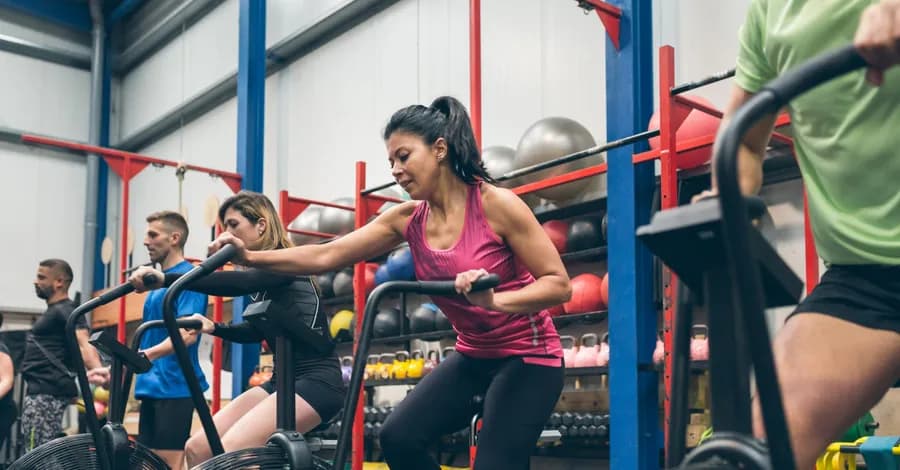
Functional strength training is a training approach that prioritises exercises replicating or directly supporting the movement patterns of daily life and sport — pushing, pulling, squatting, hinging, carrying, and rotating under load.
What distinguishes functional strength training from traditional isolation-based training is its emphasis on multi-joint, multi-plane movements that develop the integrated strength that daily activities actually require, rather than the isolated single-muscle strength that has limited carry-over to real-world function.
The mechanism is neuromuscular integration — training multiple muscle groups to work together in coordinated movement patterns, developing the proprioception, balance, and timing that isolated exercises cannot produce.
Functional training also prioritises the core as a stabiliser in every movement (as it functions in real life) rather than as an isolated muscle group trained separately.
The result is strength that transfers seamlessly to daily activities and sport.
Benefits of Functional Strength Training
Benefit 1: Greater Transfer to Daily Activities
Functional strength training develops the strength, balance, and coordination that daily activities — carrying shopping, climbing stairs, lifting children — actually require, producing improvements that show up immediately in daily life rather than only on gym measurements.
Benefit 2: Improved Balance and Fall Prevention
The single-leg, multi-plane movements of functional training develop the proprioceptive and stabiliser systems that prevent falls — the most clinically significant outcome of functional training in adults over 60.
Benefit 3: Better Athletic Performance Across All Sports
All sports are functional — they require integrated strength across multiple joints and planes simultaneously. Functional training directly improves the sport-specific physical capacities that isolated machine training cannot.
Benefit 4: More Time-Efficient Fitness
Compound functional movements train multiple muscle groups simultaneously — producing cardiovascular and strength adaptations in fewer total exercises than isolation programmes require, making it the most time-efficient approach to general fitness.
What to Eat to Support Your Functional Strength Training — Nutrition Pairing
Protein — The Foundation of Functional Strength Training Training
Aim for 1.6–2.0g of protein per kg of bodyweight per day. Best sources include eggs, paneer, lentils (dal), chicken, Greek yoghurt, and whey protein. Distribute protein evenly across 3–4 meals rather than loading it all in one sitting. Adequate protein is non-negotiable — without it, training effort produces minimal adaptation regardless of programme quality.
Carbohydrates — Fuel for Functional Strength Training Performance
Complex carbohydrates (oats, brown rice, sweet potato, whole wheat roti) should form 40–50% of total calories. Consume a carbohydrate-containing meal 60–90 minutes before your functional strength training session to ensure glycogen availability. Post-session carbohydrates restore muscle glycogen within the critical 30-minute recovery window.
Anti-Inflammatory Foods for Recovery
Include turmeric (with black pepper for bioavailability), ginger, and omega-3 rich foods (flaxseeds, walnuts, fatty fish) daily. These directly reduce the systemic inflammation that accumulates with consistent training, speeding recovery between sessions.
Hydration — Often Underestimated
Aim for 35–40ml of water per kg of bodyweight daily. Add an additional 500ml for every 30 minutes of active training. Even mild dehydration (2% body weight) measurably reduces strength output and exercise capacity.
How to Start Functional Strength Training Safely
Before You Begin — What to Check
No specific medical clearance required for healthy individuals. Those with joint replacements, balance disorders, or neurological conditions should consult a physiotherapist before beginning. Assess baseline: single-leg balance duration, the ability to lower to and rise from the floor unassisted, and basic squat and hinge movement quality.
Your First 2 Weeks — Foundation Phase
Two sessions per week. Focus on the foundational functional patterns: bodyweight squat, hip hinge, push-up, single-leg balance, and horizontal pull (band row). Prioritise movement quality over any load. Every exercise should feel like a controlled, intentional movement — not a struggle.
Weeks 3–8 — Progressive Loading Phase
Three sessions per week. Add load to mastered patterns: goblet squat, loaded hinge (RDL), farmer’s carry. Introduce the carrying pattern — walking with equal loads in both hands — which is one of the most functional exercises available. Begin multi-pattern combinations: squat-to-press, hinge-to-row.
Beyond 8 Weeks — Long-Term Maintenance
Progress toward more demanding integration: single-leg squats, rotational loaded carries, and sport-specific patterns. Introduce periodisation — varying the dominant movement patterns across weeks to prevent both overuse and adaptation plateau.
Best Functional Strength Training Exercises
Goblet Squat — Quadriceps, Glutes, Core, Upper Back — Complete Functional Lower Body
The goblet squat is the most functional lower body exercise for beginners and intermediate practitioners — the weight held at the chest teaches the upright torso position that makes squatting safe and effective. It trains the foundational movement pattern of lowering to and rising from a low position that daily life requires constantly. Beginner: use a water bottle or light bag; focus on depth before adding any significant load.
Farmer’s Carry — Grip, Core, Traps, Total Body — The Most Functional Exercise
The farmer’s carry — walking with heavy loads in both hands — is considered by many strength coaches the most functional exercise available. It directly replicates carrying groceries, luggage, and any daily load-carrying activity while developing grip, core, and postural strength simultaneously. Beginner: use shopping bags with equal weight on each side; walk 20 metres before resting.
Single-Leg Romanian Deadlift — Hamstrings, Glutes, Core, Balance — Single-Leg Functional Hinge
The single-leg RDL develops the hip hinge strength and balance that virtually every real-world movement requires — from picking something off the floor to any running or jumping activity. It simultaneously addresses the single-leg stability deficit that bilateral training misses. Beginner: hold a wall for balance; keep the hip hinge pattern shallow until balance and strength allow greater depth.
Common Mistakes to Avoid in Functional Strength Training
Mistake 1: Training Only Isolation Exercises and Calling it Functional
Using weight machines for all exercises and adding one balance exercise at the end is not functional training. True functional training requires multi-joint, multi-plane, often unilateral movements as the primary training content.
Mistake 2: Progressing Load Before Movement Quality is Established
Adding weight to a poor movement pattern produces a stronger poor pattern — not a better movement. In functional training, movement quality is the first performance metric; load is secondary.
Mistake 3: Neglecting the Carrying Pattern
The carrying movement — walking with loads — is the most commonly performed physical task in daily life and one of the most neglected in structured exercise. Most functional training programmes include squat, hinge, push, and pull patterns but omit the carry.
Mistake 4: Ignoring Rotational Strength
Daily life and sport are three-dimensional — but most functional training programmes address only the sagittal plane (forward-backward). Rotation — the primary power-producing movement in batting, throwing, and many daily tasks — is frequently omitted.
Who Is Functional Strength Training Best For?
Complete Beginners Starting from Zero
No prior experience with functional strength training is required to start. Every movement is taught from its most foundational form, with modifications for those who cannot yet perform the standard version. Live instructor feedback prevents the form errors that cause beginners to plateau or get injured before results arrive.
Intermediate Trainees Who Have Hit a Plateau
If you have been exercising inconsistently or without structured progressive overload, functional strength training delivers the systematic load progression that general fitness classes do not. The programme targets the specific weaknesses and imbalances holding you back, producing results that months of unstructured training have failed to achieve.
Desk Workers and Sedentary Professionals
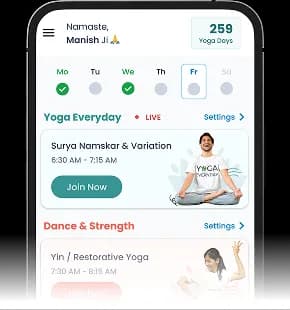
Extended sitting creates the exact muscle imbalances and weaknesses that functional strength training training corrects. No gym, no equipment, and no prior experience is required — the programme begins with bodyweight fundamentals and builds progressively from there. Habuild’s morning sessions fit into a working day without disruption.
How Habuild Teaches Functional Strength Training
Live Daily Sessions with Real-Time Instructor Feedback
Habuild’s live sessions — delivered daily by expert instructors — provide real-time form corrections for the specific technique errors that functional strength training requires attention to. Unlike pre-recorded content, the live format means the instructor can see you and correct in the moment — the difference between building correct habits and reinforcing incorrect ones.
Condition-Specific Modifications in Every Session
Every exercise in the Habuild functional strength programme is selected and modified with this specific goal in mind. Members are not attending a generic fitness class with a modification option bolted on — they are in a programme designed from the ground up for functional strength outcomes.
Progressive Programming That Respects Your Recovery Timeline
The programme structure follows the physiological timeline of improvement — not an arbitrary 4-week or 8-week marketing format. Progression is earned through demonstrated capacity, not assumed by a calendar week.
Community of Members With the Same Goals
Flexible Batch Timing
Choose morning or evening classes and join the slot that suits your day.
Morning
6:30 AM
7:30 AM
8:30 AM

Evening
5:00 PM
6:00 PM
7:00 PM
8:00 PM

Choose Your Membership Plan
Continue after the trial with membership options designed for long-term consistency support.
Continue your habit on the Habuild app
Use the Habuild app for reminders, live access, progress support, and habit tracking.