Yoga for asthma
A pranayama-focused yoga practice for asthma that improves pulmonary function alongside prescribed medication.

Key Takeaways
- Pranayama is the most evidence-supported practice for asthma
- Always continue prescribed asthma medication alongside practice
- Best practised in cool, clean air with gentle progression
- Guided by senior instructor Saurabh Bothra's structured sessions
- Improves overall pulmonary function over time
Transform Your Breathing with Yoga for Asthma

Living with asthma means managing a chronic cycle of airway inflammation, bronchoconstriction, and the anxiety that breathing difficulty produces — often despite medication.
Yoga for asthma addresses the complete respiratory picture: pranayama practices that train the breathing muscles, improve lung capacity, and reduce the hyperventilation patterns that trigger attacks; chest-opening postures that counteract the chronic forward-hunched posture of chronic breathlessness; and relaxation practices that reduce the anxiety-driven respiratory reactivity that asthma progressively develops. Our respiratory health guide covers the complete yoga approach to asthma management.
Over 50,000+ Habuild members have used daily yoga practice to reduce asthma attack frequency, improve their lung function, and manage breathlessness — many significantly reducing their dependence on rescue inhalers over time.
Can Yoga for Asthma Really Improve Breathing?
Yes — yoga for asthma, particularly its pranayama component, is one of the most comprehensively evidence-supported complementary interventions for asthma management, with multiple randomised controlled trials demonstrating improved pulmonary function and reduced symptom frequency.
Yoga addresses asthma through several mechanisms: diaphragmatic breathing training (reducing the thoracic and accessory breathing patterns that asthma develops); nasal breathing training (the nose's filtration, humidification, and nitric oxide production benefiting airway health); reduced hypocapnia (normalising the CO2 levels that hyperventilation reduces, improving bronchodilation); and stress reduction (reducing the anxiety that triggers hyperventilation and bronchospasm). Our breathing exercises resources provide the complete pranayama curriculum supporting respiratory health.
A systematic review in the Journal of Asthma found that regular pranayama practice produced significant improvements in FEV1 (forced expiratory volume) and FVC (forced vital capacity) — the two primary measures of asthmatic lung function. While yoga for asthma should always complement rather than replace prescribed medical treatment, consistent practice provides meaningful symptomatic improvement alongside medication.
Benefits of Yoga for Asthma
1.Strengthens the Respiratory Muscles
Pranayama practice systematically strengthens the diaphragm, intercostal muscles, and accessory respiratory muscles — improving the respiratory mechanical advantage that asthmatics progressively lose. Our pranayama benefits guide covers the complete respiratory strengthening curriculum.
**2.Improves Lung Capacity and Pulmonary Function **
Regular yoga for asthma practice increases tidal volume (the air moved per breath), vital capacity (maximum air capacity), and FEV1 — the clinical measure most relevant to asthmatic airway health — through progressive respiratory muscle strengthening and airway mobilisation.
**3.Reduces Asthma Attack Frequency and Severity **
Through the combined mechanisms of stress reduction, hyperventilation correction, respiratory muscle strengthening, and autonomic nervous system regulation, consistent yoga for asthma significantly reduces both the frequency and severity of acute asthma episodes.
**4.Trains Nasal Breathing — The Primary Respiratory Protector **
Nasal breathing provides filtration, humidification, and nitric oxide production that mouth breathing lacks — all three specifically protective for asthmatic airways. Yoga for asthma specifically trains the shift from the mouth-breathing of breathlessness to the nasal breathing that airway health requires. See also yoga for sinus for the complementary sinus health programme.
5.Reduces the Anxiety-Asthma Cycle
Asthma and anxiety are bidirectionally linked — anxiety triggers hyperventilation that provokes bronchospasm; breathlessness triggers anxiety that worsens the attack. Yoga for asthma's pranayama and relaxation practices directly break this cycle. See also yoga for breathing for the companion respiratory health programme.
6.Opens the Chest and Counteracts Respiratory Posture
Chronic asthma produces a characteristic forward-hunched, internally-rotated shoulder posture that compresses the chest cavity and reduces respiratory volume. Yoga for asthma's chest-opening postures directly counteract this postural pattern — improving the mechanical respiratory advantage that correct posture provides.
Best Yoga Poses for Asthma
1.Nadi Shodhana Pranayama (Alternate Nostril Breathing)
The most directly beneficial pranayama for asthma — alternate nostril breathing normalises breathing rhythm, reduces hyperventilation patterns, trains nasal breathing, and balances the autonomic nervous system. The foundation of all yoga for asthma practice.
Difficulty Level: Beginner
2.Anulom Vilom (Simple Alternate Nostril)
The introductory version of Nadi Shodhana — breathing in through one nostril and out through the other without retention — ideal for new practitioners or during mild asthma flare periods when Kumbhaka (retention) is contraindicated.
Difficulty Level: Beginner
3.Ujjayi Pranayama (Ocean Breath)
The gentle throat constriction of Ujjayi creates slight airway resistance that strengthens the respiratory muscles — similar to the principle of pursed-lip breathing in physiotherapy — while its audible quality provides immediate biofeedback for breathing rhythm regulation.
Difficulty Level: Beginner
4.Fish Pose (Matsyasana)
A chest-opening backbend that maximally expands the rib cage, opens the intercostal spaces, and stimulates the thymus gland — one of the most directly chest-opening postures for expanding the respiratory volume that chronic asthma progressively compresses.
Difficulty Level: Beginner
5.Cobra Pose (Bhujangasana)
A prone backbend that opens the chest and anterior body while simultaneously strengthening the posterior chain — counteracting the forward-hunched asthmatic posture and improving thoracic respiratory mechanics.
Difficulty Level: Beginner
6.Bridge Pose (Setu Bandhasana)
A supine backbend that opens the chest and stretches the intercostal muscles — improving thoracic mobility and respiratory volume while strengthening the posterior chain that supports upright, open-chested posture.
Difficulty Level: Beginner
7.Cat-Cow Pose (Marjariasana-Bitilasana)
Rhythmic thoracic spine mobilisation that progressively opens the intercostal spaces and improves thoracic respiratory mechanics — warming the chest and ribcage before more demanding postures.
Difficulty Level: Beginner
8.Corpse Pose with Diaphragmatic Breathing (Savasana)
Complete supine relaxation with hands on the abdomen to monitor and develop diaphragmatic breathing — one of the most important practices for correcting the accessory breathing patterns that asthma progressively develops.
Difficulty Level: Beginner
How Habuild's Yoga for Asthma Classes Help
1.Pranayama-First Programme Design
Habuild's yoga for asthma sessions prioritise pranayama — devoting significant time to the specific breathing practices that evidence most strongly supports for asthmatic pulmonary function improvement — before physical postures.
2.Live Guidance for Asthma-Safe Practice
Specific asthma cautions — avoiding Kapalabhati (contraindicated for asthmatics), approaching backbends progressively, never practising during acute asthma attacks — are incorporated into every Habuild yoga for asthma session.
3.Gradual Respiratory Strengthening Progression
Habuild's yoga for asthma programme builds respiratory muscle strength progressively — beginning with diaphragmatic breathing awareness and gentle pranayama before advancing to the extended breath ratios and Kumbhaka practices that produce the greatest pulmonary function improvements.
4.Community Support for Chronic Condition Management
Managing asthma as a chronic condition requires the long-term consistency that Habuild's community, accountability systems, and daily live classes provide — the social support of thousands of practitioners managing similar respiratory health goals.
Flexible Batch Timing
Choose morning or evening classes and join the slot that suits your day.
Morning
6:30 am - 7:15 am
7:30 am - 8:15 am
8:30 am - 9:15 am

Evening
5pm - 5:45pm
6pm - 6:45pm
7pm - 7:45pm

Meet Your Yoga for Asthma Instructor: Saurabh Bothra

Saurabh Bothra
Founder, Habuild
Your yoga for asthma journey is guided by one of India's most qualified instructors—Saurabh Bothra. Saurabh's online yoga class for asthma sessions combine traditional yoga wisdom with practical techniques for modern lifestyles. His best yoga for asthma methods have helped thousands achieve sustainable results.
Choose Your Membership Plan
Continue after the trial with membership options designed for long-term consistency support.
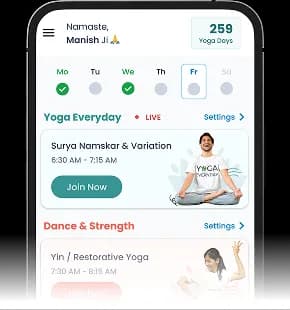
Continue your habit on the Habuild app
Use the Habuild app for reminders, live access, progress support, and habit tracking.