Yoga for Memory Power
A yoga practice for memory power backed by a 2015 study showing improved verbal and visual-spatial memory in 12 weeks.

Key Takeaways
- A 2015 Journal of Alzheimer's Disease study confirms gains
- Supports BDNF-mediated hippocampal growth
- Reduces cortisol-driven memory impairment
- Guided by senior instructor Saurabh Bothra's live classes
- Improvements measured within 12 weeks of practice
Transform Your Memory and Concentration with Daily Yoga

Memory and concentration are not fixed cognitive traits — they are neurobiological capacities that fluctuate with the physiological state of the brain. Chronic cortisol directly damages hippocampal neurons (the memory centre) and suppresses the BDNF production that maintains and grows them. Sleep deprivation impairs the synaptic consolidation of new memories. Default mode network hyperactivity — the chronic mind-wandering of stressed, distracted modern life — prevents the focused attention that new information encoding requires.
Yoga addresses all three simultaneously. Its cortisol reduction protects hippocampal neurons and restores BDNF production; its sleep improvement supports overnight memory consolidation; and the present-moment attention trained by balance poses and pranayama builds the focused concentration that memory encoding requires. 650,000+ people build better habits every morning with Habuild — and those who track cognitive performance describe improved memory, sharper concentration and faster information processing as among the most consistent and motivating benefits of their practice.
The Habuild members who describe the sharpest cognitive improvement practise every morning. Daily yoga changes the neurobiological baseline that memory runs on.
Can Yoga Really Help with Memory Power?
Yes — the neuroscientific evidence is compelling and specific. A 2015 study in the Journal of Alzheimer’s Disease found that 12 weeks of yoga and meditation practice produced significant improvements in verbal memory, visual-spatial memory and cognitive flexibility compared to controls. The mechanism is hippocampal — fMRI studies have documented increased hippocampal grey matter volume in consistent yoga practitioners, with the volume increase correlating directly with memory performance improvements. BDNF, produced during physical exercise and elevated by pranayama, is the molecular signal for this hippocampal growth.
Benefits of Yoga for Memory Power
1. BDNF Production That Grows Hippocampal Memory Neurons
BDNF (brain-derived neurotrophic factor) is the primary molecular driver of neuroplasticity — it stimulates the growth of new neurons, strengthens synaptic connections and protects existing neurons from stress-induced damage. The hippocampus, the brain’s memory hub, is the region most sensitive to BDNF. Yoga produces BDNF through physical movement and through the cortisol reduction that removes BDNF’s primary suppressor. Consistent yoga practitioners show measurably greater hippocampal volume and better episodic memory performance than non-practitioners.
2. Improved Cerebral Blood Flow to Memory Regions
The prefrontal cortex (working memory, attention) and hippocampus (long-term memory encoding) are the brain regions most dependent on consistent oxygenated blood delivery. Yoga’s inversions (Sarvangasana, Sirsasana) and aerobic flows (Surya Namaskar) increase cerebral blood flow to these regions — directly improving the metabolic availability that memory function requires. Members describe improved mental clarity and recall specifically on the days they have practised inversions.
3. Reduced Cortisol That Protects Memory Neurons
Chronic cortisol is the most potent available neurotoxin for the hippocampus — it directly suppresses neurogenesis, shrinks hippocampal volume and impairs the long-term potentiation that is the molecular mechanism of memory formation. Yoga’s progressive cortisol normalisation removes this hippocampal threat, allowing the brain’s memory systems to function at full capacity rather than under chronic neurochemical stress.
4. Enhanced Focus and Concentration Through DMN Deactivation
The default mode network — the brain system responsible for mind-wandering, internal narration and distraction — is the primary enemy of focused concentration and effective memory encoding. Yoga and meditation consistently deactivate the DMN, training the brain’s ability to sustain focused present-moment attention. This is the neurological mechanism behind the improved concentration that yoga practitioners describe — measurable in EEG as increased alpha wave activity and reduced delta-band mind-wandering.
5. Better Sleep That Consolidates Memory
Memory consolidation — the process by which information encoded during waking is transferred to long-term storage — occurs primarily during slow-wave sleep. Yoga’s sleep quality improvements (deeper sleep, fewer awakenings, improved sleep architecture) directly enhance memory consolidation, making the information processed during the day more reliably accessible the following morning. Students and professionals who add daily yoga consistently describe better retention of material studied the day before.
Best Yoga Poses (Asanas) for Memory Power
1. Tree Pose (Vrikshasana)
Difficulty: Beginner
Single-leg balance demanding sustained focused attention — Vrikshasana forces the prefrontal cortex and cerebellum into simultaneous activation that trains both cognitive focus and neuromuscular coordination. The concentration required to maintain balance is itself the brain exercise that strengthens attentional control. Hold 60 seconds each side with eyes open then closed (advanced). Asana for memory power through direct attention training
2. Supported Shoulderstand (Sarvangasana)
Difficulty: Intermediate
Full inversion that reverses gravitational blood distribution and drives increased cerebral blood flow to the entire brain, with particular benefit to the frontal and temporal lobes that memory and concentration depend on. The thyroid stimulation of chin lock supports the metabolic rate of brain function. 3–5 minutes. Most impactful single pose for acute cognitive enhancement
3. Standing Forward Fold (Uttanasana)
Difficulty: Beginner
Gravity-assisted cerebral blood flow increase in an accessible forward fold — the inverted head position increases cerebral perfusion and the posterior chain stretch releases the physical tension that restricts the neck vessels supplying the brain. Hold 60–90 seconds. Yoga for concentration and memory daily accessible practice
4. Alternate Nostril Breathing (Nadi Shodhana)
Difficulty: Beginner
Balances activity between the left and right cerebral hemispheres through alternating nostril stimulation of the autonomic nervous system — improving the inter-hemispheric communication that integrative cognitive tasks require. EEG research shows consistent Nadi Shodhana practice increases alpha wave activity (the cognitive state of relaxed alertness) and improves working memory performance. 10–15 minutes daily
5. Child’s Pose (Balasana)
Difficulty: Beginner
Deep parasympathetic activation that removes the cortisol load suppressing BDNF production and hippocampal function. Used as a resting pose between more active sequences, Balasana provides the neurochemical reset that allows the memory systems to return to optimal function between cognitive demands. 2–3 minutes
6. Corpse Pose (Savasana)
Difficulty: Beginner
The memory consolidation pose — the delta wave brain state that deep Savasana produces resembles the slow-wave sleep state in which memory consolidation occurs. 10–15 minutes of genuine Savasana at the end of practice provides a mini-consolidation window for the cognitive patterns trained during the session
Every memory-enhancing pose and pranayama above is guided live daily at Habuild.
How Habuild's Live Yoga Classes Help with memory and concentration
1. Daily Practice Builds Lasting Results
The physiological changes that yoga produces for memory and concentration are cumulative — they require consistent daily stimulus over weeks and months to produce the structural adaptations that translate as genuine improvement. Habuild’s daily live morning sessions provide the consistency mechanism that makes this accumulation possible and sustainable.
2. Live Guidance for Correct Form
Every yoga session for memory and concentration requires specific form precision — the poses that produce therapeutic benefit do so only when executed correctly. Saurabh Bothra’s live instruction ensures every pose delivers its intended physiological effect, making the practice therapeutically effective rather than simply active.
3. Community Accountability Keeps You Consistent
Habuild’s 650,000+ member morning community, streak tracking and live class structure provide the daily accountability that sustains practice through the weeks and months that produce genuine memory and concentration improvement — the consistency that solo practice rarely achieves.
4. Sessions Designed for All Fitness Levels
Whether you are a complete beginner or an experienced practitioner, Habuild’s sessions include modifications for every level and condition. Every participant receives the specific memory and concentration-relevant poses and sequences within the standard daily programme.
Who is Yoga for Memory and Concentration Best Suited For?
1. Complete Beginners
No prior yoga experience, flexibility or fitness level is required. Habuild's sessions begin with fully accessible modifications and progress over weeks — the benefits for Memory and Concentration are available from the very first session.
2. Working Professionals with Busy Schedules
A 45-minute morning session provides the complete daily therapeutic stimulus for Memory and Concentration management before the working day begins. The morning timing is the most effective window for most health-focused yoga practices.
3. People Who Have Tried Other Methods Without Success
If conventional approaches have produced temporary improvement without lasting change, yoga addresses the underlying physiological drivers that symptomatic treatments alone cannot reach — delivering the root-cause intervention that produces durable improvement.
4. Anyone Looking for a Sustainable, Long-Term Solution
Yoga is a daily practice that practitioners maintain for decades because it produces an immediate sense of wellbeing that makes continuing feel natural. The members who describe the most transformative results are consistently those who made it a permanent daily commitment.
If this describes your cognitive goals, the neurobiological shift begins with daily practice. free — start your 14-day free trial.
How Long Does It Take to See Memory Results?
1. Week 1–2: Improved Post-Practice Mental Clarity
The BDNF and cerebral blood flow effects of a single session produce measurable acute cognitive improvement — practitioners describe thinking more clearly for several hours after morning practice. The post-inversion mental alertness is particularly described as distinctive and immediate.
2. Week 3–4: Better Focus During Work and Study
The DMN deactivation training begins to generalise — practitioners notice they can sustain focused attention for longer before being pulled into distraction. Mind-wandering during study or demanding work decreases.
3. Month 2–3: Noticeably Improved Memory and Recall
Long-term memory encoding improves as hippocampal function is restored. Practitioners describe remembering conversations, names and information that previously would have been lost. Sleep quality improvement contributes to overnight consolidation at this stage.
4. Month 4+: Lasting Cognitive Enhancement
The structural changes — hippocampal volume, BDNF baseline, cortisol normalisation — are established as a new cognitive baseline. The memory and concentration improvements are durable between sessions and are described as permanent changes in cognitive capability rather than temporary acute effects.
Flexible Batch Timing
Choose morning or evening classes and join the slot that suits your day.
Morning
6:30 am - 7:15 am
7:30 am - 8:15 am
8:30 am - 9:15 am

Evening
5pm - 5:45pm
6pm - 6:45pm
7pm - 7:45pm

Meet Your Yoga for Memory Power Instructor: Saurabh Bothra

Saurabh Bothra
Founder, Habuild
Your yoga for memory power journey is guided by one of India's most qualified instructors—Saurabh Bothra.
Choose Your Membership Plan
Continue after the trial with membership options designed for long-term consistency support.
Continue your habit on the Habuild app
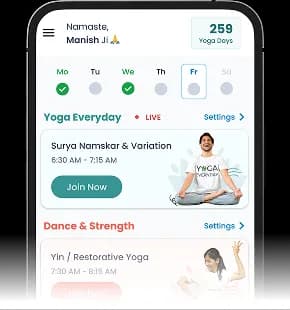
Use the Habuild app for reminders, live access, progress support, and habit tracking.