
Arogyavardhini Vati: Ingredients, Traditional Uses, Evidence and Safety
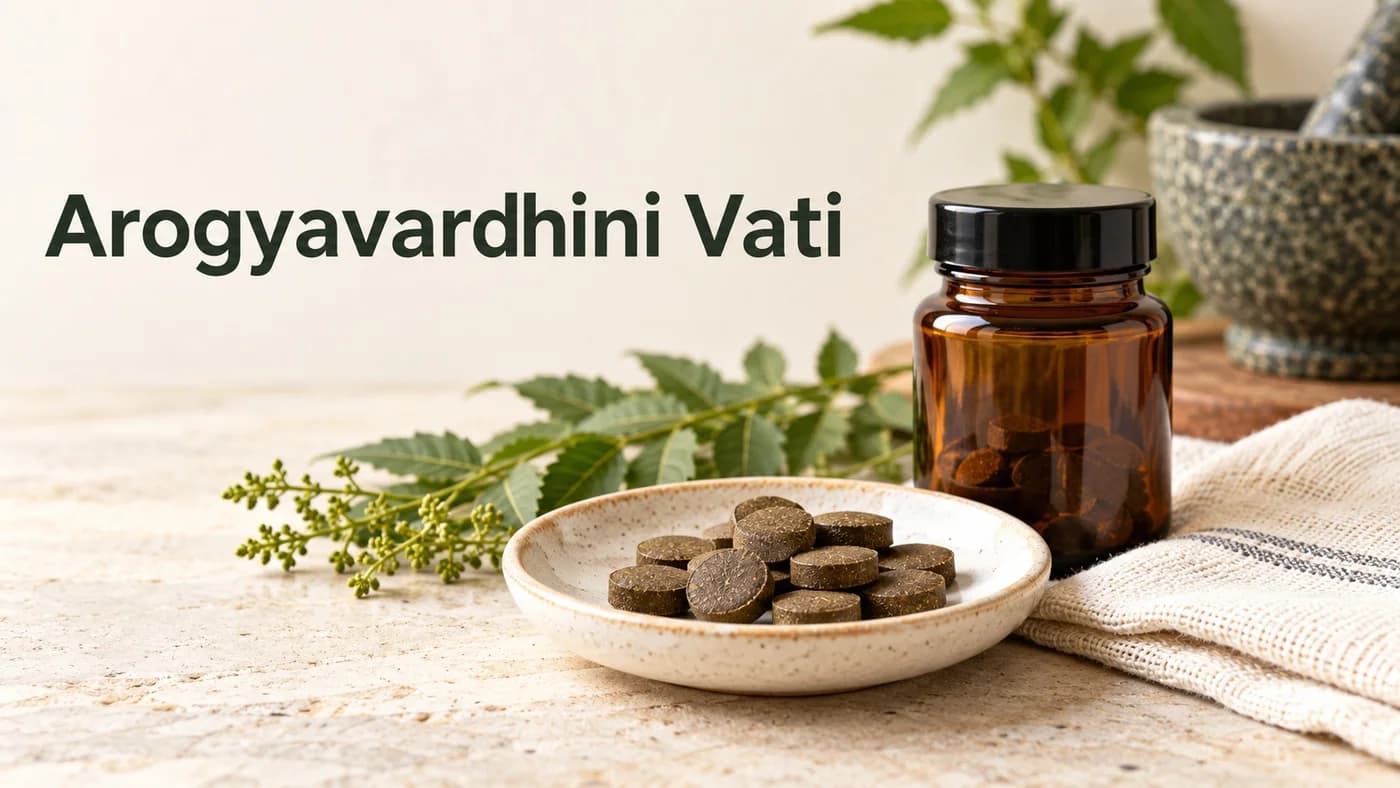
Arogyavardhini Vati is a classical Ayurvedic tablet with kutki and processed minerals. Know its uses, the limited evidence and safety checks.

Key Takeaways
- Classical recipes combine kutki with herbs and processed metals like mercury.
- It is a medicine, not a daily supplement; use it only under qualified advice.
- Human evidence for liver, cholesterol or skin benefits is small and limited.
- Studies have found lead, mercury or arsenic in some Ayurvedic products.
- Never use it in place of tests or treatment for raised liver enzymes.
Arogyavardhini Vati is a classical Ayurvedic tablet, traditionally used for liver, digestive and skin complaints. The name sounds like one fixed product, but ingredients and quality can vary between brands. It is a medicine-like preparation, not a daily food or general tonic. Before taking it, the useful questions are what problem you have, what is in that particular tablet, and whether it is suitable for you.
What is Arogyavardhini Vati?
The name means roughly "promoter of good health". Classical recipes are built around kutki (Picrorhiza kurroa), a bitter herb, together with triphala, shilajit, guggulu and chitrak. They also include processed minerals and metals: kajjali (a mercury and sulphur compound) and bhasmas of copper, iron and mica. The tablets are traditionally prepared with neem leaf juice.
Because of these metal ingredients, Arogyavardhini belongs to the rasa shastra group of Ayurvedic medicines. Manufacturing methods and the amount in each tablet are not identical across products, so a friend's experience with one brand tells you little about another.
Traditional uses and what the evidence shows
In Ayurvedic practice it is prescribed for indigestion, sluggish liver function, skin problems and some metabolic complaints. Research in people is limited. A small pilot study gave Arjuna powder followed by Arogyavardhini Vati to people with high cholesterol, and animal studies have looked at liver protection and blood lipids. These studies are small, short or in animals, so they cannot show that the tablet treats fatty liver, high cholesterol or acne in everyday use.
Will it "clean" the liver?
"Liver detox" is a marketing phrase, not a measurable treatment. If a report shows raised liver enzymes, the next step is to find the cause, because fatty liver, hepatitis, alcohol and medicines need different care. Lifestyle steps with stronger evidence are covered in our guide on how to reduce fatty liver, and we explain why no drink or tablet "flushes" the liver in liver detox foods and drinks.
The same applies to cholesterol. Your doctor interprets a lipid report alongside age, blood pressure, diabetes and smoking. Swapping prescribed treatment for a traditional tablet can leave the real risk untreated.
Digestion and skin
Occasional heaviness after a big meal is different from repeated pain, vomiting, appetite loss or a lasting change in bowel habits, which need a diagnosis. Acne that is painful, scarring or not improving is best assessed by a dermatologist. A tablet sold for many unrelated problems may mask symptoms without solving them.
Why the exact product matters
Research on Ayurvedic medicines sold online found that about one in five contained detectable lead, mercury or arsenic, with higher rates among rasa shastra products. The CDC has also reported cases of lead poisoning linked to Ayurvedic medicines. In a rat study, Arogyavardhini Vati did not change liver or kidney tests over 28 days, but mercury levels rose in the brain, liver and kidneys. This does not mean every tablet is unsafe, but "herbal" and "natural" do not settle the question.
Practical safety checks
- Avoid loose or unlabelled tablets; choose a named manufacturer with an ingredient list and batch number.
- Take it only for a defined period prescribed by a qualified Ayurvedic doctor, not indefinitely.
- Avoid it during pregnancy and breastfeeding, and do not give it to children without specialist advice.
- Be especially cautious with kidney or liver disease.
- Bring the packet and your medicine list to your doctor, particularly if you take medicines for diabetes or blood pressure.
When to stop and seek help
Stop the product and get medical advice if you develop worsening abdominal pain, repeated vomiting, unusual weakness, a new rash or other symptoms that began after starting it. Yellow eyes or skin, dark urine, facial swelling or trouble breathing need prompt care. Do not accept claims that serious symptoms are a "healing crisis".
If you have taken an unlabelled product for a long time and now have unexplained symptoms, tell your doctor exactly what you took and for how long so they can decide whether testing is needed.
Editorial sources
- NCCIH: Ayurvedic Medicine: In Depth
- PubMed: Lead, mercury, and arsenic in US- and Indian-manufactured Ayurvedic medicines sold via the Internet
- CDC MMWR: Lead Poisoning Associated with Ayurvedic Medications
- PubMed: Safety evaluation of Arogyavardhini vati on brain, liver and kidney in rats
- PubMed: Arjuna powder and Arogyavardhini Vati in dyslipidemia patients, a pilot study
Frequently Asked Questions
Related Articles
Prabhakar Vati: Uses, Benefits, Dosage & Side Effects
Prabhakar Vati is a classical Ayurvedic cardiac tonic in tablet form used for heart health, blood pressure, and digestive disorders. Learn about its.


Sanjivani Vati: Uses, Benefits, Dosage & Side Effects
Sanjivani Vati is a classical Ayurvedic polyherbal tablet used for fever, respiratory infections, digestive disorders, and immune support. Learn its.

How to Reduce Fatty Liver: 7 Natural Ways to Heal an Inflamed Liver
The liver is one of the most regenerative organs in the body, and fatty liver responds dramatically to consistent lifestyle change. See 7 natural ways to heal an inflamed liver.

Liver Detox Foods and Drinks That Actually Support Liver Health
Your liver detoxifies your blood every day on its own — what food can do is lighten its workload. See the foods and drinks with real evidence behind them.