Strength Training for Runners
Join live strength training classes from home with beginner-friendly guidance and expert coaching.

Key Takeaways
- Builds speed alongside running performance
- Reduces injury risk through targeted strength work
- Complements running with resistance training
- Guided by senior instructor Trishala Bothra's live sessions
- Designed for runners at every experience level
What is Strength Training for Runners?

Strength training for runners is a targeted resistance programme designed around the specific physical demands of running — building the posterior chain, single-leg stability, and hip strength that improve running economy and reduce injury risk. Unlike general gym workouts, this programme prioritises movements that directly translate to better performance on the road or track. The mechanism is running economy — the oxygen cost of running at a given pace. Research suggests that runners who include two structured strength sessions per week may improve their running economy and reduce common overuse injuries like IT band syndrome, shin splints, and runner's knee. Stronger muscles absorb impact better, maintain form longer, and generate more power per stride.
Benefits of Strength Training for Runners
Improved Running Economy and Speed
Many runners who add targeted strength work report running faster at the same perceived effort — a direct result of improved neuromuscular efficiency and stronger hip extensors. Studies suggest strength-trained runners may use less energy per kilometre, translating to meaningful improvements in race times over consistent training blocks.
Reduced Injury Risk
Overuse injuries are the most common running setback — and most are linked to weak glutes, hip stabilisers, and calf muscles. Strength training for runners specifically addresses these weaknesses, helping to distribute impact forces more evenly and may reduce injury frequency.
Improved Running Form Under Fatigue
As runs get longer, form breaks down — hips drop, knees cave, and the posterior chain fatigues. A stronger core, glutes, and hamstrings help maintain technique even in the final kilometres of a long run or race.
Better Recovery Between Runs
Stronger muscles recover more efficiently from the repetitive loading of running. Many runners find they can add more mileage or intensity without excessive soreness when strength training is consistently included.
What to Eat to Support Your Runners — Nutrition Pairing
Protein — The Foundation of Runners Training
Aim for 1.4–1.7g of protein per kg of bodyweight per day. Best sources include eggs, paneer, lentils (dal), chicken, Greek yoghurt, and whey protein. Distribute protein evenly across 3–4 meals rather than loading it all in one sitting. Adequate protein is non-negotiable — without it, training effort produces minimal muscle adaptation regardless of programme quality.
Carbohydrates — Fuel for Performance and Recovery
Runners need a higher carbohydrate intake relative to most strength athletes — carbohydrates fuel the aerobic energy system that running depends on. Prioritise whole-grain rice, oats, sweet potato, and banana — especially in the 2–3 hours before your run and within 30 minutes after.
Hydration and Micronutrients
Iron is critical for runners — low iron impairs the oxygen-carrying capacity that running performance depends on. Vitamin D supports bone density for impact absorption. Magnesium aids muscle recovery. Aim for 2.5–3 litres of water daily, increasing on long run days.
How to Get Started with Strength Training for Runners
Before You Begin — Setting Your Baseline
Before beginning, assess your current fitness level honestly. Can you complete 10 bodyweight squats with good form? Can you hold a plank for 20 seconds? These are the practical baselines for this programme. Set a specific, measurable goal — not just "get stronger" but "complete 15 bodyweight squats with full depth in 8 weeks". If you have any existing injuries or health conditions, consult your doctor before starting.
Week 1–2: Foundation Phase
Two sessions per week. Focus entirely on movement quality — correct joint alignment, controlled tempo, and full range of motion. Use bodyweight only or very light resistance. Do not skip this phase.
Week 3–8: Progressive Loading Phase
Add resistance progressively — aim to add one more rep or a small amount of weight each week. For runners goals, the rep range varies: maximum strength works in the 5–8 rep range with heavier loads; muscular endurance and tone stays in the 12–20 rep range with moderate loads. Track your sessions — a simple note of sets, reps, and load each week makes progression deliberate rather than guesswork.
Week 9+: Goal-Specific Advancement
Introduce more advanced training variables: supersets, tempo manipulation, and periodisation. If you've stalled, look at nutrition, sleep, and recovery first — these are the most common causes of plateau beyond the early adaptation phase.
Best Strength Training Exercises for Runners

Bodyweight Single-Leg Squat (Pistol Squat Progression) — Quadriceps, glutes, hip stabilisers | 3 sets × 8–10 reps each leg. Replicates the single-leg loading pattern of running — the most specific strength exercise a runner can do. Beginner modification: hold a wall or chair for support while building single-leg balance.
Romanian Deadlift — Hamstrings, glutes, lower back | 3 sets × 10–12 reps. Strengthens the posterior chain — the engine of running propulsion. Weak hamstrings are a primary contributor to hamstring strains and poor running economy. Beginner modification: use bodyweight or light dumbbells; hinge at the hips while keeping a neutral spine.
Calf Raises (Single-Leg) — Gastrocnemius, soleus | 3 sets × 15–20 reps each leg. The calf complex absorbs and transmits impact with every footstrike. Weak calves are a leading cause of Achilles tendinopathy and plantar fasciitis in runners. Beginner modification: use both legs and hold a wall for balance initially.
Common Mistakes to Avoid When Training for Runners
Skipping Leg Strength Work Because "Running Is Enough"
Running builds cardiovascular fitness but does not adequately develop the hip stabilisers and posterior chain strength that prevent injury. Add two dedicated strength sessions per week, separate from your runs.
Doing Strength Training the Day Before a Long Run
Leg fatigue from strength training directly impairs long run quality and recovery. Schedule strength sessions after easy runs or on rest days — never 24 hours before your longest weekly run.
Neglecting Single-Leg Work
Bilateral exercises like squats don't replicate the single-leg demands of running. An all-two-legged programme misses the hip stability and proprioceptive work that translates directly to injury prevention on the road.
Who is Strength Training for Runners Best For?
Complete Beginners Starting from Zero
Runners of all levels — from 5K beginners to marathon competitors — will benefit from targeted strength training. Every exercise can be scaled: bodyweight for those starting out, adding load as strength develops. No gym equipment is required to start.
Intermediate Trainees Who Have Hit a Plateau
If you've been running consistently but your times have plateaued or injuries keep interrupting training, goal-specific strength work is what general fitness classes miss.
Those Who Have Tried Runners Training Before Without Results
A runner-specific programme — selecting exercises for their direct transfer to running mechanics — produces results that random gym sessions don't.
Senior Citizens and Older Adults (50+)
Strength training for runners is particularly important for adults over 50. After the age of 40, lean muscle mass decreases by approximately 1–2% per year without resistance training — affecting metabolism, balance, and physical independence. If you have existing health conditions, please consult your doctor before starting.
How Habuild Trains You for Runners
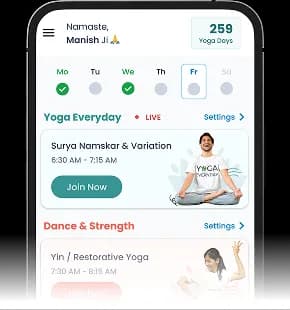
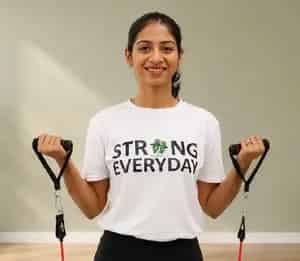
Habuild is India's First Habit Building Program for Yoga — and through its 'Strong Everyday' programme led by Trishala Bothra, it extends this same habit-building philosophy to structured strength and fitness training.
Goal-Specific Programming — Not a Generic Fitness Class
Every exercise selection, rep range, and rest period in the runners programme is chosen because it produces runners results specifically.
Live Daily Sessions with Real-Time Form Correction
Unlike pre-recorded videos, Habuild's live daily sessions allow the instructor to see and correct form errors in real time — the specific errors that prevent runners progress and increase injury risk.
Progressive Overload Built into Every Session
Members do not need to design their own progressive overload — it is built into the programme structure. Each week, the sessions are deliberately more challenging than the last, ensuring the body never fully adapts and results continue coming.
Flexible Batch Timing
Choose morning or evening classes and join the slot that suits your day.
Morning
6:30 AM
7:30 AM
8:30 AM

Evening
5:00 PM
6:00 PM
7:00 PM
8:00 PM


Choose Your Membership Plan
Continue after the trial with membership options designed for long-term consistency support.
Continue your habit on the Habuild app
Use the Habuild app for reminders, live access, progress support, and habit tracking.