Cholesterol Diet Chart: A Simple Daily Plan to Manage Your Levels
A cholesterol diet chart shows what to eat more of and what to cut back on to manage LDL and HDL levels. See a clear daily structure you can follow at.


Key Takeaways
- Soluble fibre from oats, rajma, and lentils helps bind and remove cholesterol.
- Trans fats in bakery items and packaged snacks are worth cutting first.
- Flaxseed, walnuts, and chia seeds are daily omega-3 sources worth adding.
- Most people see measurable LDL and HDL improvement within 8-12 weeks.
- Works best paired with movement, sleep, and stress management, not diet alone.
A cholesterol diet chart makes it easier to see, at a glance, what to eat more of and what to cut back on to keep your LDL (bad cholesterol) in check and your HDL (good cholesterol) steady. You don’t need a complicated plan — just a clear structure you can follow at every meal.
Cholesterol Diet Chart: Foods to Favour
These foods actively help lower LDL cholesterol and support heart health:
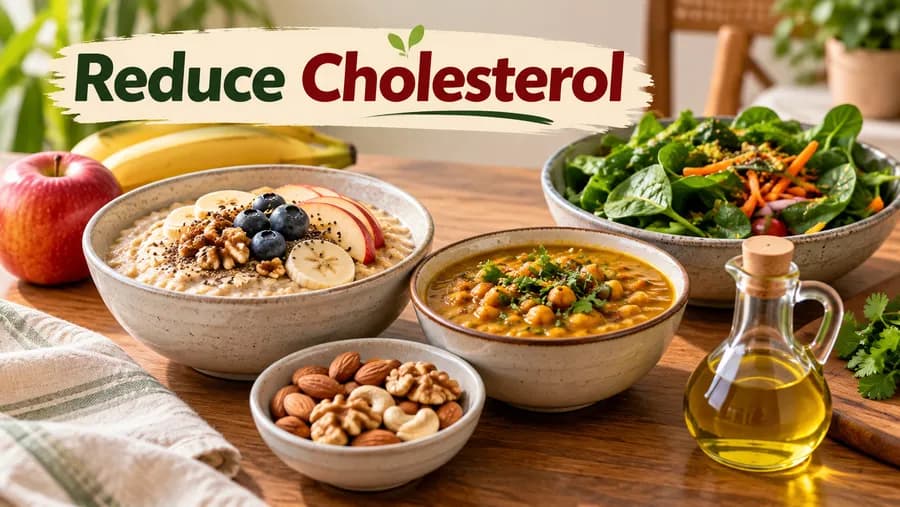
- Soluble fibre — oats, barley, rajma, chana, lentils, apples, and pears bind cholesterol in the gut and help remove it
- Healthy fats — nuts (almonds, walnuts), seeds (flaxseed, chia), olive oil, and mustard oil in place of ghee-heavy cooking
- Omega-3s — flaxseed (ground, for better absorption), walnuts, and chia seeds are excellent daily sources; stir a spoon into curd, dal, or a smoothie
- Fresh fruits and vegetables — at least 4-5 servings daily for fibre and antioxidants
- Plant sterols — fortified foods or small amounts of soy products like tofu and soy milk
These are the categories worth building every meal around if you’re following a cholesterol diet chart closely.
Foods to Limit on a Cholesterol Diet Chart
Just as important as what you add is what you scale back:
- Trans fats — bakery items, packaged biscuits, samosas, and anything with “partially hydrogenated oil” on the label
- Excess saturated fat — full-fat dairy, ghee, butter, and coconut oil in large quantities
- Fried and processed foods — chips, fried snacks, and processed meats raise LDL over time
- Refined carbs and added sugar — white bread, sugary drinks, and sweets can lower HDL and raise triglycerides
Sample Day on a Cholesterol Diet Chart
A realistic day following this eating pattern could look like this:
- Morning: A glass of warm water with lemon, followed by soaked almonds and walnuts
- Breakfast: Vegetable oats or moong dal chilla cooked in minimal oil, with a fruit on the side
- Lunch: Two rotis, a bowl of rajma or chana, a green vegetable, and a small salad with olive oil dressing
- Evening: A handful of roasted chana or fruit instead of fried snacks
- Dinner: Grilled fish or a lentil-based curry with brown rice or millet, plus steamed vegetables
- Throughout the day: 8-10 glasses of water and light physical activity like a walk after meals
Repeating this pattern most days is what makes a cholesterol diet chart effective over time, not any single meal.
Photo: cogdogblog, CC0, via Openverse (Flickr)
Lifestyle Habits That Support This Plan
None of this replaces a cholesterol diet chart — think of these habits as multipliers that make the plan work faster. Diet alone works best when paired with regular movement, adequate sleep, and stress management, since chronic stress and inactivity can also push cholesterol levels up. Cutting down smoking and limiting alcohol further supports the effect of this eating pattern. Most people see measurable improvement in LDL and HDL within 8-12 weeks of consistent changes, though results vary by individual and existing health conditions.
Cholesterol isn’t the only marker worth watching through diet — if uric acid is also a concern, our guide to foods to avoid for uric acid covers the overlapping and differing dietary triggers.
Reading Your Numbers Alongside the Chart
A cholesterol diet chart works best when you know what you’re aiming for. As a general guide, total cholesterol under 200 mg/dL, LDL under 100 mg/dL, HDL above 40 mg/dL (men) or 50 mg/dL (women), and triglycerides under 150 mg/dL are considered healthy ranges for most adults, though your doctor may set different targets based on your history. Get a lipid profile test done once a year if you’re over 40 or have a family history of heart disease, and every 3-6 months if you’re actively following a cholesterol diet chart to manage already-elevated numbers. Tracking the actual numbers, rather than just “eating better” in the abstract, is what tells you whether this cholesterol diet chart is genuinely moving the needle.
Common Mistakes People Make With a Cholesterol Diet Chart
- Cutting all fat instead of the right fat — healthy fats from nuts, seeds, and oils are necessary and don’t raise LDL the way trans and excess saturated fat do
- Relying on “cholesterol-free” labels — many plant-based packaged snacks are cholesterol-free but still high in trans fat and refined carbs, which affect your lipid profile just as much
- Going all-or-nothing — following a cholesterol diet chart strictly for a week and then abandoning it does less good than moderate, sustained changes over months
- Ignoring portion size on “healthy” foods — nuts and olive oil are good for you but calorie-dense, so a handful, not a bowlful, is the right serving
- Skipping the follow-up blood test — without repeat testing, it’s hard to know whether your version of a cholesterol diet chart is actually working for your body
Frequently Asked Questions
Related Articles

Diet for Strength Training: a Practical Eating Guide for Muscle and Recovery
Explore protein, carbohydrates, healthy fats and meal planning for strength training, muscle building and recovery.
How to reduce Cholesterol in 7 Days: Natural Exercises and Habits
Aerobic exercise, resistance training, and yoga each work through a different pathway — raising HDL, improving insulin sensitivity, and normalising cortisol — for multi-pathway cholesterol improvement medication alone can't replicate. See the natural exercises and habits.


How to Reduce Cholesterol: 8 Natural Ways to Lower LDL and Improve Heart Health
Daily exercise, dietary shifts, and stress management can lower LDL meaningfully within 8-16 weeks for most people, per the American Heart Association. See all 8 natural ways.