
Herbal Tea Recipes: 5 Simple Blends for Daily Routine
These five herbal tea blends use common Indian kitchen ingredients like fennel, cinnamon, tulsi, ginger, and cardamom — light, warm drinks, not medicine..
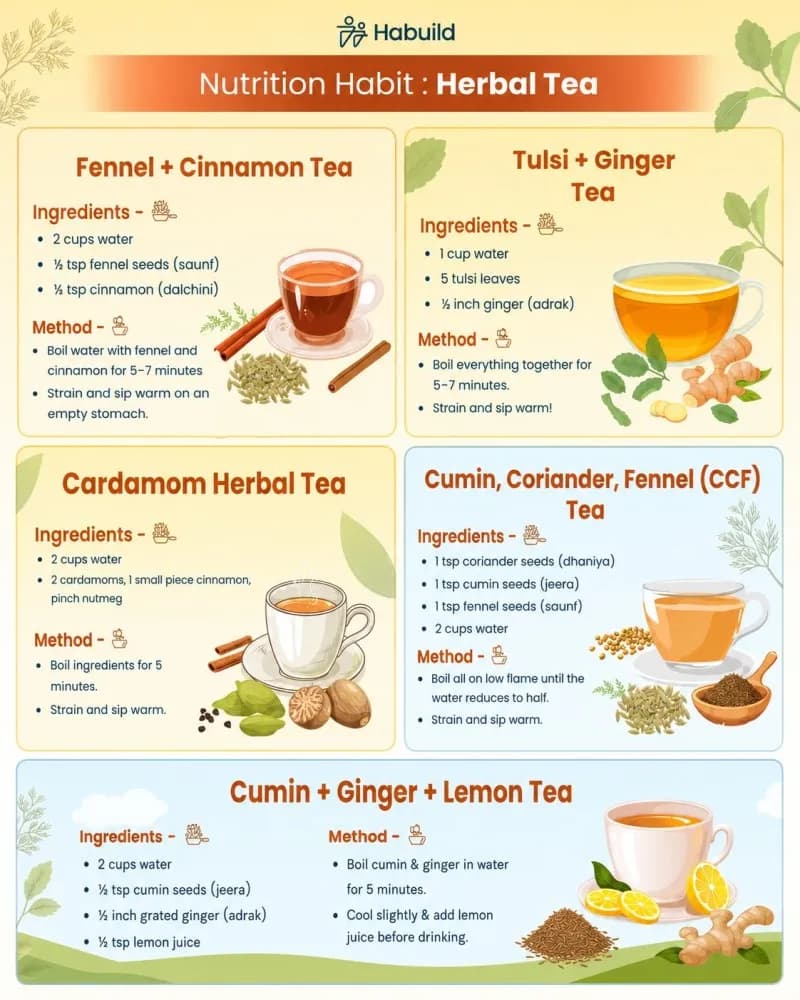
Key Takeaways
- Five caffeine-free blends use common kitchen ingredients like fennel, tulsi, and cardamom.
- Meant as light, soothing drinks, not medicine, and best kept unsweetened.
- Fennel-cinnamon tea offers a mild sweet-spicy taste for a light morning drink.
- CCF tea (cumin, coriander, fennel) has a clean, earthy taste common in Indian homes.
- Each recipe needs just a few ingredients and five to seven minutes of simmering.
Herbal tea recipes are a simple way to add warmth, flavour and variety to your daily routine. These five blends use common Indian kitchen ingredients like fennel, cinnamon, tulsi, ginger, cardamom, cumin, coriander and lemon.
The idea is not to treat these drinks like medicine. Think of them as light, warm drinks you can make when you want something soothing without loading the cup with sugar. They can be a nice change from regular chai, especially when you want a caffeine-free option in the morning or evening.
Each recipe below is easy, uses very few ingredients and takes only a few minutes. Keep the portions small, use clean water and avoid adding sugar unless really needed. FSSAI’s Eat Right India campaign encourages people to reduce excess sugar in everyday food habits, so unsweetened herbal drinks can be a useful swap for sweet beverages.
Source note: FSSAI Eat Right India recommends gradually reducing excess sugar, salt and fat in daily eating habits.
Why herbal teas work as a simple habit
A herbal tea habit works because it is easy to repeat. You do not need a long recipe or special equipment. A small pan, water, spices and five to seven minutes are enough.
These drinks also help people who want a lighter choice than milk tea, packaged drinks or sweet evening snacks. A warm cup can slow you down for a few minutes. That pause itself is useful, especially during busy mornings or late evenings.
The best approach is moderation. Use kitchen-level quantities, not large spoonfuls. Stronger is not always better. If your stomach feels uncomfortable after any ingredient, skip that recipe and choose a gentler one.
5 herbal tea recipes to try
Use these recipes as simple home blends. Drink them warm, not boiling hot. You can adjust water slightly based on taste.
Fennel cinnamon tea
This tea has a mild sweet-spicy taste. Fennel gives it a soft flavour, while cinnamon adds warmth. It works well when you want a light morning drink.
Ingredients: 2 cups water, 1/2 teaspoon fennel seeds and 1/4 teaspoon cinnamon.
- Boil water in a small pan.
- Add fennel seeds and cinnamon.
- Let it simmer for 5 to 7 minutes.
- Strain and sip warm.
Tulsi ginger tea
Tulsi and ginger make a fresh, sharp blend. This is a good choice when you want something warm and simple. Use fresh ginger if possible because it gives better flavour.
Ingredients: 1 cup water, 5 tulsi leaves and 1/2 inch ginger.
- Boil water.
- Add tulsi leaves and sliced or crushed ginger.
- Boil everything together for 5 to 7 minutes.
- Strain and drink warm.
Cardamom herbal tea
Cardamom herbal tea is gentle and aromatic. The small pinch of nutmeg should stay small. Too much nutmeg can make the drink too strong.
Ingredients: 2 cups water, 2 cardamoms, 1 small piece cinnamon and a pinch of nutmeg.
- Lightly crush the cardamoms.
- Add water, cardamom, cinnamon and nutmeg to a pan.
- Boil for 5 minutes.
- Strain and sip warm.
CCF tea
CCF tea means cumin, coriander and fennel tea. It has a clean, earthy taste and is common in many Indian homes as a light spice water.
Ingredients: 1 teaspoon coriander seeds, 1 teaspoon cumin seeds, 1 teaspoon fennel seeds and 2 cups water.
- Add all seeds and water to a pan.
- Boil on low flame until the water reduces to about half.
- Strain the tea.
- Sip it warm.
Cumin ginger lemon tea
This blend has a sharper taste because of ginger and lemon. Add lemon only after the tea cools slightly. This keeps the taste fresh and avoids bitterness.
Ingredients: 2 cups water, 1/2 teaspoon cumin seeds, 1/2 inch grated ginger and 1/2 teaspoon lemon juice.
- Boil cumin seeds and ginger in water for 5 minutes.
- Switch off the flame.
- Let it cool slightly.
- Add lemon juice before drinking.
How to choose the right herbal tea
For a light morning drink
Try fennel cinnamon tea or tulsi ginger tea. Keep it unsweetened. If you feel acidity on an empty stomach, drink it after a small breakfast instead.
For after lunch
Try CCF tea. Keep it mild and warm. Avoid making it very concentrated just because you want faster results.
For evening
Try cardamom herbal tea when you want something soothing. It can replace a second cup of chai for people trying to reduce caffeine or sugar.
For a fresh taste
Try cumin ginger lemon tea. Add lemon at the end and keep the ginger quantity small if your stomach is sensitive.
Small safety notes before drinking herbal teas
Herbal teas are made from common kitchen ingredients, but that does not mean everyone should drink them in large amounts. Keep them as a gentle food habit, not a treatment for any disease.
Ginger may cause heartburn, stomach discomfort or throat irritation for some people, especially in higher amounts. Cinnamon is usually safe in normal food amounts, but large amounts or long-term heavy use may not suit everyone. Health sources also advise people who take regular medicines to speak with a health professional before using herbal products often.
Be more careful if you are pregnant, breastfeeding, taking blood thinners, taking diabetes medicines, dealing with liver disease, or preparing for surgery. For children, keep the tea mild and avoid strong spice mixtures. When in doubt, choose plain warm water or speak to a doctor.
Safety source: NCCIH ginger safety information and NCCIH cinnamon safety informationboth advise moderation and caution with herbal products, especially with medicines.
Frequently Asked Questions
Related Articles
Chamomile Tea for Sleep: Does It Really Work?
Chamomile tea for sleep has more real evidence behind it than most bedtime folk remedies — but it's a mild aid, not a sedative. See how it compares to warm milk and valerian root.


Healthy fats: why your body needs fat
Healthy fats help your body absorb vitamins and support brain, hormones, joints, cells and daily meals. Learn simple vegetarian sources and habits.
