
How to make Ambali tastier: jeera, coriander and thin Ambali ideas
A pinch of roasted jeera, fresh coriander, and the right water balance make plain Ambali far more palatable. See simple ways to improve the taste.

Key Takeaways
- Cook the millet paste smooth on low-medium heat before adding any flavour.
- Wait for the base to cool fully before adding buttermilk, or the texture spoils.
- Roasted jeera and fresh coriander are the simplest, most reliable flavour boosters.
- Thin Ambali is the same base with extra water, not a different recipe.
- Fix blandness with a little more salt or jeera, not by adding several ingredients at once.
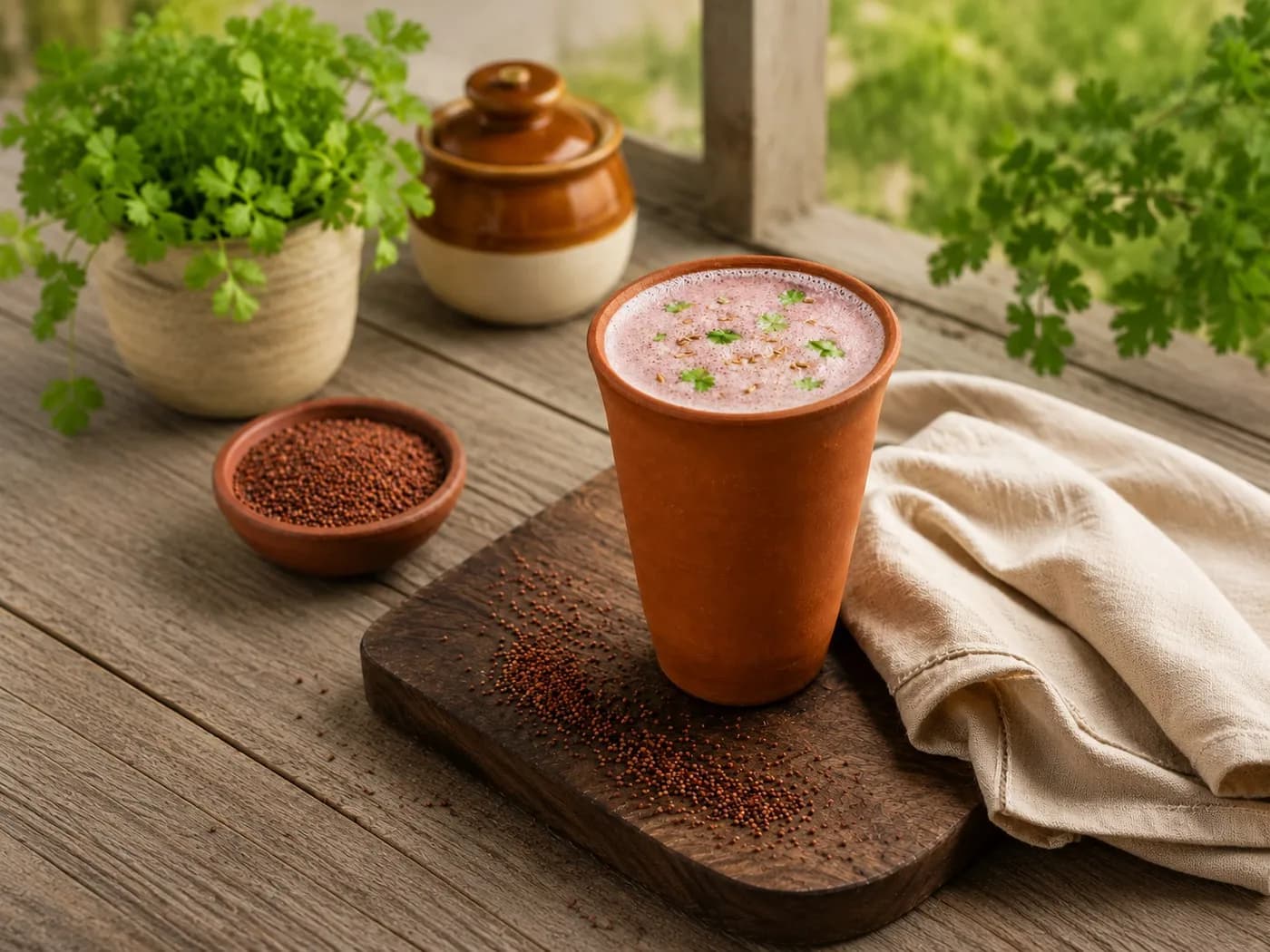
How to make Ambali tastier is a useful question because plain Ambali can feel too bland for some people. The answer is not to add heavy toppings or too much masala. A pinch of roasted jeera, fresh coriander, the right amount of salt and the right water balance can make Ambali taste much better.
Ambali is meant to be light. It should feel cooling, smooth and easy on the stomach. When the base is cooked well and the flavour is kept simple, Ambali can become an easy summer drink or a small snack between meals. You can make it with ragi, jowar or another millet flour, depending on what you use at home.
Start with a smooth Ambali base
Cook the millet paste well
Good taste starts before flavouring. If ragi or jowar flour is undercooked, Ambali can taste raw. Mix the flour with water first, then cook it on low to medium heat until it becomes smooth. Keep stirring so there are no lumps.
Cool before adding buttermilk
If you are adding buttermilk, wait until the cooked millet base cools completely. Adding buttermilk to a hot base can spoil the texture. A cooled base mixes better and tastes cleaner.
Adjust texture before serving
Ambali thickens as it cools. Check the texture before drinking. Add water slowly and mix well. The drink should feel smooth, not sticky or too thick.
Simple flavour boosters for Ambali
Roasted jeera powder
Roasted jeera is the easiest flavour booster. It gives Ambali a warm, familiar taste, a little like chaas. Start with a small pinch. Too much jeera can make the drink bitter.
Fresh coriander
Fresh coriander makes Ambali taste lighter. Chop it finely so it mixes well. Coriander works best in salted Ambali, especially when the drink is served cool.
Mild chilli, onion or lemon
A small amount of green chilli, onion or lemon can make Ambali more savoury. Keep this optional. For children, older adults or anyone with acidity, a mild jeera-coriander version is usually better.
Thin Ambali for a lighter texture
What makes it different
Thin Ambali is not a different dish. It is the same cooked millet base made more drinkable by adding extra water. A thick Ambali may need a spoon. Thin Ambali should be easy to sip from a glass.
When to choose thin Ambali
Choose thin Ambali when the regular version feels too heavy. It works well in summer afternoons or as a light evening option. It can also be a good beginner version for someone who is trying Ambali for the first time.
How much water to add
There is no fixed rule. Start by adding half a glass of water to the cooled base, mix well and check the texture. Add more only if needed. Thin Ambali should be smooth, not watery.
Fix common taste problems
If it tastes too bland
Add a little salt or roasted jeera. Mix, taste and adjust slowly. Do not add too many things at once. Most bland Ambali needs better seasoning, not more ingredients.
If it feels too thick
Add water slowly and mix well. This is the easiest fix. A thinner texture is better when you want Ambali as a cooling drink instead of a filling snack.
If it becomes too thin
Use less water next time or cook the base slightly thicker. Avoid adding dry flour directly into the finished drink because it can form lumps.
If it tastes too sour
If rested Ambali becomes too sour, reduce the resting time. You can also add a little more water or fresh buttermilk to soften the taste.
Keep Ambali healthy and easy
Avoid too much salt
Salt makes Ambali tasty, but too much is not needed. Start small. The drink should feel refreshing, not salty like a strong pickle masala.
Avoid sugar overload
A sweet Ambali can be made, but for an everyday Habuild-style habit, the salted version is more practical. It works better as a cooling drink and does not turn into dessert.
Keep spices gentle
Jeera and coriander are enough for most people. Too much chilli, onion, masala or sourness can make the drink harsh on the stomach. Simple is better here.
Serve it fresh
Ambali tastes best when it is fresh or properly chilled. Do not keep a mixed Ambali sitting outside for many hours, especially in warm weather. If you are preparing it in advance, keep the cooked base separate and add water, buttermilk and seasoning closer to serving time. Also refer to FSSAI Eat Right India, simple food safety and healthy eating guidance.
Use the same base for the family
One millet base can become many versions. For someone who likes mild taste, keep it plain with salt. For someone who likes flavour, add jeera and coriander. For hot afternoons, make it thinner. This way you do not need to cook different recipes for everyone.
Traditional Indian cooking often uses soaking, fermentation and careful cooking to make foods easier to digest. Ambali follows the same simple idea when the millet base is cooked well and rested properly. Keep the final drink fresh, clean and easy to repeat.
The best Ambali is the one your family will actually drink. Try jeera one day, coriander another day, and thin Ambali on a hot day. Small changes make the habit easier to continue.
Frequently Asked Questions
Related Articles

How to Make Kidney Strong: Exercises, Yoga & Daily Habits
Keeping kidneys strong comes down to consistent movement, good hydration, and managed stress, not a single supplement or shortcut. See the exercises.


How to Make Joints Strong: Exercises, Habits, and a Plan That Works
Building the muscles, tendons, and connective tissue around each joint helps it move freely and bear load for years. See the exercises and habits that.

How to Make Back Strong: A Complete Guide for Beginners
A strong back supports posture and reduces discomfort during daily movement — built through consistent, correctly-formed training over weeks, not days..