Kerala Indian Food: A Nutritional Overview
Kerala food is built around coconut in nearly every form, alongside steamed rice dishes like puttu and appam you won’t find quite the same way elsewhere.

Key Takeaways
- Coconut shapes the flavour and fat profile of nearly every dish – oil, milk, and garnish.
- Puttu and appam are steamed rice-coconut staples using minimal added fat.
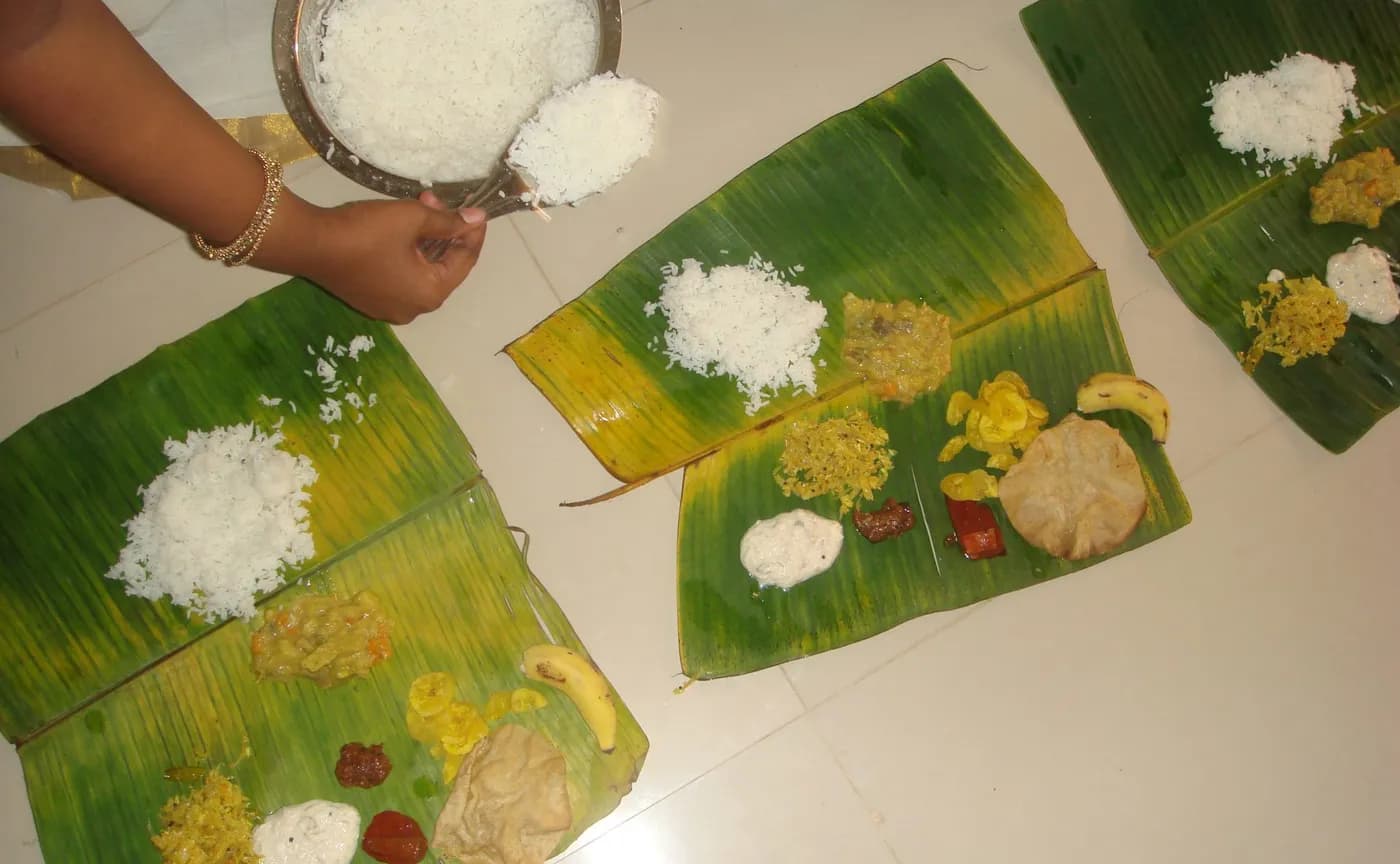
- A traditional sadya is elaborate but vegetable-forward, served on a banana leaf.
- Kerala matta rice has a slightly higher fibre content than plain white rice.
- Malabar-style cooking leans richer, with more spice and ghee than everyday coastal fare.
Kerala Indian food has a distinct identity within South Indian cooking, built around coconut in nearly every form, an unusually wide range of vegetable and lentil preparations, and steamed rice dishes like puttu and appam that you won’t find in quite the same way elsewhere in the south. Where a broader South Indian meal leans on sambar and dosa, Kerala’s everyday plate is more likely to include coconut milk-based curries like avial and olan, a stir-fried thoran, and rice steamed in a cylindrical mould. It’s a cuisine shaped by the state’s backwaters and its abundance of coconut, banana, and tapioca, and that shows up clearly in what ends up on the table. Anyone new to Kerala Indian food quickly notices how much of the everyday plate is vegetable- and lentil-forward rather than built around a single centerpiece dish.
Kerala Indian Food: At a Glance
- Coconut is the defining ingredient — used as oil, milk, grated garnish, and in chutneys, coconut shapes the flavour and fat profile of most Kerala dishes.
- Vegetable and lentil dishes carry real variety — avial (mixed vegetables in a coconut-yogurt gravy), thoran (stir-fried vegetables with grated coconut), and olan (ash gourd cooked in coconut milk) are everyday staples along the coast, not occasional specials.
- Puttu and appam are signature steamed staples — puttu (steamed rice-coconut cylinders) and appam (fermented rice-coconut pancakes) use gentle cooking methods with minimal added fat.
- Sadya meals are elaborate but vegetable-forward — a traditional sadya served on banana leaf includes numerous vegetable dishes, pulses, and pickles alongside rice.
- Rice is central, often par-boiled Kerala matta rice, which has a slightly higher fibre content than plain white rice.
- Malabar-style dishes bring in richer spicing and ghee, particularly in the northern Kerala/Malabar tradition, which leans more indulgent than everyday coastal fare.
- Coconut, rice, and lentils repeat across the week — the everyday backbone of Kerala Indian food is built from a small set of staple ingredients used in dozens of different ways.
Coconut, Vegetables, and What Makes Kerala Indian Food Distinct
The coconut palm is practically a symbol of Kerala, and its presence in the food goes well beyond flavour. Coconut oil is the primary cooking fat in most traditional Kerala kitchens, coconut milk forms the base of curries like avial and olan, and freshly grated coconut goes into chutneys and thoran (a stir-fried vegetable dish). This gives Kerala Indian food a fat profile that differs noticeably from, say, Tamil Nadu’s more sesame-oil-based cooking. Coconut fat is largely saturated, but it’s used here as a whole-food ingredient rather than a processed one, and it comes bundled with fibre and some minerals when eaten as fresh coconut rather than only as extracted oil. This whole-food use of coconut is one of the clearest markers that sets Kerala Indian food apart from cuisines that rely mainly on refined oils.
It’s worth remembering this is still one regional expression of a much broader style — our south Indian food guide covers how the same fermented, vegetable-forward principles play out with sesame oil and rice in place of coconut further inland.
Vegetables are the other defining feature of Kerala’s everyday plate — the state’s tropical climate and backwaters support an exceptional range of produce, and dishes like avial (mixed vegetables in a coconut-yogurt gravy), thoran, and olan (ash gourd cooked in coconut milk) turn up on the table far more routinely than in most other Indian cuisines. Kerala-style sambar, made with a slightly different spice blend and often a touch of coconut, and tapioca (kappa) — usually boiled and mashed with coconut and green chillies — round out a plate that leans heavily on lentils, vegetables, and coconut for both bulk and flavour, which is really the everyday reality of Kerala Indian food away from festival tables.
Photo: Ajith R N, CC0, via Openverse (WordPress.org Photo Directory)
Puttu, Appam, and Sadya: Nutrition Notes on Kerala Staples
Puttu, made from rice flour layered with grated coconut and steamed, is a light preparation with no added oil in the cooking process itself — it’s typically paired with a simple curry, ripe banana, or kadala curry (black chickpea curry), which adds protein and fibre to round out the meal. Appam, made from a fermented rice-and-coconut batter, gets the same fermentation benefits as idli and dosa batters — improved digestibility and a mild nutrient boost — while its coconut milk content gives it a slightly softer, sweeter character than a plain dosa. A traditional sadya, served for festivals like Onam, looks indulgent with its many small dishes on a banana leaf, but it’s largely vegetable-based: avial, thoran, olan, and pachadi collectively bring a wide range of vegetables, lentils, and yogurt-based preparations to the plate, even though the meal as a whole (with payasam for dessert) can run high in overall calories if every dish is taken in full portions. Malabar-region dishes, influenced by Arab and Mappila culinary traditions, tend to use more ghee, cashews, and richer spice blends — worth enjoying as occasional specialities rather than a daily template, simply because of how calorie-dense they can get. The everyday staples remain the better yardstick for how balanced Kerala Indian food really is.
Eating Kerala Food in a Balanced Way
None of this calls for cutting out coconut oil or skipping sadya at a family function — Kerala Indian food built around vegetables, lentils, coconut, and steamed rice preparations is genuinely nutrient-dense. The more useful habit is portioning: using coconut oil for flavour rather than deep-frying in it, choosing steamed puttu or appam over fried snacks like kerala banana chips on a regular basis, and treating a full sadya spread or Malabar biryani as an occasion food rather than an everyday one. Approached this way, Kerala Indian food holds up well as a genuinely balanced everyday diet.
Frequently Asked Questions
Related Articles

How to Digest Food Fast: 7 Natural Methods That Work
Slow digestion produces bloating, fatigue, and discomfort — movement, position, and dietary tweaks speed up digestive transit. See 7 natural methods that


Anantmool (Indian Sarsaparilla): Benefits, Uses & Ayurvedic Properties
Explore Anantmool (Indian Sarsaparilla) in Ayurveda, including traditional uses, properties, preparation guidance, side effects and precautions.