
Muesli for Weight Loss: Does It Actually Work?
No single food, muesli included, makes you lose weight on its own — what matters is whether it replaces a low-fibre breakfast and what’s actually in the.

Key Takeaways
- No single food burns fat – the real mechanism is better fullness per calorie from fibre.
- Many packaged mueslis hide more sugar per serving than a chocolate-flavoured cereal.
- Check that oats, bran, nuts, and seeds – not sugar or syrup – top the ingredients list.
- A sensible serving is around 40-50 grams since muesli is calorie-dense.
- Homemade muesli gives full control over sugar content and is usually the safer bet.
Muesli for weight loss is a popular breakfast swap, and the logic behind it is reasonable — but no single food, muesli included, makes you lose weight on its own. What matters is whether it replaces a low-fibre breakfast, how much you eat, and what’s actually in the bowl.
Why Muesli for Weight Loss Comes Down to Fibre and Satiety
Muesli is usually a mix of rolled oats, bran, nuts, seeds, and dried fruit, eaten raw or lightly toasted. The reason it gets discussed for weight management isn’t magic — it’s fibre.
- Oats and bran contain a mix of soluble and insoluble fibre that adds bulk to the meal without adding many calories.
- Fibre slows down how quickly food leaves your stomach, so you feel full for longer after breakfast.
- Nuts and seeds in muesli add a small amount of healthy fat and protein, which further slows digestion and blunts hunger a couple of hours later.
This combination can help reduce mid-morning snacking, which is often where extra calories creep in. That’s the real mechanism — better satiety per calorie, not fat being “burned away” by any ingredient. It’s also why muesli for weight loss tends to work better as a breakfast swap than as an add-on snack.
How to Choose a Muesli for Weight Loss (And Avoid the Added-Sugar Trap)
This is where a lot of people go wrong. Many packaged mueslis marketed as “healthy” are loaded with added sugar, honey, malt syrup, or sugar-coated dried fruit — sometimes more sugar per serving than a chocolate-flavoured cereal. That quietly undoes the satiety benefit, since sugary muesli spikes and drops blood sugar faster, leaving you hungry sooner.
A few practical checks:
- Read the ingredients list, not just the front-of-pack claims. If sugar, honey, or syrup appears in the first three ingredients, look elsewhere.
- Aim for muesli where whole oats, bran, nuts, and seeds dominate, with unsweetened dried fruit used sparingly.
- Watch portion size. A sensible serving is around 40–50 grams — muesli is calorie-dense, so eyeballing a large bowl can add up quickly.
- Pair it with plain yogurt or milk instead of fruit juice to add protein and further improve fullness.
Homemade muesli, made by mixing your own oats, nuts, and seeds, gives you full control over sugar content and is usually the safer bet, and it’s the simplest way to make sure muesli for weight loss actually delivers on its promise.
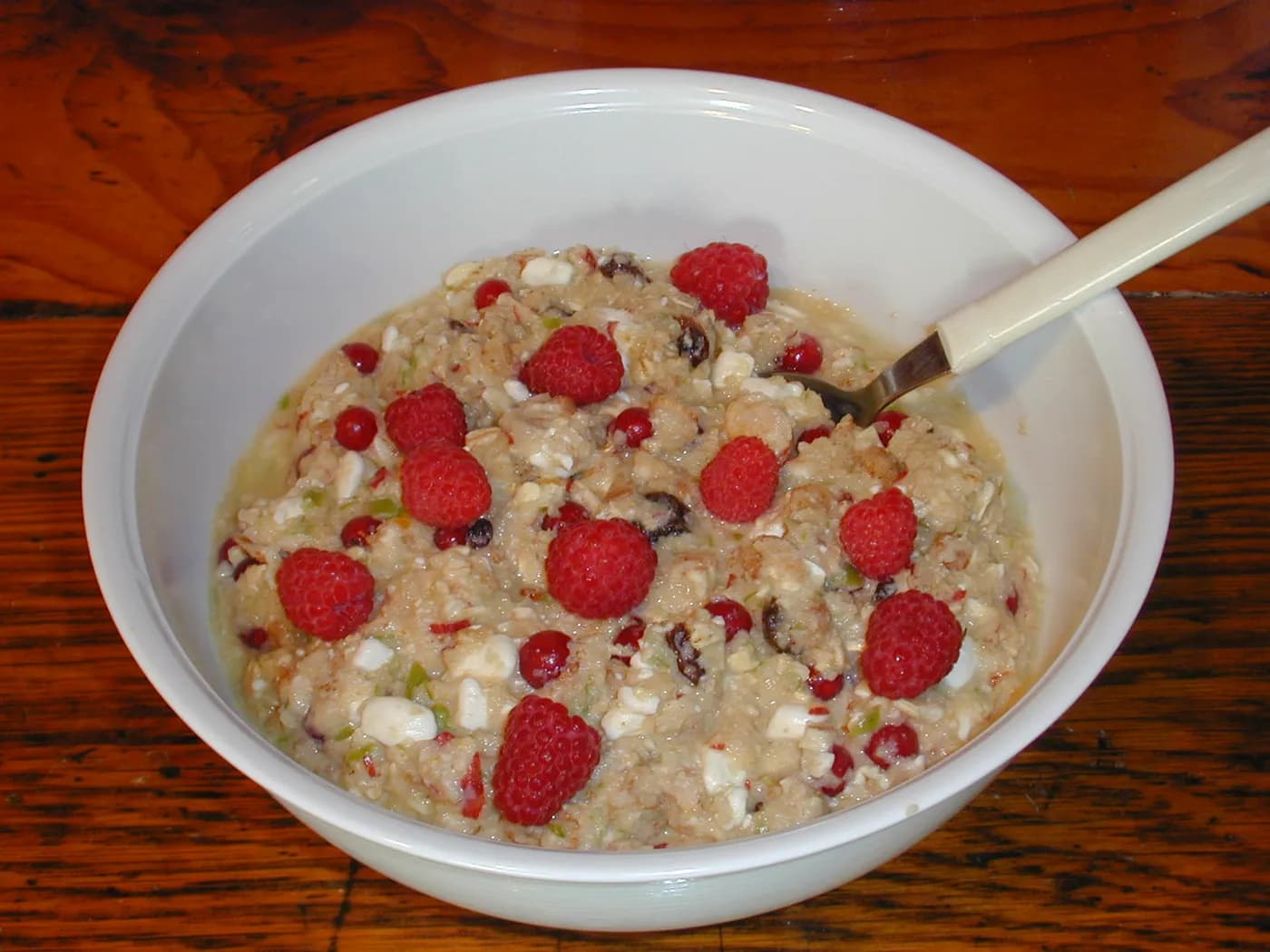
Photo: simpleprovisions, CC BY 2.0, via Openverse
What the Evidence Actually Supports for Muesli and Weight Loss
Studies on higher-fibre breakfasts consistently show improved satiety and slightly lower calorie intake later in the day, compared to refined-cereal breakfasts. That’s a modest, real effect — not a dramatic one. Muesli hasn’t been shown to speed up metabolism or target belly fat, and claims like that should be treated with scepticism. Its actual value is simple: it’s a filling, fibre-rich breakfast that can make it easier to eat less without trying hard, provided the version you choose isn’t secretly a sugar bowl. Treated this way, muesli for weight loss is a modest, sensible tool rather than a miracle food.
The same fibre-and-satiety logic shows up in other breakfast staples too — our steel cut oats for weight loss guide covers a slower-digesting alternative, and if you’re looking to add a gel-forming fibre boost to your bowl, chia seeds for weight loss work through a genuinely different mechanism worth knowing about.
How to Make Your Own Muesli for Weight Loss at Home
A simple homemade base puts you in full control of sugar and portion size:
- 2 cups rolled oats
- 1/4 cup mixed nuts (almonds, walnuts), roughly chopped
- 2 tablespoons pumpkin or sunflower seeds
- 2 tablespoons chia or flax seeds
- 1/4 cup unsweetened dried fruit (raisins or chopped dates), used sparingly
- A pinch of cinnamon for flavour without added sugar
Mix everything and store in an airtight container for up to a month. A 40-50 gram portion (roughly half a cup) soaked overnight in milk or curd makes a filling, low-effort breakfast — and because you control every ingredient, this version of muesli for weight loss avoids the hidden sugar problem that affects most packaged options.
Who Should Be Cautious With Muesli
Muesli for weight loss isn’t automatically the right choice for everyone:
- People with IBS or fibre sensitivity may find a large bowl of raw muesli causes bloating or discomfort; starting with a smaller portion or soaking it longer can help.
- Those with diabetes should watch portion size and dried fruit content carefully, since even unsweetened muesli is carbohydrate-dense and can affect blood sugar if eaten in large amounts.
- Anyone with a gluten sensitivity should confirm the oats used are certified gluten-free, since cross-contamination during processing is common.
- People managing reflux (GERD) sometimes find raw, dry muesli harder to digest than a cooked porridge — soaking it in milk overnight tends to help.
None of this means avoiding muesli for weight loss altogether — it just means adjusting portion, preparation, or ingredients to suit your own digestion.
Frequently Asked Questions
Related Articles

Does Lifting Weights Burn Belly Fat? Here’s How
Weight training changes how your body stores and uses fat over time, not just how many calories you burn in a single session. See the science, exercises.


Yoga for Weight Loss for Women: Poses, Routine & Tips That Actually Work
Dynamic poses, breathwork, and mindfulness support gradual, sustainable weight management — no gym, equipment, or prior fitness experience needed. See.

Does Yoga Reduce Belly Fat? What Actually Works
Not through spot reduction, but by strengthening the core, lowering cortisol, and improving digestion — yoga can meaningfully support fat loss around the.