
Oats Nutrition: Types, Fibre, Portions and Breakfast Ideas
Oats provide carbohydrate, soluble fibre called beta-glucan, protein and minerals. Steel-cut, rolled and instant oats differ in cooking time.
Key Takeaways
- Oats provide carbohydrate, protein and soluble fibre.
- Steel-cut, rolled and plain instant oats have similar basic ingredients.
- Beta-glucan may support cholesterol management within a balanced diet.
- Adding protein and fruit or vegetables makes the meal more complete.
- People with coeliac disease should choose certified gluten-free oats.
Oats are a whole grain that provides carbohydrate, fibre, protein and minerals. They are especially known for beta-glucan, a type of soluble fibre. Understanding oats nutrition can help you choose between steel-cut, rolled and instant varieties without assuming that one bowl is a complete diet.
Plain oats suit sweet or savoury meals. Toppings, liquid and portion often matter more than the type chosen.
What are oats?
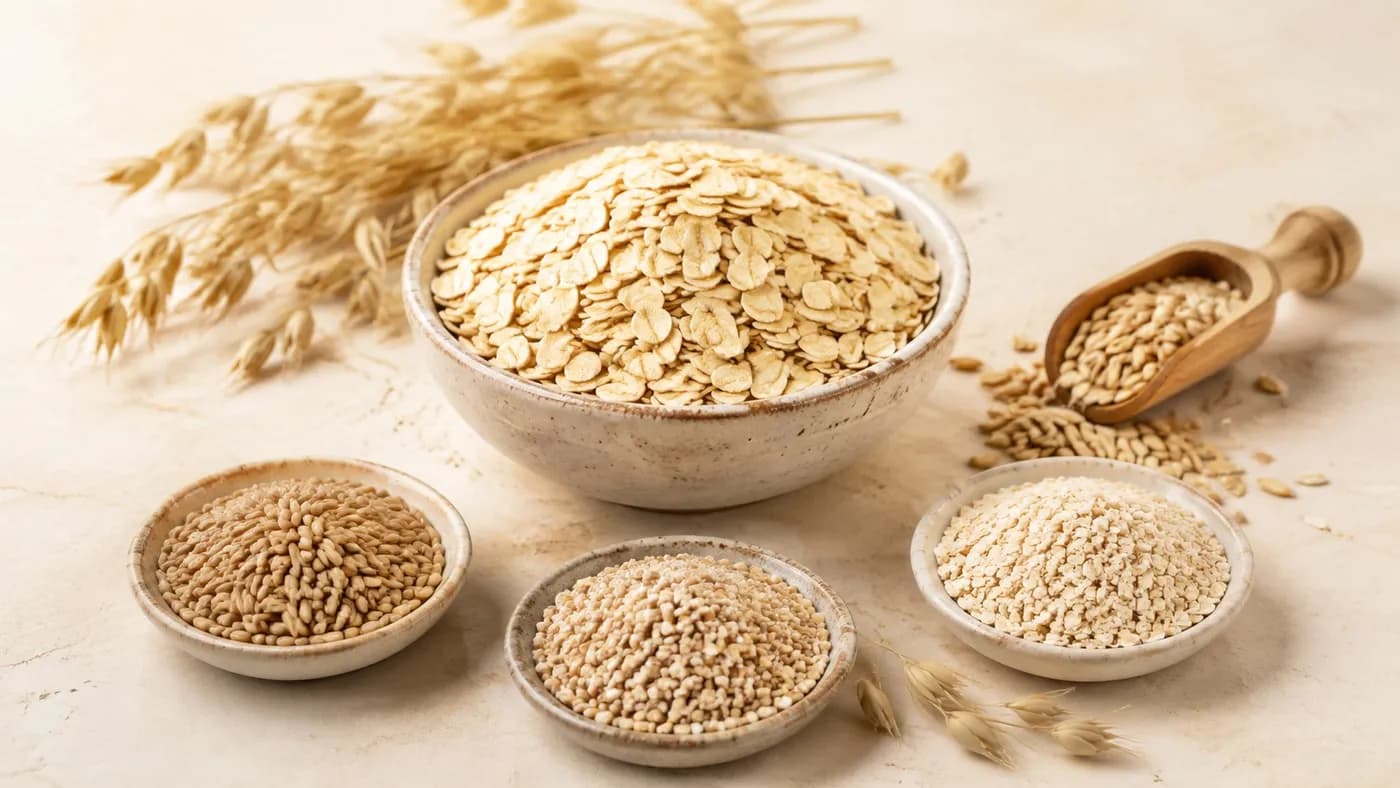
Oats are cereal grains. After harvesting, the inedible outer hull is removed, leaving oat groats. Different processing methods turn groats into steel-cut oats, rolled oats or instant oats.
Steel-cut oats are chopped into pieces and take longer to cook. Rolled oats are steamed and flattened. Instant oats are rolled more thinly or partly cooked so they soften quickly.
Processing changes texture and cooking time, but plain versions retain broadly similar oats nutrition. Flavoured sachets may contain added sugar, salt, milk powder or flavouring, so the ingredient list still matters.
Oats nutrition at a glance
Oats provide carbohydrate for energy, some plant protein and a mixture of soluble and insoluble fibre. They also contribute nutrients such as manganese, phosphorus, magnesium, iron and B vitamins in varying amounts.
Beta-glucan forms a gel-like mixture in the digestive tract. This fibre is one reason oats nutrition is often discussed in relation to cholesterol, fullness and bowel health.
A plain bowl is not automatically balanced. Oats nutrition becomes more complete when protein, vegetables, fruit or suitable fats are added.
Possible benefits of oats nutrition
Oats nutrition, soluble fibre and cholesterol
Oat beta-glucan can help lower LDL cholesterol when enough is eaten regularly as part of a heart-friendly diet. It does not cancel the effects of smoking, inactivity, high saturated-fat intake or missed medicines.
Different oat products provide different beta-glucan amounts. A sweet biscuit containing a little oat flour is not nutritionally equivalent to a bowl of plain porridge.
Oats nutrition for digestion
Oats contain soluble and insoluble fibre. Together, these can support stool bulk and regular bowel movements.
Increasing fibre suddenly may cause gas, bloating or cramps. Start with a modest serving and drink enough fluid. Habuild’s high-fibre foods guide explains how to increase fibre through varied Indian foods.
Oats nutrition and fullness
The fibre and texture of oats may help breakfast feel more satisfying. However, oats nutrition does not guarantee weight loss. Portion size, toppings and the rest of the day still matter.
Large amounts of jaggery, sugar, cream, chocolate spread or nuts can make a bowl energy-dense. These ingredients are not forbidden, but they should be considered part of the meal rather than invisible extras.
Oats nutrition and blood sugar
Plain oats often produce a steadier rise in blood glucose than highly refined sugary cereals, but responses vary. Steel-cut or rolled oats may digest more slowly than finely processed instant products.
People with diabetes should consider the portion and total carbohydrate, then combine oats with protein, fibre and suitable fats. Do not change diabetes medicine based on a breakfast trend.
Protein in oats nutrition
Oats provide some protein but usually not enough to be the sole meal anchor. Milk, curd, unsweetened fortified soy drink, tofu, nuts or seeds can add more.
Habuild’s guide to protein-rich vegetarian foods offers combinations that make oats nutrition more useful within a complete day.
How processing affects oats nutrition
Choose according to time, texture and recipe:
- Steel-cut oats are chewy and take the longest to cook.
- Rolled oats cook faster and work in porridge, chilla and baking.
- Quick oats soften rapidly and can be convenient on busy mornings.
- Flavoured instant oats require a label check for sugar and sodium.
No plain type is universally superior. Choose the oats nutrition and texture that fit your routine.
How to prepare a balanced oats breakfast
For sweet porridge, cook oats with milk or an unsweetened fortified soy drink. Add fruit for flavour and fibre, then include a measured amount of nuts or seeds.
For a savoury version, cook oats with vegetables such as carrots, peas, beans, capsicum or spinach. Add tofu, curd or a side of dal for more protein.
Other ideas include:
- Mix rolled oats into vegetable chilla batter.
- Use oats with curd, chia and fruit for overnight oats.
- Add oats to vegetable cutlets instead of relying on refined crumbs.
- Prepare oats upma with vegetables and peanuts.
- Blend a small amount into dosa or idli batter.
- Use plain oats in homemade muesli with nuts and seeds.
These options allow oats nutrition to fit familiar foods. Habuild’s everyday nutrition guide can help you balance the full plate.
Portion and timing
There is no single ideal serving. Appetite, age, activity, health goals and other foods in the meal all influence the portion.
A modest dry serving expands after cooking. Begin with the amount suggested on the pack and adjust according to hunger. If breakfast leaves you hungry soon afterwards, review its protein and overall size rather than simply adding more sweetener.
Oats can be eaten at breakfast, lunch or dinner. Eating them at night does not automatically cause weight gain, and eating them in the morning does not automatically reduce it.
Oats and gluten
Oats do not naturally contain the same gluten proteins as wheat, barley and rye. However, they can be contaminated during growing, transport or processing.
People with coeliac disease should choose oats clearly labelled and certified gluten-free and follow their clinician’s guidance. Some people with coeliac disease may still react to avenin, a protein in oats.
A wheat allergy, coeliac disease and non-coeliac gluten sensitivity are different conditions. Do not remove several grains without proper assessment if symptoms persist.
Buying and storage
Choose a pack with a clear ingredient list, batch information and best-before date. Plain oats offer more control over sweetness and salt than many flavoured packets.
Store oats in a dry, airtight container away from heat and insects. Discard them if they smell rancid, appear mouldy or show signs of moisture.
What oats nutrition cannot do
Oats cannot detoxify the body, melt belly fat or cure diabetes. They do not replace cholesterol medicines, and an oat-based snack is not automatically healthy.
Their realistic role is to provide a convenient whole grain with fibre and flexible meal uses. Variety still matters, so rotate oats with poha, upma, millet, whole-grain rotis and other suitable foods.
Sources
Frequently Asked Questions
Related Articles
Protein-rich vegetarian foods: 1/4th plate habit
Explore protein, carbohydrates, healthy fats and meal planning for strength training, muscle building and recovery.

Healthy fats: why your body needs fat
Healthy fats help your body absorb vitamins and support brain, hormones, joints, cells and daily meals. Learn simple vegetarian sources and habits.