
Sesame Seeds Benefits: Nutrition, Calcium, Portions and Easy Uses
Sesame seeds provide unsaturated fat, protein, fibre and minerals, and tahini is a paste made from ground sesame. Learn easy everyday uses.
Key Takeaways
- Sesame provides unsaturated fats, protein, fibre and minerals.
- It contains calcium, but the amount absorbed varies by product and preparation.
- Whole, ground, hulled and unhulled seeds differ in texture and nutrition.
- A small measured portion is usually enough.
- Sesame allergy can be serious.
Sesame seeds, or til, are used in chutneys, laddoos and seasonal dishes. They provide unsaturated fats, protein, fibre and minerals, but their value depends on the portion and the complete meal.
Understanding realistic sesame seeds benefits can help you use them sensibly without treating a small seed as a cure. Sesame can enrich a vegetarian diet, but it cannot replace balanced meals, prescribed medicines or treatment for a nutrient deficiency.
What are sesame seeds?
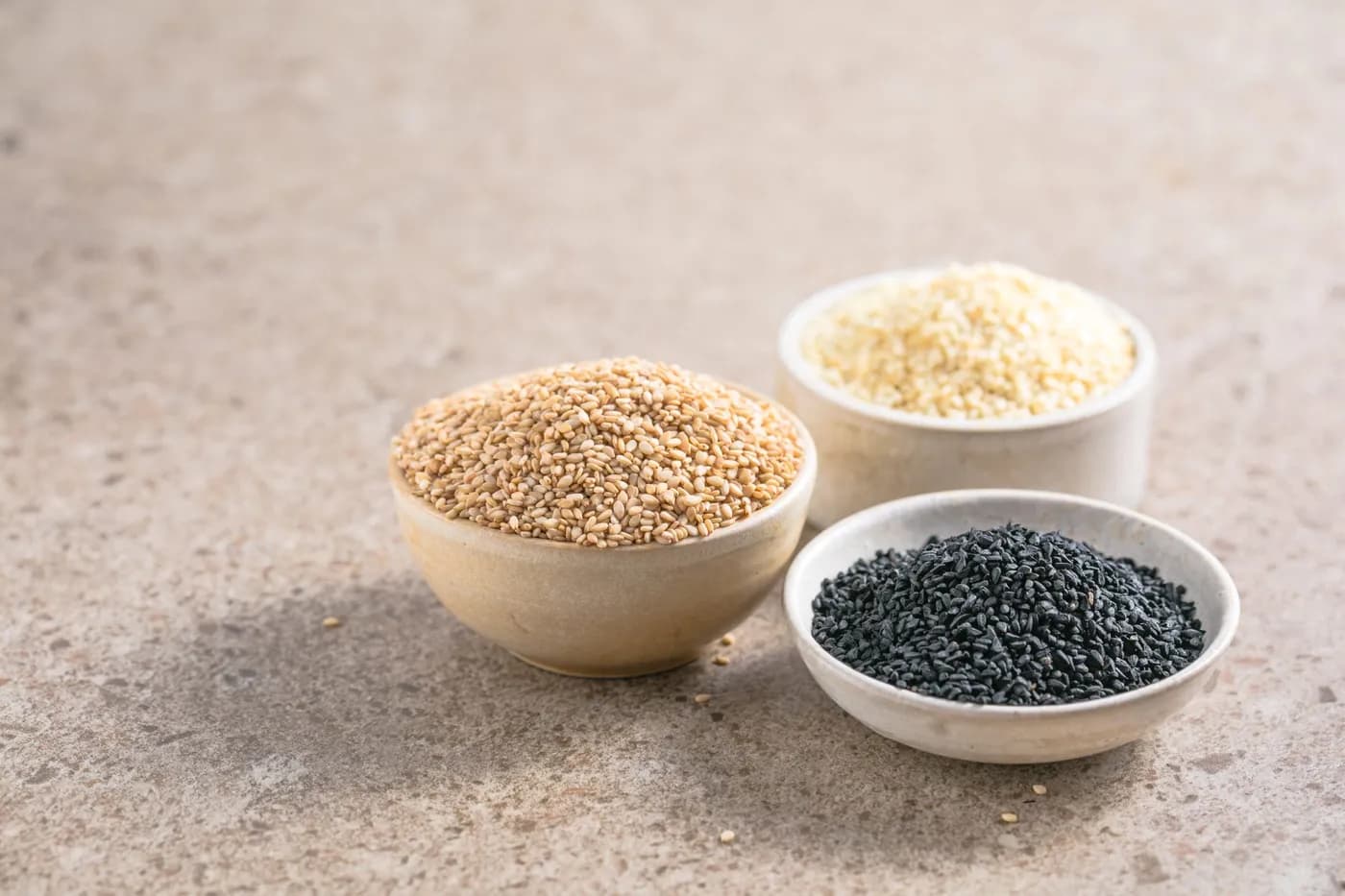
Sesame seeds come from the Sesamum indicum plant. They may be white, brown or black and are sold hulled or unhulled. Hulled sesame is softer, while unhulled sesame retains its mineral-rich outer layer. Grinding makes either form easier to mix into food.
Tahini is a ground sesame paste. Til chutney uses the same idea: breaking down the seeds spreads their flavour through a meal.
Sesame seeds nutrition
Sesame seeds nutrition includes fat, protein, fibre, calcium, iron, magnesium, zinc and phosphorus. Most of the fat is unsaturated. Because seeds contain substantial fat for their size, they are also energy-dense.
The profile varies by variety and processing. A spoonful contributes nutrients but cannot meet an adult’s full calcium, iron or protein requirement.
Chikki, revdi and laddoos may contain considerable jaggery or sugar, while salted seed mixes can add sodium. Consider the complete product when judging sesame seeds benefits.
Possible sesame seeds benefits
Unsaturated fats
One of the practical sesame seeds benefits is that the seeds provide mostly unsaturated fats. Replacing some foods high in saturated fat with measured portions of nuts, seeds or suitable vegetable oils can improve the overall type of fat in the diet.
Sesame seeds benefits do not increase with unlimited portions. Activity, sleep, blood pressure, medicines and the full diet still matter.
Calcium and bone health
Calcium supports bones, teeth, muscle contraction and nerve function. Sesame contributes calcium, particularly when the hull remains, but values vary and absorption is not complete.
Sesame seeds benefits for bones should be kept in context. Curd, milk, calcium-set tofu, fortified plant drinks and ragi can also contribute. Osteoporosis or a diagnosed deficiency requires individual advice rather than reliance on til.
Iron in a vegetarian diet
Sesame contains non-haem iron, the type found in plants. The body absorbs it less readily than haem iron. Eating it with vitamin C-rich foods such as lemon, amla, guava, tomatoes or capsicum may support absorption.
A spoonful cannot treat anaemia. Persistent tiredness, breathlessness or paleness needs testing. Habuild’s guide to vegetarian iron-rich foods provides meal ideas.
Protein and fullness
Sesame adds some plant protein and may make food more satisfying. However, the amount in a typical portion is modest. Dal, beans, soy, paneer and curd remain stronger vegetarian meal anchors.
Use it as an addition, not your only protein source. Habuild’s guide to protein-rich vegetarian foods explains how foods work together.
Fibre and digestion
Fibre is another reason sesame seeds benefits may be relevant to everyday meals. Whole and unhulled seeds generally retain more outer fibre than hulled or strained products.
Large portions may cause bloating or loose stools. Begin small and drink enough fluid. These sesame seeds benefits work best within a varied, fibre-rich diet.
Plant compounds
Sesame contains lignans and other compounds studied for antioxidant activity. This does not prove that ordinary portions prevent cancer, reverse ageing or cure disease. Realistic sesame seeds benefits come from using the food within a balanced diet.
Whole, ground or tahini?
Whole sesame adds crunch, while crushed seeds blend easily into meals. Hulled seeds are softer, while unhulled seeds keep the outer layer. Tahini is convenient, but large portions are easy to overlook.
Check for added salt, sugar or oil. Gentle roasting develops flavour. Choose a form that suits your recipe and digestion.
How to eat sesame seeds
If you are wondering how to eat sesame seeds, try these simple ideas:
- Add roasted til to chutney or dry spice powder.
- Sprinkle a teaspoon over sabzi, poha or salad.
- Mix ground sesame into curd-based dips.
- Add it to atta for rotis or savoury crackers.
- Use tahini with lemon and herbs as a dressing.
- Combine a measured amount with peanuts or other seeds.
- Add sesame to homemade laddoos while keeping the sweetener moderate.
These ideas make sesame seeds benefits practical without requiring a special supplement. Habuild’s everyday diet and nutrition guide can help balance the complete meal.
How much sesame should you eat?
There is no compulsory serving. One to two tablespoons may fit many adults, but suitable amounts differ with energy needs, allergies and tolerance.
Begin with one teaspoon. Measure tahini and sweet snacks instead of eating from the packet. Measured portions help keep sesame seeds benefits in proportion.
Children need smaller portions and age-safe textures. Seek advice when a child has an allergy or difficulty chewing or swallowing.
Buying and storage
Choose dry seeds in a sealed pack. Protect them from heat, light and air, and follow storage directions. Ground sesame and tahini may require refrigeration.
Discard products that smell stale, taste sharply bitter or appear mouldy. Buying smaller quantities can help if you use sesame occasionally.
Sesame allergy and safety
Sesame is an important food allergen. Reactions can occur after eating seeds, tahini, sesame oil or foods containing hidden sesame. Read ingredient labels carefully if you or a family member has an allergy.
Seek urgent medical help for breathing trouble, swelling of the lips, tongue or throat, faintness or widespread hives. A previous mild reaction does not guarantee that another will be mild.
People with kidney disease or a prescribed mineral restriction may require individual portion guidance. Discuss concentrated extracts or supplements with a clinician, especially during pregnancy, breastfeeding or alongside regular medicines.
What sesame seeds cannot do
Sesame cannot cure anaemia, reverse osteoporosis, balance hormones, detoxify the body or guarantee weight loss. Sesame seeds benefits are most realistic when the food replaces a less nutritious topping or adds variety to a balanced vegetarian meal.
Movement, sleep, appropriate healthcare and a varied diet matter more than any single ingredient. This is the right context for sesame seeds benefits.
Sources
Frequently Asked Questions
Related Articles
Protein-rich vegetarian foods: 1/4th plate habit
Explore protein, carbohydrates, healthy fats and meal planning for strength training, muscle building and recovery.

Healthy fats: why your body needs fat
Healthy fats help your body absorb vitamins and support brain, hormones, joints, cells and daily meals. Learn simple vegetarian sources and habits.