
Types of Millets: Ragi, Jowar, Bajra, Foxtail and Kodo
Types of millets like ragi, jowar, bajra, foxtail and kodo bring different nutrients to your plate. Learn how to rotate millets simply.
Key Takeaways
- Ragi is linked to calcium, bajra to iron, foxtail to protein and fibre.
- Rotating millets gives more varied nutrients than depending on just one grain.
- Jowar feels light and filling; bajra has a stronger taste and can feel heavier.
- Millets work as roti, dosa, idli, porridge, upma, pulao, or khichdi.
- FAO recognised 2023 as the International Year of Millets.
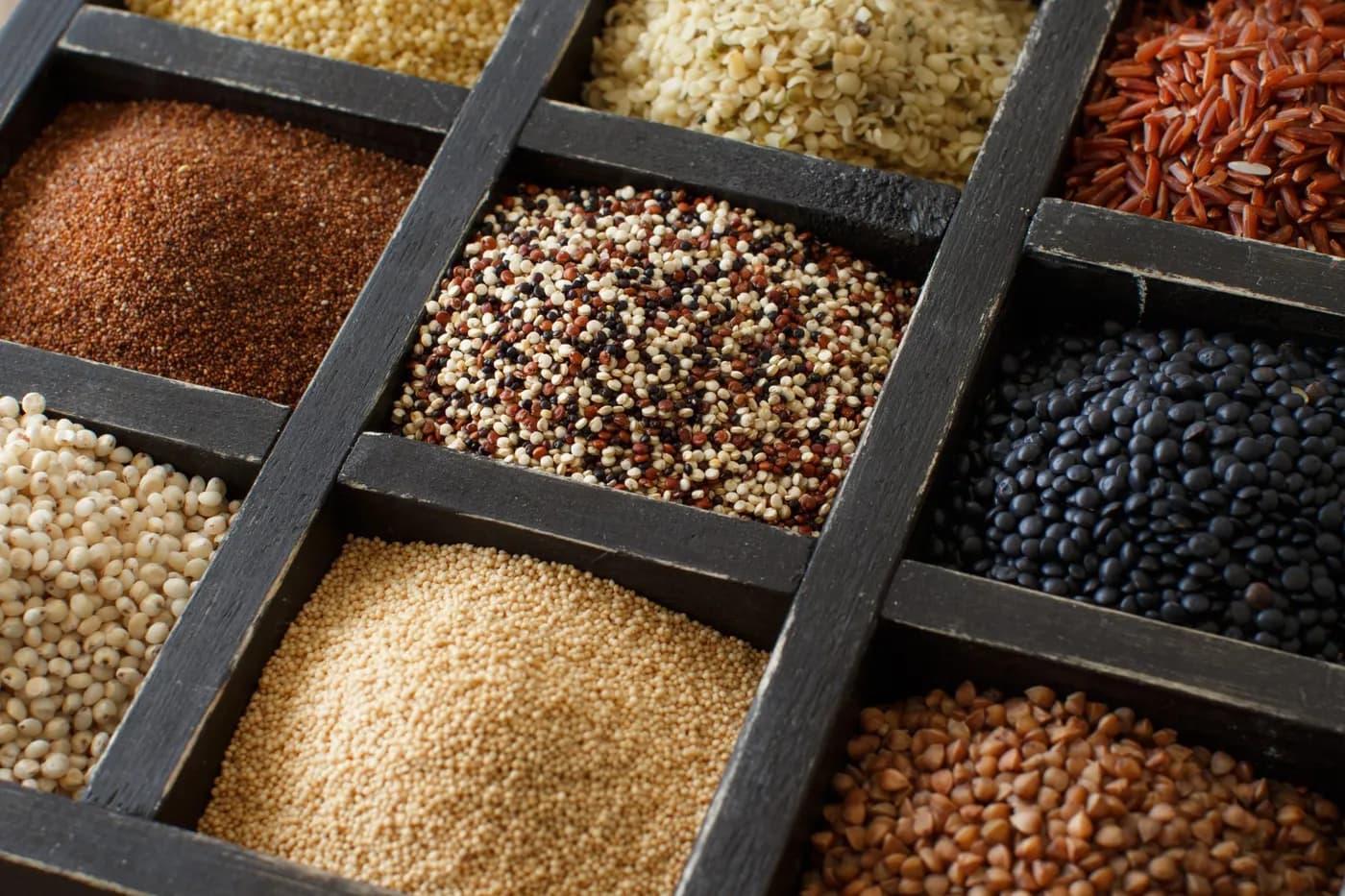
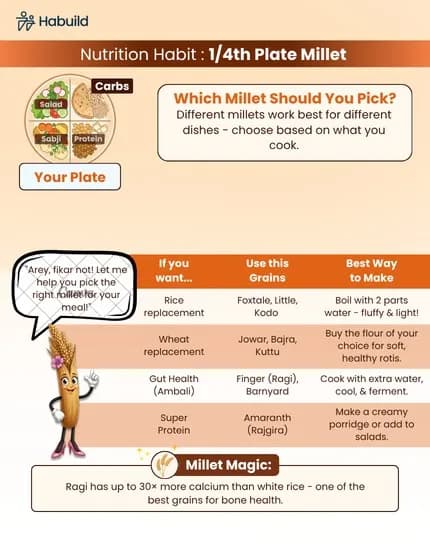
Types of millets like ragi, jowar, bajra, foxtail and kodo can bring different nutrients to your plate. That is why the image says, "Rotate millets = rotate nutrients." It is a simple idea, and it works well for Indian meals.
If you're wondering which grain to reach for this week, this breakdown of types of millets benefits makes the choice easier.
Many people hear the word millet and think all millets are the same. They are not. Ragi is known for calcium. Bajra is often linked with iron. Foxtail millet gives protein and fibre. Jowar feels light and filling. Kodo adds variety and minerals. The goal is not to eat every millet every day. The goal is to rotate them slowly.
Indian dietary guidance supports food variety because no single food gives everything the body needs. A plate that changes through the week is often better than the same grain at every meal. Source: ICMR-NIN My Plate
Why rotating millets is useful
Rotation is easier than perfection. You do not need a complicated millet chart. You just need to avoid depending only on rice and wheat all the time. Millets can be used as roti, dosa, idli, porridge, upma, pulao, daliya, ambali or khichdi.
Different grains give different nutrients
Each millet has its own taste, texture and nutrient profile. Some are better for soft porridges, while others make good rotis or upma. Rotating helps you enjoy variety without forcing one millet into every recipe.
Variety makes meals less boring
If ragi dosa feels boring after a few days, switch to jowar roti or foxtail millet pulao. The habit becomes easier when food still tastes familiar.
It fits Indian cooking
Millets are not new foods. They are traditional grains used in many Indian regions. The FAO recognised 2023 as the International Year of Millets, which helped bring more attention to these grains. Source: FAO Millets
Here's a quick look at the types of millets benefits, grain by grain.
Common types of millets and what they bring
Ragi: calcium
Ragi, also called finger millet, is commonly used for ragi mudde, ragi dosa, ragi idli, malt and ambali. It has an earthy taste and works well in soft recipes. For many homes, ragi is the easiest millet to start with because ragi flour is widely available.
Jowar: light and filling
Jowar, also called sorghum, is used for bhakri, roti, upma and ambali. It feels lighter than some heavier grains and pairs well with sabji, dal, curd or chutney.
Bajra: iron
Bajra, or pearl millet, has a stronger taste and is often used in winter foods like bajra roti, khichdi and porridge. It can feel heavy for some people, so start with small portions and pair it with vegetables or curd.
Foxtail millet: protein and fibre
Foxtail millet works well in pulao, upma, khichdi, lemon millet and daliya. It has a pleasant grainy texture and is useful when you want a rice-like meal with more variety.
Kodo millet: magnesium and variety
Kodo millet is useful for upma, khichdi, curd millet and pulao. It can be a good option when you want to move beyond the most common millets.
How to use millets in everyday meals
Do not start by changing every meal. Pick one recipe and one millet. Cook it well, see how your stomach feels and then add more variety over time.
Breakfast ideas
- Ragi idli with sambar
- Jowar dosa with chutney
- Foxtail millet upma
- Little millet daliya
- Ragi ambali in summer
Lunch ideas
- Jowar roti with dal and sabji
- Foxtail millet pulao with curd
- Bajra khichdi with vegetables
- Kodo millet curd bowl
- Ragi mudde with sambar
Dinner ideas
- Soft millet khichdi
- Ragi porridge
- Jowar roti with light sabji
- Kodo millet soup-style khichdi
- Foxtail millet with dal
A simple millet rotation plan
A rotation plan should be easy enough to follow. Try this for one week.
Use ragi once for breakfast, such as ragi idli or ragi dosa.
Use jowar once for lunch, such as jowar roti with dal.
Use foxtail millet once as pulao or upma.
Use bajra once in a small portion, especially when the weather is cooler.
Use kodo millet once as khichdi or curd millet.
Keep rice and wheat also in the routine if they suit you. Rotation does not mean removing everything else.
Soaking and cooking tip
Whole millets usually need washing and soaking before cooking. Soaking helps them cook better. Millet flours are easier to use but still need proper cooking to avoid a raw taste.
Common mistakes to avoid
Do not eat too much too soon
If your meals are usually low in fibre, suddenly eating large millet portions may cause bloating. Start small and increase slowly.
Do not treat millets as magic foods
Millets are useful, but they do not fix an unbalanced diet by themselves. Add dal, curd, vegetables, nuts or seeds to make the full meal better.
Do not forget taste
A habit lasts only when food tastes good. Use familiar recipes like dosa, roti, upma, khichdi and ambali instead of forcing new dishes daily.
Who should be careful
People with medical diets, digestive conditions or thyroid-related concerns should not make big food changes without guidance. For most people, small portions and variety are a safer start.
Related reads: Types of millets: simple guide to Indian millets · How to cook millets: soaking, swaps and myths
Just as rotating ragi, jowar, bajra, foxtail and kodo brings a wider spread of nutrients to your plate, rotating in some daily movement rounds out what your body gets from food alone. Millets work quietly in the background of digestion and energy, and yoga works the same way for flexibility and stress. If you're already experimenting with different grains, consider trying Habuild's free yoga challenge as another simple addition worth rotating into your week.
Frequently Asked Questions
Related Articles
Jowar Ambali: Light Gluten-free Millet Drink
Jowar Ambali is a light gluten-free millet drink made with jowar flour, water, salt and buttermilk for a simple summer-friendly variation.
Moong Dal Soup Recipe: A Light Protein-Rich Meal
Moong dal soup recipe made with yellow moong dal, jeera, haldi and ghee. A light vegetarian meal for lunch, dinner or easy digestion.
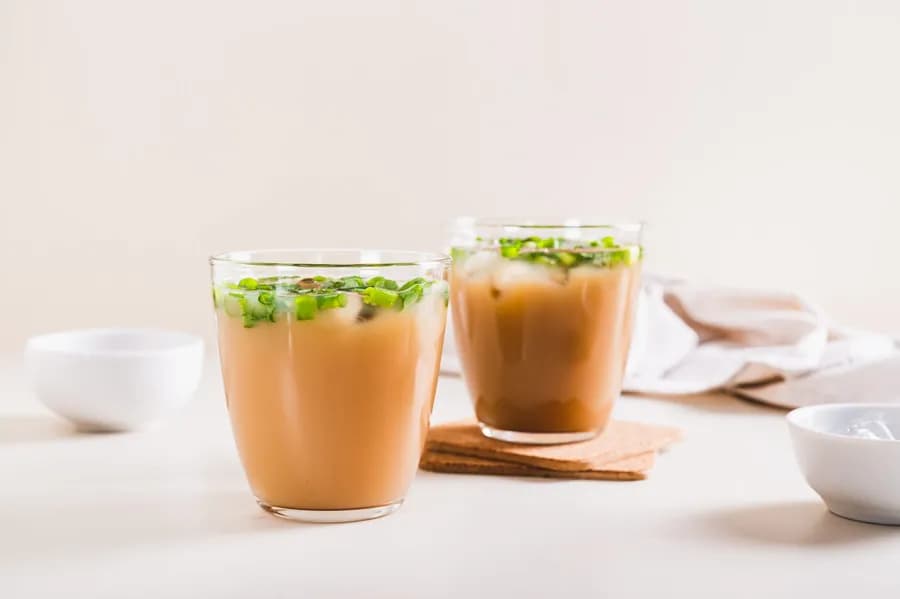
Ambali Benefits: Cooling Summer Millet Drink
Ambali benefits include hydration, cooling comfort and steady energy when made with ragi or millet, water, salt and buttermilk in a simple way.