
Vegan Korean Food: A Beginner’s Guide to Plant-Based Korean Dishes
Much of Korean cuisine is already built around vegetables, tofu, mushrooms, and fermented plants — the tricky part is spotting hidden seafood-based.
Key Takeaways
- Many banchan side dishes like seasoned spinach and bean sprouts are naturally vegan.
- Traditional kimchi usually hides seafood-based seasonings – check labels or make it yourself.
- Tofu and mushrooms are used heavily, making protein substitution straightforward.
- Gochujang and doenjang are typically vegan, but some brands add trace animal ingredients.
- Swapping the broth base and checking fermented paste labels covers most adaptations.
Vegan Korean food is easier to find than most people expect, because so much of the cuisine is already built around vegetables, tofu, mushrooms, and fermented plants. The tricky part is knowing which dishes to watch out for — traditional kimchi and many broths lean on hidden animal-derived ingredients like seafood-based stocks and sauces — and which ones are naturally plant-based or simple to adapt. This guide walks through the vegan-friendly staples, flags the hidden animal ingredients, and gives you real recipes for three dishes you can make at home tonight. By the end, cooking vegan Korean food at home should feel far less intimidating than ordering it out.
Vegan Korean Food at a Glance
- Many Korean side dishes (banchan) like seasoned spinach, bean sprouts, and braised potatoes are naturally vegan
- Traditional kimchi usually contains hidden animal-derived ingredients like seafood-based seasonings — always check labels or make it yourself
- Tofu (dubu) and mushrooms are used heavily as protein sources, making substitution straightforward
- Gochujang (fermented chili paste) is typically vegan, but double-check the brand for hidden animal-derived additives
- Sesame oil, garlic, ginger, and soy sauce form the backbone of most vegan Korean flavor profiles
- With a few pantry swaps, building a full vegan Korean food spread at home is easier than it looks
Watch Out for These Hidden Non-Vegan Ingredients
Before cooking your first vegan Korean food dishes, it helps to know where animal products commonly hide in Korean cooking. Traditional fermentation and broths often rely on hidden animal-derived ingredients like fish- or seafood-based stocks and sauces, which show up in classic kimchi and in the base of many soups and stews. Some gochujang and doenjang (fermented soybean paste) brands are vegan, but a few add trace animal-derived ingredients, so reading the label matters. Honey occasionally appears in glazes too. Once you know what to look for, adapting Korean recipes to be fully plant-based is mostly a matter of swapping the liquid base and double-checking labels on fermented pastes and sauces. With those swaps sorted, the three recipes below give you a real starting point for vegan Korean food at home.
Vegan Bibimbap Recipe
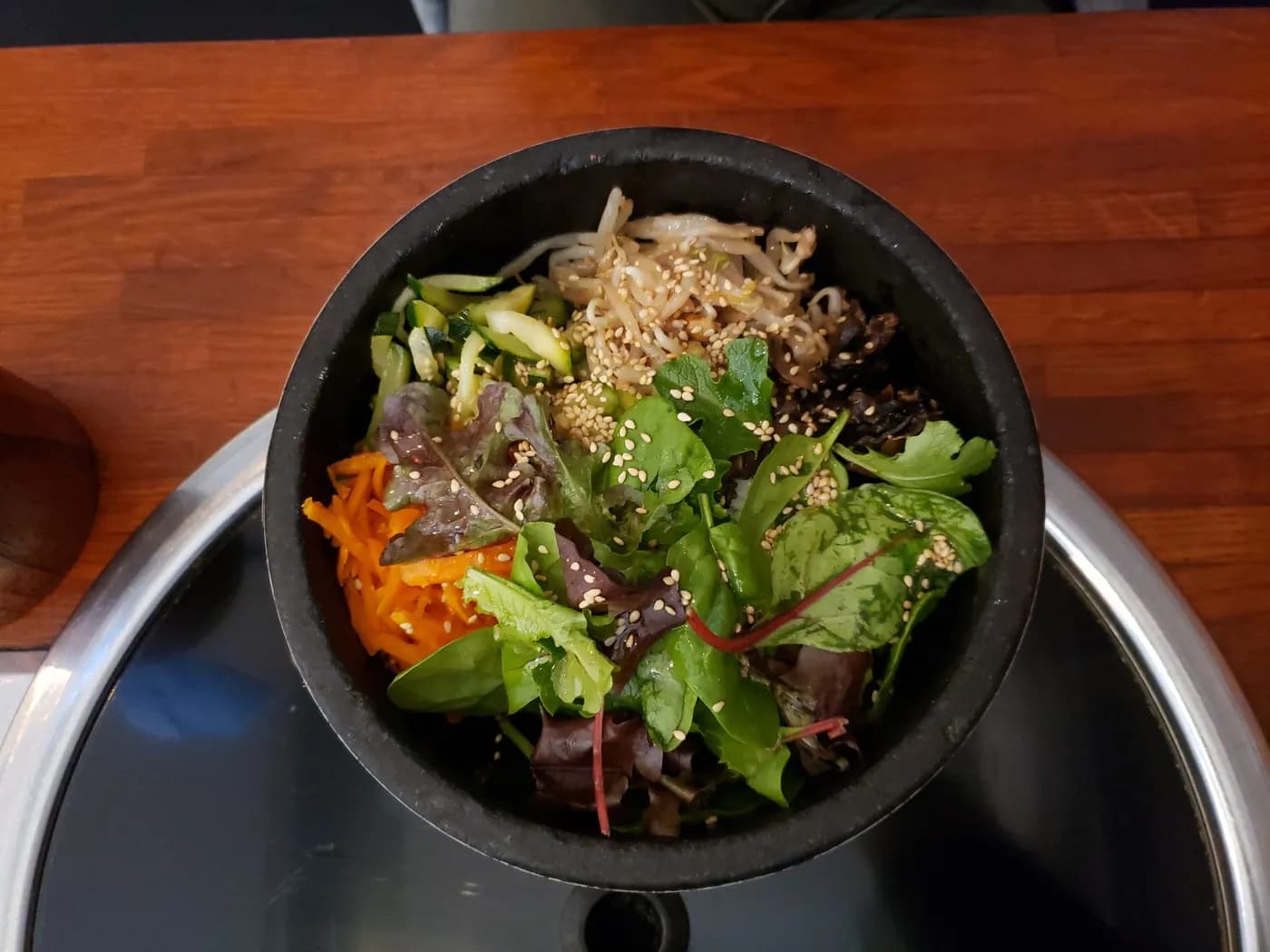
Bibimbap — a bowl of rice topped with seasoned vegetables — is one of the most naturally adaptable dishes in Korean cuisine once you swap the usual animal-derived toppings for tofu, and it’s often the first dish people learn when they start cooking vegan Korean food.
Ingredients (serves 2): – 1.5 cups cooked short-grain rice – 1 block (200g) firm tofu, cubed – 1 cup spinach, blanched – 1 cup bean sprouts, blanched – 1 medium carrot, julienned and sautéed – 1 medium zucchini, julienned and sautéed – 4-5 shiitake mushrooms, sliced and sautéed – 2 tbsp soy sauce – 2 tbsp sesame oil, divided – 1 tbsp gochujang (vegan-verified) – 1 tsp rice vinegar – 1 tsp sugar or maple syrup – Toasted sesame seeds, to garnish
Method: 1. Press the tofu for 10 minutes to remove excess water, then pan-fry the cubes in 1 tbsp sesame oil until golden on all sides. 2. Sauté the carrot, zucchini, and mushrooms separately in a little oil with a pinch of salt, keeping each vegetable’s flavor distinct. 3. Toss the blanched spinach and bean sprouts each with a small drizzle of sesame oil, a pinch of salt, and a little garlic. 4. Mix the gochujang, rice vinegar, sugar, and remaining sesame oil into a quick sauce. 5. Divide the rice between two bowls, then arrange the tofu and vegetables in sections on top. 6. Spoon the gochujang sauce over the bowl, sprinkle with sesame seeds, and mix everything together just before eating.
This bowl alone is a good introduction to how satisfying vegan Korean food can be once the tofu and vegetables are properly seasoned.
If this kind of ingredient-swapping approach appeals to you, Vegan Diet Basics covers the broader nutrients worth planning around once you’re eating fully plant-based day to day. And if you like the idea of a quick tofu-and-noodle bowl, Vegetarian Singapore Noodles is another easy weeknight dish worth adding to the rotation.
Photo: Andy Li, CC0, via Wikimedia Commons
Vegan Japchae (Glass Noodle Stir-Fry)
Japchae is naturally easy to make vegan since its flavor comes from soy sauce, sesame oil, and vegetables rather than meat, which makes it one of the more forgiving dishes to cook when you’re new to vegan Korean food.
Ingredients (serves 3-4): – 200g Korean sweet potato glass noodles (dangmyeon) – 1 onion, thinly sliced – 1 carrot, julienned – 1 red bell pepper, julienned – 2 cups spinach – 6-8 shiitake mushrooms, sliced – 3 tbsp soy sauce – 2 tbsp sesame oil – 1 tbsp sugar – 2 cloves garlic, minced – Sesame seeds, to garnish
Method: 1. Soak the glass noodles in warm water for 20-30 minutes until pliable, then boil for 5-6 minutes until translucent. Drain and cut into shorter lengths with scissors. 2. Sauté the onion, carrot, bell pepper, and mushrooms separately with a pinch of salt until just tender, then set aside. 3. Quickly wilt the spinach in the same pan, then set aside. 4. In a large bowl or wok, combine the noodles with soy sauce, sesame oil, sugar, and garlic, tossing over low heat for 2-3 minutes. 5. Add all the vegetables back in and toss everything together until evenly coated. 6. Garnish with sesame seeds and serve warm or at room temperature.
Japchae keeps well and reheats easily, which makes it a practical dish to cook in bulk once you’re comfortable making vegan Korean food on a weeknight.
Making Vegan Kimchi at Home
Since store-bought kimchi often contains hidden animal-derived seasonings, making a vegan version at home is the most reliable way to enjoy it, and it’s a staple worth mastering if you’re serious about vegan Korean food.
Ingredients: – 1 medium napa cabbage – 1/4 cup sea salt (for brining) – 1 tbsp grated ginger – 4-5 cloves garlic, minced – 2-3 tbsp Korean red pepper flakes (gochugaru) – 1 tbsp soy sauce – 1 tsp sugar – 2 tbsp rice flour mixed with 1/2 cup water, cooked into a thin paste (replaces the usual animal-derived thickener) – 2 spring onions, chopped – 1 small radish, julienned
Method: 1. Cut the cabbage into quarters, salt each leaf generously, and let it sit for 1-2 hours until wilted, turning occasionally. 2. Rinse the cabbage thoroughly under cold water 2-3 times to remove excess salt, then drain well. 3. Mix the ginger, garlic, gochugaru, soy sauce, sugar, and cooled rice flour paste into a thick red paste. 4. Add the spring onions and radish to the paste, then massage the mixture into every leaf of the cabbage, wearing gloves if you prefer. 5. Pack the cabbage tightly into a clean jar, pressing down so the paste covers it, and leave about an inch of space at the top. 6. Leave at room temperature for 1-2 days to ferment, then refrigerate. It keeps well for several weeks and gets tangier over time.
Once you’ve got a jar of this fermenting on the counter, you’ll always have a genuinely vegan Korean food staple ready to serve alongside rice and vegetables.
Why Vegan Korean Food Works Well Nutritionally
A typical vegan Korean meal built around rice, tofu, and a variety of vegetables covers a good spread of nutrients. Tofu supplies plant protein and calcium, fermented foods like kimchi support gut bacteria diversity through natural probiotics, and the sheer variety of vegetables in banchan-style meals adds fiber, vitamin C, and folate that a single-protein plate often lacks. Sesame oil and seeds contribute healthy fats, while gochujang and garlic bring flavor without needing much added salt or sugar once you get the balance right. The main thing to monitor is sodium, since soy sauce, gochujang, and fermented pastes are all salty — balancing a Korean-style meal with plenty of fresh or lightly cooked vegetables helps offset this, which is one of the reasons a well-planned vegan Korean food spread tends to end up fairly balanced overall.
Frequently Asked Questions
Related Articles

How to Digest Food Fast: 7 Natural Methods That Work
Slow digestion produces bloating, fatigue, and discomfort — movement, position, and dietary tweaks speed up digestive transit. See 7 natural methods that


Healthy fats: why your body needs fat
Healthy fats help your body absorb vitamins and support brain, hormones, joints, cells and daily meals. Learn simple vegetarian sources and habits.
