
Side Effects of Sleeping Late at Night
Late nights are common, but they often mean too little sleep. Learn the side effects of sleeping late and simple steps to move your bedtime earlier.

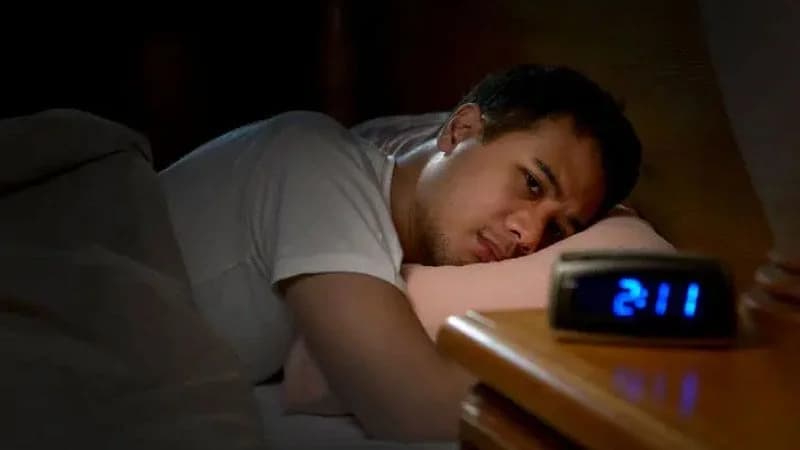
Key Takeaways
- The biggest problem with sleeping late is usually getting too little sleep, not the clock time.
- Adults need at least 7 hours of sleep a night for good health.
- Short sleep is linked with weight gain, poor focus, low mood and a higher risk of heart disease.
- A large study found the lowest heart risk in people who fell asleep between 10 and 11 pm.
- Move your bedtime earlier by 15 minutes at a time and get morning daylight.
Why So Many of Us Sleep Late
Late nights have become normal for many people. Long working hours, late dinners, traffic, family time and, above all, phones and streaming all push bedtime later. Many people still have to wake up early for work, college or school, so a late bedtime often means a short night.
Some people are also natural night owls. Everyone has a body clock, or circadian rhythm, and its timing varies. Early birds feel sleepy and alert earlier, while night owls naturally prefer later bedtimes. Being a night owl isn't a disease, but living on a night owl's schedule in an early-morning world can cause problems.
Is Sleeping Late Bad If You Still Get Enough Sleep?
This is an important question. If you sleep from 1 am to 9 am every day and wake up refreshed, you may be getting enough sleep, and consistency helps a lot. The trouble is that most people who sleep late still have to wake up early, so they end up sleeping only five or six hours. Many then try to catch up at weekends, which shifts their body clock back and forth, a pattern sometimes called social jet lag.
Timing may matter a little on its own too. In a study of about 88,000 adults in the UK, people who fell asleep between 10 and 11 pm had the lowest rate of heart disease over the following years. Those who fell asleep at midnight or later had about a 25% higher risk. The study was observational, so it can't prove that the late bedtime caused the problems, but it suggests that going to bed earlier may be kinder to your heart.
Side Effects of Sleeping Late and Sleeping Too Little
Tiredness and poor concentration
The most obvious effect is feeling tired, foggy and unfocused the next day. Short sleep affects attention, memory and reaction time, which can make work harder and raise the risk of accidents, including on the road.
Weight gain and cravings
Sleep loss affects hunger hormones, making you feel hungrier and more drawn to sugary and fatty foods. Late nights also give you more hours to snack. Over time, short sleep is linked with weight gain.
Blood sugar and heart health
Regularly sleeping less than seven hours is linked with a higher risk of type 2 diabetes, high blood pressure and heart disease. Your body uses sleep to repair and regulate itself, and cutting it short affects these systems.
Mood and stress
Short sleep can make you more irritable, anxious and low. It also makes it harder to cope with everyday stress.
Weaker immunity
People who don't get enough sleep may be more likely to catch common infections and may take longer to recover.
Skin and appearance
After a short night, many people notice dull skin, puffy eyes and dark circles. Good sleep gives your body time to repair itself.
How Much Sleep Do You Need?
Sleep experts recommend that adults get seven or more hours of sleep a night on a regular basis. Teenagers need eight to ten hours, and school-age children need even more. If you need to wake at 6 am, that means aiming to be asleep by around 11 pm at the latest.
How to Start Sleeping Earlier
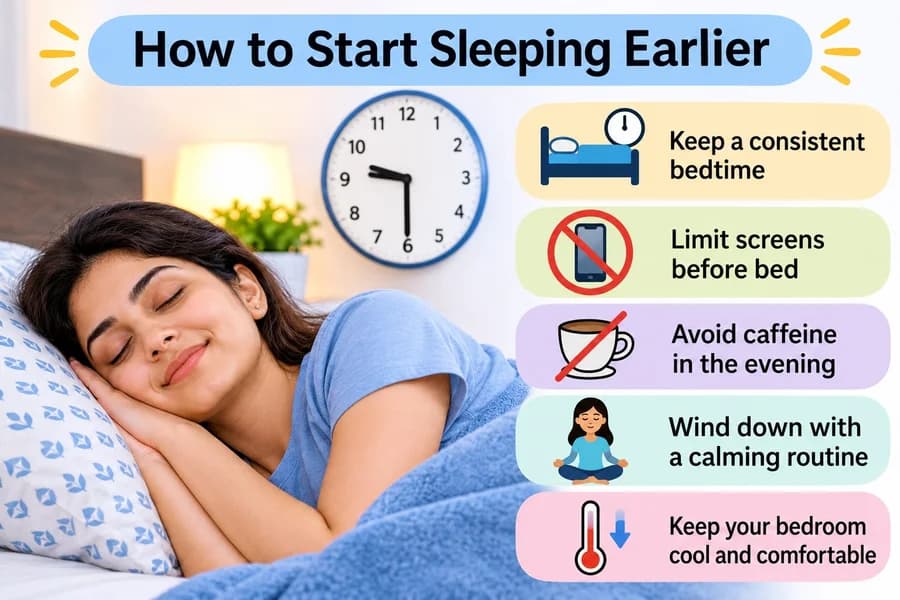
Shift bedtime slowly
Don't try to jump from 1 am to 10 pm overnight. Move your bedtime earlier by about 15 minutes every few days until you reach your goal.
Fix your wake-up time
Get up at the same time every day, including weekends. A steady wake-up time is one of the most powerful ways to reset your body clock.
Get morning light
Spend some time outdoors in daylight soon after waking, for example with a morning walk. Morning light helps move your body clock earlier.
Dim the evening
Bright light and screens late at night delay your body clock. Dim the lights an hour before bed and put your phone away.
Watch caffeine and late dinners
Avoid tea, coffee and colas in the late afternoon and evening. Try to finish dinner two to three hours before bed.
Build a wind-down routine
A warm bath, light stretching, reading a book or slow breathing exercises can signal to your body that it's time to sleep.
What If You're a Natural Night Owl?
If your body clock naturally runs late, you may never become a true early bird, and that's okay. The goal is a schedule that gives you enough sleep and stays roughly the same every day. If your work or studies allow it, a slightly later but steady schedule, such as midnight to 8 am, may suit you better than forcing a 10 pm bedtime you can't keep and then catching up at weekends. If your schedule can't move, the tips above, especially morning light and a fixed wake-up time, can gradually shift your body clock earlier.
Shift workers face a special challenge. If you work nights, try to keep your sleep times as regular as possible, sleep in a dark, quiet room and use blackout curtains during the day.
When to See a Doctor
If you go to bed on time but still can't fall asleep, wake often during the night or feel exhausted despite enough hours in bed, talk to a doctor. Insomnia, sleep apnoea and delayed sleep phase disorder can all be treated.
How Habuild Can Help
Habuild's live sessions run in morning batches and combine yoga, exercise and breathing, which can help you build an earlier routine. The Habuild app's Box Breathing habit is a calm way to relax before bed.
Editorial Sources
- Watson et al. – Recommended Amount of Sleep for a Healthy Adult: AASM and SRS Joint Consensus Statement, Journal of Clinical Sleep Medicine (2015)
- Nikbakhtian et al. – Accelerometer-derived sleep onset timing and cardiovascular disease incidence, European Heart Journal – Digital Health (2021)
- NHLBI – What Are Sleep Deprivation and Deficiency?
- CDC – About Sleep
- Wittmann et al. – Social jetlag: misalignment of biological and social time, Chronobiology International (2006)
Health Disclaimer
This article is for general information only and is not medical advice. If you have ongoing sleep problems, please consult a doctor.
Frequently Asked Questions
Related Articles

What’s the Best Time to Sleep and Wake Up?
The best time to sleep isn't a single universal hour — it depends on your wake-up time, chronotype and cycle count, not a flat 10pm rule. See how to find your own.
How to Fix Your Sleep Schedule (Without an All-Nighter)
Fixing a drifted sleep schedule doesn't need a risky all-nighter reset — small daily shifts work better and are far easier on your body. See the gradual approach that actually sticks.
Sleep Debt: What It Is and How to Pay It Back
Sleep debt compounds quietly from small nightly shortfalls, not just one dramatic sleepless night. See how to calculate it, and why weekend catch-up sleep only partly repays it.
How Many Hours of Sleep Is Necessary? A Realistic Answer
How many hours of sleep is necessary depends heavily on age, not a flat 8-hour rule for everyone. See the real ranges by life stage, and the signs you're falling short.