
Sleepwalking: Causes, Signs and What to Do
Sleepwalking is common in children and less common in adults. Learn why it happens, how to keep a sleepwalker safe and when to get help.
Key Takeaways
- Sleepwalking happens during deep non-REM sleep, usually in the first few hours of the night.
- It's much more common in children than adults, and most children outgrow it.
- Lack of sleep, stress, fever, alcohol and some medicines can trigger episodes.
- Gently guide a sleepwalker back to bed; don't shout at them or shake them awake.
- See a doctor if episodes are frequent, dangerous or start in adulthood.
What Is Sleepwalking?
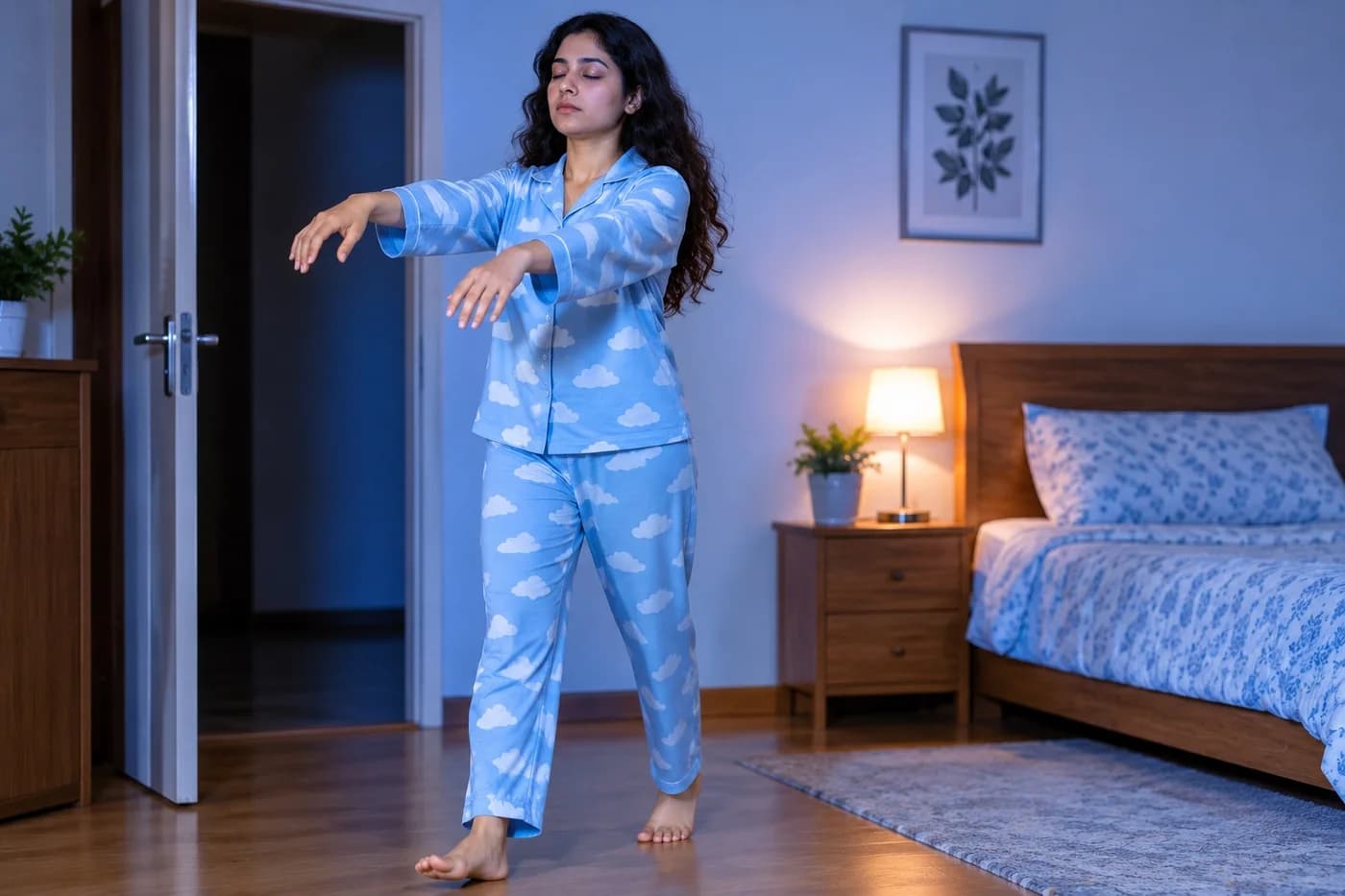
Sleepwalking, also called somnambulism, is when a person gets up and moves around while they are still mostly asleep. Some people simply sit up in bed and look around. Others walk around the room, open doors, go to the kitchen or, in rare cases, try to leave the house. The person's eyes are often open, but they have a blank, glassy look and don't respond normally when spoken to.
Sleepwalking belongs to a group of sleep behaviours called parasomnias. It happens during deep non-REM sleep, the most restful stage of sleep, rather than during the dreaming REM stage. Because deep sleep is most common in the first third of the night, sleepwalking episodes usually happen within the first few hours after falling asleep. Most episodes last a few minutes, though some can go on longer, and the person usually remembers little or nothing the next morning.
How Common Is It?
Sleepwalking is far more common in childhood. A large review of studies estimated that about 5% of children had sleepwalked in the past year, compared with about 1.5% of adults, and that nearly 7% of people sleepwalk at some point in their lives. It often starts between the ages of about 4 and 8, and most children grow out of it by their teenage years. Sleepwalking also tends to run in families, so a child with a parent who sleepwalked is more likely to do it too.
Signs of Sleepwalking
Common signs include getting out of bed and walking around while asleep, a blank stare, slow or confused responses, mumbling or sleep talking, difficulty waking the person and no memory of the episode afterwards. Some sleepwalkers do routine tasks such as dressing or moving objects. Occasionally, a person may become confused or upset if someone tries to wake them suddenly.
What Causes Sleepwalking?
Experts think sleepwalking happens when part of the brain wakes up while the rest stays in deep sleep. The parts that control movement become active, but the parts responsible for awareness and memory do not. Several factors make this partial waking more likely.
Lack of sleep
Being sleep-deprived is one of the most common triggers. When you're short on sleep, your body spends more time in deep sleep, which raises the chance of an episode.
Stress and an irregular schedule
Emotional stress, travel, and frequent changes to bedtime can all disturb sleep and trigger episodes.
Fever and illness
In children especially, a fever can bring on sleepwalking.
Alcohol and some medicines
Alcohol can disrupt normal sleep cycles. Certain medicines, including some sleeping pills, have been linked with sleepwalking and other complex sleep behaviours.
Other sleep disorders
Conditions that repeatedly break up deep sleep, such as obstructive sleep apnoea or restless legs syndrome, can make sleepwalking more likely. A full bladder or a sudden noise can also partly wake a person during deep sleep.
Is Sleepwalking Dangerous?
Sleepwalking itself isn't harmful, but the person can be injured. They may trip over furniture, fall down stairs, walk into glass or even go outside. Rarely, adults may act in ways that are unusual for them. That's why safety at home is the most important part of managing it.
How to Help Someone Who Is Sleepwalking
If you find someone sleepwalking, stay calm. Gently guide them back to bed by the arm, using a soft, calm voice. You don't need to wake them, and trying to shake them awake or shouting can make them confused, frightened or even defensive. If they do wake up, reassure them and help them settle back to sleep.
Making the Home Safer
Lock doors and windows at night, and keep keys out of reach. Fit safety gates at the top of stairs if a child sleepwalks. Clear the floor of toys, wires and clutter, and move sharp or breakable objects away. A child who sleepwalks should not sleep on the top of a bunk bed. Some families use a door alarm or a simple bell on the bedroom door so they know when someone gets up.
How Sleepwalking Is Managed
For many people, especially children, no treatment is needed beyond good sleep habits and a safe home. Getting enough sleep is key, so keep a regular bedtime and wake-up time. A calm bedtime routine, without screens, helps too, and children should use the toilet before bed.
If a child sleepwalks at about the same time every night, doctors sometimes suggest "scheduled waking": gently waking the child about 15 to 30 minutes before the usual episode time for a few weeks. This can help break the pattern. Treating any underlying problem, such as sleep apnoea, also helps. Medicines are rarely needed and are only used under a doctor's care.
When to See a Doctor
See a doctor if sleepwalking happens often, if the person has hurt themselves or others, if it starts for the first time in adulthood, if it continues into the teenage years or later, or if it comes with loud snoring, gasping or daytime sleepiness. A sleep specialist may suggest a sleep study to look for other causes.
How Habuild Can Help
Habuild's live sessions combine yoga, exercise and breathing, which support better sleep. The Habuild app's Box Breathing habit is a calm way to relax before bed.
Editorial Sources
- Stallman & Kohler – Prevalence of Sleepwalking: A Systematic Review and Meta-Analysis, PLOS ONE (2016)
- NHS – Sleepwalking
- Mayo Clinic – Sleepwalking: Symptoms and causes
- Cleveland Clinic – Sleepwalking (Somnambulism)
- US FDA – Certain Prescription Insomnia Medicines: New Boxed Warning Due to Risk of Serious Injuries Caused by Sleepwalking, Sleep Driving and Other Activities While Not Fully Awake (2019)
Health Disclaimer
This article is for general information only and is not medical advice. If you or your child sleepwalk often or get hurt during episodes, please consult a doctor.
Frequently Asked Questions
Related Articles
Sleep Talking: Causes and How to Stop It
Sleep talking is a common parasomnia that happens with zero conscious awareness, and it's usually harmless. See the most common triggers, and when it's worth mentioning to a doctor.

Sleep Paralysis: Why It Happens and How to Stop It
Sleep paralysis feels genuinely terrifying, but it causes no physical harm and always resolves on its own. See why it happens, and practical ways to reduce how often it occurs.

Common Types of Sleep Disorders and What Causes Them
Sleep disorders cover a wide range of conditions, from insomnia to sleep apnea to restless legs, and treatment differs completely by type. See how to recognise which one might be at play.
The Stages of Sleep and Why Each One Matters
The stages of sleep aren't interchangeable — each one handles a different kind of physical or mental repair. See how they cycle through the night, and why timing your wake-up around them matters.