
10 Benefits of Aerial Yoga
Discover the top 10 benefits of aerial yoga — from spinal decompression to core strength. Try guided yoga sessions free for 14 days.
Key Takeaways
- Gravity gently lengthens the spine while hanging freely in the hammock, easing sitting tightness.
- The hammock supports stretches that would otherwise require significant baseline flexibility.
- Balancing body weight in a suspended hammock demands constant, dynamic core engagement.
- The unstable hammock surface trains the body to self-correct, sharpening proprioception.
- Joint surfaces move slightly apart when suspended, encouraging fresh synovial fluid into joints.
- Engages grip strength and torso lateral muscles that floor-based practice often misses.
Aerial yoga is a suspended hammock-based practice that delivers spinal decompression, deeper flexibility, functional core strength, and nervous-system calm — all in a single session. The benefits of aerial yoga accumulate quickly with consistent practice and are accessible to complete beginners from day one.
Whether you are looking to decompress your spine, build real core strength, or rediscover the joy of movement, aerial yoga offers a full-body experience that traditional mat practice cannot always replicate. This guide covers what aerial yoga does for your body, how to begin, and why consistency is the key to lasting results. If back tension is already part of your daily life, pairing aerial work with yoga for back pain can make a meaningful difference.
10 Benefits of Aerial Yoga Worth Knowing
- Spinal Decompression and Relief Hanging freely in the hammock allows gravity to gently lengthen the spine without compression. This helps ease the tightness that builds from long hours of sitting or poor posture. People who practise regularly often report their back feeling noticeably lighter over time.
- Deeper Flexibility Without Strain The hammock acts as a support system, allowing you to ease into stretches that would otherwise require significant baseline flexibility. Hip flexors, hamstrings, and shoulder joints open gradually and safely — making aerial yoga especially useful for people who feel stiff on the mat.
- Improved Core Strength Balancing your body weight in a suspended hammock demands constant engagement from your core muscles. Unlike crunches or planks, this engagement is dynamic and functional — your stabilisers are working even in resting positions. Over weeks of practice, this builds genuine, usable core strength.
- Better Balance and Proprioception The hammock introduces an unstable surface, so your body learns to self-correct constantly. This improves proprioception — your awareness of where your body is in space — which carries over into better balance and coordination in everyday life.
- Stress Reduction and Mental Calm Inversions in aerial yoga activate the parasympathetic nervous system and increase circulation to the brain. The sensation of being cradled in the hammock can quiet the mind in a way that is distinct from seated meditation. Exploring yoga for stress management alongside aerial practice deepens this effect considerably.
- Joint Decompression and Mobility Hips, shoulders, and knees all benefit from the traction that aerial movements create. When suspended, joint surfaces move away from each other slightly, reducing friction and encouraging fresh synovial fluid into the joint — supporting long-term mobility and ease.
- Full-Body Muscle Toning Aerial yoga engages muscle groups that floor-based practice often misses — grip strength in your hands, stabilising muscles of your shoulders, and the lateral muscles along your torso. The variety of movement patterns ensures balanced, whole-body conditioning over time.
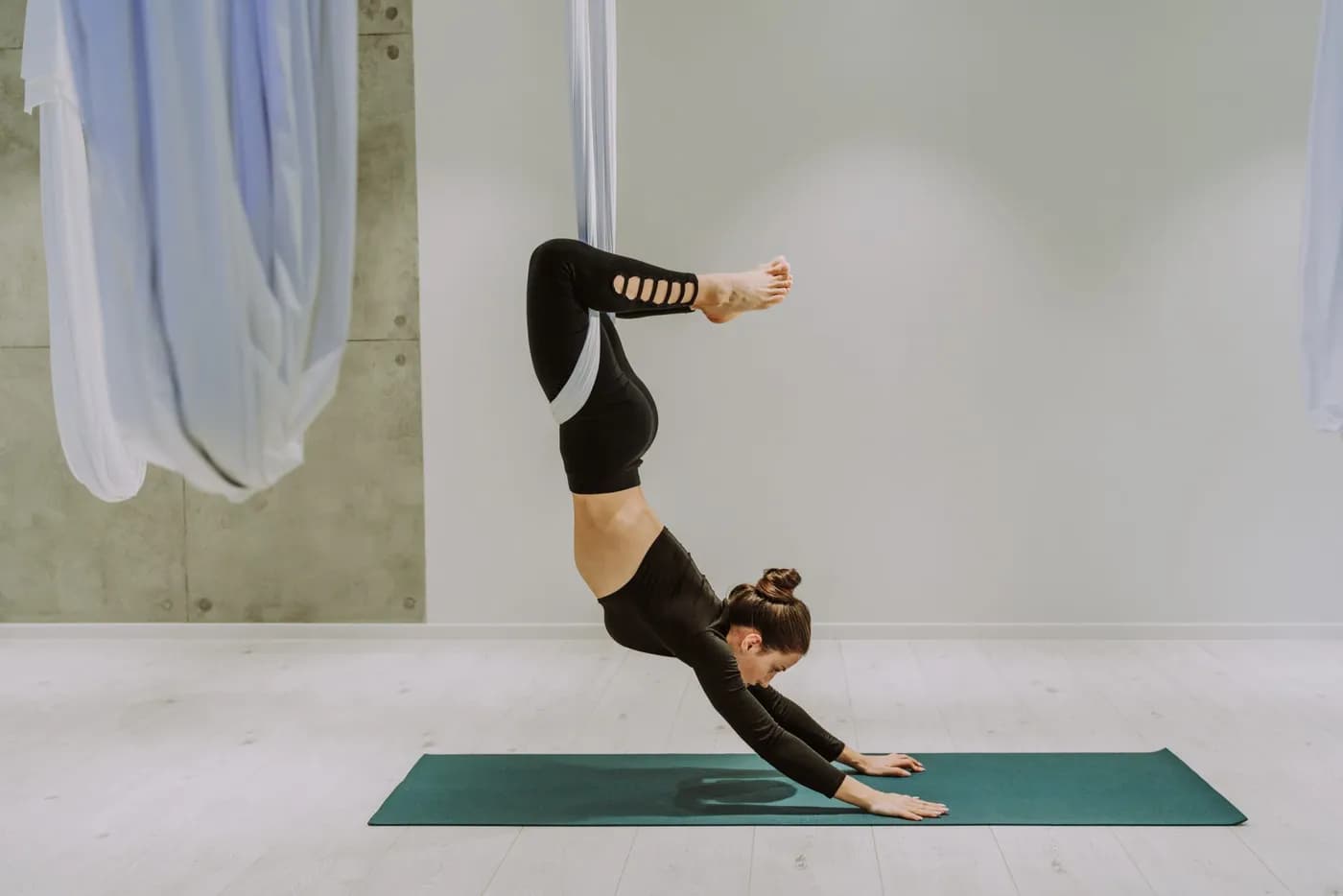
- Inversion Benefits Without Headstand Anxiety Many people want the circulatory and lymphatic benefits of inversions but struggle with headstands or handstands. The hammock supports your weight fully during inverted poses, making inversions accessible for beginners and those who are cautious about cervical strain.
- Boosted Mood and Playfulness There is a genuine element of fun in aerial yoga that many other fitness formats lack. Swinging and moving through the air triggers endorphin release. Consistent practitioners often report that sessions feel less like a workout and more like play — which makes showing up regularly far easier.
- Supports Digestive Health Through Movement Twisting and inverting the body in a hammock gently massages the abdominal organs, supporting healthy gut motility and easing sluggishness from sedentary routines. Pairing this with yoga for digestive health can amplify the effect over time.
How to Get Started with Aerial Yoga
What You Need to Begin
The essential piece of equipment is a yoga hammock or silk sling, rigged securely from a ceiling beam or a purpose-built frame. Beyond that, you need comfortable, form-fitting clothing that covers the backs of your knees and armpits — exposed skin can pinch uncomfortably in the fabric. Remove all jewellery before practice.
Setting Realistic Goals
Begin with two to three sessions per week and focus on getting comfortable with the hammock before attempting more complex movements. Aerial yoga rewards patience — the first few sessions are about building trust with the equipment and learning foundational shapes. Progress tends to accelerate noticeably between weeks three and six. Consistency across that window matters far more than intensity in any single session.
Start with the Basics
Foundational aerial poses — a supported inversion, a seated hammock position, and a gentle backbend over the fabric — are where most beginners should spend their first month. Breath awareness is central: inhale to prepare for a movement, exhale to release into it. A structured programme with expert guidance ensures you build these fundamentals correctly, protecting your joints and accelerating your progress.
Best Poses for Aerial Yoga Practice
These five poses offer a strong entry point into aerial yoga and collectively deliver most of the yoga trapeze benefits that make this practice so effective.
Aerial Tadasana (Supported Mountain Pose)
Stand inside the hammock with the fabric at hip height, both hands resting on the sling. This grounding pose helps you develop an intuitive feel for the hammock’s resistance and swing. Breathe steadily and engage your core to stay centred. It is the starting point for almost every flowing sequence.
Aerial Uttanasana (Suspended Forward Fold)
With the hammock supporting your hips, hinge forward and let the crown of your head drop toward the floor. Gravity gently lengthens the entire posterior chain — from heels to the base of the skull. Hold for five to eight breaths and release slowly. This is one of the clearest expressions of the spinal decompression benefit.
Aerial Virabhadrasana (Flying Warrior)
Wrap the hammock around your front hip and extend into a Warrior I shape with your back leg suspended. This challenges balance, opens the hip flexors, and builds the lateral stability that translates into stronger standing poses on the mat. Exhale as you sink deeper into the front knee.
Aerial Balasana (Cocoon Child’s Pose)
Curl your whole body into the hammock so the fabric wraps around you like a cocoon. This deeply restorative shape releases the lower back, calms the nervous system, and is often used at the end of a session. Breathe slowly into the back of the ribcage and allow the fabric to hold your full weight.
Aerial Savasana (Hammock Rest Pose)
Lie back fully inside the hammock so it cradles your spine in a gentle backbend. Arms drift out to the sides, eyes close, and the body surrenders entirely to the fabric. This is the yoga swing benefit that practitioners describe as transformative — a deep, floating relaxation that is genuinely difficult to replicate on the floor.
Common Mistakes to Avoid in Aerial Yoga
- Skipping the Warm-Up Entering a hammock with cold muscles and stiff joints dramatically increases the risk of strain, particularly in the shoulders and wrists. A five-to-ten-minute floor warm-up — gentle neck rolls, hip circles, and wrist mobilisation — prepares the connective tissue for the unusual demands of suspended movement. Never skip it, no matter how short your session is.
- Holding Your Breath During Poses Breath-holding is the most common habit beginners bring from other fitness disciplines. In aerial yoga, it causes muscle tension that works directly against the practice’s core principle of release. Train yourself to exhale into every deepening movement and inversions will open far more readily within weeks.
- Rushing into Advanced Poses Too Soon Complex aerial inversions, drops, and wraps look spectacular — and it is tempting to attempt them before the foundations are in place. This is where most aerial yoga injuries happen. Build your grip strength, body awareness, and hammock confidence through basic poses for at least four to six weeks before progressing.
- Practising Without Structural Support A hammock rigged from an insecure anchor point is a genuine safety risk. Before your first session, verify that your mounting point can support at least three times your body weight in dynamic load. A guided programme with safety-first instruction is the most sensible place to begin if you are unsure about setup.
Who Should Try Aerial Yoga?
- Beginners Aerial yoga is genuinely accessible to beginners. The hammock provides support that removes the fear of falling in inversions and deep backbends, making advanced-looking shapes achievable from week one. Understanding the importance of yoga as a daily practice helps beginners build the right mindset from the start.
- Women The combination of inversions, gentle abdominal massage, and deep hip-opening work makes aerial yoga particularly supportive for women managing hormonal fluctuations, menstrual discomfort, or stress-related tension. Consistent practice can help support nervous system regulation and gradually ease stress-driven hormonal disruption through its calming effects.
- Older Adults For adults over 50, aerial yoga offers joint decompression and mobility work with significantly less ground-level strain than traditional mat yoga. The hammock acts as a support aid, reducing the effort required to move into and out of poses. As with any new physical practice, consulting a doctor before beginning is advisable — especially if there are pre-existing cardiovascular or joint conditions.
- Working Professionals Desk workers carry characteristic tension patterns — tight hip flexors, compressed lumbar discs, rounded shoulders, and a chronically activated stress response. Aerial yoga directly addresses all four. A 45-minute session after work can decompress the spine, open the front body, and shift the nervous system from a stressed state to a rested one in a way that a standard gym session rarely achieves.
Build Flexibility with a Routine That Actually Works
Building flexibility, spinal health, and genuine body confidence through aerial yoga is not about practising harder — it is about practising consistently, with the right guidance. A structured daily routine, expert-led instruction, and a supportive community are what separate people who see real change from people who give up after two weeks.
What You Get with Habuild’s Yoga Everyday Programme:
- Daily live guided yoga sessions with expert instructors
- Beginner-to-advanced progression built into the schedule
- No-equipment and home-friendly practice formats
- Correct-form guidance that protects your joints and accelerates results
- A community of thousands of consistent practitioners to keep you accountable
If you have been curious about top-rated online yoga classes that fit around your schedule, Habuild’s Yoga Everyday programme is designed for exactly that.
Start Your Yoga Journey
Frequently Asked Questions
Related Articles
Yoga Sequence for Beginners: Poses, Tips & Daily Routine
Learn the best yoga sequence for beginners — step-by-step poses, breathing tips, common mistakes to avoid, and how to build a daily home practice.

Yoga Warm Up Exercises: Best Poses & How to Start
Discover the best yoga warm up exercises to prepare your body safely. Start your practice right with Habuild’s guided daily yoga — try free for 14 days.

Yoga Stretches for Flexibility: Best Poses & Warm-Up Routine
Discover the best yoga stretches for flexibility with poses, warm-up tips, and a beginner routine. Start your 14-day free trial trial with Habuild Yoga.