
What is Ashtanga Yoga: Practice, Benefits & How to Get Started
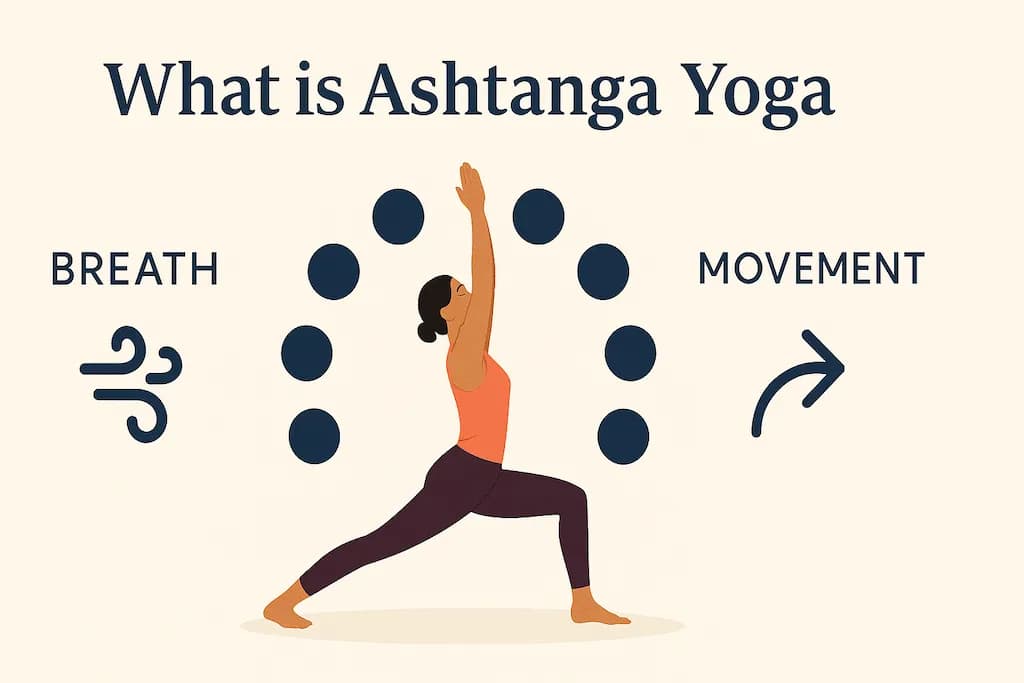
This vigorous, sequentially structured system synchronises breath and movement through a fixed series of asanas, developing strength, flexibility, and.
Key Takeaways
- The Ashtanga Vinyasa system’s Primary Series alone contains 75+ poses in a fixed sequence.
- Tristhana means simultaneously focusing on posture, Ujjayi breath, and a fixed gaze point.
- Built on Vinyasa, Bandhas (Mula and Uddiyana locks), and Drishti as its three pillars.
- Ujjayi breath combined with Bandhas generates internal heat said to purify the body.
- Consists of six progressively challenging series developed by K. Pattabhi Jois in Mysore.
- Most practitioners take many years to comfortably complete just the Primary Series.
Ashtanga yoga is a vigorous, sequentially structured physical yoga system — characterised by the synchronisation of breath and movement through a fixed series of asanas — that simultaneously develops exceptional strength, flexibility, and focused mental clarity.
What is Ashtanga Yoga?
Ashtanga yoga has two meanings in classical Indian tradition. In its original Sanskrit context, ‘Ashtanga’ means ‘eight limbs’ — referring to Patanjali’s eight-limbed yoga path described in the Yoga Sutras. In contemporary usage, ‘Ashtanga yoga’ most commonly refers to the Ashtanga Vinyasa system developed by K. Pattabhi Jois in Mysore, India — a specific dynamic yoga style built on the synchronisation of movement and Ujjayi breath through a fixed sequence of asanas.
The Ashtanga Vinyasa system consists of six progressively challenging series, each a fixed sequence of poses performed in the same order every session. The system is built on three foundational elements: Vinyasa (the linking breath-movement transitions between poses), Bandhas (internal energy locks — Mula and Uddiyana — maintained throughout), and Drishti (fixed gaze points for each pose). Together these three create the intense inner focus and heat generation that characterises Ashtanga practice.
What is Ashtanga Yoga: Core Elements
Vinyasa — Breath-Linked Movement
Vinyasa is the system of flowing transitions between poses, each linked to a specific inhalation or exhalation. Every pose in the Ashtanga system has a defined number of vinyasas — breath-movements — for entering and exiting. This continuous breath-movement linkage creates the flowing, dynamic quality of Ashtanga and generates the internal heat that purifies the body.
Tristhana — Three Places of Attention
Tristhana is the simultaneous focus on three elements: Asana (physical alignment), Pranayama (Ujjayi breathing), and Drishti (focused gaze). Maintaining all three simultaneously throughout practice is the technical and meditative challenge that makes Ashtanga yoga uniquely demanding and transformative.
The Six Series
The Ashtanga system contains six series: the Primary Series (Yoga Chikitsa — therapeutic), the Intermediate Series (Nadi Shodhana — nerve cleansing), and four Advanced Series (Sthira Bhaga). The ashtanga yoga Primary Series alone contains 75+ poses and takes most practitioners many years to complete comfortably.
Ashtanga Yoga Benefits
Physical Benefits
Builds Exceptional Strength and Flexibility Together
Ashtanga’s vigorous vinyasa sequence and sustained 5-breath holds build extraordinary functional strength and flexibility simultaneously — particularly upper body, core, and hip strength from the Chaturanga-based transitions.
Generates Internal Purifying Heat
Ujjayi breath combined with Bandhas and the exertion of the sequence generates intense internal heat that promotes sweating and deep cellular purification — the physiological basis of Ashtanga’s detoxifying tradition.
Ashtanga vs Hatha Yoga — Key Differences
Hatha yoga holds poses statically for extended periods with alignment emphasis. Ashtanga yoga flows continuously between poses linked by vinyasa transitions, maintaining Ujjayi breath, Bandhas, and Drishti throughout. Hatha is more meditative and suitable for all levels; Ashtanga is more vigorous and physically demanding. Both are forms of the same classical yoga — Ashtanga as the dynamic expression, Hatha as the foundational system.
Senior Citizens (50+)
Modified Ashtanga — shorter sequences, less demanding transitions, and supported poses — is accessible and beneficial for active seniors. Begin with professional guidance. Consult your doctor before beginning any vigorous yoga practice.
Begin Your Ashtanga Yoga Practice with Habuild
Ashtanga yoga’s fixed sequence and breathwork create a uniquely powerful daily practice — a physical training, a moving meditation, and a systematic purification of body and mind simultaneously. Habuild’s daily sessions provide the consistent practice structure that Ashtanga requires.
Start your 14 day free yoga journey with Habuild, today!
Frequently Asked Questions
Related Articles
Types of Ashtanga Yoga: A Complete Guide to Sequences, Poses & Practice
The Primary Series, Intermediate Series, and four Advanced Series each build on the last within the same breath-linked vinyasa framework. See how the.

Ashtanga Yoga Kya Hai | Habuild पर जानें पूरी जानकारी
Ashtanga yoga kya hai? जानें इसके फायदे, आसन, शुरुआत कैसे करें और रोज़ अभ्यास से जीवन कैसे बदलता है। Habuild के साथ शुरू करें।
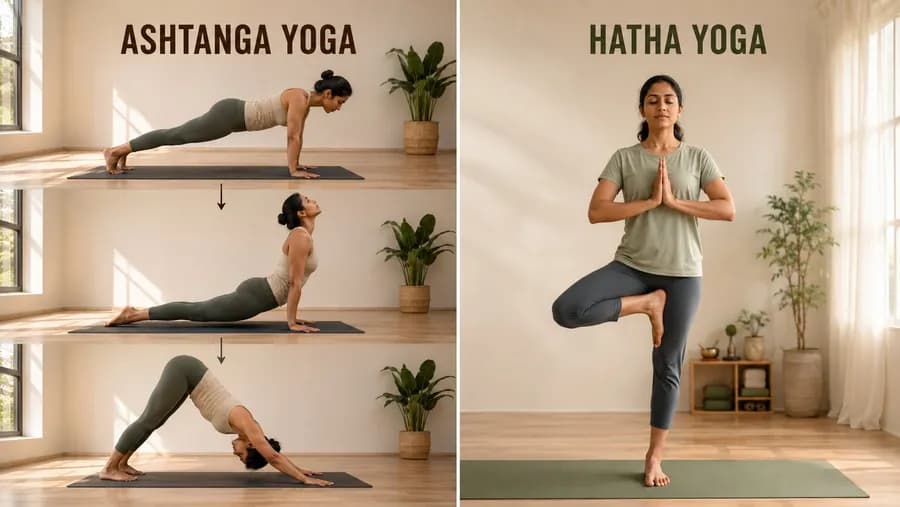
Difference Between Hatha Yoga and Ashtanga Yoga
Explore the key difference between Hatha Yoga and Ashtanga Yoga — pace, structure, and who each style suits best. Start your free trial today.