Calisthenics Body vs Gym Body
Join live strength training classes from home with beginner-friendly guidance and expert coaching.

Quick Comparison — Strength Training vs Calisthenics
- Calories Burned: Strength Training — High (especially with compound lifts) | Calisthenics — Moderate to High (depends on intensity)
- Muscle Building: Strength Training — Superior for hypertrophy and size | Calisthenics — Effective for lean, functional muscle
- Strength Gain: Strength Training — Excellent, measurable via progressive overload | Calisthenics — Good, but harder to quantify progression
- Fat Loss: Strength Training — Strong due to metabolic boost | Calisthenics — Moderate; less metabolic afterburn
- Bone Density: Strength Training — High impact, especially with loaded movements | Calisthenics — Moderate; less axial loading
- Metabolism Boost: Strength Training — Significant, sustained resting metabolic rate increase | Calisthenics — Mild to moderate
- Beginner Friendly: Strength Training — Yes, with guidance | Calisthenics — Yes, low barrier to entry
- Equipment Needed: Strength Training — Dumbbells, barbells, or resistance bands | Calisthenics — None (bodyweight only)
- Injury Risk: Strength Training — Low with proper form | Calisthenics — Low; some wrist/shoulder overuse risk
- Long-Term Sustainability: Strength Training — High, with progressive structure | Calisthenics — Moderate; plateaus harder to break
What Is Calisthenics?
Calisthenics is a form of exercise that uses only your own bodyweight as resistance. Think push-ups, pull-ups, dips, pistol squats, muscle-ups, and handstands. It requires minimal to no equipment, which is a large part of its widespread appeal. Because no external load is added, progression in calisthenics happens by increasing movement complexity — moving from a standard push-up to an archer push-up, for instance. This makes skill development central to the practice, which differentiates it from conventional gym training where you simply add weight to a bar. Calisthenics builds a lean, functional physique with notable relative strength — meaning strength expressed relative to bodyweight. Athletes like gymnasts demonstrate this exceptionally well. However, once you can comfortably handle your bodyweight, adding further resistance requires creative workarounds like weighted vests or rings.
Strength Training vs Calisthenics for Muscle Building
How Effective Is Each for Muscle Growth Gym-based strength training has a clear structural advantage for muscle hypertrophy. You can precisely control load, volume, and tempo — the three variables most responsible for muscle growth. Moving from 10 kg to 12 kg on a dumbbell curl is a measurable, reliable stimulus for your bicep to adapt and grow. Calisthenics can absolutely build muscle, particularly in the chest, back, shoulders, and arms. But for larger muscle groups like the quads, hamstrings, and glutes, it becomes increasingly difficult to generate enough tension through bodyweight alone once a base level of fitness is reached. Training Impact and Body Response Gym training creates mechanical tension and metabolic stress — two of the primary drivers of muscle protein synthesis. Compound lifts like squats, deadlifts, and bench press recruit large muscle groups simultaneously, producing a strong hormonal response that supports growth. Calisthenics creates high levels of muscle coordination and neuromuscular efficiency. The result is often a lean, defined physique rather than significant mass. For those exploring the calisthenics body vs gym body women angle specifically, women often find gym-based training more effective for building shapely glutes and legs — areas where bodyweight alone tends to fall short quickly. Speed of Results and Sustainability With guided gym training, beginners typically see visible muscle tone within 8–12 weeks of consistent structured work. Calisthenics produces results too, but early gains can plateau without a deliberate progression plan. Both methods demand consistency — which is ultimately the most important variable. Best Choice for Muscle Building For those whose primary goal is visible muscle development and body composition improvement, weighted strength training offers a more direct and scalable path than calisthenics alone. Understanding how progressive overload works is key to unlocking those long-term gains.
Strength Training vs Calisthenics for Fat Loss
How Effective Is Each for Fat Loss Both methods burn calories, but gym-based strength training tends to produce a larger total energy expenditure over time. This is primarily because heavier loaded movements demand more from your cardiovascular and muscular systems simultaneously. More importantly, strength training builds more lean muscle tissue — and muscle is metabolically active at rest. This means someone who has been consistently doing weighted squats and deadlifts for three months will burn more calories at rest than someone of the same weight relying only on calisthenics. Training Impact and Body Response Calisthenics workouts can be intense — circuit-style bodyweight sessions get your heart rate up and burn meaningful calories in session. But the post-exercise oxygen consumption (EPOC), commonly called the afterburn effect, is generally lower compared to heavy resistance training sessions. Strength training's afterburn effect can last 24–48 hours post-session, meaning your body continues burning at an elevated rate well after the workout ends. This cumulative advantage becomes significant over months of consistent training. Speed of Results and Sustainability Initial fat loss can happen quickly with either approach if paired with appropriate nutrition. Over the long term, building muscle through gym training creates a more favourable metabolic environment for sustained fat loss. For women especially, this is a key reason the calisthenics body vs gym body which is better question often tips toward structured weighted work. Best Choice for Fat Loss If fat loss is the priority, structured strength training — particularly programs that combine compound movements with adequate volume — tends to outperform pure calisthenics over a 3–6 month horizon. Combining both can also work well for those who enjoy variety.
When Strength Training May Be the Better Long-Term Choice Than Calisthenics
Calisthenics is a genuinely valuable form of training. But there are specific situations where gym-based strength training has a meaningful long-term edge.
- Muscle preservation as you age: After 35, adults gradually lose muscle mass each year. Loaded resistance training with progressive overload is one of the most effective tools to slow this process.
- Bone health: Axial loading — the kind that happens with squats, deadlifts, and overhead presses — is consistently associated with improved bone mineral density. Calisthenics offers far less of this stimulus.
- Metabolism and body composition: The more lean muscle you carry, the higher your resting metabolic rate. Gym training is better suited to building and sustaining that lean mass over the years.
- Overuse injury risk: Calisthenics at high volume can place repetitive stress on wrists, elbows, and shoulders. Well-programmed gym training distributes load across muscle groups more evenly.
- Anti-aging benefits: Strength training is associated with improvements in insulin sensitivity, hormonal balance, posture, and functional movement quality — all of which matter more as you get older.
None of this means you have to abandon bodyweight work. But if you want a training method that scales with you for decades and supports health well beyond aesthetics, a structured strength program is hard to beat. Explore
a full library of strength training exercises
to see what progressive loaded training actually looks like in practice.
Best Strength Training Approaches That Compete with Calisthenics
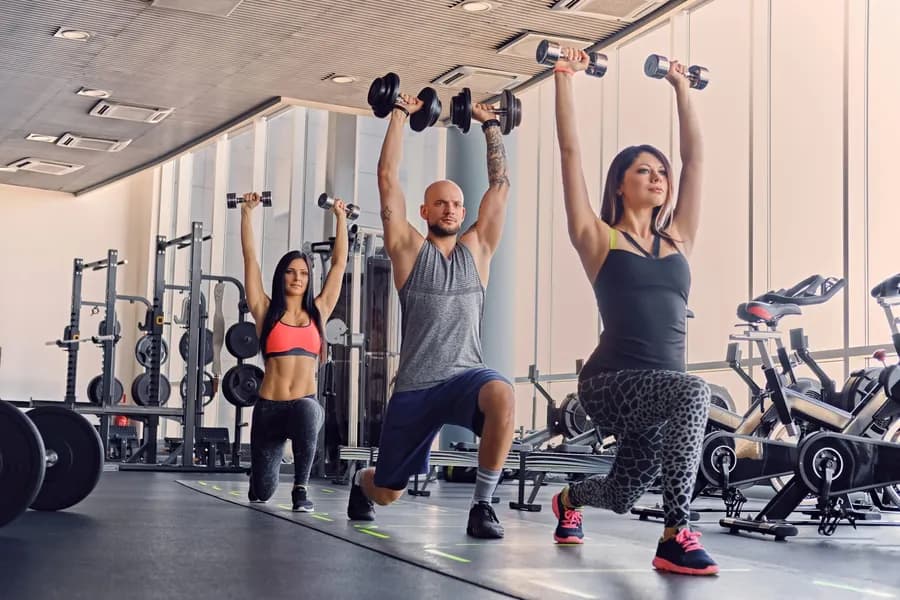
If calisthenics appeals to you because of its low-equipment, flow-based nature, these gym training styles offer a similar feel while delivering the additional load your body needs to keep progressing:
- Controlled tempo training: Slowing down your eccentric (lowering) phase — taking 3–4 seconds to lower the weight — creates enormous muscle tension similar to the time-under-tension found in advanced calisthenics movements.
- Mobility-focused strength work: Movements like the goblet squat, Romanian deadlift, and single-leg variations train strength through a full range of motion, bridging the gap between gym training and the movement quality calisthenics is known for.
- Full range of motion lifts: Prioritising deep squats, full-range pull-downs, and wide-grip rows builds the joint integrity and flexibility that calisthenics athletes develop — but with the added benefit of external load for a greater muscle stimulus.
These approaches let you keep the movement quality and body awareness of calisthenics while unlocking the progressive overload that makes gym training so effective for long-term results.
How Habuild Strong Everyday Classes Compare to Calisthenics
Build Muscle and Burn Fat Together Habuild's Strong Everyday sessions combine compound strength movements with metabolic work — so you're building lean muscle and sustaining an elevated calorie burn in the same session. This dual effect is difficult to replicate with pure calisthenics once you're past the beginner stage. Guided Live Format vs Solo Training One of calisthenics' biggest weaknesses is the absence of structure. Most people train alone, rely on YouTube videos, and receive no real-time feedback on form. Habuild's live daily sessions give you an expert instructor observing your movement and adjusting your technique in the moment — a quality of coaching you simply don't get from solo bodyweight routines. Progressive Overload with Expert Guidance Progressive overload — systematically increasing the demand placed on your muscles — is the engine behind all long-term strength and muscle gains. In calisthenics, programming your own progression is challenging and easy to get wrong. In Habuild's Strong Everyday program, your instructor manages this progression for you, ensuring each week builds meaningfully on the last. Daily Structured Practice for Habit Building Consistency is the single biggest predictor of fitness results — and consistency requires habit. Habuild's live format creates an external commitment: a class time, a community of fellow members, and an instructor expecting you. This accountability structure outperforms the willpower-dependent approach that solo calisthenics training so often requires. Works for All Fitness Levels Whether you're a complete beginner who has never lifted a weight, or someone transitioning from years of calisthenics, Habuild's Strong Everyday sessions are designed to meet you where you are. Modifications are built into every session so intensity scales to your current level.
Flexible Batch Timing
Choose morning or evening classes and join the slot that suits your day.
Morning
6:30 AM
7:30 AM
8:30 AM

Evening
5:00 PM
6:00 PM
7:00 PM
8:00 PM

Meet Your Strength Training Trainer
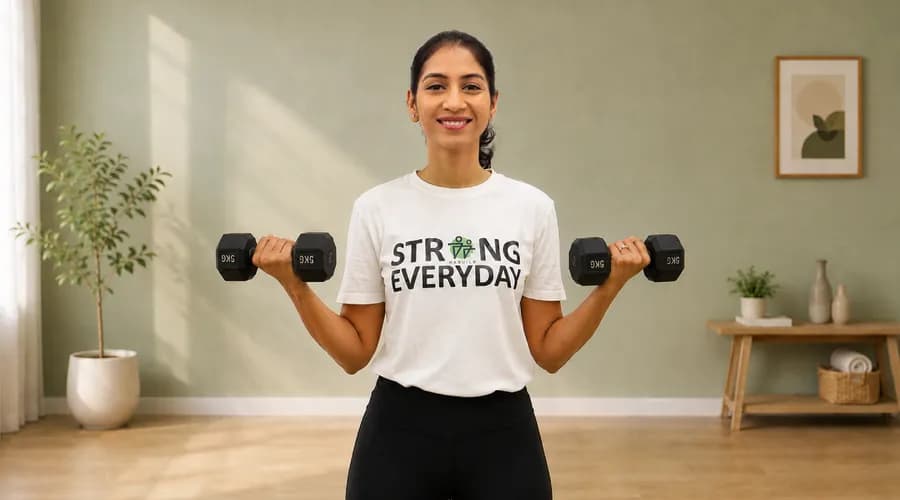
Trishala Bothra
COO & Co-Founder, Habuild
Practice Strong Everyday with Trishala Bothra, an IIT-B and London School of Business alumni Trishala is focused on making movement feel lighter, more engaging, and something you actually look forward to. In just 3 years, over 50,000 people began their strength journey, and 10,000+ join every week to keep getting stronger.
Choose Your Membership Plan
Continue after the trial with membership options designed for long-term consistency support.
Continue your habit on the Habuild app
Use the Habuild app for reminders, live access, progress support, and habit tracking.