Ankle Dorsiflexion Exercises for Better Mobility and Movement
An informational guide to ankle dorsiflexion exercises, mobility and movement considerations. Explore Habuild’s live classes for overall strength, fitness and a regular movement habit.

Key Takeaways
- Improves ankle mobility and movement quality
- Uses physiotherapy-informed movement cues
- Suitable for beginners through experienced athletes
- Explains ankle movement and general mobility exercises.
- Exercise suitability depends on the cause of stiffness or discomfort.
What Are Ankle Dorsiflexion Exercises?

Ankle dorsiflexion exercises are movements specifically chosen to increase the range of motion at the ankle joint in the upward direction — pulling the top of the foot toward the shin. Unlike general cardio or most leg workouts, these movements target the talocrural joint, the calf-Achilles complex, and surrounding connective tissue with a clear physiological purpose: restoring and expanding the ankle’s flexion capacity. The mechanism works through three overlapping movement types: active stretching of the posterior chain (calf, soleus, and Achilles tendon), joint mobilisation through controlled load-bearing range, and eccentric strengthening of the tibialis anterior. When you move through dorsiflexion repeatedly under controlled conditions, the joint capsule gradually loosens, the calf tissue lengthens, and the nervous system becomes more comfortable allowing the ankle to travel further. This cause-and-effect chain — repeated controlled movement → tissue adaptation → increased range — is what separates targeted dorsiflexion training from passive stretching alone.
Benefits of Ankle Dorsiflexion Exercises for Better Mobility
Improved Lower-Body Movement Quality
The most immediate benefit is a meaningful upgrade in how every lower-body movement feels and functions. Squats become deeper and more upright, walking gait becomes smoother, and stair-climbing stops feeling like effort. Every muscle from the glutes down to the foot gets to work through its full intended range — more efficient movement and less energy wasted on compensation patterns.
Research published in the Journal of Orthopaedic and Sports Physical Therapy found that restricted ankle dorsiflexion is directly associated with increased knee valgus stress — an overload pattern that contributes to knee pain over time.
Reduction in Ankle Stiffness and Lower-Leg Tightness
Most people searching for ankle dorsiflexion exercises are dealing with a specific daily complaint: that tight, locked feeling in the ankle first thing in the morning or after sitting for long periods. Targeted movements — like the kneeling ankle stretch, banded joint mobilisation, and wall ankle stretches — directly counteract this restriction by lengthening the soleus and posterior joint capsule.
With regular practice, that morning stiffness typically begins to ease within two to four weeks.
Long-Term Injury Resilience Through Consistent Training
Consistent dorsiflexion training builds measurable structural resilience in the ankle. The Achilles tendon stiffens appropriately for energy return, the tibialis anterior strengthens to control the landing phase of each step, and the peroneal muscles develop better lateral stability. Balance and stability work that comes with improved ankle range also reduces the risk of common injuries like ankle sprains and plantar fasciitis.
The WHO recommends at least 150 minutes of moderate-intensity activity per week — ankle mobility work can be woven into this consistently without adding extra time.
Downstream Benefits for Energy, Posture, and Daily Comfort
When your ankles move freely, the rest of your body stops working overtime. Poor dorsiflexion forces the knees to cave inward and the lower back to compensate during every step — a subtle but cumulative drain on energy and posture. Restoring ankle range reduces this unnecessary load.
Changes in mobility and comfort vary between individuals; this guide does not promise pain relief or a fixed timeline for improvement.
What to Eat to Support Your Ankle Dorsiflexion Training — Nutrition Guide
What you eat directly determines how fast you recover, how much you progress, and how consistently you can train. Here is what your nutrition plan should look like to support your ankle dorsiflexion training effectively.
Protein and Collagen — Nourishing Your Connective Tissue Mobility and flexibility training still requires adequate protein (1.2–1.6 g/kg/day) to support connective tissue repair. Collagen synthesis — critical for joint and fascia health — needs dietary amino acids as raw material. Include eggs, bone broth, paneer, dal, and lean meats across your meals.
Calcium and Vitamin D — Joint and Bone Health Joint and connective tissue health depends heavily on calcium and Vitamin D working together. Aim for 1000–1200 mg of calcium daily from dairy (milk, curd, paneer), ragi, sesame seeds (til), and leafy greens. Get 15–20 minutes of morning sunlight on exposed skin to maintain Vitamin D levels and improve calcium absorption.
Anti-Inflammatory Foods — Faster Recovery Recovery speed is directly influenced by your body’s inflammatory status. Turmeric with black pepper (curcumin + piperine), fresh ginger, and omega-3 fatty acids from flaxseeds, walnuts, and fatty fish all actively reduce exercise-induced inflammation. Include these consistently rather than only on hard training days.
Hydration — Performance and Joint Lubrication Adequate hydration supports joint lubrication, muscle function, and nutrient transport — aim for 2.5–3 L of water daily. Drink at least 500 ml before your morning exercise session to prime circulation and joint mobility. Herbal teas and coconut water count toward your fluid intake and provide additional micronutrients.
Magnesium — Muscle Function and Sleep Quality Magnesium governs over 300 enzymatic reactions including muscle contraction and relaxation — making it essential for any movement-based training. Include pumpkin seeds, bananas, dark chocolate (70%+), spinach, and whole grains in your daily diet. Many Indians are mildly deficient; if you experience frequent muscle cramps or poor sleep quality, a magnesium glycinate supplement may help.
How to Get Started with Ankle Dorsiflexion Exercises
Starting a new training programme is often the hardest part. Here is a clear, week-by-week plan to begin your ankle dorsiflexion training without injury or overwhelm.
Before You Begin — Setting Your Baseline Start by assessing your current range of motion in the target joints — you can do this simply by attempting the movement and noticing where you feel restriction or discomfort. Set a realistic goal like achieving a specific range of motion or eliminating a recurring tightness within 6 weeks. Mobility work is most effective when done daily, even if each session is short.
Week 1–2: Foundation In week one and two, hold each stretch or mobility drill for 30–45 seconds and focus on breathing into the stretch rather than forcing range. Expect mild discomfort at end-range — this is normal — but stop immediately if you feel sharp or pinching pain. Two 15-minute sessions daily (morning and evening) produce faster adaptation than one longer session.
Week 3–4: Building Consistency Your nervous system begins to ‘trust’ the end-range positions around weeks 3–4, allowing you to go slightly deeper without effort. Anchor your morning session to an existing habit — right after waking, before your first cup of tea — to build automaticity. Increase hold times to 45–60 seconds and begin adding active mobility work (controlled movement through full range) alongside passive stretching.
Week 5–8: Progression By weeks 5–8, the mobility gains become functional: you will notice them during daily activities like sitting, climbing stairs, and getting up from the floor. Begin loading the newly acquired range with light strengthening work to make the mobility permanent rather than temporary. Progress that is earned through daily practice at this stage tends to be retained long-term. **With mobility training, daily consistency across months matters far more than any single intense session.**
Best Ankle Dorsiflexion Exercises for Improved Ankle Mobility
Exercise 1 — Wall Ankle Stretch — Calf, Soleus, and Posterior Joint Capsule — 3 × 10 reps per side
What it does: This is the most evidence-backed entry point for improving ankle dorsiflexion range. Standing facing a wall, you place one foot forward with toes touching the base and drive the knee forward over the toes without lifting the heel. This places the ankle into maximal dorsiflexion under light body weight, progressively stretching the calf-Achilles complex and loosening the posterior joint capsule. It suits this goal because it trains the ankle at the exact end range needed during squats and stairs.
Dosage: 3 sets of 10 slow, controlled reps per side. Hold the end range for 2 seconds each rep. Daily practice is ideal.
Beginner modification: Start with the foot closer to the wall (smaller range). Move it progressively further away only when you can perform the movement without the heel lifting.
Exercise 2 — Banded Ankle Joint Mobilisation — Talocrural Joint and Joint Capsule — 2 × 15 reps per side
What it does: A resistance band anchored low on a wall or post is looped around the front of the ankle while you lunge forward repeatedly. The band creates a posterior-to-anterior distraction force on the talus bone — precisely the direction needed to free up the joint capsule restriction that limits dorsiflexion. This is the technique used in physiotherapy for ankle stiffness and is one of the most effective tools for people who have had previous ankle sprains.
A structured ankle strength workout that includes this mobilisation sees faster range improvements than stretching alone.
Dosage: 2 sets of 15 reps per side. Move slowly through full available range. Rest 30 seconds between sides.
Beginner modification: Perform without a band first, using just the lunge movement, to develop range awareness before adding the distraction component.
Exercise 3 — Eccentric Heel Drop — Soleus, Gastrocnemius, and Tibialis Anterior — 3 × 12 reps per side
What it does: Standing with the ball of the foot on the edge of a step, you rise onto your toes and then slowly lower the heel below the step level over 4–5 seconds. This eccentric (lengthening-under-load) phase directly increases the Achilles tendon’s capacity to move through a greater range — the primary structural bottleneck for many people with restricted dorsiflexion. It also builds tibialis anterior strength needed to actively pull the foot into dorsiflexion during walking.
For those also dealing with lower-leg circulation issues, pairing this with exercises for circulation adds compounding benefit.
Dosage: 3 sets of 12 reps per side. The eccentric phase must be slow — rush it and you lose the structural benefit.
Beginner modification: Perform on flat ground without the step elevation until you build sufficient calf and Achilles tolerance.
Common Mistakes to Avoid When Training for Ankle Dorsiflexion
Mistake 1 — Letting the Heel Rise During Exercises — Correction: Load the Heel Intentionally
What it is: The most common error in dorsiflexion training is allowing the heel to peel off the floor when the ankle reaches its limit. This feels like progress because the knee moves further forward — but the actual ankle joint has not moved at all. The range gain is illusory: it is coming from the foot rolling inward and the heel lifting, not from the joint expanding. This pattern reinforces poor mechanics and produces no tissue adaptation.
What to do instead: Press the heel actively into the floor throughout every rep. Place a small weight or your hand on your heel as a tactile cue if needed. If the heel lifts before you achieve adequate range, move the foot closer to the wall and rebuild from a shorter distance.
Mistake 2 — Treating Dorsiflexion Work as a One-Time Warmup — Correction: Train It as a Standalone Practice
What it is: Many people do a quick 30-second calf stretch before a workout and consider their ankle mobility addressed. Dorsiflexion range is a structural adaptation that requires sufficient volume, frequency, and progressive overload — the same principles that apply to any physical quality you want to improve. A brief pre-workout stretch creates temporary tissue relaxation, not lasting range improvement. Stiffness returns the next day every single time.
What to do instead: Dedicate 8–12 minutes specifically to ankle dorsiflexion work at least five days per week. Treat it the way you would treat any mobility goal — with progressions, dosage targets, and consistency tracking.
Mistake 3 — Ignoring the Soleus and Focusing Only on the Gastrocnemius — Correction: Train Both Muscles Separately
What it is: Most people stretch the calf with a straight-leg position, which targets the gastrocnemius (the upper, more visible calf muscle) but largely bypasses the soleus — the deeper calf muscle that is the primary restrictor of dorsiflexion range, especially when the knee is bent. Since walking, squatting, and most functional movement involves a bent knee, an undertrained soleus is the hidden bottleneck that straight-leg calf stretching never resolves.
What to do instead: Always include bent-knee calf stretches and exercises alongside straight-leg variations. The wall ankle stretch (knee-forward position) and banded mobilisation both target the soleus effectively when the knee is kept flexed.
Who Is Ankle Dorsiflexion Training Best For?
Ankle Dorsiflexion training is not a one-size-fits-all programme — but it is far more broadly accessible than most people assume. Here is who benefits most.
Complete Beginners Starting from Zero You do not need any prior fitness experience to begin ankle dorsiflexion exercises. Every movement in a well-structured programme comes with easier modifications — for example, performing the exercise seated, with a reduced range of motion, or using a wall or chair for support. The only requirement is willingness to show up consistently; the strength and technique will follow.
People With Poor Ankle Mobility or Flat Feet This training is especially valuable for people managing Poor Ankle Mobility or Flat Feet. Ankle Dorsiflexion exercises specifically target the muscular imbalances and movement patterns that drive these conditions. Always begin at a reduced intensity and range, and increase gradually as your body adapts.
Office Workers and Sedentary Adults Sedentary adults who spend 6–8 hours sitting daily experience progressive losses in ankle dorsiflexion capacity — this training directly reverses that trend. A 20–30 minute morning session creates a positive hormonal and metabolic shift that persists throughout the working day. Even three sessions per week produce measurable improvements in energy levels, concentration, and posture.
Active Adults and Athletes Active adults and athletes who train hard but neglect mobility work accumulate joint restrictions that eventually limit performance and cause injury. Incorporating ankle dorsiflexion training 3–4 times per week restores range of motion, improves movement efficiency, and reduces recovery time between sessions. Many experienced athletes report that mobility work produces faster performance improvements than adding more conditioning volume.
Seniors Maintaining Functional Independence Age-related loss of joint mobility is a primary contributor to falls, reduced independence, and chronic pain in older adults. Regular ankle dorsiflexion practice maintains the range of motion needed for daily tasks — getting up from a chair, reaching overhead, and walking without pain. Gentle, consistent practice is safe for most older adults and produces meaningful functional improvements within 4–6 weeks.
Build Overall Strength with Habuild
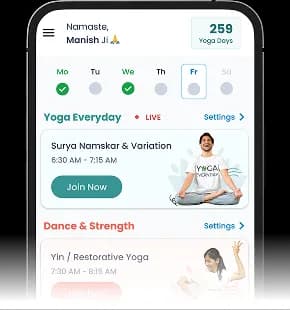
Habuild offers instructor-led live yoga, strength training and face yoga classes to help you build a regular movement habit. The ankle dorsiflexion exercises in this article are for general information, while Habuild’s classes focus on overall fitness and consistency.
This removes the promises of specialised ankle programming, individual technique corrections and a prescribed weekly mobility progression.
Disclaimer: This article is for general information, not personalised training, rehabilitation or medical advice. Habuild offers live yoga, strength training and face yoga classes. Seek qualified advice for persistent ankle pain or an existing injury.
Flexible Batch Timing
Choose morning or evening classes and join the slot that suits your day.
Morning
6:30 AM
7:30 AM
8:30 AM

Evening
5:00 PM
6:00 PM
7:00 PM
8:00 PM


Choose Your Membership Plan
Continue after the trial with membership options designed for long-term consistency support.
Continue your habit on the Habuild app
Use the Habuild app for reminders, live access, progress support, and habit tracking.