Benefits of Plank Exercise
A daily plank routine that builds core strength, reduces back pain, and improves posture within weeks.
Key Takeaways
- 60-second daily plank builds measurable core strength
- Reduces lower back pain within 4 weeks
- Side planks add oblique-specific benefits
- Guided by senior instructor Saurabh Bothra's live sessions
- Among the most-prescribed exercises in rehab training
What Is Plank Exercise?
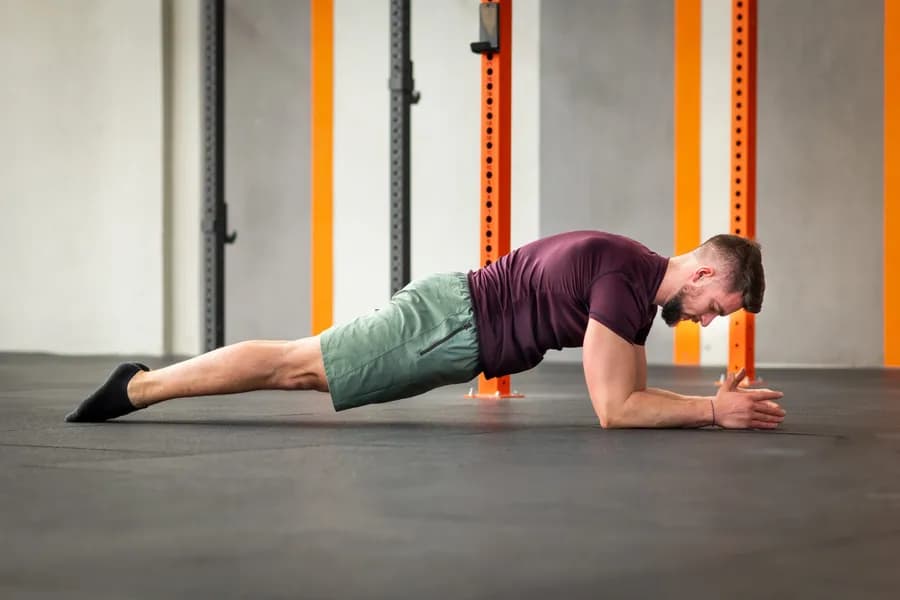
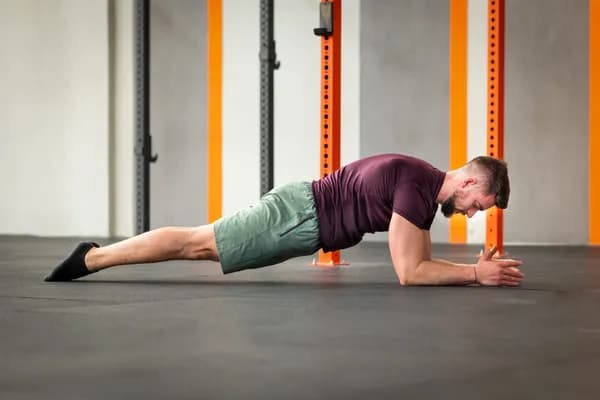
The benefits of plank exercise extend far beyond visible abs — daily plank practice builds anti-rotation core strength, meaningfully reduces lower back pain, improves posture, strengthens shoulders, and develops the deep stabilising muscles that protect the spine. This guide covers the seven biggest plank exercise benefits, the specific techniques that produce them, and how to start practising correctly from day one.
7 Benefits of Plank Exercise
Benefit 1: Builds the Strongest, Most Functional Core
Planks engage the entire core simultaneously — including the rectus abdominis, transverse abdominis, obliques, lower back, glutes, and shoulders. Few single exercises produce this much integrated muscle activation in a single hold.
Benefit 2: Reduces Lower Back Pain Substantially
Research on core training, particularly anti-rotation work like the plank, consistently shows meaningful reductions in low back pain frequency, often in the range of 50–75% over 12-week training cycles. The mechanism: planks build the deep core muscles that stabilise the spine — addressing the root cause of most non-disc-related lower back pain.
Benefit 3: Improves Posture and Reduces Forward Slouch
Strong core muscles support an upright posture, particularly the transverse abdominis (the deep “corset” muscle). Daily planks visibly improve standing and sitting posture within 4–6 weeks.
Benefit 4: Builds Visible Abdominal Definition
The plank engages all four layers of abdominal muscle — the rectus abdominis (visible six-pack), the obliques, the transverse abdominis, and the muscles deep around the spine. Combined with appropriate body fat, this produces visible abs faster than crunches alone.
Benefit 5: Strengthens Shoulders, Arms, and Wrists
A standard plank loads the shoulders, upper back, biceps, and wrists isometrically — building stability and endurance in joints critical for upper-body health.
Benefit 6: Improves Balance and Body Awareness
The plank is a closed-kinetic-chain exercise that demands constant micro-adjustment to maintain a straight body line. Research on core training and balance consistently shows measurable improvements in single-leg balance and proprioception within 8 weeks of daily practice.
Benefit 7: Enhances Athletic Performance Across All Sports
A strong, stable core transfers force more efficiently through the body — improving running, jumping, lifting, throwing, and swinging. The plank is the most accessible foundation for full-body athletic strength.
How to Get Started with Plank Exercise
What You Need to Begin
Nothing. Plank exercises require no equipment, no gym, and minimal space. A yoga mat or carpet provides comfort under the forearms but isn’t essential.
Setting Realistic Goals
First-time exercisers should aim to hold a 30-second plank with perfect form within 2 weeks, and 60 seconds within 4 weeks. Don’t chase 5-minute planks — past 90 seconds, additional time mostly trains endurance, not strength. Quality of form matters far more than duration.
Start with the Basics
Begin with the knee plank — knees on the ground, forearms supporting the upper body, body in a straight line from head to knees. Hold 15–20 seconds, rest, repeat 3 times. After 1–2 weeks, progress to the standard plank on toes. Build duration in 5-second increments.
Common Mistakes to Avoid in Plank Exercise
Mistake 1: Hips Sagging or Piking
The most common plank failure. Sagging hips strain the lower back; piking hips reduce core engagement. Maintain a perfectly straight line from head to heels — squeeze the glutes hard to prevent both.
Mistake 2: Holding Too Long With Bad Form
Past 60–90 seconds, most home trainers compromise form to extend duration. A perfect 45-second plank produces more strength gain than a sloppy 2-minute hold.
Mistake 3: Skipping the Side Plank
Most plankers do only standard planks, completely neglecting the obliques. Side plank benefits are irreplaceable for complete core development — always pair both in the same session.
Mistake 4: Holding Breath Throughout
Many people unconsciously hold their breath during planks, increasing blood pressure and reducing endurance. Breathe steadily and slowly — inhale for 3 seconds, exhale for 3 seconds — throughout the hold. In a live Habuild class, the coach calls out the breath-hold the moment it appears — invisible to the lifter, every time, and the silent reason most home plank work plateaus early.
How Habuild Trains You to Hold a Perfect Plank
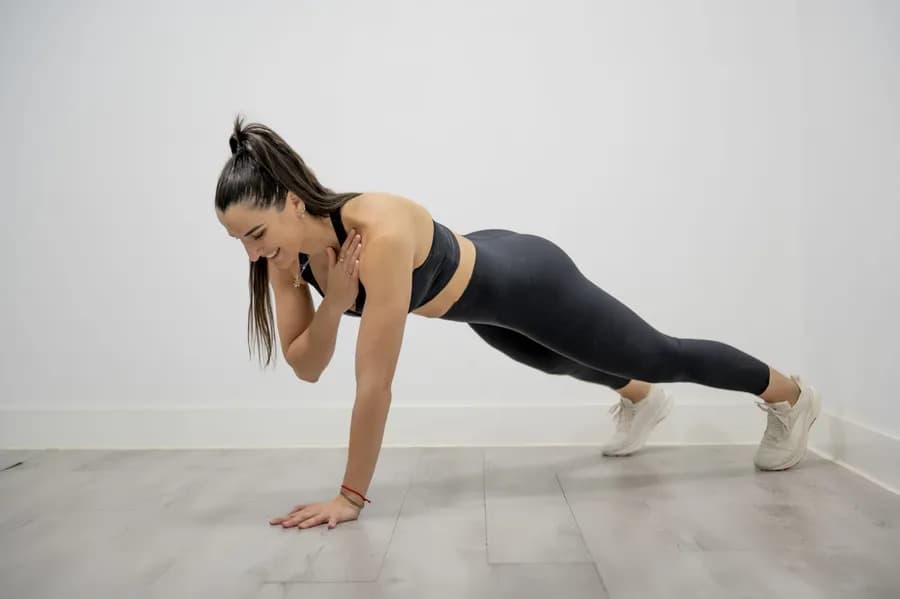
Plank-Specific Programming With Form-First Progression
Habuild’s core sessions sequence plank variations in order of difficulty — standard forearm plank, side plank, high plank, shoulder taps — each introduced only when the previous one is mastered. Members build from 20-second holds to 60-second holds before adding any variation.
Live Daily Sessions With Real-Time Form Correction
The three plank failures — hips sagging, hips piking, and held breath — are invisible to most home trainers. Habuild’s live instructor catches them immediately, in real time, before they become embedded patterns that reduce results and increase injury risk.
Progressive Overload Built Into Every Session
Members progress from knee planks → standard forearm planks → high planks → dynamic variations (shoulder taps, leg lifts) on a structured schedule. No guessing when to progress — the programme handles it based on form benchmarks.
Accountability, Streaks, and Community
Daily streak tracking and the live cohort format keep members consistent. Most home core training fails within 3–4 weeks from inconsistency — Habuild’s live structure removes that failure point entirely.
Who Is Plank Exercise Best For?
Complete Beginners Starting from Zero
Planks require no equipment and begin from a modified position — on the knees rather than the toes — which makes them accessible even to those with zero core strength. Five seconds of a modified plank is a legitimate starting point. The only requirement is showing up consistently — strength and technique follow from that.
Intermediate Trainees Looking to Fill a Gap
Planks are one of the few exercises that deliver meaningful benefit at every fitness level. For beginners, they build the foundational core stability that makes all other exercises safer. For advanced athletes, they serve as an anti-rotation and spinal stability tool that protects the lower back under heavy load. Adding plank exercises to an existing routine addresses a specific conditioning gap that most general workouts miss.
Everyone — From Complete Beginners to Advanced Athletes
Planks are one of the few exercises that deliver meaningful benefit at every fitness level. For beginners, they build the foundational core stability that makes all other exercises safer. For advanced athletes, they serve as an anti-rotation and spinal stability tool that protects the lower back under heavy load.
Senior Citizens and Older Adults (50+)
Plank Exercise can be adapted for older adults by controlling tempo, reducing range of motion, and using supported variations. Habuild’s live instructors modify exercises in real time for different fitness levels and physical conditions in the same session.
Is Plank Exercise Good for Beginners?
Yes — absolutely. Plank Exercise begin at very low intensity with fully accessible entry-level variations. Habuild’s live instructor adapts the session in real time so beginners and experienced trainees can train together without either being left behind.
How to Add Plank Exercise to Your Training Routine
How Often to Do Plank Exercise — Frequency Guide
Train plank exercises daily, or at minimum 4–5 times per week. This frequency gives the muscle and nervous system adequate stimulus without outpacing recovery. Consistency matters more than intensity in the early weeks — showing up regularly produces better results than infrequent all-out sessions.
When in Your Workout to Do Plank Exercise
Place plank exercises at the start of a core session as a bracing-practice movement, or as the final exercise of any session to finish with core engagement. Sequencing exercises correctly ensures you bring maximum quality to plank exercises rather than performing them under accumulated fatigue from earlier work.
What to Pair Plank Exercise With
Combine plank exercises with dead bugs, glute bridges, and bird dogs for a complete anti-rotation and core stability programme. This combination develops complementary muscle groups in the same session and builds the balanced strength that prevents compensation and injury.
How to Progress Plank Exercise Over Time
Once the base movement feels controlled and repeatable, extend hold duration, then progress to plank variations — shoulder taps, plank up-downs, side planks — and finally to dynamic plank movements like plank reaches and leg lifts. Progress only when form is consistent — adding difficulty before mastering the base movement reinforces poor mechanics and stalls long-term results.
How Habuild Teaches Plank Exercise
Habuild is India’s First Habit Building Program — and through its strength and fitness sessions, it brings the same habit-based philosophy to targeted exercise training. Every session is structured around your specific goal, not a one-size-fits-all class.
Goal-Specific Programming — Not a Generic Fitness Class
Every exercise, rep range, and rest period in Habuild’s plank exercises sessions is chosen because it produces results for plank exercises specifically. Habuild does not run the same session for every goal — the programme is structured to drive your specific outcome with every session, not general fitness that happens to include plank exercises.
Live Daily Sessions with Real-Time Form Correction
Unlike pre-recorded videos, Habuild’s live daily sessions allow the instructor to see and correct your form in real time — the specific errors that limit plank exercises results and increase injury risk. This live correction is the difference between training that works and training that wastes effort and creates bad habits.
Progressive Overload Built into Every Session
Members do not need to design their own progressive overload for plank exercises — it is built into the programme structure. Each week, sessions are deliberately more challenging than the last, ensuring the body never fully adapts and results continue coming rather than stalling.
Accountability, Streaks, and Community
The most common reason people stop exercising is not effort — it is missing sessions until the habit breaks. Habuild’s streak system, live session accountability, and community of members training the same goal alongside you resolves this directly. Members who join with a specific goal like plank exercises and stay consistent for 30 days almost universally report that showing up has become automatic.
Flexible Batch Timing
Choose morning or evening classes and join the slot that suits your day.
Morning
6:30 AM
7:30 AM
8:30 AM

Evening
5:00 PM
6:00 PM
7:00 PM
8:00 PM

Choose Your Membership Plan
Continue after the trial with membership options designed for long-term consistency support.
Continue your habit on the Habuild app
Use the Habuild app for reminders, live access, progress support, and habit tracking.