Brain Fitness Exercises: Sharpen Memory, Focus and Cognitive Health
A set of brain fitness exercises that sharpen memory and focus by increasing blood flow and BDNF production.
Key Takeaways
- Increases cerebral blood flow through targeted movement
- Stimulates BDNF production for cognitive support
- Includes yoga inversions, flows, and pranayama
- Guided by senior instructor Saurabh Bothra's live classes
- Engages coordination patterns that strengthen the brain
What Are Brain Fitness Exercises?
Brain fitness exercises are movements that produce measurable neurobiological changes supporting cognitive function — not just general exercise performed near a brain. The specific movement patterns that produce the strongest brain benefit are: aerobic flows (which trigger BDNF and elevated cerebral blood flow), balance and coordination challenges (which activate cerebellar and frontal lobe circuits simultaneously), and pranayama breathwork (which improves cerebral oxygenation and deactivates the default mode network). These differ from standard fitness exercises in that their brain benefit comes from specific physiological mechanisms, not just the general health effects of physical activity.
The mechanism: physical exercise produces BDNF through a cascade from muscle contraction — working muscles release lactate and VEGF that cross the blood-brain barrier and stimulate hippocampal neurogenesis and synaptic strengthening. Balance exercises specifically activate the cerebellum and the prefrontal-hippocampal circuits that govern attention, working memory and spatial cognition. Pranayama improves cerebral oxygenation through improved respiratory efficiency and activates the vagal-prefrontal pathway that governs executive function. Together, brain exercises for memory and focus produce structural brain changes — not just temporary cognitive effects.
Benefits of Brain Fitness Exercises
Improved Memory Through Hippocampal BDNF and Neurogenesis
BDNF stimulates the growth of new neurons in the hippocampus — the brain’s memory encoding and retrieval centre. Regular brain fitness exercises increase hippocampal volume measurably over 12 weeks of consistent practice, with corresponding improvements in verbal and spatial memory performance.
A 2011 PNAS study found aerobic exercise increased hippocampal volume by 2% over 12 months — reversing 1–2 years of age-related hippocampal shrinkage and improving spatial memory performance.
Sharper Focus Through Default Mode Network Deactivation
The default mode network (DMN) — the brain system responsible for mind-wandering and distraction — is the primary enemy of sustained focus. Brain fitness exercises combining physical movement with breath awareness consistently deactivate the DMN, producing the focused, present-moment attention state that learning and high-performance cognitive work requires.
Stronger Heart Driving More Blood to the Brain
The brain consumes 20% of cardiac output despite being 2% of body mass. Cardiovascular fitness improvements from consistent exercise increase cerebral blood flow and the delivery of oxygen and glucose that high-performance cognitive function requires.
Regular aerobic exercise reduces cardiovascular disease risk by up to 35% and increases cerebral blood flow by 15–30% during exercise — the direct mechanism connecting physical fitness to cognitive performance.
Reduced Cortisol That Protects Memory Neurons
Chronic cortisol is the most potent available neurotoxin for the hippocampus — it directly suppresses neurogenesis and impairs the long-term potentiation that is the molecular mechanism of memory formation. Exercises for brain health that incorporate stress management (yoga flows, pranayama) address this driver as directly as they address BDNF production.
Best Brain Fitness Exercises
Tree Pose (Vrikshasana) — Prefrontal Cortex + Cerebellum — 60 seconds each side
[Image — Vrikshasana tree pose brain fitness exercise balance and focus]
Single-leg balance that simultaneously activates the cerebellum (balance co-ordination), prefrontal cortex (sustained attention to maintain balance) and hippocampus (spatial cognition). Each balance challenge is itself a brain exercise — the neural effort of maintaining balance is the mechanism. Progress from eyes open to eyes closed as balance improves. One of the 5 brain exercises most specifically targeting prefrontal and hippocampal circuits. Difficulty: Beginner. See also:
Alternate Nostril Breathing (Nadi Shodhana) — Hemispheric Balance + Cerebral Oxygenation — 10–15 mins
[Image — Nadi Shodhana pranayama brain fitness exercise hemispheric balance]
Alternating nostril breathing balances left and right hemisphere activity, increases alpha wave production (the relaxed-alert cognitive state associated with optimal learning and creativity), and improves cerebral oxygenation through the respiratory efficiency training of slow controlled breathing. Research documents working memory improvements following consistent Nadi Shodhana practice. Exercises for brain health anchor practice. Difficulty: Beginner. See also:
Surya Namaskar Flow — Full BDNF + Cerebral Blood Flow — 10–20 rounds
[Image — Surya Namaskar brain fitness exercise BDNF cerebral blood flow]
The most comprehensive single brain fitness exercise — 10–20 continuous rounds produce sustained aerobic output (BDNF production), include forward folds (cerebral blood flow via inversion), require constant co-ordination and breath synchronisation (cerebellar and frontal activation), and close with Savasana (DMN deactivation). Brain exercises for memory and cognitive health most complete daily practice. Difficulty: Beginner-Intermediate. See also:
Common Mistakes to Avoid in Brain Fitness Training
Mistake 1: Only Doing Mindless Repetitive Exercise — Correction: Add Coordination and Balance Challenges
Repetitive steady-state exercise (treadmill at fixed pace, machine weights) produces BDNF but misses the cerebellar and frontal activation that balance and coordination challenges specifically generate. The most cognitively stimulating brain fitness exercises are those requiring novel motor learning — new balance challenges, complex movement sequences, eyes-closed balance variations.
Mistake 2: Exercising Without Breath Awareness — Correction: Synchronise Movement with Breath
Breath-movement synchronisation activates the vagal-prefrontal pathway that governs executive function and working memory. Exercise performed without breath awareness misses this cognitive activation mechanism. Every exercise in a brain fitness programme should include deliberate nasal breathing and movement-breath co-ordination.
Mistake 3: Inconsistent Practice — Correction: Daily 20–30 Minutes Over Months
Hippocampal neurogenesis from exercise requires consistent daily stimulus over 8–12 weeks to produce measurable structural change. Occasional intense exercise produces temporary BDNF elevation without the sustained stimulus that produces hippocampal growth. Daily moderate-intensity practice outperforms irregular intense sessions for brain health outcomes.
How Habuild Trains You for Brain Fitness
Condition-Specific Programming — Not a Generic Fitness Class
Habuild’s sessions are sequenced for cognitive benefit — opening with lower-body activation (muscle pump and cardiovascular priming), building through co-ordination-demanding yoga flows (cerebellar and frontal activation), progressing to inversion-inclusive sequences (cerebral blood flow), and closing with pranayama and Savasana (DMN deactivation and consolidation).
Live Daily Sessions with Real-Time Form Correction
Habuild’s live format provides real-time corrections for the specific errors that undermine Brain Fitness training — shallow breathing, incorrect load sequencing, skipping the cool-down, and the alignment details that make the difference between a productive session and an ineffective one. Not pre-recorded content.
Progressive Overload Built into Every Session
Brain fitness adaptations require progressive challenge to maintain stimulus — as balance and co-ordination exercises become familiar, the cognitive activation they produce reduces. Habuild’s programme systematically advances the balance challenge, movement complexity and pranayama depth week by week, maintaining the novel motor learning demand that produces the strongest BDNF response.
Accountability, Streaks and Community
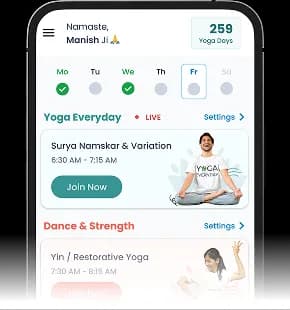
Daily habit formation through streak tracking, a WhatsApp community and the live morning class social structure. Members who show up consistently are the ones who see results — Habuild’s accountability systems make consistency achievable rather than requiring willpower alone.
Who Is Brain Fitness Exercises Best For?
Complete Beginners Starting from Zero
Brain fitness exercises begin with basic coordination movements — walking while counting backwards, simple balance challenges, or following along with a routine that requires memory of the sequence. No equipment or fitness level is required. The only requirement is showing up consistently — strength and technique follow from that.
Intermediate Trainees Looking to Fill a Gap
Brain fitness exercises — combining physical exercise with cognitive tasks, coordination challenges, and mindfulness — improve neuroplasticity, memory, attention, and processing speed. Physical exercise in particular is the most evidence-supported intervention for brain health, with aerobic exercise shown to increase hippocampal volume. Adding brain fitness exercises to an existing routine addresses a specific conditioning gap that most general workouts miss.
Adults Seeking Cognitive Improvement, Mental Sharpness, and Dementia Prevention
Brain fitness exercises — combining physical exercise with cognitive tasks, coordination challenges, and mindfulness — improve neuroplasticity, memory, attention, and processing speed. Physical exercise in particular is the most evidence-supported intervention for brain health, with aerobic exercise shown to increase hippocampal volume.
Senior Citizens and Older Adults (50+)
Brain Fitness Exercises can be adapted for older adults by controlling tempo, reducing range of motion, and using supported variations. Habuild’s live instructors modify exercises in real time for different fitness levels and physical conditions in the same session.
Is Brain Fitness Exercises Good for Beginners?
Yes — absolutely. Brain Fitness Exercises begin at very low intensity with fully accessible entry-level variations. Habuild’s live instructor adapts the session in real time so beginners and experienced trainees can train together without either being left behind.
How to Add Brain Fitness Exercises to Your Training Routine
How Often to Do Brain Fitness Exercises — Frequency Guide
Train brain fitness exercises daily, or minimum 5 days per week. This frequency gives the muscle and nervous system adequate stimulus without outpacing recovery. Consistency matters more than intensity in the early weeks — showing up regularly produces better results than infrequent all-out sessions.
When in Your Workout to Do Brain Fitness Exercises
Place brain fitness exercises morning when cognitive resources are typically highest — brain fitness exercises benefit most from mental freshness rather than end-of-day fatigue. Sequencing exercises correctly ensures you bring maximum quality to brain fitness exercises rather than performing them under accumulated fatigue from earlier work.
What to Pair Brain Fitness Exercises With
Combine brain fitness exercises with aerobic exercise (walking, cycling), meditation, and sleep optimisation for a complete brain health programme. This combination develops complementary muscle groups in the same session and builds the balanced strength that prevents compensation and injury.
How to Progress Brain Fitness Exercises Over Time
Once the base movement feels controlled and repeatable, increase the complexity of coordination challenges, add dual-task demands (physical movement combined with cognitive tasks), and increase the duration of aerobic sessions which have the strongest dose-response relationship with brain health. Progress only when form is consistent — adding difficulty before mastering the base movement reinforces poor mechanics and stalls long-term results.
How Habuild Teaches Brain Fitness Exercises
Habuild is India’s First Habit Building Program — and through its strength and fitness sessions, it brings the same habit-based philosophy to targeted exercise training. Every session is structured around your specific goal, not a one-size-fits-all class.
Goal-Specific Programming — Not a Generic Fitness Class
Every exercise, rep range, and rest period in Habuild’s brain fitness exercises sessions is chosen because it produces results for brain fitness exercises specifically. Habuild does not run the same session for every goal — the programme is structured to drive your specific outcome with every session, not general fitness that happens to include brain fitness exercises.
Live Daily Sessions with Real-Time Form Correction
Unlike pre-recorded videos, Habuild’s live daily sessions allow the instructor to see and correct your form in real time — the specific errors that limit brain fitness exercises results and increase injury risk. This live correction is the difference between training that works and training that wastes effort and creates bad habits.
Progressive Overload Built into Every Session
Members do not need to design their own progressive overload for brain fitness exercises — it is built into the programme structure. Each week, sessions are deliberately more challenging than the last, ensuring the body never fully adapts and results continue coming rather than stalling.
Accountability, Streaks, and Community
The most common reason people stop exercising is not effort — it is missing sessions until the habit breaks. Habuild’s streak system, live session accountability, and community of members training the same goal alongside you resolves this directly. Members who join with a specific goal like brain fitness exercises and stay consistent for 30 days almost universally report that showing up has become automatic.
Flexible Batch Timing
Choose morning or evening classes and join the slot that suits your day.
Morning
6:30 AM
7:30 AM
8:30 AM

Evening
5:00 PM
6:00 PM
7:00 PM
8:00 PM


Choose Your Membership Plan
Continue after the trial with membership options designed for long-term consistency support.
Continue your habit on the Habuild app
Use the Habuild app for reminders, live access, progress support, and habit tracking.