7 Exercises for Neck
A 7-move neck routine that builds strength and relieves pain while correcting forward head posture.

Key Takeaways
- Combines strengthening with gentle stretching
- Best done 4-5 days a week, 5-10 minutes per session
- Daily gentle work beats occasional intense sessions
- Guided by senior instructor Saurabh Bothra's live sessions
- Stop immediately if any movement causes sharp pain
What Are Exercises for the Neck?

Exercises for the neck are a targeted set of strengthening and mobility movements designed to relieve cervical pain, fix forward head posture, and build resilience in the muscles that support the head and neck. Unlike general fitness or upper-body training, neck exercises operate at low intensity and high precision. The goal is not to fatigue the muscles. The goal is to correct the imbalance that creates the pain. Most non-traumatic neck pain comes from forward head posture caused by long hours at a laptop or phone — a movement pattern correction that pairs naturally with broader .
The mechanism of correction is straightforward. When the head moves forward, the deep neck flexors weaken and the upper trapezius tightens. Targeted neck pain exercises at home reverse this in two coordinated ways. Strengthening movements like chin tucks rebuild the deep neck flexors. Mobility work like upper trap stretches releases the chronically tight muscles. Done 5 to 10 minutes daily, the protocol produces measurable pain reduction within 2 to 4 weeks for most postural neck pain.
Benefits of Exercises for the Neck
Reduces Cervical Pain Within Weeks
Research on targeted neck strengthening (Ylinen et al. and follow-up work) consistently shows substantial cervical pain reduction with consistent 6-week protocols. The strengthening component is what creates lasting change. Stretching alone usually fails.
Corrects Forward Head Posture
Forward head posture is the root cause of most desk-worker neck pain. Daily neck exercises gradually retrain the head’s resting position, reducing the chronic load on the cervical spine. The same protocol pairs well with our broader when discomfort has spread.
Cuts Tension Headache Frequency
Many tension headaches originate from upper cervical tightness. Better neck mobility reduces tension headache frequency in most members within 3 to 4 weeks.
Builds Resilience for Desk Work
Strong neck and upper-back muscles tolerate long screen hours far better than weak ones. The exercises below also reinforce a wider approach that includes upper-body work alongside the neck-specific protocol.
Best Neck Exercises — 3 Movements That Cover Strength and Stretch
Exercise 1: Chin Tucks — Deep Neck Flexors — 3 sets of 10 reps
How to perform: Sit or stand tall. Without tilting your head, draw your chin straight back as if making a double chin. Hold for 5 seconds, release. Why it suits this goal: This is the single most important neck strengthening exercise. It activates the deep neck flexors that hold the head over the spine. Modification: Lie on your back with a folded towel under your head. Gently press the back of your head into the towel.
Exercise 2: Scapular Squeezes — Mid Trapezius — 3 sets of 12 reps
How to perform: Sit or stand with arms relaxed at your sides. Squeeze your shoulder blades back and down, hold 5 seconds, release. Why it suits this goal: This activates the upper-back muscles that pull the shoulders into proper alignment, reducing forward-head load on the neck — the same scapular work that anchors any structured . Modification: Perform with elbows bent and palms facing forward at shoulder height for greater activation.
Exercise 3: Upper Trap Stretch — Releases Tight Side Neck — Hold 30 seconds each side
How to perform: Sit tall. Place your right hand under your right thigh to anchor the shoulder. Tilt your left ear toward your left shoulder. Hold. Why it suits this goal: This is one of the most effective neck stretches for pain because it directly releases the chronically tight upper trapezius. Modification: Use the free hand to apply gentle pressure on top of the head for a deeper stretch. Only do this when 30-second holds without pressure feel comfortable.
Common Mistakes to Avoid in Neck Exercises
Mistake 1: Pushing Through Sharp Pain — Correction: Stop Immediately
What it is and why it undermines results: Sharp, shooting, or radiating pain (especially down the arm) is a signal to stop, not something to push through. Continuing through it can worsen disc-related issues. What to do instead: Stop immediately. Mild discomfort during a stretch is normal. Sharp pain is a stop signal. Consult a physiotherapist before continuing.
Mistake 2: Rolling the Neck in Full Circles — Correction: Move in Single Planes
What it is and why it undermines results: Full neck circles compress the cervical spine at unnatural angles and can aggravate disc issues. What to do instead: Move only in single planes. Use left-right rotation, forward-backward flexion, and side-to-side ear-to-shoulder. Never combine multiple planes in one movement.
Mistake 3: Stretching Only, Skipping Strengthening — Correction: Build the Deep Neck Flexors
What it is and why it undermines results: Most people with neck pain stretch the tight muscles but never strengthen the weak ones. The result is temporary relief and recurring pain. What to do instead: Pair every stretching session with chin tucks and scapular squeezes. Strength is what creates lasting change. In a live Habuild class, the coach catches the chin-tuck-turning-into-nodding error within the first rep — the silent reason most home practice produces minimal benefit despite weeks of effort.
50,000+ members already training with Habuild every morning
Live daily sessions · Expert instructor · Cancel anytime
How Habuild Trains You to Build a Stronger Neck
Posture-Specific Programming, Not Generic Stretching
Habuild’s neck and shoulder sessions follow a deliberate sequence: gentle release first, then activation, then upper-back strengthening. Each section serves a specific role in postural correction.
Live Daily Sessions With Real-Time Form Correction
The two invisible neck-exercise failures are chin tucks turning into nodding, and scapular squeezes turning into shoulder shrugging. Both are caught immediately by a live coach. Without correction, most home practice produces minimal benefit.
Progressive Overload Built Into Every Session
Members progress from short holds and gentle stretches to longer holds and resistance-band variations on a structured schedule. The progression is built in.
Accountability, Streaks, and Community
Lasting neck pain relief requires daily practice over weeks. Streaks and live cohort timing keep members showing up, particularly on the days when pain has eased and motivation drops.
Who Is Exercises for Neck Best For?
Complete Beginners Starting from Zero
All neck exercises in this programme are done seated or standing, with no equipment required. They are gentle enough for anyone with existing neck discomfort, starting with the safest movements first. The only requirement is showing up consistently — strength and technique follow from that.
Intermediate Trainees Looking to Fill a Gap
Neck pain is among the most common musculoskeletal complaints, and most cases are driven by weakness and tightness in the neck and upper back muscles. Targeted neck exercises resolve the root cause rather than masking it with painkillers. Adding neck exercises to an existing routine addresses a specific conditioning gap that most general workouts miss.
Desk Workers, Drivers, and Those with Chronic Neck Tension
Neck pain is among the most common musculoskeletal complaints, and most cases are driven by weakness and tightness in the neck and upper back muscles. Targeted neck exercises resolve the root cause rather than masking it with painkillers.
Senior Citizens and Older Adults (50+)
Exercises for Neck can be adapted for older adults by controlling tempo, reducing range of motion, and using supported variations. Habuild’s live instructors modify exercises in real time for different fitness levels and physical conditions in the same session.
Is Exercises for Neck Good for Beginners?
Yes — absolutely. Exercises for Neck begin at very low intensity with fully accessible entry-level variations. Habuild’s live instructor adapts the session in real time so beginners and experienced trainees can train together without either being left behind.
How to Add Exercises for Neck to Your Training Routine
How Often to Do Exercises for Neck — Frequency Guide
Train neck exercises daily, 5–8 minutes. This frequency gives the muscle and nervous system adequate stimulus without outpacing recovery. Consistency matters more than intensity in the early weeks — showing up regularly produces better results than infrequent all-out sessions.
When in Your Workout to Do Exercises for Neck
Place neck exercises morning as a posture reset, or at any point during a long seated work session. Sequencing exercises correctly ensures you bring maximum quality to neck exercises rather than performing them under accumulated fatigue from earlier work.
What to Pair Exercises for Neck With
Combine neck exercises with chin tucks, scapular squeezes, and thoracic extension stretches for complete cervical and upper-back health. This combination develops complementary muscle groups in the same session and builds the balanced strength that prevents compensation and injury.
How to Progress Exercises for Neck Over Time
Once the base movement feels controlled and repeatable, begin with unresisted range-of-motion movements, then add isometric resistance (pressing your palm against your forehead or temple), and finally progress to resistance band exercises. Progress only when form is consistent — adding difficulty before mastering the base movement reinforces poor mechanics and stalls long-term results.
How Habuild Teaches Exercises for Neck
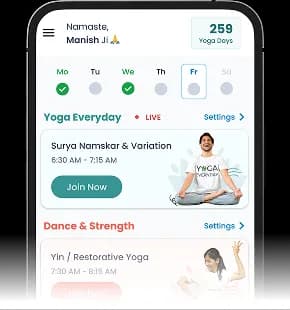
Habuild is India’s First Habit Building Program — and through its strength and fitness sessions, it brings the same habit-based philosophy to targeted exercise training. Every session is structured around your specific goal, not a one-size-fits-all class.
Goal-Specific Programming — Not a Generic Fitness Class
Every exercise, rep range, and rest period in Habuild’s neck exercises sessions is chosen because it produces results for neck exercises specifically. Habuild does not run the same session for every goal — the programme is structured to drive your specific outcome with every session, not general fitness that happens to include neck exercises.
Live Daily Sessions with Real-Time Form Correction
Unlike pre-recorded videos, Habuild’s live daily sessions allow the instructor to see and correct your form in real time — the specific errors that limit neck exercises results and increase injury risk. This live correction is the difference between training that works and training that wastes effort and creates bad habits.
Progressive Overload Built into Every Session
Members do not need to design their own progressive overload for neck exercises — it is built into the programme structure. Each week, sessions are deliberately more challenging than the last, ensuring the body never fully adapts and results continue coming rather than stalling.
Accountability, Streaks, and Community
The most common reason people stop exercising is not effort — it is missing sessions until the habit breaks. Habuild’s streak system, live session accountability, and community of members training the same goal alongside you resolves this directly. Members who join with a specific goal like neck exercises and stay consistent for 30 days almost universally report that showing up has become automatic.
Flexible Batch Timing
Choose morning or evening classes and join the slot that suits your day.
Morning
6:30 AM
7:30 AM
8:30 AM

Evening
5:00 PM
6:00 PM
7:00 PM
8:00 PM

Choose Your Membership Plan
Continue after the trial with membership options designed for long-term consistency support.
Continue your habit on the Habuild app
Use the Habuild app for reminders, live access, progress support, and habit tracking.