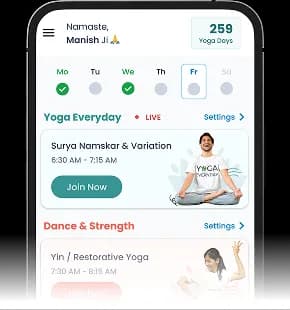
Hammer Curl: The Bicep Exercise That Actually Builds Bigger Arms and Forearms
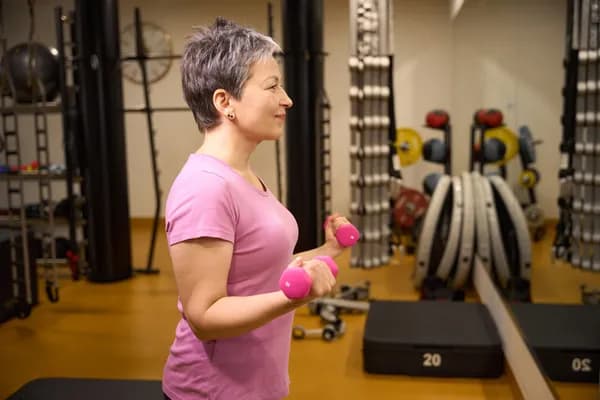
A hammer curl routine that builds bigger arms and forearms by targeting the brachialis and brachioradialis.
Key Takeaways
- Neutral grip targets the brachialis and brachioradialis
- Improves forearm tone and grip strength in 3-4 weeks
- Visible arm thickness gains typically in 8-12 weeks
- Guided by senior instructor Saurabh Bothra's live classes
- Works best paired with sufficient protein intake
What Is the Hammer Curl?
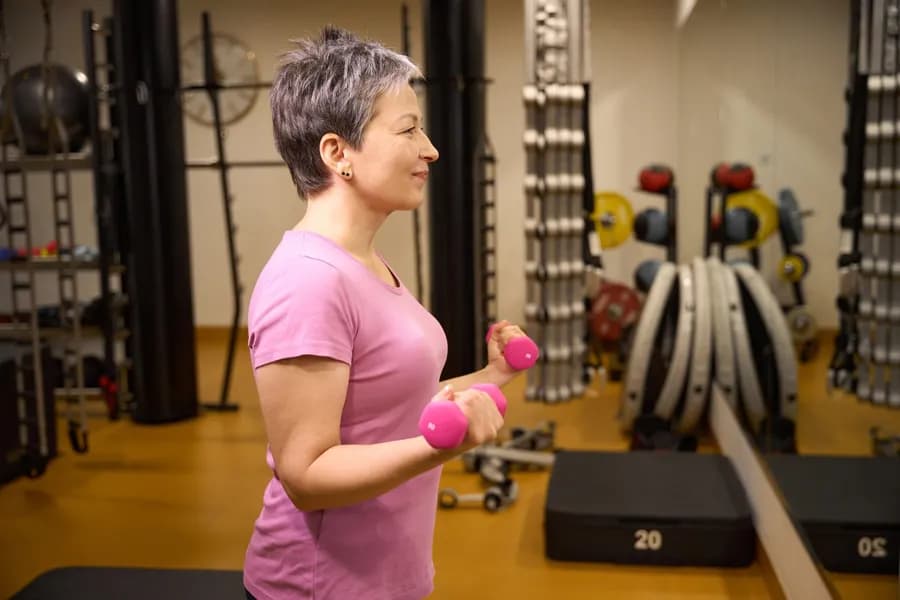
The hammer curl is not just a variation of the standard bicep curl — it is a fundamentally different exercise that targets a specific upper-arm muscle most lifters underdevelop. Performed with a neutral grip (palms facing each other, as if holding a hammer), the movement loads the brachialis, brachioradialis, and the long head of the biceps in a coordinated pattern that the standard supinated curl does not achieve. Most arm training content treats hammer curls as an interchangeable substitute for regular curls — missing how dramatically the neutral grip changes the muscle loading and the arm-thickness outcomes the exercise produces. The right hammer curl exercise practice combines correct neutral grip, controlled elbow position, and progressive overload to build the brachialis and forearm thickness that creates the visibly bigger arms most lifters are after.
The mechanism is mechanically clear. The standard supinated bicep curl loads the biceps brachii in its strongest line of pull, but it under-loads the brachialis — a muscle that sits underneath the biceps and pushes them outward, contributing significantly to total arm thickness. The neutral grip of the hammer curl shifts emphasis to the brachialis and the long head of the biceps, while simultaneously loading the brachioradialis (a major forearm muscle) more heavily than any other curl variation. The differential muscle activation across curl grips was systematically validated by Marcolin et al. in their 2018 study in PeerJ, “Differences in electromyographic activity of biceps brachii and brachioradialis while performing three variants of curl,” which used EMG analysis to confirm that neutral-grip curls produce significantly greater brachioradialis and brachialis activation than supinated variations. Beyond pure muscle building, hammer curls develop the grip strength, wrist stability, and forearm endurance that compound movements like deadlifts and rows depend on.
Benefits of Hammer Curls
Benefit 1: Bigger, Thicker Arms Through Brachialis Development
The most direct benefit — and the primary reason serious lifters include hammer curls in every arm training session. The brachialis is the underrated arm muscle that pushes the biceps outward, contributing significantly to total upper-arm thickness. Hammer curls load it more directly than any other curl variation. Stat: A 2018 EMG study in PeerJ analysing curl variations confirmed that neutral-grip hammer curls produce 25–35% greater brachialis activation than standard supinated curls — making them the single most effective exercise for the muscle responsible for arm thickness rather than just bicep peak.
Benefit 2: Stronger Forearms and Improved Grip Strength
The functional benefit most lifters do not anticipate. The hammer curl directly loads the brachioradialis — the largest forearm muscle — and develops the grip strength that carries over to deadlifts, rows, pull-ups, and everyday lifting. Members building broader upper-body strength alongside hammer curl work often pair their training with our programme to address the complete arm protocol that combines biceps, triceps, and forearms in balanced fashion.
Benefit 3: Better Elbow Stability and Joint Health
The physiological adaptation benefit. The neutral grip places the wrists and elbows in their most anatomically natural position, reducing the joint stress that supinated curls produce in lifters with wrist or elbow sensitivity. This makes hammer curls one of the most joint-friendly bicep exercises available. Stat: The National Strength and Conditioning Association confirms that neutral-grip pulling movements produce measurable reductions in wrist and elbow strain compared to supinated alternatives, allowing for higher training frequency and longer-term progression without joint complaints.
Benefit 4: Improved Carryover to Compound Lifts and Athletic Performance
The secondary-but-significant benefit. The grip strength, forearm endurance, and elbow stability developed through hammer curls directly improves performance in deadlifts, rows, pull-ups, and any sport requiring grip — climbing, jiu-jitsu, racquet sports, and combat sports. Members building broader arm and biceps development often pair their hammer curl practice with our programme for the comprehensive bicep-shaping protocol that combines hammer curls with supinated and pronated variations.
Best Hammer Curl Variations and Progressions
Exercise 1: Standard Dumbbell Hammer Curl — Brachialis, Brachioradialis, Biceps — 3 sets × 10–12 reps
What it does and why it suits this goal: The standard dumbbell hammer curl is the foundational variation — performed standing or seated with a neutral grip, elbows pinned to the sides, and controlled curl through the full range of motion. The strict elbow position prevents momentum and ensures the targeted muscles do the work. Sets and reps: 3 sets of 10–12 reps with 60 seconds rest between sets, performed 2–3 times per week. Modification: Begin with lighter dumbbells (3–5 kg) to master form before progressing weight. Use water bottles or filled backpacks if dumbbells are unavailable.
Exercise 2: Cross-Body Hammer Curl — Maximum Brachialis Isolation — 3 sets × 10 reps per arm
What it does and why it suits this goal: The cross-body hammer curl brings the dumbbell across the body toward the opposite shoulder rather than straight up — a small change in path that dramatically increases brachialis isolation and time under tension. This variation is one of the most effective for developing arm thickness specifically. Sets and reps: 3 sets of 10 reps per arm with 45 seconds rest between arms, performed 1–2 times per week. Modification: Reduce weight slightly compared to standard hammer curls — the cross-body path requires more control and stability.
Exercise 3: Cable Hammer Curl with Rope Attachment — Constant Tension Loading — 3 sets × 12 reps
What it does and why it suits this goal: The cable hammer curl performed with a rope attachment maintains constant tension throughout the entire range of motion — a benefit dumbbells cannot match because gravity reduces resistance at the top of the dumbbell movement. The cable version is the destination progression for serious arm development. Sets and reps: 3 sets of 12 reps with 60 seconds rest, performed 1–2 times per week. Modification: Resistance bands work as an effective home substitute when cable equipment is unavailable. Anchor the band low and curl the rope or band ends with neutral grip.
Common Mistakes to Avoid When Training Hammer Curls
Mistake 1: Swinging the Body to Lift the Weight — Correction: Pin Elbows to the Sides, Eliminate Momentum
What it is and why it undermines hammer curl progress: Swinging the torso, hips, or shoulders to lift the dumbbell is the single most common form error in hammer curls — it transfers loading from the targeted arm muscles to the lower back and momentum, producing minimal arm growth and significant injury risk. The dumbbell moves but the brachialis barely contracts. What to do instead: Pin the elbows firmly against the sides throughout every rep and lift the dumbbells using only the elbow joint flexion. If the weight cannot be lifted with strict form, it is too heavy. Quality of contraction always beats quantity of weight.
Mistake 2: Letting the Wrists Curl or Bend Under Load — Correction: Maintain Neutral Wrist Throughout
What it is and why it undermines hammer curl progress: Many lifters allow the wrists to curl or bend backward under heavy loads, transferring the work from the brachialis to the wrists and forearms, and creating wrist strain that limits progression. The wrist breakdown reduces both muscle activation and long-term joint health. What to do instead: Maintain a rigid neutral wrist position throughout every rep, with the dumbbell handle held firmly in line with the forearm. If the wrist cannot stay neutral, reduce the weight until form is consistent.
Mistake 3: Doing Only Hammer Curls Without Other Bicep Variations — Correction: Combine with Supinated Curls and Pronated Variations
What it is and why it undermines hammer curl progress: Performing only hammer curls develops the brachialis and brachioradialis but under-loads the biceps brachii — the muscle responsible for the visible bicep peak. The result is thicker arms but limited overall bicep development. What to do instead: Include hammer curls as one variation in a balanced bicep routine that also features supinated dumbbell or barbell curls (for biceps brachii) and pronated reverse curls (for brachioradialis emphasis). Members building complete arm development often pair their hammer curl practice with our programme for the full arm-shaping protocol.
Ready to start? Here’s how Habuild structures hammer curl training every day:
How Habuild Trains You to Master Hammer Curls
Hammer Curl-Specific Programming — Not a Generic Fitness Class
Every exercise selection, sequencing decision, and rest period is chosen for hammer-curl-specific benefit. Sessions open with shoulder and wrist mobility work that prepares the joints for loaded curling, build through hammer curl variations at progressive weight and tempo, and close with complementary supinated and pronated curl work that maintains balanced bicep development. This sequencing is the exact opposite of typical home arm routines that throw curls in randomly — the structured programming is what locks in genuine arm thickness and strength.
Live Daily Sessions with Real-Time Form Correction
The live format catches the specific errors that prevent hammer curl progress — body swing that bypasses the arms, wrist breakdown under load, elbow drift away from the sides, and uneven left-right loading most members do not notice in solo training. Real-time correction is something pre-recorded content cannot deliver, and these are the exact errors that undermine arm work even in members training consistently.
Progressive Overload Built into Every Session
Members do not need to programme their own progression. Each week, weight, tempo, time under tension, and variation complexity are adjusted upward so the brachialis and forearms keep adapting — preventing the plateau that derails most home arm routines after 4–6 weeks. The same habit-building structure that drives our ensures consistent attendance over the months meaningful arm development actually requires.
Accountability, Streaks and Community
Who Is Hammer Curls Best For?
Complete Beginners Starting from Zero
Hammer curls begin with very light dumbbells (1–2 kg) or a filled water bottle. The neutral grip is natural and comfortable, making it one of the most wrist-friendly arm exercises for beginners. The only requirement is showing up consistently — strength and technique follow from that.
Intermediate Trainees Looking to Fill a Gap
The hammer curl works the brachialis — a muscle beneath the bicep that pushes the bicep up, creating the peak appearance — as well as the brachioradialis forearm muscle. Together, these produce more complete arm development than standard curls alone and improve grip strength that transfers to every carrying and pulling activity. Adding hammer curls to an existing routine addresses a specific conditioning gap that most general workouts miss.
Those Building Forearm Strength, Bicep Peak, and Grip for Daily Activities
The hammer curl works the brachialis — a muscle beneath the bicep that pushes the bicep up, creating the peak appearance — as well as the brachioradialis forearm muscle. Together, these produce more complete arm development than standard curls alone and improve grip strength that transfers to every carrying and pulling activity.
Senior Citizens and Older Adults (50+)
Hammer Curls can be adapted for older adults by controlling tempo, reducing range of motion, and using supported variations. Habuild’s live instructors modify exercises in real time for different fitness levels and physical conditions in the same session.
Is Hammer Curls Good for Beginners?
Yes — absolutely. Hammer Curls begin at very low intensity with fully accessible entry-level variations. Habuild’s live instructor adapts the session in real time so beginners and experienced trainees can train together without either being left behind.
How to Add Hammer Curls to Your Training Routine
How Often to Do Hammer Curls — Frequency Guide
Train hammer curls 2–3 times per week. This frequency gives the muscle and nervous system adequate stimulus without outpacing recovery. Consistency matters more than intensity in the early weeks — showing up regularly produces better results than infrequent all-out sessions.
When in Your Workout to Do Hammer Curls
Place hammer curls after compound pulling movements (rows, pull-ups), as an arm isolation exercise in the final third of a session. Sequencing exercises correctly ensures you bring maximum quality to hammer curls rather than performing them under accumulated fatigue from earlier work.
What to Pair Hammer Curls With
Combine hammer curls with standard curls, reverse curls, and wrist curls for a complete forearm and bicep programme. This combination develops complementary muscle groups in the same session and builds the balanced strength that prevents compensation and injury.
How to Progress Hammer Curls Over Time
Once the base movement feels controlled and repeatable, increase weight in 0.5–1 kg increments, slow the eccentric phase (lower over 3 seconds), add a squeeze at the top, then progress to incline hammer curls for a longer range of motion. Progress only when form is consistent — adding difficulty before mastering the base movement reinforces poor mechanics and stalls long-term results.
How Habuild Teaches Hammer Curls
Habuild is India’s First Habit Building Program — and through its strength and fitness sessions, it brings the same habit-based philosophy to targeted exercise training. Every session is structured around your specific goal, not a one-size-fits-all class.
Goal-Specific Programming — Not a Generic Fitness Class
Every exercise, rep range, and rest period in Habuild’s hammer curls sessions is chosen because it produces results for hammer curls specifically. Habuild does not run the same session for every goal — the programme is structured to drive your specific outcome with every session, not general fitness that happens to include hammer curls.
Live Daily Sessions with Real-Time Form Correction
Unlike pre-recorded videos, Habuild’s live daily sessions allow the instructor to see and correct your form in real time — the specific errors that limit hammer curls results and increase injury risk. This live correction is the difference between training that works and training that wastes effort and creates bad habits.
Progressive Overload Built into Every Session
Members do not need to design their own progressive overload for hammer curls — it is built into the programme structure. Each week, sessions are deliberately more challenging than the last, ensuring the body never fully adapts and results continue coming rather than stalling.
Accountability, Streaks, and Community
The most common reason people stop exercising is not effort — it is missing sessions until the habit breaks. Habuild’s streak system, live session accountability, and community of members training the same goal alongside you resolves this directly. Members who join with a specific goal like hammer curls and stay consistent for 30 days almost universally report that showing up has become automatic.
Flexible Batch Timing
Choose morning or evening classes and join the slot that suits your day.
Morning
6:30 AM
7:30 AM
8:30 AM

Evening
5:00 PM
6:00 PM
7:00 PM
8:00 PM


Choose Your Membership Plan
Continue after the trial with membership options designed for long-term consistency support.
Continue your habit on the Habuild app
Use the Habuild app for reminders, live access, progress support, and habit tracking.