5 Variations of Hip Circles Exercises
A 5-variation hip circles routine that improves 360-degree hip mobility and relieves lower-back stiffness.
Key Takeaways
- Improves 360-degree hip mobility over time
- Relieves lower-back stiffness from sitting
- Improves squat depth and running stride
- Guided by senior instructor Saurabh Bothra's live classes
- 5 variations suit runners and lifters alike
What Are Hip Circles Exercises?
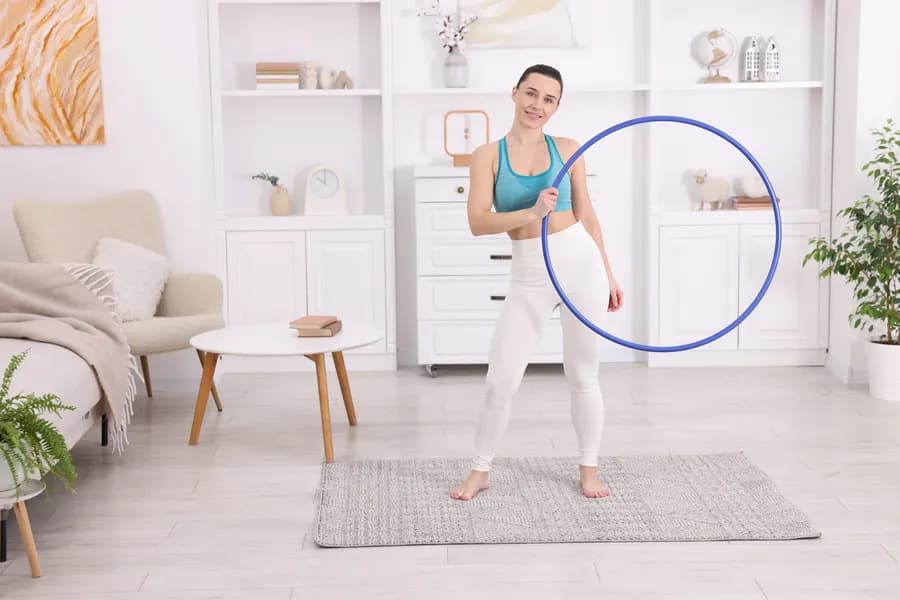
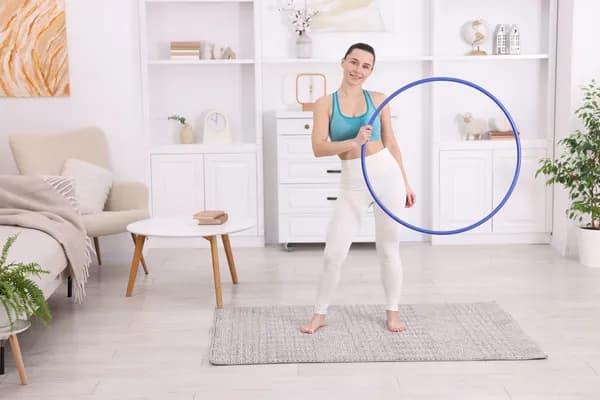
Hip circles exercises are a dynamic mobility movement category — the moving counterpart to static hip stretches. The standard standing hip circle is performed by placing the hands on the hips and rotating the pelvis in controlled circular motion, like drawing circles in the air with the hips themselves. From there, variations expand the toolkit: kneeling hip circles (in a tabletop position with one leg lifted) target the hip joint through a different angle; lying hip circles (lying on the back with one knee bent and rotating the hip in space) emphasise the deep hip rotators; standing leg-lifted hip circles add a balance challenge. Together these variations cover all six directions the hip can move — flexion, extension, abduction, adduction, internal rotation, and external rotation.
What are hip circles exercise mechanism searches really asking is: how does this simple-looking move actually drive mobility? The answer comes down to the unique design of the hip joint. The hip is a ball-and-socket joint capable of full 360° circumduction (rotation through all planes simultaneously). When you perform hip circles correctly, the femoral head moves through every part of the acetabulum, lubricating the joint capsule with synovial fluid, warming up the surrounding muscle groups (glutes, hip flexors, adductors, abductors) in sequence, and improving dynamic range of motion. This is why elite athletes, runners, weightlifters and dancers all include hip circles in their daily warm-up — and why office workers who sit 8+ hours daily benefit even more, since prolonged sitting actively shortens the hip flexors and reduces hip mobility. For broader integrated lower-body mobility programming, the programme covers hip circles alongside the strength work that pairs with mobility.
Benefits of Hip Circles Exercises
Improves Hip Mobility in All Six Directions
Static stretches lengthen one muscle at a time. Hip circles move the joint through its full circumduction — every direction simultaneously. Hip circles exercise benefits include 360° hip mobility improvement, not just hip flexion or hip extension separately. Stat: research on dynamic mobility protocols (e.g., Behm & Chaouachi review of warm-up modalities) shows daily dynamic mobility work meaningfully increases hip range of motion over 6–8 week protocols in sedentary office workers.
Relieves Lower-Back Stiffness From Prolonged Sitting
Tight hip flexors are a primary driver of lower-back pain — when the front of the hip is locked short, the lumbar spine compensates by hyperextending. Daily hip circles directly address the hip-flexor restriction, often producing measurable lower-back pain reduction within 3–4 weeks. Stat: a substantial proportion of office workers report some level of lower-back discomfort (LBP epidemiology research consistently reports prevalence above 50% in sedentary working populations), and hip mobility work resolves a meaningful portion of these cases.
Improves Squat Depth, Running Stride and Athletic Performance
Limited hip mobility is the single most common reason adults cannot squat to parallel or below — the hips simply don’t have the range. Daily hip circles expand this range over weeks, which translates directly into deeper squats, longer running stride, and improved performance in any sport requiring hip mobility (cycling, dance, martial arts).
Excellent Pre-Workout Warm-Up With No Performance Loss
Unlike acute static stretching (stretching meta-analyses by Behm et al., reviewed in Applied Physiology, Nutrition, and Metabolism, consistently show acute static stretching can reduce subsequent power output), hip circles prepare the lower body for heavy work without performance loss. 60 seconds of hip circles before squats, deadlifts or running improves form quality and reduces injury risk significantly.
Best Hip Circles Variations
Exercise 1: Standing Hip Circles — Full 360° Hip Mobility — 3 sets × 8 circles each direction
Stand with feet shoulder-width apart, hands on hips, knees slightly bent. Rotate the hips in a controlled circular motion — forward, right, back, left — for 8 circles in one direction, then reverse for 8 circles. 3 sets total. Keep the upper body relatively still; let the hips do the work. Modification: reduce the size of the circles initially; build to bigger circles over 1–2 weeks once the hips warm up safely.
Exercise 2: Kneeling Hip Circles (Fire Hydrant Pattern) — Hip Joint + Glute Med — 3 sets × 8 circles each side
Start on hands and knees, wrists under shoulders, knees under hips, spine neutral. Lift the right knee out to the side (fire hydrant position) and rotate the lifted leg in a controlled circle — knee leads forward, up, back, down. 8 circles each direction, switch sides. 3 sets. Deeper hip joint mobility than standing version because the lifted-leg position takes the joint through fuller range. Modification: reduce circle size if balance is challenging; place a yoga block under the supporting hand for wrist relief.
Exercise 3: Lying Hip Circles — Deep Hip Rotators — 3 sets × 8 circles each direction each side
Lie flat on your back, bend the right knee with the foot flat on the floor near the glute. Lift the right foot off the floor, knee bent 90°, and use the knee to draw a circle in the air — the entire leg rotates from the hip joint. 8 circles each direction, switch legs. 3 sets. Targets the deep external rotators (piriformis, gemelli, obturator) that the standing version doesn’t reach as effectively. Particularly valuable for office workers with tight, locked hip rotators. Modification: reduce circle size if the lower back lifts off the floor; smaller is better than range-with-bad-form.
Common Mistakes to Avoid With Hip Circles Exercises
Mistake 1: Going Too Big Too Cold — Correction: Build Range Progressively
The most common hip circles error: starting with maximum-range big circles on a completely cold body, often reaching for hip flexor or adductor strain. How to do hip circles exercise correctly starts with small range and builds. What to do instead: first 3–4 circles should be small, controlled, well within comfortable range. Build the range over the next 4–5 circles as the joint capsule warms up. Maximum range is appropriate only after the hip is genuinely warm.
Mistake 2: Speed Circles With No Hip Engagement — Correction: Slow Tempo, Active Movement
Whipping the hips in fast loose circles with the upper body swaying along trains nothing — momentum carries the move, the hip muscles barely engage. What to do instead: moderate, deliberate pace. Each circle should take roughly 2–3 seconds to complete. Keep the upper body still — only the pelvis moves. Feel the hip muscles consciously engaging at every point of the circle. The programme reinforces the same active-movement principle for all lower-body work.
Mistake 3: Ignoring Core Engagement — Correction: Brace Core to Prevent Lower-Back Compensation
If the core is loose during hip circles, the lower back arches and rotates as the hips move, compensating for hip range that isn’t actually there. The result: lower back pain instead of hip mobility. What to do instead: consciously brace the core — gently engage the abs as if preparing for a light push to the stomach — before each set. The brace ensures the rotation happens at the hip joint, not at the lumbar spine.
How Habuild Trains You for Hip Mobility and Functional Movement
Mobility-First Programming — Warm-Up Built Into Every Session
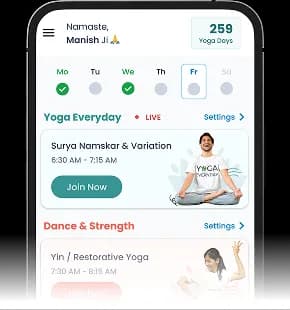
Most home workouts skip warm-up entirely or do 10 seconds of half-hearted movement. Habuild’s daily sessions include a structured 5–7 minute mobility component (hip circles, leg swings, arm circles, dynamic stretches) before strength work begins. Members don’t lift cold; they don’t skip the prep that prevents injury.
Live Daily Sessions With Real-Time Form Correction
The big-too-cold error, the speed-circle error, the lower-back-compensation error — all corrected within seconds on the live call. Hip circles done badly are useless; hip circles done well are foundational mobility work. The difference is form, and form requires live coaching.
Progressive Overload Built Into Every Session
Week 1: standing hip circles with small range, 6 circles each direction. Week 4: full-range standing circles plus kneeling variation. Week 6: lying hip circles introduced for deep rotator mobility. Week 8: combined sequences integrated into pre-workout warm-up. Members don’t programme this — complexity and range demand build progressively within the live class flow.
Accountability, Streaks and Community
Hip mobility takes 6–8 weeks of daily practice to meaningfully change. Daily streak tracking, the WhatsApp community and live morning sessions keep members on the mat through the slow window where mobility is rebuilding gradually before squat depth and lower-back relief show.
Who Is Hip Circles Exercises Best For?
Complete Beginners Starting from Zero
Hip circles are done standing with no equipment — feet shoulder-width apart, hands on hips, rotating in a controlled circle. The movement is completely accessible for any fitness level and requires no warm-up before doing the warm-up. The only requirement is showing up consistently — strength and technique follow from that.
Intermediate Trainees Looking to Fill a Gap
Hip circles directly address the hip joint stiffness that accumulates from prolonged sitting and is the underlying cause of much lower back and hip pain. Regular hip circles maintain synovial fluid circulation in the joint, improve range of motion, and prepare the hip for loaded movements. Adding hip circles exercises to an existing routine addresses a specific conditioning gap that most general workouts miss.
Those with Hip Stiffness, Lower Back Pain, and Anyone Warming Up for Lower-Body Training
Hip circles directly address the hip joint stiffness that accumulates from prolonged sitting and is the underlying cause of much lower back and hip pain. Regular hip circles maintain synovial fluid circulation in the joint, improve range of motion, and prepare the hip for loaded movements.
Senior Citizens and Older Adults (50+)
Hip Circles Exercises can be adapted for older adults by controlling tempo, reducing range of motion, and using supported variations. Habuild’s live instructors modify exercises in real time for different fitness levels and physical conditions in the same session.
Is Hip Circles Exercises Good for Beginners?
Yes — absolutely. Hip Circles Exercises begin at very low intensity with fully accessible entry-level variations. Habuild’s live instructor adapts the session in real time so beginners and experienced trainees can train together without either being left behind.
How to Add Hip Circles Exercises to Your Training Routine
How Often to Do Hip Circles Exercises — Frequency Guide
Train hip circles exercises daily, as part of every lower-body warm-up. This frequency gives the muscle and nervous system adequate stimulus without outpacing recovery. Consistency matters more than intensity in the early weeks — showing up regularly produces better results than infrequent all-out sessions.
When in Your Workout to Do Hip Circles Exercises
Place hip circles exercises at the very start of any lower-body session, or as a stand-alone morning mobility routine. Sequencing exercises correctly ensures you bring maximum quality to hip circles exercises rather than performing them under accumulated fatigue from earlier work.
What to Pair Hip Circles Exercises With
Combine hip circles exercises with leg swings, hip flexor stretches, and glute bridges for a complete hip mobility and activation warm-up. This combination develops complementary muscle groups in the same session and builds the balanced strength that prevents compensation and injury.
How to Progress Hip Circles Exercises Over Time
Once the base movement feels controlled and repeatable, increase circle size, slow the rotation for greater range of motion, add a resistance band, or progress to standing hip CARs (controlled articular rotations). Progress only when form is consistent — adding difficulty before mastering the base movement reinforces poor mechanics and stalls long-term results.
How Habuild Teaches Hip Circles Exercises
Habuild is India’s First Habit Building Program — and through its strength and fitness sessions, it brings the same habit-based philosophy to targeted exercise training. Every session is structured around your specific goal, not a one-size-fits-all class.
Goal-Specific Programming — Not a Generic Fitness Class
Every exercise, rep range, and rest period in Habuild’s hip circles exercises sessions is chosen because it produces results for hip circles exercises specifically. Habuild does not run the same session for every goal — the programme is structured to drive your specific outcome with every session, not general fitness that happens to include hip circles exercises.
Live Daily Sessions with Real-Time Form Correction
Unlike pre-recorded videos, Habuild’s live daily sessions allow the instructor to see and correct your form in real time — the specific errors that limit hip circles exercises results and increase injury risk. This live correction is the difference between training that works and training that wastes effort and creates bad habits.
Progressive Overload Built into Every Session
Members do not need to design their own progressive overload for hip circles exercises — it is built into the programme structure. Each week, sessions are deliberately more challenging than the last, ensuring the body never fully adapts and results continue coming rather than stalling.
Accountability, Streaks, and Community
The most common reason people stop exercising is not effort — it is missing sessions until the habit breaks. Habuild’s streak system, live session accountability, and community of members training the same goal alongside you resolves this directly. Members who join with a specific goal like hip circles exercises and stay consistent for 30 days almost universally report that showing up has become automatic.
Flexible Batch Timing
Choose morning or evening classes and join the slot that suits your day.
Morning
6:30 AM
7:30 AM
8:30 AM

Evening
5:00 PM
6:00 PM
7:00 PM
8:00 PM


Choose Your Membership Plan
Continue after the trial with membership options designed for long-term consistency support.
Continue your habit on the Habuild app
Use the Habuild app for reminders, live access, progress support, and habit tracking.