Strength Training for Lower Body: Build Leg Power, Stability, and Endurance
A lower body strength programme that builds powerful legs and glutes through biomechanically precise training.
Key Takeaways
- Strengthens quads, hamstrings, and calves together
- Accounts for individual alignment and mobility restrictions
- Rooted in biomechanical precision, not generic routines
- Guided by lead instructor Anuj Tyagi's live sessions
- Builds power alongside strength and stability
What is Strength Training for the Lower Body?
Lower body strength training is a structured approach to building muscle and neuromuscular strength specifically in the quadriceps, hamstrings, glutes, calves, and hip stabilisers — not just general fitness work that happens to involve the legs. A true lower body strength programme selects movements, loads, and progressions with the specific goal of developing these muscle groups in a coordinated, balanced way. The physiological mechanism is straightforward but powerful: resistance applied to the lower body muscles creates microscopic stress in the muscle fibres. During recovery, the body repairs and thickens those fibres — a process called muscle protein synthesis. Over repeated sessions, the nervous system also becomes more efficient at recruiting motor units, producing more force without simply adding bulk. This dual adaptation — structural and neural — is what makes progressive lower body strength training so effective for everyday function, athletic performance, and injury resilience.
Why Lower Body Strength Training is Essential
Research published in the Journal of Strength and Conditioning Research found that lower body muscular weakness is one of the strongest predictors of fall risk, metabolic dysfunction, and reduced quality of life across age groups — with adults who perform regular leg resistance training showing up to a 40% reduction in injury-related disability compared to sedentary peers.
Without deliberate lower body strength work, the large muscle groups of the legs gradually lose mass and force-producing capacity — a process that accelerates after age 30 and is compounded by desk-based work and inactivity. Weak hips and knees shift load onto passive structures like ligaments and cartilage, increasing wear over time. The glutes, quads, and hamstrings together represent the largest muscle mass in the body, and when they are undertrained, resting calorie burn, insulin sensitivity, and hormonal regulation all suffer.
What Happens Without Strength Training?
Without targeted lower body work, progressive muscle loss — sarcopenia — begins subtly and accelerates decade by decade. Joints lose the muscular support they depend on, making everyday activities like walking uphill, rising from chairs, or carrying groceries increasingly effortful. Over years, this sets up a cycle where reduced capacity leads to less movement, which leads to faster decline.
What to Eat to Support Your Lower Body Strength Training — Nutrition Guide
What you eat directly determines how fast you recover, how much you progress, and how consistently you can train. Here is what your nutrition plan should look like to support your Lower Body Strength training effectively.
Protein — The Foundation of Strength Gains
For strength-focused training, aim for 1.6–2.0 g of protein per kg of body weight daily. This higher intake supports muscle protein synthesis and repair after resistance sessions. Indian sources like eggs, paneer, dal, chicken, and moong work excellently here.
Calcium and Vitamin D — Joint and Bone Health
Strong bones provide the structural foundation for all movement — include calcium-rich foods like milk, curd, paneer, ragi, and sesame seeds (til) daily. Vitamin D is essential for calcium absorption; aim for 15–20 minutes of morning sunlight alongside dietary sources like eggs and fatty fish. Deficiency in either nutrient accelerates joint wear over time.
Anti-Inflammatory Foods — Faster Recovery
Recovery speed is directly influenced by your body’s inflammatory status. Turmeric with black pepper (curcumin + piperine), fresh ginger, and omega-3 fatty acids from flaxseeds, walnuts, and fatty fish all actively reduce exercise-induced inflammation. Include these consistently rather than only on hard training days.
Hydration — Performance and Joint Lubrication
Adequate hydration supports joint lubrication, muscle function, and nutrient transport — aim for 2.5–3 L of water daily. Drink at least 500 ml before your morning exercise session to prime circulation and joint mobility. Herbal teas and coconut water count toward your fluid intake and provide additional micronutrients.
Magnesium — Muscle Function and Sleep Quality
Magnesium governs over 300 enzymatic reactions including muscle contraction and relaxation — making it essential for any movement-based training. Include pumpkin seeds, bananas, dark chocolate (70%+), spinach, and whole grains in your daily diet. Many Indians are mildly deficient; if you experience frequent muscle cramps or poor sleep quality, a magnesium glycinate supplement may help.
How to Get Started with Lower Body Strength Exercises
Starting a new training programme is often the hardest part. Here is a clear, week-by-week plan to begin your Lower Body Strength training without injury or overwhelm.
Before You Begin — Setting Your Baseline
Before your first session, assess where you currently stand: can you perform 10 bodyweight squats with good form? Hold a plank for 30 seconds? These simple benchmarks tell you whether to start at the absolute beginner level or move slightly ahead. Set a concrete, measurable goal — for example, performing 3 sets of 15 controlled reps of your target movement within 8 weeks.
Week 1–2: Foundation
Prioritise form above all else — a slow, controlled rep with full range of motion builds more real strength than 20 sloppy ones. Expect some delayed onset muscle soreness (DOMS) 24–48 hours after your first two or three sessions; this is normal and will reduce as your body adapts. Keep sessions to 20–30 minutes and use 3 sets of 8–10 reps per exercise, resting 60–90 seconds between sets.
Week 3–4: Building Consistency
Once you can complete all sets comfortably with good form, begin adding volume — either one extra set per exercise or an additional exercise. Training at the same time each morning dramatically improves adherence; your body begins priming itself hormonally before you even start. Track each session with a simple log — even just noting reps completed — so you can see tangible progress week over week.
Week 5–8: Progression
Around weeks 4–6, most people notice their first meaningful strength gains — movements that felt hard now feel manageable, and posture often improves noticeably. Begin introducing progressive overload: increase resistance, slow the tempo, or add a pause at the hardest point of each rep. Your recovery capacity also improves in this phase, so you may be able to handle 4–5 sessions per week if your schedule permits.
In strength training, consistency across weeks matters far more than any single intense session.
Best Strength Training Exercises for the Lower Body
For a complete leg weights workout that covers all major muscle groups, these three movements provide the most value per session — particularly if you are building your programme from home or with minimal equipment.
Exercise 1: Goblet Squat — Quad, Glute, and Core Integration
The goblet squat holds a weight at chest height, which naturally encourages an upright torso and correct knee tracking — two of the most common failure points in lower body training. It trains the quads, glutes, and inner thighs simultaneously while developing core bracing habits that carry over into every other exercise. Difficulty level: beginner to intermediate. Modification: use a water bottle or no weight at all; focus first on hitting parallel with heels flat on the floor.
Exercise 2: Romanian Deadlift — Hamstring and Glute Loading
The Romanian Deadlift (RDL) trains the posterior chain — hamstrings, glutes, and lower back extensors — through a hip hinge movement pattern that is fundamental to daily life (lifting, loading, bending). Most people have significantly undertrained posterior chains relative to their quads, and the RDL addresses this imbalance directly. Difficulty level: beginner to intermediate. Modification: start with bodyweight hip hinges until the movement pattern is clean, then add light dumbbells.
Exercise 3: Reverse Lunge — Single-Leg Stability and Hip Control
The reverse lunge trains each leg independently, identifying and correcting strength asymmetries that bilateral exercises like squats can mask. Stepping back rather than forward reduces shear force on the knee compared to a forward lunge, making it safer for those with patellofemoral sensitivity. It develops hip stability, balance, and single-leg strength — all essential for healthy walking, running, and stair-climbing mechanics. Difficulty level: beginner. Modification: hold a wall or chair for balance until confidence builds; add dumbbells once form is solid.
You can find a structured approach to these foundational movements in Habuild’s dedicated lower body strength training programme.
Common Mistakes to Avoid in Lower Body Strength Training
Mistake 1: Skipping Posterior Chain Work in Favour of Quads Only
Many beginners focus entirely on squat variations and neglect the hamstrings and glutes. This creates a front-to-back muscle imbalance that shifts excessive stress onto the knee joint and lower back. Balance every quad-dominant movement (squat, leg press) with a hip-hinge movement (RDL, glute bridge) in the same session.
Mistake 2: Using Load to Compensate for Poor Range of Motion
Adding weight before achieving full, controlled range in a movement pattern locks in faulty mechanics under load. If your squat depth is shallow or your hinge rounds your spine, adding weight reinforces those patterns rather than correcting them. Address mobility first, load second.
Mistake 3: Training Through Joint Pain Rather Than Muscle Fatigue
Muscle burn during a set is expected. Sharp, clicking, or pinching sensations at the knee or hip are not. Lower body joints are load-bearing structures with limited regenerative capacity — ignoring pain signals risks converting a minor irritation into a significant injury. Always distinguish between the discomfort of effort and the signal of damage.
Mistake 4: Neglecting Single-Leg Work Entirely
Bilateral movements (squats, deadlifts) allow the stronger leg to compensate for the weaker one without you realising it. Over time, this can widen asymmetries. Include at least one single-leg exercise — reverse lunges, step-ups, or single-leg RDLs — in every lower body session to ensure balanced development on both sides. 50,000+ members already training with Habuild every morning
Live daily sessions · Expert instructor · Cancel anytime
Who Is Lower Body Strength Training Best For?
Lower Body Strength training is not a one-size-fits-all programme — but it is far more broadly accessible than most people assume. Here is who benefits most.
Complete Beginners Starting from Zero
You do not need any prior fitness experience to begin Lower Body Strength exercises. Every movement in a well-structured programme comes with easier modifications — for example, performing the exercise seated, with a reduced range of motion, or using a wall or chair for support. The only requirement is willingness to show up consistently; the strength and technique will follow.
People With Muscle Weakness or Functional Strength Deficits in the Lower Body
This training is especially valuable for people managing Muscle Weakness or Functional Strength Deficits in the Lower Body. Lower Body Strength exercises specifically target the muscular imbalances and movement patterns that drive these conditions. Always begin at a reduced intensity and range, and increase gradually as your body adapts.
Office Workers and Sedentary Adults
Sedentary adults who spend 6–8 hours sitting daily experience progressive losses in Lower Body Strength capacity — this training directly reverses that trend. A 20–30 minute morning session creates a positive hormonal and metabolic shift that persists throughout the working day. Even three sessions per week produce measurable improvements in energy levels, concentration, and posture.
Active Adults and Athletes
Experienced gym-goers and recreational athletes use Lower Body Strength training to address specific movement gaps and build functional capacity. This style of training bridges the gap between general fitness and sport-specific performance, reducing injury risk in the process. It works well as a primary programme or as targeted supplementary work alongside your existing routine.
Seniors Maintaining Functional Independence
Sarcopenia — the age-related loss of muscle mass — begins in the mid-30s and accelerates after 60 if not countered with resistance training. Lower Body Strength exercises are one of the most effective tools for preserving muscle mass, bone density, and functional independence in older adults. Progressive bodyweight and resistance training is safe, evidence-based, and highly effective for this group.
How Habuild Teaches Lower Body Strength Training
Live Daily Sessions with Real-Time Instructor Feedback
Every Habuild session is live — not pre-recorded. This matters enormously for lower body training, where form errors like knee cave, forward lean, and insufficient depth are the most common causes of injury. Your instructor can see you, cue you in real time, and correct the specific movement faults that affect your lower body sessions. No recording can do this.
Condition-Specific Modifications in Every Session
If you have knee sensitivity, hip tightness, or lower back concerns, Habuild’s sessions are structured with modifications built in — not added as an afterthought. Every exercise is selected with the practical realities of its members in mind, so you are always working at the right intensity for your body, not adapting a programme designed for someone else.
Progressive Programming That Respects Your Recovery Timeline
Habuild’s lower body programme follows the physiological timeline of strength adaptation — building the foundation through the first weeks before introducing progressive load. You are not pushed to increase weight before your movement quality justifies it. The programme structure mirrors the phases outlined above, giving your muscles and connective tissue the time they need to respond properly.
Community of Members Training the Same Programme
When 50,000+ members show up to the same live session every morning, accountability is no longer something you manufacture alone. Habuild members share the same schedule, the same instructor, and the same goals — which is why consistency rates are so much higher in a live group format than solo training.
Flexible Batch Timing
Choose morning or evening classes and join the slot that suits your day.
Morning
6:30 AM
7:30 AM
8:30 AM

Evening
5:00 PM
6:00 PM
7:00 PM
8:00 PM


Choose Your Membership Plan
Continue after the trial with membership options designed for long-term consistency support.
Continue your habit on the Habuild app
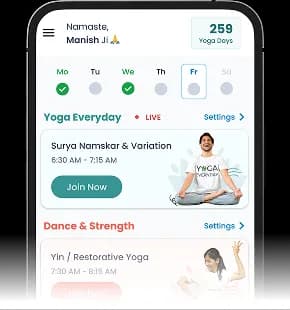
Use the Habuild app for reminders, live access, progress support, and habit tracking.