Pilates Workout: A Complete Daily Mat Routine for Core, Posture, and Strength
A complete mat-based Pilates routine for core strength, posture, and joint-friendly full-body conditioning.
Key Takeaways
- Uses only a mat — no equipment required
- Trains stabilising muscles through slow, controlled movement
- Rooted in Joseph Pilates' rehabilitation-based method
- Guided by senior instructor Saurabh Bothra's live classes
- Safe, joint-friendly, and adaptable for most fitness levels
What Is a Pilates Workout?
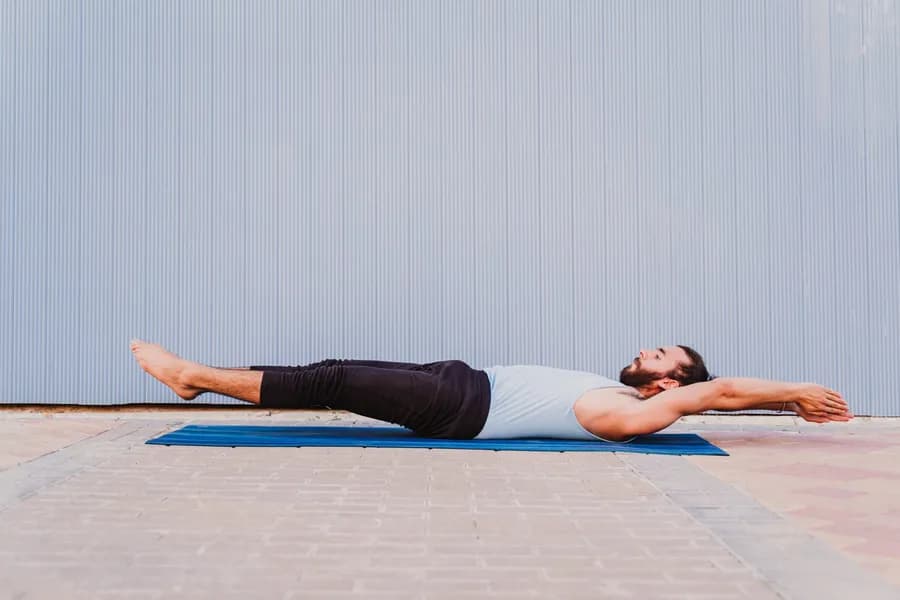
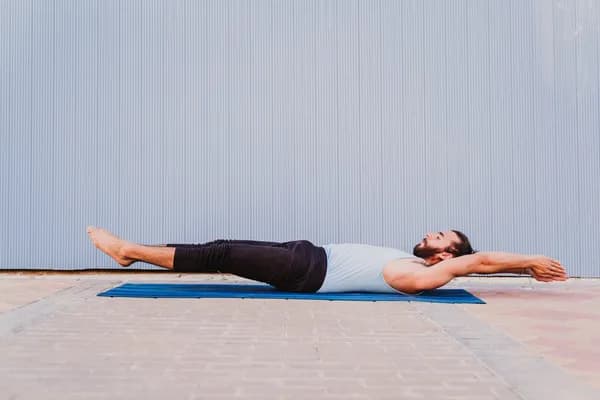
A pilates workout is a sequence of bodyweight (or lightly resisted) exercises performed slowly, with attention on breath, alignment, and deep-core engagement. Developed by Joseph Pilates in the early 1900s as rehabilitation training for injured dancers and soldiers, every move is engineered to be safe, joint-friendly, and adaptable.
The mechanism is different from heavy strength work. A pilates workout teaches your stabilising muscles — transverse abdominis, multifidus, pelvic floor, deep hip rotators — to fire before your big movers (rectus abdominis, glutes, quads) take over. Once they fire correctly, your back stops hurting, your posture stands taller without effort, and bigger lifts feel safer.
This is also what separates Pilates from yoga: yoga uses breath and held postures; Pilates uses breath and slow, controlled repetitions to load specific stabilisers. That’s why many serious athletes and lifters build a every week.
Benefits of a Daily Pilates Workout
Benefit 1: Visibly Flatter, Stronger Core
Pilates targets the transverse abdominis — the muscle that wraps around your midsection like a corset. It’s the one that pulls your stomach in, not the rectus abdominis (six-pack muscle). Regular pilates produces a flatter, more functional core in 6–8 weeks.
Benefit 2: Dramatic Posture and Back-Pain Improvement
Around 80% of adults experience back pain at some point, per the National Institute of Neurological Disorders and Stroke. A 2015 Cochrane review found Pilates produces meaningful reductions in chronic low-back pain after 8 weeks of consistent practice. The fix comes from strengthening the spinal stabilisers, not just stretching tight muscles.
Benefit 3: Better Balance, Joint Mobility, and Injury Resistance
Pilates trains the small muscles around hips, shoulders, and ankles. The result: fewer twisted ankles, less shoulder impingement, easier squatting and reaching. For a wider lower-body programme, see our .
Benefit 4: Mind-Body Calm and Stress Relief
The breath-led format down-regulates the nervous system. Many members report sleeping better and feeling less anxious within two to three weeks of starting a daily pilates workout — even before any physical change appears.
Best Pilates Workout Routine (At Home, No Equipment)
Move 1: The Hundred — Deep Core + Breath — 100 breath pulses (10 cycles of 5/5)
Lie on your back, head and shoulders lifted, legs in tabletop. Pulse arms beside the body while breathing in for 5 and out for 5 counts. Modification: keep feet on the floor.
Move 2: Roll-Up — Full-Spine Articulation — 8 reps
Lie flat with arms overhead. Slowly peel up to a seated reach over the toes, then reverse one vertebra at a time. Trains the spine to bend and unbend with control.
Move 3: Single-Leg Stretch — Lower Abs — 10 reps each side
Lie on your back, head lifted, alternate drawing one knee in while extending the other leg long. Keep the core flat — no doming.
Move 4: Double-Leg Stretch — Coordination + Deep Core — 10 reps
From the same starting position, extend both legs and arms long, then sweep them around and pull the knees in. The hardest pure-core move in mat pilates.
Move 5: Side-Lying Leg Lifts — Glute Med, Lateral Hip — 12 reps each side
Lie on your side, lift the top leg slowly. Targets the hip stabiliser nobody trains. Critical for runners and walkers.
Move 6: Swimming — Posterior Chain + Spinal Extension — 30 seconds × 2
Lie face-down, lift opposite arm and leg, alternate. Counterbalances all the front-of-body sitting we do daily.
Pilates Ball Variations (Optional)
Add a small inflated pilates ball between knees during bridges to engage inner thigh and pelvic floor; or behind the lower back during seated work for spinal support. The ball makes a beginner pilates workout 30% more effective without adding any difficulty.
Common Pilates Workout Mistakes
Mistake 1: Holding Your Breath — Correction: Breath Drives the Movement
Pilates is a breath-led practice. Holding your breath during effort kills the entire benefit — your deep core can’t engage without rhythmic breathing. Inhale through the nose during prep, exhale forcefully during effort.
Mistake 2: Going Too Fast — Correction: Half the Speed You Think
Speed lets the surface muscles take over. The slower you move, the more the deep stabilisers are forced to work. Three-second up, three-second down is the standard.
Mistake 3: Lower-Back Arching During Core Work — Correction: Tilt the Pelvis
If your low back lifts off the mat during the Hundred or single-leg stretch, the work has shifted off your core and onto your back — exactly backwards. Tuck the pelvis slightly so the back stays flat.
What Habuild Members Say
Anjali D. from Bengaluru — Lost 4 inches off her waist in 11 weeks
“I’d been doing crunches for years with nothing to show. Switching to a daily pilates workout is what finally did it. My waist actually changed shape.”
Rajeev N. from Pune — Eliminated chronic low-back pain in 8 weeks
“My back hurt every morning for 4 years. After two months of daily pilates I wake up pain-free. I cannot believe it took so long to find this.”
Kavya P. from Chennai — Reversed forward-rounded shoulders in 9 weeks
“Friends started asking what changed. I look two inches taller, and I’m not.”
Who Is Pilates Workout Best For?
Complete Beginners Starting from Zero
Pilates exercises begin on a mat with no equipment — the entry movements are gentle, controlled, and focused on breathing and body awareness rather than strength or intensity. Complete beginners with no exercise background can start here safely. The only requirement is showing up consistently — strength and technique follow from that.
Intermediate Trainees Looking to Fill a Gap
Pilates develops the deep core muscles — particularly the transverse abdominis and pelvic floor — that conventional strength training largely neglects. It builds the body awareness, breathing control, and precise muscular engagement that improve performance in every other form of exercise and reduce chronic pain from postural issues. Adding pilates to an existing routine addresses a specific conditioning gap that most general workouts miss.
Those Building Core Strength, Postural Awareness, and Body Control
Pilates develops the deep core muscles — particularly the transverse abdominis and pelvic floor — that conventional strength training largely neglects. It builds the body awareness, breathing control, and precise muscular engagement that improve performance in every other form of exercise and reduce chronic pain from postural issues.
Senior Citizens and Older Adults (50+)
Pilates Workout can be adapted for older adults by controlling tempo, reducing range of motion, and using supported variations. Habuild’s live instructors modify exercises in real time for different fitness levels and physical conditions in the same session.
Is Pilates Workout Good for Beginners?
Yes — absolutely. Pilates Workout begin at very low intensity with fully accessible entry-level variations. Habuild’s live instructor adapts the session in real time so beginners and experienced trainees can train together without either being left behind.
How to Add Pilates Workout to Your Training Routine
How Often to Do Pilates Workout — Frequency Guide
Train pilates 3–5 times per week. This frequency gives the muscle and nervous system adequate stimulus without outpacing recovery. Consistency matters more than intensity in the early weeks — showing up regularly produces better results than infrequent all-out sessions.
When in Your Workout to Do Pilates Workout
Place pilates any time — Pilates is one of the few exercise modalities appropriate both for morning activation and evening recovery. Sequencing exercises correctly ensures you bring maximum quality to pilates rather than performing them under accumulated fatigue from earlier work.
What to Pair Pilates Workout With
Combine pilates with walking, yoga, and light strength training for a complete movement practice that combines strength, flexibility, and cardiovascular health. This combination develops complementary muscle groups in the same session and builds the balanced strength that prevents compensation and injury.
How to Progress Pilates Workout Over Time
Once the base movement feels controlled and repeatable, move from supine (lying) exercises to seated, kneeling, and standing variations, increase the lever arm of each movement, and progress to exercises on a reformer or with a resistance ring. Progress only when form is consistent — adding difficulty before mastering the base movement reinforces poor mechanics and stalls long-term results.
How Habuild Teaches Pilates Workout
Habuild is India’s First Habit Building Program — and through its strength and fitness sessions, it brings the same habit-based philosophy to targeted exercise training. Every session is structured around your specific goal, not a one-size-fits-all class.
Goal-Specific Programming — Not a Generic Fitness Class
Every exercise, rep range, and rest period in Habuild’s pilates sessions is chosen because it produces results for pilates specifically. Habuild does not run the same session for every goal — the programme is structured to drive your specific outcome with every session, not general fitness that happens to include pilates.
Live Daily Sessions with Real-Time Form Correction
Unlike pre-recorded videos, Habuild’s live daily sessions allow the instructor to see and correct your form in real time — the specific errors that limit pilates results and increase injury risk. This live correction is the difference between training that works and training that wastes effort and creates bad habits.
Progressive Overload Built into Every Session
Members do not need to design their own progressive overload for pilates — it is built into the programme structure. Each week, sessions are deliberately more challenging than the last, ensuring the body never fully adapts and results continue coming rather than stalling.
Accountability, Streaks, and Community
The most common reason people stop exercising is not effort — it is missing sessions until the habit breaks. Habuild’s streak system, live session accountability, and community of members training the same goal alongside you resolves this directly. Members who join with a specific goal like pilates and stay consistent for 30 days almost universally report that showing up has become automatic.
Flexible Batch Timing
Choose morning or evening classes and join the slot that suits your day.
Morning
6:30 AM
7:30 AM
8:30 AM

Evening
5:00 PM
6:00 PM
7:00 PM
8:00 PM

Choose Your Membership Plan
Continue after the trial with membership options designed for long-term consistency support.
Continue your habit on the Habuild app
Use the Habuild app for reminders, live access, progress support, and habit tracking.