5 Variations of Scissor Kicks Exercises
A 5-variation scissor kicks routine that targets lower abs and inner thighs with progressive core endurance work.
Key Takeaways
- Builds lower-ab definition through sustained tension
- Tones inner thighs, rare for bodyweight core moves
- Improves endurance core strength over time
- Guided by senior instructor Saurabh Bothra's live sessions
- Suited for swimmers, dancers, and runners alike
What Are Scissor Kicks Exercises?
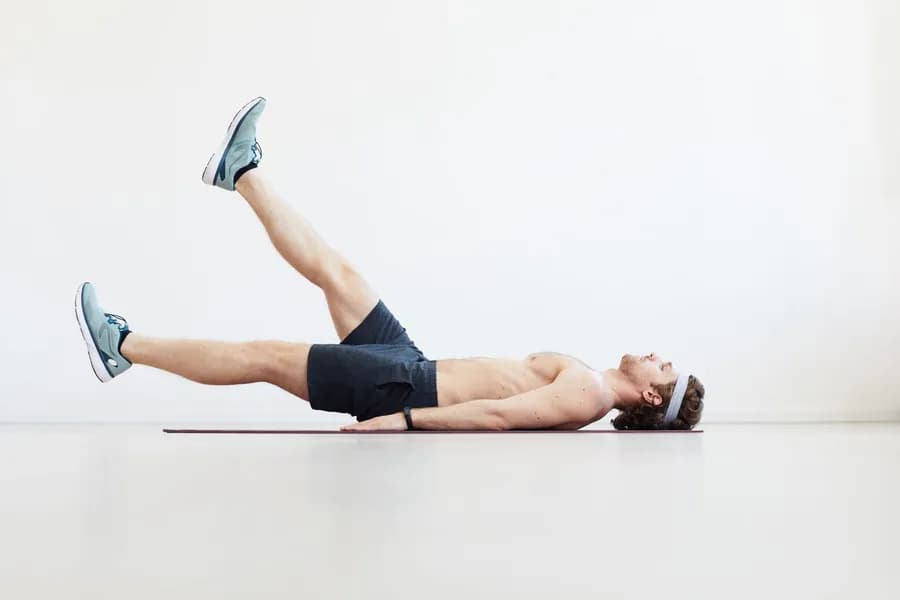
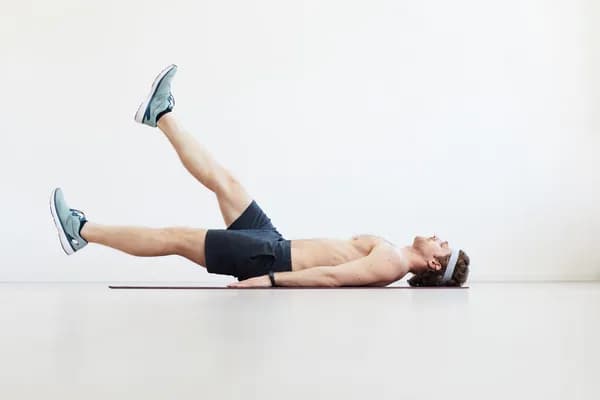
Scissor kicks exercises are a bodyweight ab and leg movement performed by lying flat on your back with legs extended straight and held a few inches off the floor, then alternately crossing the legs over each other in a horizontal scissor-like motion — right leg moves over left, then left over right. The pattern is named after the way scissor blades cross each other, which is exactly how the legs travel during the exercise. Unlike flutter kicks (where the legs move up and down independently in a vertical plane), scissor kicks cross the legs across the body’s midline in a horizontal plane — which engages a different set of muscles. The how to do scissor kicks exercise question searchers ask often reflects this confusion: scissor kicks and flutter kicks look similar at a glance but train slightly different muscle groups, and the technique difference matters for results. Variations expand the toolkit: hands-under-glutes beginner version reduces lower-back load; scissor kicks abs exercise floor workout (the most common keyword variant) refers to the floor-based standard version; vertical scissor kicks rotate the legs to vertical position for a deeper lower-ab challenge.
The mechanism is what makes scissor kicks uniquely valuable for lower-ab and inner-thigh development simultaneously. The rectus abdominis and hip flexors work isometrically to hold the legs off the floor (the same demand as flutter kicks). But the horizontal crossing motion adds two additional muscle groups: the hip adductors (inner thighs) fire to bring one leg across the body, and the hip abductors fire on the opposing side to control the spread. The result is a single exercise that hits lower abs + hip flexors + inner thighs + outer thighs — broader muscle engagement per minute than almost any other unweighted ab move. Sustained 30-second sets also elevate heart rate, adding a cardio component most ab exercises miss. For broader integrated core development covering both stability and dynamic ab work, the programme covers scissor kicks alongside complementary core movements.
Benefits of Scissor Kicks Exercises
Targets Lower Abs AND Inner Thighs Simultaneously
Most ab exercises train only the rectus abdominis and hip flexors. Scissor kicks add the hip adductors (inner thighs) — the muscle group most adults can’t train without specific equipment like inner-thigh machines. The combined demand makes scissor kicks one of the highest-yield bodyweight movements for the lower-ab + inner-thigh combination most fitness-focused trainees are after.
Builds Endurance Strength Through Sustained Tension
The legs never touch the floor during scissor kicks — meaning the abs and hip flexors work continuously throughout 30–60 second sets without rest. Scissor kicks exercise benefits include the kind of endurance ab strength used by swimmers, dancers, runners and martial artists. EMG research on abdominal exercises (Escamilla et al., 2010, Journal of Orthopaedic & Sports Physical Therapy) shows leg-elevated anti-extension hold work like scissor kicks produces significantly higher lower-rectus-abdominis activation than standard crunches.
Elevates Heart Rate (Adds a Cardio Component)
Sustained 30-second scissor kick sets push heart rate into the cardio training zone, especially when chained back-to-back without rest. Adding 3 minutes of scissor kicks to a workout adds genuine cardiovascular conditioning alongside the ab and inner-thigh work — making them remarkably time-efficient for working professionals.
Tones the Inner Thighs (Often-Neglected Muscle Group)
The hip adductors are notoriously hard to train without specific equipment. Scissor kicks produce visible inner-thigh tightening within 6–8 weeks of consistent practice — particularly noticeable in those who carry softness in the inner-thigh area despite overall fitness. The toning effect comes from both muscle activation and improved muscle definition under reduced body fat.
Best Scissor Kicks Variations
Exercise 1: Standard Scissor Kicks (Floor) — Lower Abs + Inner Thighs — 3 sets × 30–45 seconds
Lie flat on your back, legs extended straight, hands by your sides palms down. Press the lower back firmly into the floor. Lift legs about 6 inches off the floor and alternately cross one leg OVER the other in a horizontal scissor motion — right leg crosses over left, returns; left leg crosses over right, returns. 3 sets × 30–45 seconds. The scissor kicks abs exercise floor workout standard variation. Modification: place hands palms-down under the glutes if the lower back lifts off the floor; reduce range of crossing if hip flexors fatigue early.
Exercise 2: Hands-Under-Glutes Beginner Variation — Lower-Back-Friendly — 3 sets × 30 seconds
Same starting position, but place both hands flat on the floor under your glutes (palms down). The position passively tilts the pelvis posteriorly, removing strain from the lower back. 3 sets × 30 seconds. Designed for those building ab strength from zero, anyone with lower-back sensitivity, or postpartum recovery training. Modification: bend knees slightly if straight-leg version still flares the back; reduce range of crossing (smaller scissors) until form locks.
Exercise 3: Vertical Scissor Kicks — Lower-Ab Bias — 3 sets × 25 seconds
Lie flat, legs raised to vertical (90°), arms by your sides. Open the legs slightly outward in a horizontal scissor pattern — right leg moves out and slightly down to the right, left moves to the left, then they cross back through centre with the opposite leg in front. 3 sets × 25 seconds. The vertical orientation removes hip flexor compensation and shifts more load to the lower abs and obliques. Save for week 4+ once standard scissor kicks are clean. Modification: bend knees slightly to reduce hamstring tension; reduce the spread of the legs initially.
Common Mistakes to Avoid With Scissor Kicks Exercises
Mistake 1: Letting the Lower Back Arch Off the Floor — Correction: Press Lower Back Flat Throughout
The single most common scissor kicks error: as the legs work, the lower back arches and lifts off the floor. The exercise becomes a pure hip-flexor drill — the abs disengage completely, and the lower back takes the load it shouldn’t. What to do instead: press the lower back firmly into the floor before each set begins. If the back lifts during the set, immediately stop, place hands under the glutes for tactile support, and resume. Reduce the range of motion (smaller scissor crossings) until the back stays planted.
Mistake 2: Going Too Fast With Sloppy Form — Correction: Controlled Tempo, Visible Crossing
Speed-doing scissor kicks by whipping the legs across each other with momentum trains nothing — the abs and adductors barely engage. What to do instead: moderate, deliberate tempo. Each leg-crossing should be visible — one leg clearly travels OVER the other before reversing. The motion should feel controlled, not frantic. 30 controlled seconds beat 60 chaotic ones for both lower-ab development and joint health. The programme reinforces controlled tempo for all leg-based core work.
Mistake 3: Confusing Scissor Kicks With Flutter Kicks — Correction: Horizontal Crossing, Not Vertical Kicking
Many at-home routines use the names interchangeably, but the movements are different. Flutter kicks move legs vertically (up-down) — scissor kicks cross legs horizontally (over-under). Doing flutter kicks while thinking you’re doing scissor kicks misses the inner-thigh component entirely. What to do instead: visualise scissor blades crossing each other. The legs travel ACROSS the body’s midline, not just up and down. If you’re not feeling the inner thighs engage, you’re probably doing flutter kicks instead.
How Habuild Trains You for Lower Ab Strength and Inner-Thigh Definition
Multi-Plane Core Programming, Not Just Spinal Flexion
Most home ab routines train only spinal flexion (crunches) — leaving the lower abs, obliques and adductor-engaged core work underdeveloped. Habuild’s daily sessions explicitly programme scissor kicks, flutter kicks and dynamic ab work alongside crunches and planks, ensuring all training planes (sagittal flexion, frontal anti-rotation, horizontal crossing) develop together.
Live Daily Sessions With Real-Time Form Correction
The arching-back error, the speed-rep error, the wrong-pattern error (doing flutter when you meant scissor) — all corrected within seconds on the live call. Scissor kicks done badly are useless or risky for the lower back; scissor kicks done well are highly effective combined ab + inner-thigh work. The difference is form, and form requires live coaching.
Progressive Overload Built Into Every Session
Week 1: hands-under-glutes scissor kicks, 20 seconds with focus on form. Week 4: standard scissor kicks at 30-second sets. Week 6: vertical scissor kicks introduced. Week 10: longer sets and combined sequences with flutter kicks. Members don’t programme this — duration, complexity and load build progressively within the live class flow.
Accountability, Streaks and Community
Lower-ab visibility takes 8–12 weeks of unbroken practice. Daily streak tracking, the WhatsApp community and live morning sessions keep members on the mat through the slow window where the lower abs are building but visible change happens last.
Who Is Scissor Kicks Exercises Best For?
Complete Beginners Starting from Zero
Scissor kicks are done lying flat on the floor with no equipment. Raising the legs higher makes them easier; lowering them closer to the floor increases the difficulty. Beginners start with legs at 45 degrees. The only requirement is showing up consistently — strength and technique follow from that.
Intermediate Trainees Looking to Fill a Gap
Scissor kicks train the lower abs and hip flexors through a sustained tension that builds both strength and endurance simultaneously, while the crossing motion also engages the inner thigh (adductor) muscles. They are a time-efficient lower-body and core exercise that most programmes neglect. Adding scissor kicks exercises to an existing routine addresses a specific conditioning gap that most general workouts miss.
Those Training Lower Abs and Inner Thighs with a Single Exercise
Scissor kicks train the lower abs and hip flexors through a sustained tension that builds both strength and endurance simultaneously, while the crossing motion also engages the inner thigh (adductor) muscles. They are a time-efficient lower-body and core exercise that most programmes neglect.
Senior Citizens and Older Adults (50+)
Scissor Kicks Exercises can be adapted for older adults by controlling tempo, reducing range of motion, and using supported variations. Habuild’s live instructors modify exercises in real time for different fitness levels and physical conditions in the same session.
Is Scissor Kicks Exercises Good for Beginners?
Yes — absolutely. Scissor Kicks Exercises begin at very low intensity with fully accessible entry-level variations. Habuild’s live instructor adapts the session in real time so beginners and experienced trainees can train together without either being left behind.
How to Add Scissor Kicks Exercises to Your Training Routine
How Often to Do Scissor Kicks Exercises — Frequency Guide
Train scissor kicks exercises 4–5 times per week. This frequency gives the muscle and nervous system adequate stimulus without outpacing recovery. Consistency matters more than intensity in the early weeks — showing up regularly produces better results than infrequent all-out sessions.
When in Your Workout to Do Scissor Kicks Exercises
Place scissor kicks exercises in the core block as a lower-ab endurance movement, paired with crunches for a complete ab session. Sequencing exercises correctly ensures you bring maximum quality to scissor kicks exercises rather than performing them under accumulated fatigue from earlier work.
What to Pair Scissor Kicks Exercises With
Combine scissor kicks exercises with leg raises, flutter kicks, and reverse crunches for a complete lower-ab programme with varied muscle angles. This combination develops complementary muscle groups in the same session and builds the balanced strength that prevents compensation and injury.
How to Progress Scissor Kicks Exercises Over Time
Once the base movement feels controlled and repeatable, lower leg height toward the floor, increase duration of each set, add ankle weights, or slow the scissor motion to create more sustained tension. Progress only when form is consistent — adding difficulty before mastering the base movement reinforces poor mechanics and stalls long-term results.
How Habuild Teaches Scissor Kicks Exercises
Habuild is India’s First Habit Building Program — and through its strength and fitness sessions, it brings the same habit-based philosophy to targeted exercise training. Every session is structured around your specific goal, not a one-size-fits-all class.
Goal-Specific Programming — Not a Generic Fitness Class
Every exercise, rep range, and rest period in Habuild’s scissor kicks exercises sessions is chosen because it produces results for scissor kicks exercises specifically. Habuild does not run the same session for every goal — the programme is structured to drive your specific outcome with every session, not general fitness that happens to include scissor kicks exercises.
Live Daily Sessions with Real-Time Form Correction
Unlike pre-recorded videos, Habuild’s live daily sessions allow the instructor to see and correct your form in real time — the specific errors that limit scissor kicks exercises results and increase injury risk. This live correction is the difference between training that works and training that wastes effort and creates bad habits.
Progressive Overload Built into Every Session
Members do not need to design their own progressive overload for scissor kicks exercises — it is built into the programme structure. Each week, sessions are deliberately more challenging than the last, ensuring the body never fully adapts and results continue coming rather than stalling.
Accountability, Streaks, and Community
The most common reason people stop exercising is not effort — it is missing sessions until the habit breaks. Habuild’s streak system, live session accountability, and community of members training the same goal alongside you resolves this directly. Members who join with a specific goal like scissor kicks exercises and stay consistent for 30 days almost universally report that showing up has become automatic.
Flexible Batch Timing
Choose morning or evening classes and join the slot that suits your day.
Morning
6:30 AM
7:30 AM
8:30 AM

Evening
5:00 PM
6:00 PM
7:00 PM
8:00 PM

Choose Your Membership Plan
Continue after the trial with membership options designed for long-term consistency support.
Continue your habit on the Habuild app
Use the Habuild app for reminders, live access, progress support, and habit tracking.