Strength Training for Abs
Join live strength training classes from home with beginner-friendly guidance and expert coaching.

Key Takeaways
- Develops core power progressively
- Builds visible six-pack definition
- Rooted in a habit-building training philosophy
- Guided by senior instructor Trishala Bothra's live sessions
- Combines core strength with aesthetic goals
What is Strength Training for Abs?

Strength training for abs is a targeted resistance programme specifically designed to build a stronger core and visible six-pack abs — not general fitness. Every exercise selection, rep range, and progression is chosen because it directly drives abs results through the specific mechanism of rectus abdominis and transverse abdominis hypertrophy combined with overall body fat reduction through compound resistance loading. The key distinction from generic training is goal-specificity. An abs programme differs in its rep ranges, rest periods, exercise selection, and nutritional pairing from muscle-gain or fat-loss programmes.
Benefits of Strength Training for Abs
Stronger, More Defined Core Muscles
Targeted core strength training develops the rectus abdominis, obliques, and transverse abdominis — the muscles that create visible abs definition. Many practitioners report meaningfully improved core definition within 8–10 weeks when combined with appropriate nutrition.
Reduced Lower Back Pain and Better Spinal Support
A strong core is the body's natural back brace — supporting the lumbar spine under load and through everyday activities.
Improved Athletic Performance and Power Transfer
The core is the link between the upper and lower body — all athletic power is transmitted through it. Stronger abs directly improve performance in running, lifting, throwing, and virtually every sport.
Better Posture and Reduced Abdominal Bloating
Strong transverse abdominis muscles act as a natural corset — supporting the organs, reducing the forward pelvic tilt that creates the appearance of a protruding belly.
What to Eat to Support Your Abs — Nutrition Pairing
Protein — The Foundation of Abs Training
Aim for 1.6–2.2g of protein per kg of bodyweight daily. Best sources include eggs, paneer, chicken, lentils (dal), Greek yoghurt, and whey protein. Distribute protein across 3–4 meals rather than concentrating it in one sitting.
Carbohydrates — Fuel for Performance and Recovery
Visible abs require reduced overall body fat — which means carbohydrate intake must be managed to support a moderate caloric deficit. Prioritise complex carbohydrates from oats, vegetables, and legumes; reduce refined carbohydrates and sugar.
Hydration and Micronutrients
Adequate hydration is particularly important for abs training — dehydration causes bloating that obscures definition. Magnesium supports muscle recovery. Fibre from vegetables supports the digestive health that reduces abdominal distension.
How to Get Started with Strength Training for Abs
Before You Begin — Setting Your Baseline
Assess your starting point before beginning. Can you complete 10 bodyweight squats with full depth? Can you hold a plank for 20 seconds? Set a specific, measurable abs goal — not vague but concrete and trackable.
Week 1–2: Foundation Phase
Two sessions per week. Focus entirely on movement quality — correct joint alignment, controlled tempo, and full range of motion. Use bodyweight only or very light resistance. Rushing this phase is the most common beginner mistake.
Week 3–8: Progressive Loading Phase
Add resistance progressively — aim to add one more rep or a small amount of resistance each week. Track your sessions — a simple weekly note of sets, reps, and resistance makes progression deliberate rather than guesswork.
Week 9+: Goal-Specific Advancement
Introduce advanced training variables: supersets, tempo manipulation, and periodisation. If you have plateaued, look at nutrition, sleep, and recovery — these are the most common causes of stalled progress.
Best Strength Training Exercises for Abs
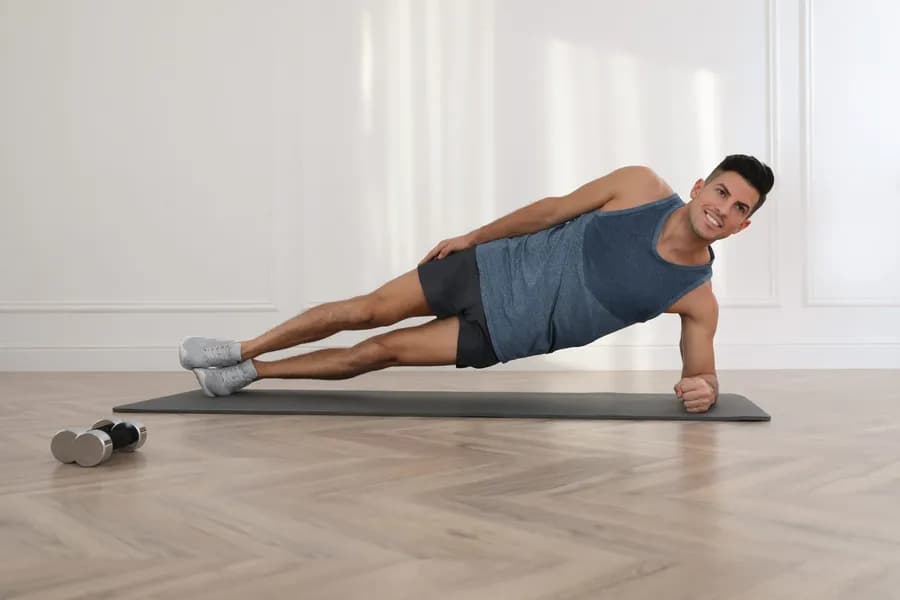
Plank Variations (Standard, Side, and RKC) — Transverse abdominis, obliques, rectus abdominis, glutes | 3 sets × 30–60 seconds per variation. The plank is the most foundational core exercise — training the transverse abdominis in its primary function as a stabiliser rather than a mover. Beginner modification: begin from the knees for the standard plank; build duration before progressing to full plank position.
Dead Bug — Transverse abdominis, rectus abdominis, hip flexors | 3 sets × 10 reps each side. The Dead Bug trains the core in anti-extension — resisting the lumbar extension that most people's lower back wants to do under load. Beginner modification: begin with arm-only or leg-only movement; progress to full contralateral movement as coordination develops.
Hollow Body Hold — Rectus abdominis, hip flexors, serratus anterior | 3 sets × 20–40 seconds. The hollow body position — the foundation of gymnastics core training — creates maximum rectus abdominis tension through the full range of the muscle. Beginner modification: begin with arms by the sides and knees bent; only extend the arms and legs when the lower back can maintain contact with the floor throughout.
Common Mistakes to Avoid When Training for Abs
Doing Only Crunches and Sit-Ups
Traditional crunches train only a small range of the rectus abdominis and produce minimal metabolic demand. Crunches alone cannot produce six-pack abs.
Training Abs Daily Without Recovery
The abs are muscles — they need recovery like any other muscle group. Train abs 3–4 times per week with rest days between sessions for optimal development.
Expecting Abs Training to Remove Belly Fat
Spot reduction — losing fat from a specific area through local exercise — is physiologically impossible. Visible abs require overall body fat reduction through a caloric deficit and full-body strength training.
Who is Strength Training for Abs Best For?
Complete Beginners Starting from Zero
Abs training is fully accessible for beginners with modifications for every exercise. The plank from knees, bent-knee dead bug, and modified hollow body are safe starting points with zero equipment.
Intermediate Trainees Who Have Hit a Plateau
If your abs training has plateaued, it is almost certainly because the training lacks progressive overload or the nutrition is not creating the deficit needed to reduce body fat.
Those Who Have Tried Abs Training Before Without Results
Most failed abs training attempts focus too heavily on isolated exercises and not enough on the compound training and nutrition that reduce body fat to reveal the abs underneath.
Senior Citizens and Older Adults (50+)
Strength training for abs is particularly valuable for adults over 50. After the age of 40, lean muscle mass naturally declines without resistance training — affecting metabolism, balance, joint health, and physical independence.
How Habuild Trains You for Abs
Habuild is India's First Habit Building Program for Yoga — and through its 'Strong Everyday' programme, it brings the same daily habit-building philosophy to structured strength and fitness training.
Goal-Specific Programming — Not a Generic Fitness Class
Every exercise selection, rep range, rest period, and progression in the abs programme is chosen because it produces abs results.
Live Daily Sessions with Real-Time Form Correction
Unlike pre-recorded videos, Habuild's live daily sessions allow the instructor to observe and correct form in real time — catching the specific errors that prevent abs progress and increase injury risk.
Progressive Overload Built into Every Session
Members do not need to design their own progressive overload — it is built into the programme structure. Each week, the sessions are deliberately more challenging than the last.
Flexible Batch Timing
Choose morning or evening classes and join the slot that suits your day.
Morning
6:30 AM
7:30 AM
8:30 AM

Evening
5:00 PM
6:00 PM
7:00 PM
8:00 PM


Choose Your Membership Plan
Continue after the trial with membership options designed for long-term consistency support.
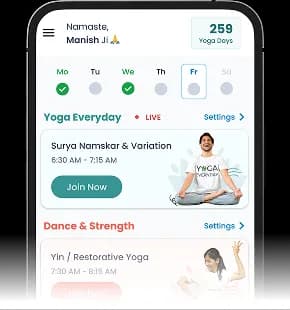
Continue your habit on the Habuild app
Use the Habuild app for reminders, live access, progress support, and habit tracking.