6 Variations of Toe Touches Exercises
A 6-variation toe touches routine that builds abs and flexibility depending on the variation performed.
Key Takeaways
- Lying and alternating versions target rectus abdominis
- Standing versions focus on hamstring flexibility
- 6 variations suit different fitness levels
- Guided by senior instructor Saurabh Bothra's live classes
- Combines strength and flexibility in one movement
What Are Toe Touches Exercises?
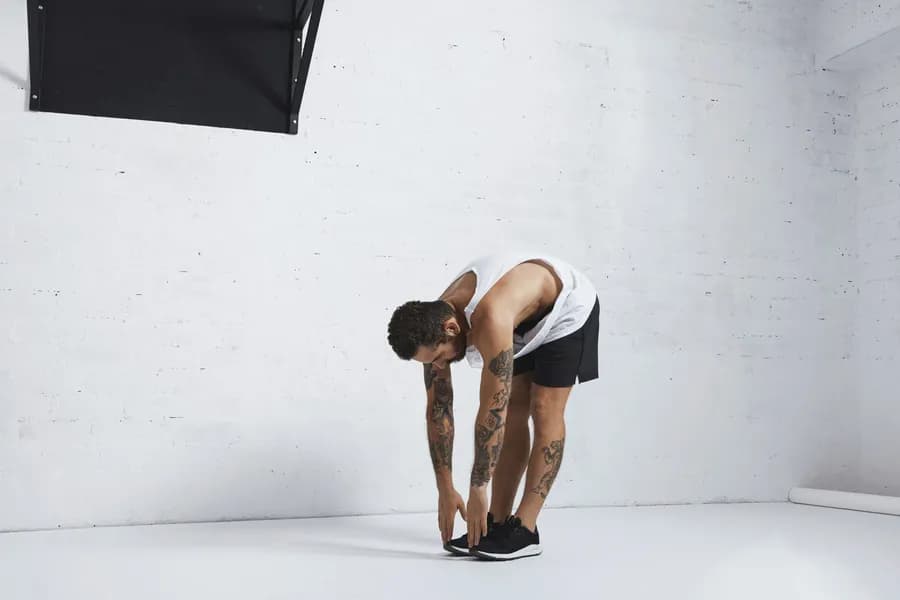
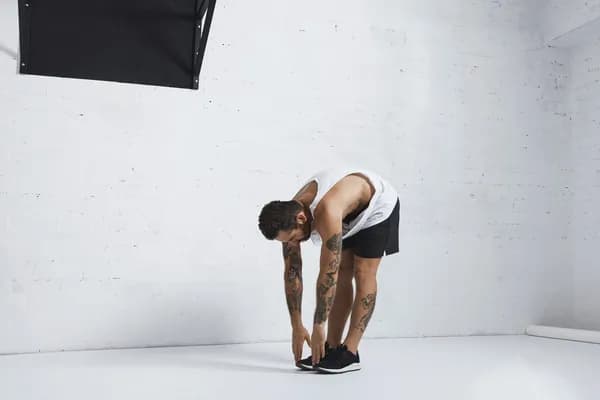
Toe touches exercises are a family of bodyweight movements where the goal is to reach the hands as close to the toes as possible — but they fall into two distinct categories that searchers often conflate. Standing toe touches are a classic flexibility exercise: stand with feet hip-width apart, hinge forward at the hips, and reach toward the toes. The focus is hamstring and lower-back lengthening. Lying toe touches are the ab version: lie on your back with legs extended straight up at 90°, then crunch the upper body upward to reach the hands toward the toes. The focus shifts to the rectus abdominis through high-amplitude crunch motion. Variations expand the toolkit: alternating toe touches add rotational engagement (right hand to left toe, then switch); toe touch for beginners simplifies the lying version with bent knees and reduced range; weighted toe touches add a dumbbell held at the chest for advanced trainees.
The mechanism depends on which variation you’re doing. Standing toe touches train the posterior chain (hamstrings, glutes, lower back) through gentle dynamic stretching — they increase blood flow, improve flexibility over weeks of consistent practice, and serve as an excellent warm-up before strength work. Lying toe touches and the alternating-toe-touches variation are pure abdominal movements: the legs hold a 90° vertical position (engaging the lower abs and hip flexors isometrically) while the upper body crunches up (engaging the upper rectus abdominis). The result is the most ab-intensive crunch variation in the bodyweight toolkit — significantly more demanding than standard crunches because the legs being held vertical removes hip-flexor compensation. For broader integrated core development, the programme covers both crunch-style and stability-style ab work.
Benefits of Toe Touches Exercises
Trains the Full Range of the Rectus Abdominis
Lying toe touches engage the full rectus abdominis from the lower attachments (near the pelvis) to the upper attachments (near the rib cage) through high-amplitude crunch motion. This produces greater muscle activation than standard crunches, which only travel a few inches. EMG research on abdominal exercises (Escamilla et al., 2010, Journal of Orthopaedic & Sports Physical Therapy) shows full-range crunch variants produce significantly higher rectus abdominis activation than partial-range crunches.
Improves Hamstring Flexibility (Standing Variation)
Daily standing toe touches practice systematically lengthens the hamstrings — the muscles most shortened by hours of sitting. Improved hamstring flexibility reduces lower-back strain (since tight hamstrings pull the pelvis posteriorly), improves running mechanics, and protects against injury during heavier lower-body work.
Adds Rotational Core Engagement (Alternating Variation)
The alternating toe touches variation (right hand to left toe, then left hand to right toe) engages the obliques alongside the rectus abdominis — making it the only single move that hits the entire abdominal wall: upper abs, lower abs, AND obliques together. Stat: research on rotational core work (Saeterbakken / JSCR rotational training literature) shows cross-body crunch variants produce meaningfully higher oblique activation than non-rotating versions.
Builds Visible Ab Definition When Body Fat Drops
Daily toe-touch crunch training builds the rectus abdominis muscle thickness needed for visible “six-pack” definition once body fat drops below ~15% (men) or ~22% (women). Most members see meaningful definition by week 8–12 of consistent practice combined with reasonable eating and overall fat-loss work.
Best Toe Touches Variations
Exercise 1: Lying Toe Touches — Full Rectus Abdominis — 3 sets × 12–15 reps
Lie flat on your back, legs extended straight up at 90° (vertical, toes pointing toward ceiling), arms extended overhead. Crunch the upper body up by reaching the hands toward the toes — shoulder blades lift off the floor, hands meet the toes (or as close as possible). Lower with control. 3 sets × 12–15 reps. The foundational ab variation. Modification: bend knees slightly if hamstring tightness pulls legs out of vertical; reduce range — reach only halfway to the toes — until form locks.
Exercise 2: Alternating Toe Touches — Rectus Abdominis + Obliques — 3 sets × 20 reps
Same starting position as lying toe touches. Crunch up reaching the right hand toward the LEFT toe (across the body), lower; crunch up reaching the left hand toward the RIGHT toe, lower. 1 rep = both sides. 3 sets × 20 reps. The cross-body motion adds rotational engagement, hitting the obliques significantly more than standard lying toe touches. Modification: reduce the cross-body reach — touch the shin instead of the opposite toe — until oblique strength catches up. Slow the tempo down.
Exercise 3: Toe Touch for Beginners (Bent Knees, Reduced Range) — Entry-Level Abs — 3 sets × 10–12 reps
Lie flat on your back, knees bent, shins parallel to the floor (not vertical), arms extended overhead. Crunch the upper body up by reaching the hands toward the knees (not the toes — the goal is reduced range until ab strength develops). Slow lift, slow lower. 3 sets × 10–12 reps. The toe touch for beginners variant — designed for those building ab strength from zero. Build to standard lying toe touches over 3–4 weeks once form is locked. Modification: reduce range further — reach only to mid-thigh instead of knees — if neck strain or partial reps occur.
Beyond these three, the standing toe touches (forward-bend reach toward floor) variation is a flexibility-focused exercise often included in dynamic warm-up routines. Hold for 15–20 seconds with relaxed breathing — focus is on hamstring lengthening, not abs.
Common Mistakes to Avoid With Toe Touches Exercises
Mistake 1: Pulling on the Neck With Hands Behind the Head — Correction: Reach With Hands, Not the Head
The most common toe touch error: as fatigue sets in, the head pulls forward independently from the chest, straining the neck. The hands “reach” only because the head and shoulders crane upward. What to do instead: the upper crunch motion should drive the reach — shoulder blades lift off the floor, then the chest follows, and the hands reach toward the toes as the natural extension of that motion. Eyes stay on the toes (or sky if doing standing version), neck stays relaxed.
Mistake 2: Locking the Knees in Standing Toe Touches — Correction: Soft Knee Bend
If you do standing toe touches with locked knees and force the hands to the floor, you put dangerous load on the lumbar spine and hamstring tendon attachments. What to do instead: soft knee bend (small but visible). Hinge at the hips, not the lower back. Reach as far as you can without rounding the lower back or locking the knees. Hamstring flexibility improves over weeks — don’t try to force it in one session. The programme integrates standing toe touches into the warm-up so safety cues are reinforced.
Mistake 3: Going Too Fast With Sloppy Form — Correction: 2 Seconds Up, 2 Seconds Down
Speed-doing lying toe touches by bouncing the upper body up and letting it drop trains nothing — momentum carries the rep, the abs barely engage. What to do instead: deliberate tempo. 2 seconds up to peak crunch, 1-second pause at the top with conscious ab squeeze, 2 seconds lower with control. 12 controlled reps beat 30 sloppy ones for both muscle development and lower-back protection.
How Habuild Trains You for Strong, Defined Abs and Flexibility
Full-Spectrum Core Programming, Not Just One Exercise
Most online ab routines repeat the same 3 exercises forever. Habuild’s daily sessions cycle through toe touches, alternating toe touches, leg raises, dead bugs and Russian twists in a balanced weekly rotation, ensuring all 7 core muscle groups develop together — not just the upper abs.
Live Daily Sessions With Real-Time Form Correction
The neck-pull error, the locked-knee error, the speed-rep error — all corrected within seconds on the live call. Toe touches done badly are useless or risky; toe touches done well are highly effective. The difference is form, and form requires live coaching.
Progressive Overload Built Into Every Session
Week 1: toe touch for beginners (bent knees, reach to knees), 10 reps. Week 4: lying toe touches with full vertical legs, 12 reps. Week 6: alternating toe touches introduced. Week 10: weighted toe touches for advanced ab development. Members don’t programme this — duration, complexity and load build progressively within the live class flow.
Accountability, Streaks and Community
Visible abs require 8–12 weeks of unbroken practice. Daily streak tracking, the WhatsApp community and live morning sessions keep members on the mat through the slow window where the muscle is being built but isn’t yet visible.
Who Is Toe Touches Exercises Best For?
Complete Beginners Starting from Zero
Toe touches begin lying on your back with legs raised vertically — the movement is simply reaching the hands toward the feet. Those who cannot reach the toes initially still receive full core benefit from the reach motion. The only requirement is showing up consistently — strength and technique follow from that.
Intermediate Trainees Looking to Fill a Gap
Toe touches uniquely combine abdominal strengthening with hamstring and lower-back flexibility in a single movement — making them one of the most efficient exercises for anyone who wants to improve both areas without dedicating separate sessions to each. Adding toe touches exercises to an existing routine addresses a specific conditioning gap that most general workouts miss.
Those Training Abs While Improving Hamstring Flexibility Simultaneously
Toe touches uniquely combine abdominal strengthening with hamstring and lower-back flexibility in a single movement — making them one of the most efficient exercises for anyone who wants to improve both areas without dedicating separate sessions to each.
Senior Citizens and Older Adults (50+)
Toe Touches Exercises can be adapted for older adults by controlling tempo, reducing range of motion, and using supported variations. Habuild’s live instructors modify exercises in real time for different fitness levels and physical conditions in the same session.
Is Toe Touches Exercises Good for Beginners?
Yes — absolutely. Toe Touches Exercises begin at very low intensity with fully accessible entry-level variations. Habuild’s live instructor adapts the session in real time so beginners and experienced trainees can train together without either being left behind.
How to Add Toe Touches Exercises to Your Training Routine
How Often to Do Toe Touches Exercises — Frequency Guide
Train toe touches exercises 4–5 times per week. This frequency gives the muscle and nervous system adequate stimulus without outpacing recovery. Consistency matters more than intensity in the early weeks — showing up regularly produces better results than infrequent all-out sessions.
When in Your Workout to Do Toe Touches Exercises
Place toe touches exercises in the core block, or at the end of a session as a combination strength-and-flexibility finisher. Sequencing exercises correctly ensures you bring maximum quality to toe touches exercises rather than performing them under accumulated fatigue from earlier work.
What to Pair Toe Touches Exercises With
Combine toe touches exercises with crunches, hamstring stretches, and seated forward bends for a complete ab and posterior chain flexibility programme. This combination develops complementary muscle groups in the same session and builds the balanced strength that prevents compensation and injury.
How to Progress Toe Touches Exercises Over Time
Once the base movement feels controlled and repeatable, slow the eccentric return phase, add ankle weights, progress to alternating single-leg toe touches, then to standing toe touches which also challenge balance and posterior chain flexibility. Progress only when form is consistent — adding difficulty before mastering the base movement reinforces poor mechanics and stalls long-term results.
How Habuild Teaches Toe Touches Exercises
Habuild is India’s First Habit Building Program — and through its strength and fitness sessions, it brings the same habit-based philosophy to targeted exercise training. Every session is structured around your specific goal, not a one-size-fits-all class.
Goal-Specific Programming — Not a Generic Fitness Class
Every exercise, rep range, and rest period in Habuild’s toe touches exercises sessions is chosen because it produces results for toe touches exercises specifically. Habuild does not run the same session for every goal — the programme is structured to drive your specific outcome with every session, not general fitness that happens to include toe touches exercises.
Live Daily Sessions with Real-Time Form Correction
Unlike pre-recorded videos, Habuild’s live daily sessions allow the instructor to see and correct your form in real time — the specific errors that limit toe touches exercises results and increase injury risk. This live correction is the difference between training that works and training that wastes effort and creates bad habits.
Progressive Overload Built into Every Session
Members do not need to design their own progressive overload for toe touches exercises — it is built into the programme structure. Each week, sessions are deliberately more challenging than the last, ensuring the body never fully adapts and results continue coming rather than stalling.
Accountability, Streaks, and Community
The most common reason people stop exercising is not effort — it is missing sessions until the habit breaks. Habuild’s streak system, live session accountability, and community of members training the same goal alongside you resolves this directly. Members who join with a specific goal like toe touches exercises and stay consistent for 30 days almost universally report that showing up has become automatic.
Flexible Batch Timing
Choose morning or evening classes and join the slot that suits your day.
Morning
6:30 AM
7:30 AM
8:30 AM

Evening
5:00 PM
6:00 PM
7:00 PM
8:00 PM

Choose Your Membership Plan
Continue after the trial with membership options designed for long-term consistency support.
Continue your habit on the Habuild app
Use the Habuild app for reminders, live access, progress support, and habit tracking.