
Black Chickpeas Benefits: Nutrition, Uses, and How Kala Chana Compares
Kala chana, the smaller, darker chickpea common across Indian kitchens, has a denser fibre content than the paler kabuli variety. See its full nutrition.
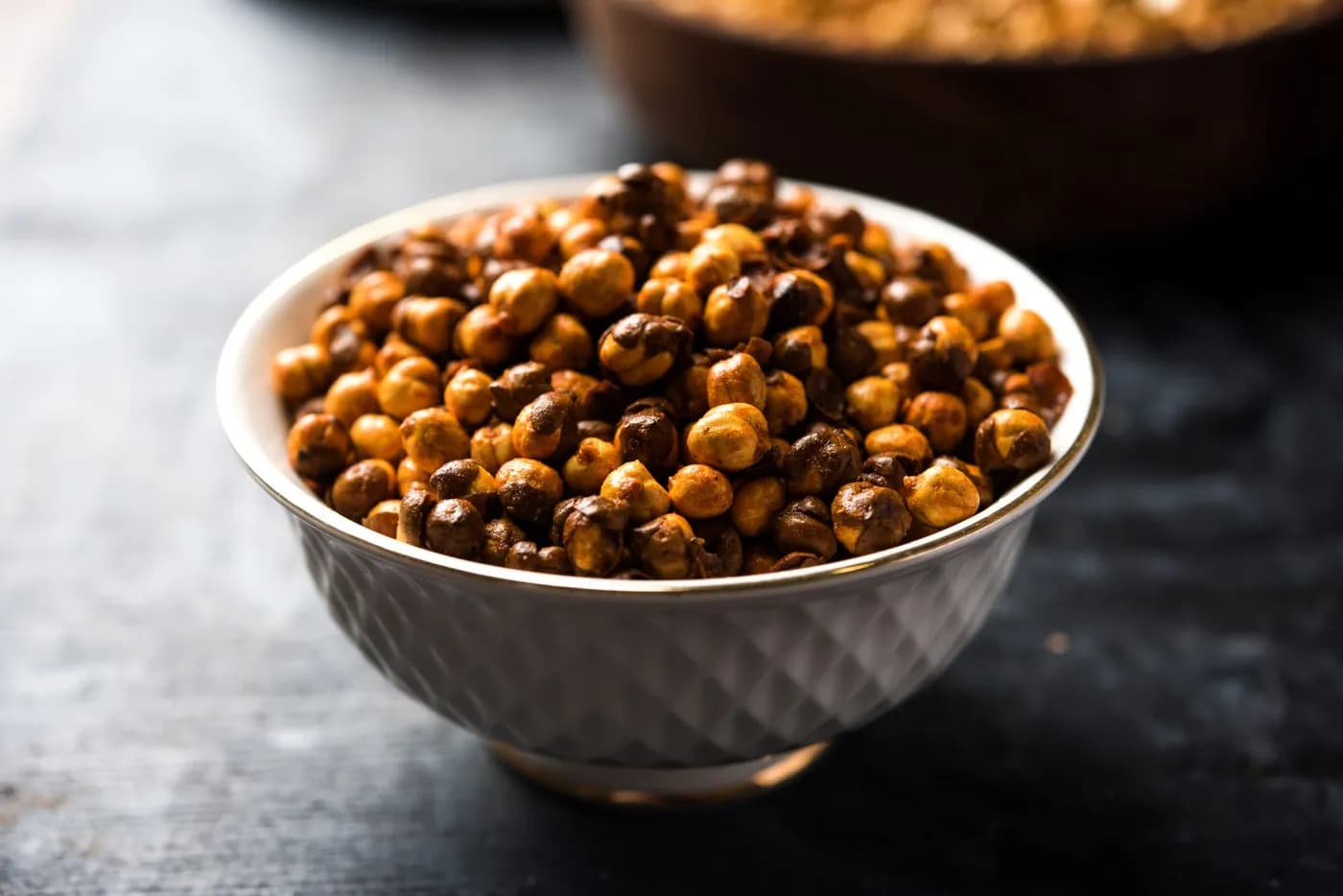
Key Takeaways
- Kala chana has denser fibre and iron than the paler kabuli chickpea variety.
- Its thicker dark skin holds most of the extra fibre and antioxidant content.
- Lower glycemic index (28-34) than kabuli chana makes it gentler on blood sugar.
- About 8-9g protein and 8g fibre per 100g cooked – filling at a similar calorie count.
- Common preparations include sundal, chana chaat, and sprouted salads.
Black chickpeas benefits are worth knowing about if your chickpea experience so far has only involved the larger, paler kabuli variety used in hummus and chole. Kala chana, the smaller and darker chickpea common across Indian kitchens, has a denser fibre content and a slightly different nutrient profile that makes it worth including in your rotation, whether boiled, sundal-style, sprouted, or tossed into a chaat.
Black Chickpeas Benefits at a Glance
- Higher fibre than white chickpeas — the thicker outer skin adds extra bulk that supports digestion.
- Good plant protein source — roughly 8-9g protein per 100g cooked, useful in a vegetarian diet.
- Notable iron content — a helpful contributor alongside other iron-rich foods, especially when paired with vitamin C.
- Lower glycemic index — its extra fibre slows digestion and moderates blood sugar response.
- Rich in antioxidant compounds — the dark seed coat contains polyphenols not found in the lighter kabuli variety.
- Versatile and inexpensive — used in sundal, chana chaat, ghugni, and sprouted salads across regional cuisines.
Nutritional Profile of Kala Chana (Per 100g Cooked)
| Nutrient | Approximate Value |
| --- | --- |
| Calories | ~164 kcal |
| Protein | ~8.9 g |
| Dietary fibre | ~8.0 g |
| Iron | ~2.9 mg |
| Folate | ~172 mcg |
| Potassium | ~291 mg |
| Fat | ~2.6 g |
Compared to white (kabuli) chickpeas, kala chana generally carries more fibre and iron per 100g, largely because a greater share of the bean is seed coat, which is where much of the fibre and antioxidant content sits — a key reason the black chickpeas benefits stand out on paper, not just in tradition.
Black Chickpeas Benefits vs Regular White Chickpeas
The main black chickpeas benefits that set kala chana apart from kabuli chana come down to size, skin, and glycemic response. Kala chana is smaller, has a tougher dark brown to black skin, and a slightly nuttier, earthier taste compared to the milder, softer kabuli chana. That thicker skin isn’t just cosmetic — it means more fibre per serving and a lower glycemic index, generally placed in the 28-34 range compared to kabuli chana’s somewhat higher range. This makes kala chana a reasonable choice for people watching post-meal blood sugar, alongside a generally more filling effect at a similar calorie count. Kabuli chana, by contrast, is easier to mash and blend, which is why it dominates hummus and creamy curries, while kala chana holds its shape and bite better in salads, stir-fries, and dry preparations.
Since kala chana’s iron content is one of its bigger draws, it’s worth seeing how it stacks up against other options in our guide to iron-rich foods, and if you’re comparing it more broadly against other legumes, beans health benefits covers the wider picture.
Photo: La.Catholique, CC BY 2.0, via Openverse (Flickr)
Common Ways to Eat Kala Chana for the Full Black Chickpeas Benefits
Sundal — kala chana tempered with mustard seeds, curry leaves, and grated coconut — is a popular South Indian preparation that’s light on oil and keeps most of the bean’s fibre intact, which matters because the black chickpeas benefits depend a lot on how lightly the bean is cooked. Chana chaat, made with boiled kala chana, onion, tomato, and a tangy lemon-chaat masala dressing, is another common way to eat it as a snack rather than a heavy meal. Sprouted kala chana is worth calling out separately: sprouting reduces some of the anti-nutrients that can interfere with mineral absorption and makes the bean slightly easier to digest, while adding a fresh, crunchy texture that works well raw in salads or lightly sautéed. A simple ghugni — kala chana simmered in a light tomato-based curry — is a filling, protein-forward option that pairs well with roti or flattened rice.
How to Fit Kala Chana Into Your Diet
A standard serving of about half a cup of cooked kala chana provides a meaningful chunk of your daily fibre and a useful protein contribution without excessive calories, and getting these black chickpeas benefits regularly is really just a matter of including kala chana a few times a week. As with any legume, soaking dried kala chana overnight before cooking improves digestibility and shortens cooking time. If you’re new to eating much fibre, introduce it gradually and drink enough water through the day, since a sudden increase in fibre intake can cause temporary bloating.
Who Should Be Cautious With Black Chickpeas Benefits
The black chickpeas benefits are considerable, but kala chana isn’t the right fit for absolutely everyone in large amounts. People with IBS or other conditions sensitive to FODMAPs sometimes find legumes, including kala chana, trigger bloating or cramping, so starting with a small portion is wise if beans are already tricky for your gut. Kala chana also contains purines, so people managing gout or uric acid levels shouldn’t overdo portions, though an occasional moderate serving is generally fine — check with your doctor if you’re on a strict low-purine diet. People prone to kidney stones from oxalates should also keep portions moderate, since legumes contribute a modest amount of oxalate alongside many other everyday foods. None of this means avoiding kala chana altogether — it just means the black chickpeas benefits are best enjoyed in sensible portions rather than very large servings, especially if you’re new to eating much fibre.
Frequently Asked Questions
Related Articles

Healthy fats: why your body needs fat
Healthy fats help your body absorb vitamins and support brain, hormones, joints, cells and daily meals. Learn simple vegetarian sources and habits.

Good fats vs bad fats: choose fats wisely
Understand good fats vs bad fats in simple words. Learn which vegetarian fats to choose, what to reduce and how to read food labels better.
