Copper Vessel Water Benefits: What’s Evidence-Based vs. Tradition
Storing water in a copper vessel overnight, or tamra jal, does have a couple of measurable effects — but many of the broader health claims attached to it.
Key Takeaways
- The oligodynamic effect – copper reducing certain bacteria in water – is genuinely documented.
- Trace copper leaching into stored water contributes a small amount to daily copper needs.
- Claims about curing digestion, immunity, or skin issues go well beyond the evidence.
- Improperly maintained vessels can leach more copper than is safe – excess isn’t better.
- More a wellness ritual today than a necessity, since filtered water is widely available.
Copper vessel water benefits sit at an interesting intersection of old practice and modern science — some of it holds up, and some of it doesn’t. Storing water in a copper vessel overnight, a practice rooted in Ayurveda and known as tamra jal, does have a couple of genuinely measurable effects, but many of the broader health claims attached to it go well beyond what evidence actually supports. Sorting out which copper vessel water benefits are real and which are overstated is really the point of this piece.
Copper Vessel Water Benefits at a Glance
- Mild antimicrobial effect: copper can reduce certain bacteria in stored water, a documented property called the oligodynamic effect
- Small amount of trace copper intake: water stored in copper vessels picks up minute amounts of copper, a mineral the body needs in small quantities
- Not a proven cure for digestion, immunity, or skin issues: these are common marketing claims without solid supporting evidence
- Excess copper is genuinely harmful: more isn’t better, and improperly maintained vessels can leach more copper than is safe
- Traditional practice, not a medical treatment: worth understanding as a habit, not relying on as therapy, since the copper vessel water benefits that exist are modest, not medicinal
The Ayurvedic Practice Behind Copper Vessel Water
Storing drinking water in a copper vessel overnight, then drinking it the next morning, is a long-standing Ayurvedic practice. It’s based on the idea that copper has purifying properties and that water “charged” this way supports digestion and overall health. The tradition predates modern water filtration, and there’s a reasonable historical logic to it: before treated municipal water existed, copper’s ability to reduce microbial contamination in stored water was genuinely useful for reducing waterborne illness. That historical link is at the root of most copper vessel water benefits still talked about today.
Today, the practice persists more as a wellness ritual than a necessity, since most people already have access to filtered or boiled water. That doesn’t make it pointless, but it does mean the practice should be understood on its actual merits rather than the more sweeping claims often attached to it. The genuine copper vessel water benefits are narrower than the wellness marketing around them suggests.
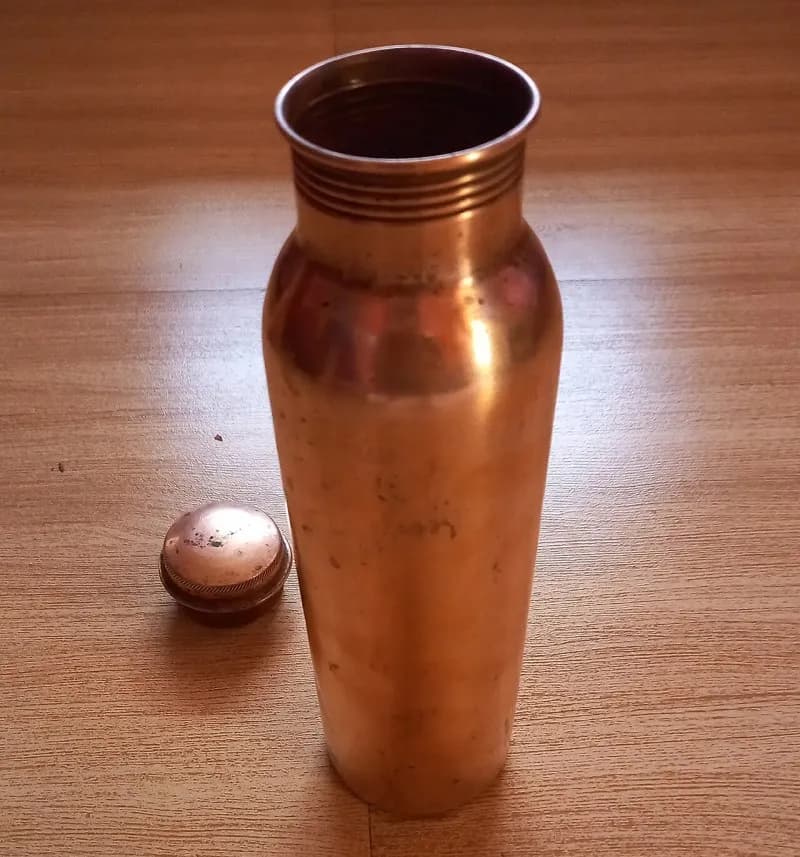
Photo: Dr. Satish Upalkar, CC BY-SA 4.0, via Wikimedia Commons
Copper Vessel Water Benefits: What’s Actually Evidence-Based
Two things about copper vessel water hold up reasonably well. First, the oligodynamic effect — copper’s ability to inhibit the growth of certain bacteria and microorganisms — is a real, documented property, not folklore. Water stored in copper vessels for several hours shows reduced levels of some bacteria compared to water stored in plastic or other containers. Second, trace amounts of copper leach into the water, contributing a small amount toward your daily copper requirement, which the body needs for red blood cell formation, connective tissue, and nervous system function. These two points are the real copper vessel water benefits worth knowing.
Copper is just one of several traditional hydration habits worth sanity-checking against the evidence — Daily Water Intake covers how much you actually need day to day, and Coconut Water Benefits does a similar reality-check for another popular hydration drink.
What isn’t well supported is the wider list of claims often attached to copper vessel water — that it “balances” the body’s doshas, cures digestive disorders, boosts immunity dramatically, slows aging, or works as a general detox. These claims circulate widely in wellness content, but there isn’t credible clinical evidence behind them. This gap between marketing and evidence is exactly why the real copper vessel water benefits get exaggerated online. The honest summary is that copper vessel water offers a mild antimicrobial benefit and a small trace-mineral contribution — genuinely useful in a limited way, not a health transformation.
The Caution: Copper Toxicity and Safe Use
This is the part that often gets left out of the enthusiastic version of this story. Copper is only needed in small amounts — adults require roughly 900 micrograms a day — and the body doesn’t handle excess copper well. Drinking water stored in copper vessels for too long, using vessels that are tarnished, poorly maintained, or made from lower-quality copper alloys, or drinking exclusively from copper throughout the day can push copper intake higher than is safe. Symptoms of copper overexposure can include nausea, stomach pain, and in more serious or chronic cases, liver damage. This risk is the necessary flip side to weigh against any copper vessel water benefits you’re hoping to get.
If you want to try this practice, a few precautions matter: use food-grade copper vessels, avoid storing water in copper for more than 8-10 hours, clean the vessel regularly with lemon and salt to prevent tarnish, and don’t rely on copper for every glass you drink in a day. People with Wilson’s disease, a condition that causes copper to build up in the body, should avoid this practice entirely. Followed carefully, these precautions let you access the copper vessel water benefits without much downside. Moderation and proper maintenance make the difference between a mild benefit and an unnecessary risk.
Frequently Asked Questions
Related Articles

Tongue Scraper Benefits: Copper, Silver & Ayurvedic Guide
A copper or silver tongue scraper, used daily for 30 seconds before brushing, removes the overnight bacterial coating Ayurveda calls ama — one of the oldest oral hygiene tools, part of dinacharya. See the full guide.

Ajmodark (Oma Water): Uses, Benefits, Dosage & Side Effects
Explore Ajmodark (Oma Water) in Ayurveda, including traditional uses, properties, preparation guidance, side effects and precautions.