Tongue Scraper Benefits: Copper, Silver & Ayurvedic Guide
A copper or silver tongue scraper, used daily for 30 seconds before brushing, removes the overnight bacterial coating Ayurveda calls ama — one of the oldest oral hygiene tools, part of dinacharya. See the full guide.

Key Takeaways
- A 2004 Journal of Periodontology study found scraping cuts volatile sulfur compounds by 75%.
- Jihva nirlekhana is one of the daily dinacharya practices in Charaka and Sushruta Samhita.
- The bacteria causing halitosis live in tongue grooves toothbrush bristles cannot reach.
- Habuild’s instructors match scraper material, copper or silver, to each member’s dosha.
- Most benefits become noticeable within just 1-2 weeks of daily 30-second practice.
- Sits alongside jal neti and kapalbhati as part of the classical morning purification routine.
Tongue scraper benefits include reduced bad breath, improved digestion, sharper sense of taste, removal of overnight bacterial coating (ama in Ayurveda), and clearer skin over time. Used daily for 30 seconds before brushing teeth, a copper or silver tongue scraper is one of the oldest and most effective oral hygiene tools — described in classical Ayurvedic texts as part of dinacharya, the daily routine. The practice takes less effort than flossing and delivers benefits modern dentistry now confirms.
If you have searched for tongue scraper benefits, you’ve probably noticed the practice gaining attention in modern wellness circles after centuries of being a quiet Ayurvedic staple. The science is settled: scraping the tongue removes bacteria, food residue, and a coating that brushing alone cannot clear. This guide covers the verified tongue scraper benefits, the differences between copper and silver tongue scrapers, the right way to scrape, the common mistakes, and how this 30-second habit fits into a complete morning routine.
What is Tongue Scraping?
Tongue scraping — jihva nirlekhana in Sanskrit — is one of the daily dinacharya practices described in classical Ayurvedic texts including the Charaka Samhita and Sushruta Samhita. The principle is straightforward: overnight, the tongue accumulates a film of bacteria, food residue, and what Ayurveda calls ama — a sticky coating considered a marker of incomplete digestion. A 2004 study published in the Journal of Periodontology confirmed that tongue scraping reduces volatile sulfur compounds (VSCs) — the primary chemical cause of halitosis — by 75%, significantly outperforming brushing alone. Habuild’s Ayurvedically-trained instructors include dinacharya guidance in the morning programme and recommend the correct scraper material for each member’s dominant dosha — a detail that makes a measurable difference in practice effectiveness.
The practice sits within the broader morning purification family that includes the jal neti nasal cleansing practice, oil pulling (kavala graha), and abdominal practices like kapalbhati pranayama. Each addresses a different cavity of the body — collectively they form the classical morning routine described in Ayurveda as the foundation of preventive health.
Modern dentistry now confirms what Ayurveda knew thousands of years ago: the bacteria that cause halitosis, gum disease, and certain forms of tooth decay reside primarily on the tongue, not the teeth. A single 30-second daily scrape addresses this directly.
Tongue Scraper Benefits
The benefits of using a tongue scraper appear quickly — most are noticeable within 1–2 weeks of daily practice.
Physical Benefits
1. Eliminates Chronic Bad BreathThis is the most immediate benefit. The bacteria responsible for halitosis live on the back of the tongue — specifically in the grooves and papillae that toothbrush bristles cannot reach. Daily scraping removes them at the source. Most chronic bad breath resolves within 7–10 days of consistent practice.
2. Improves DigestionAyurveda describes the tongue as the entry point of the digestive system. By removing the ama coating, daily scraping signals the digestive system to start the day clean. Members who combine tongue scraping with a structured yoga for digestion routine report noticeably less morning bloating and better appetite regulation within 2–3 weeks — the two practices addressing the same upstream system through complementary mechanisms.
3. Sharpens the Sense of TasteWith the bacterial coating removed, the taste buds are exposed and food tastes more vivid. Many practitioners describe noticing this within the first week — sweet things taste sweeter, bitter foods less harsh. This heightened sensitivity naturally supports better food choices.
4. Reduces Plaque and Supports Gum HealthTongue bacteria are a major source of dental plaque. Daily scraping reduces the bacterial load before it can colonise the teeth and gums — a benefit most dentists now actively recommend alongside flossing.
5. Supports Clearer SkinThe connection between digestion and skin clarity is direct in Ayurveda — ama manifests as both a tongue coating and skin imperfections. Practitioners often notice clearer skin within 4–6 weeks of consistent practice. For those targeting skin clarity more specifically, combining tongue scraping with a yoga for face glow routine addresses the same internal-to-external mechanism from two directions.
Mental and Emotional Benefits
6. Creates a Steady Morning AnchorThe 30-second routine becomes a small daily win that builds discipline. Many members find tongue scraping becomes the gateway habit that supports the rest of their morning practice — the habit that never gets skipped and therefore anchors everything else.
7. Reduces Sluggish Morning FeelingCombined with daily yoga and pranayama, tongue scraping addresses the sluggish heaviness most people feel on waking — by clearing the overnight toxin accumulation that Ayurveda identifies as the biological mechanism behind morning grogginess.
Copper Tongue Scraper Benefits
Copper tongue scraper benefits are particularly emphasised in Ayurvedic tradition. Copper has well-documented antimicrobial properties — bacteria cannot survive on a copper surface for extended periods, a property validated in modern microbiology research as well as classical texts.
For tongue scraping specifically: copper’s antimicrobial action kills bacteria on contact, making the cleansing effect more thorough. Small mineral transfers during scraping support iron absorption and immunity. Classical Ayurvedic texts recommend copper particularly for Kapha and Pitta constitutions. A quality copper tongue scraper lasts years with basic daily care — making it one of the highest-value morning investments available.
The mild metallic taste in the first few days fades quickly. Copper scrapers should be cleaned daily with warm water and dried — they tarnish naturally over time, which is normal and harmless.
Silver Tongue Scraper Benefits
Silver tongue scraper benefits are particularly recommended for Vata and Pitta constitutions in Ayurveda. Silver’s antimicrobial properties are well-documented and cover a slightly different spectrum from copper. Its cooling effect is well-suited for Pitta types prone to inflammation. Silver is hypoallergenic — generally well-tolerated even by those with metal sensitivities. High-quality silver scrapers feel substantial and last decades with proper care.
For most practitioners, the choice between copper and silver comes down to constitution and budget. Both work well. Copper is the more accessible and more commonly recommended starting point in classical texts. Stainless steel scrapers work but lack the antimicrobial mineral properties. Plastic scrapers are the least effective and not recommended.
How to Use a Tongue Scraper — Step-by-Step
The full benefits of using a tongue scraper require correct technique. Done wrong, scraping is uncomfortable and ineffective.
Step 1: Use First Thing in the Morning
Before brushing teeth, before drinking water — straight from waking. The overnight coating is what you’re targeting, and it should not be diluted or partially removed before scraping.
Step 2: Stand at the Sink
Stand in front of the bathroom sink. Slight forward lean. Tongue extended outward as far as comfortable.
Step 3: Place the Scraper at the Back of the Tongue
Gently place the U-shaped scraper as far back on the tongue as you comfortably can — avoiding the gag reflex zone. You’ll find your comfortable depth within 3–4 days of practice.
Step 4: Pull Forward in One Motion
Apply gentle pressure and pull the scraper forward across the tongue surface in a single smooth motion. Do not push back and forth — one direction only.
Step 5: Rinse the Scraper
A coating will appear on the scraper. Rinse it under warm water. This is the ama you’ve just removed — its presence confirms the practice is working.
Step 6: Repeat 5–10 Times
Scrape 5–10 times, rinsing the scraper between strokes. Stop when the scraper comes up clean.
Step 7: Rinse the Mouth and Brush
Rinse the mouth with warm water. Then proceed with regular brushing and flossing. The tongue is now clean for the day and the bacterial load on teeth and gums starts lower.
The full process takes 30–60 seconds. There is no simpler morning health intervention with this ratio of effort to result.
Preparatory Steps Before Tongue Scraping
- Buy a quality scraper — copper or silver from a trusted Ayurvedic or dental supplier. Avoid plastic.
- Sterilise the new scraper — boil for 2 minutes the first time before use.
- Keep it visible — store the scraper in the bathroom where it’s seen each morning. Visibility removes the decision friction.
Variations of Tongue Scraping
Daily Copper Scraping (Standard)
The classical Ayurvedic recommendation — daily copper scraper use. Suitable for almost all constitutions and the starting point for most practitioners.
Silver Scraping for Sensitive Mouths
Silver for those with metal sensitivities or for Pitta constitutions prone to oral inflammation.
Combined Scraping + Oil Pulling
After scraping, swish a tablespoon of organic sesame or coconut oil for 5–10 minutes (kavala graha). Spit out, rinse. The combination is the full Ayurvedic morning oral routine — scraping clears the surface, oil pulling draws residue from the gum line.
Multiple Scrapings During Illness
During fever or illness, scraping 2–3 times daily helps remove the heavier ama coating that builds up. Return to once daily once fully recovered.
Common Mistakes to Avoid in Tongue Scraping
- Mistake 1: Pushing the scraper too far back. Triggers the gag reflex unnecessarily. Start at a comfortable distance and go further gradually over days.
- Mistake 2: Scrubbing back and forth. Scrape in one direction only — back to front. Scrubbing irritates the tongue surface and defeats the removal mechanic.
- Mistake 3: Using too much pressure. The tongue is delicate. Light to moderate pressure is sufficient — hard pressure causes soreness without any added benefit.
- Mistake 4: Plastic scrapers or toothbrush bristles. Plastic lacks the antimicrobial properties of copper or silver. Toothbrush bristles brush rather than scrape — the mechanism and result are categorically different.
- Mistake 5: Skipping the daily cleaning of the scraper. Daily warm-water rinse and dry. Weekly deep clean. A dirty scraper reintroduces bacteria — the opposite of the practice’s intent.
- Mistake 6: Scraping after brushing instead of before. The whole point is to remove the overnight coating. Brushing first dilutes that coating and reduces what the scraper can remove.
Who Should Practise Tongue Scraping?
Start Your Daily Yoga & Wellness Practice for ₹1
Make Tongue Scraping a Part of Your Life
You now have a complete view of tongue scraper benefits, the differences between copper and silver scrapers, the correct technique, the variations, and the mistakes that quietly cancel results. The practice is the simplest of all Ayurvedic morning rituals — 30 seconds of daily action with effects that compound across breath, digestion, taste, and skin.
Why the Smallest Habit Matters Most
Tongue scraping is not glamorous and the benefits are quiet. There is no dramatic ritual moment — just a small consistent action that addresses a foundational layer most people skip entirely. Practitioners who hold this for 30 days notice. Those who do it for 6 months experience the compounding effect across digestion, breath, and skin that no toothbrush can match. The 30-second daily commitment is the entire investment.
How Dinacharya Compounds
In the Ayurvedic morning sequence, tongue scraping is Step 1 — it comes before oil pulling, before jal neti, before yoga, before food or water. That sequencing is not arbitrary. Removing the overnight coating before introducing anything else into the body is the upstream intervention that makes every downstream practice more effective. Habuild’s morning programme teaches dinacharya in this integrated sequence — not as isolated habits but as a system where each step enables the next.
What 50,000+ Members Already Know
The members who report the most dramatic tongue scraping results are not the ones who scrape harder or longer — they’re the ones who’ve held the habit inside a complete morning routine for 90+ days. Tongue scraping nested inside yoga, pranayama, and balanced eating is what produces the skin and digestion transformation. Habuild’s live morning sessions provide that complete routine context, and your first 7 days are ₹1.
Ayurveda has always paired physical practices like tongue scraping with movement that stirs digestion and circulation, so it’s worth treating your morning scrape as one piece of a bigger ritual rather than a stand-alone fix. Twisting and forward-folding asanas gently massage the digestive organs and support the same agni, or digestive fire, that a clean tongue is meant to protect, while steady breathing calms the nervous system that governs gut health. If you’re looking to build that fuller morning routine, Habuild’s free yoga challenge is a simple place to start.
Frequently Asked Questions
Related Articles
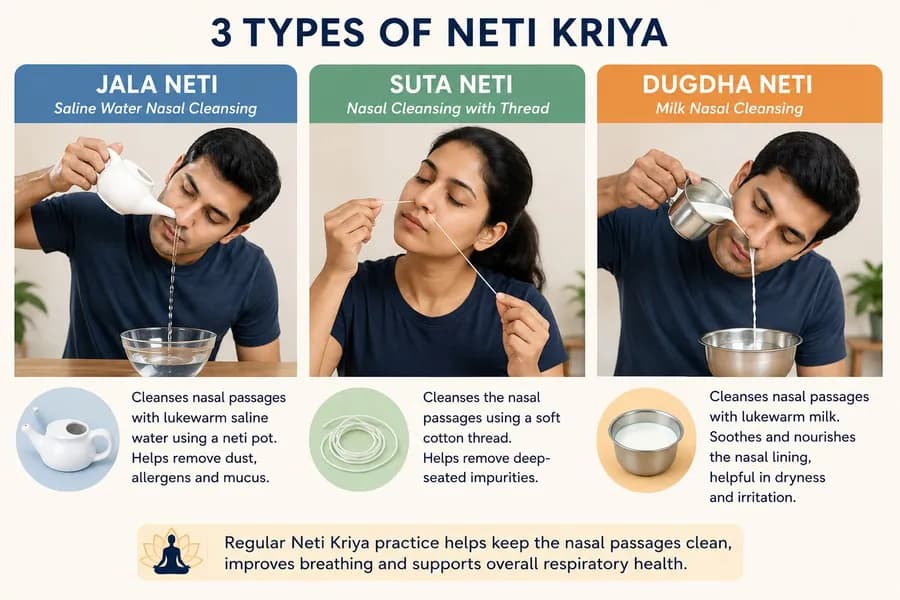
Neti Kriya: Nasal Cleansing in the Hatha Yoga Tradition
Warm saline water or a soft thread passes through the nasal passages in this classical shatkarma cleansing practice — always with distilled or sterile


How to Make Gut Health Strong: 10 Proven Ways
Learn how to make gut health strong with simple daily habits, exercises, and foods. Start your gut-friendly routine with Habuild — try it with a 14-day free trial.