
Daily Protein Requirement: How to Calculate What You Need
Your daily protein requirement isn’t a fixed number — it depends on your body weight, activity level, and goal. See exactly how to calculate it for.
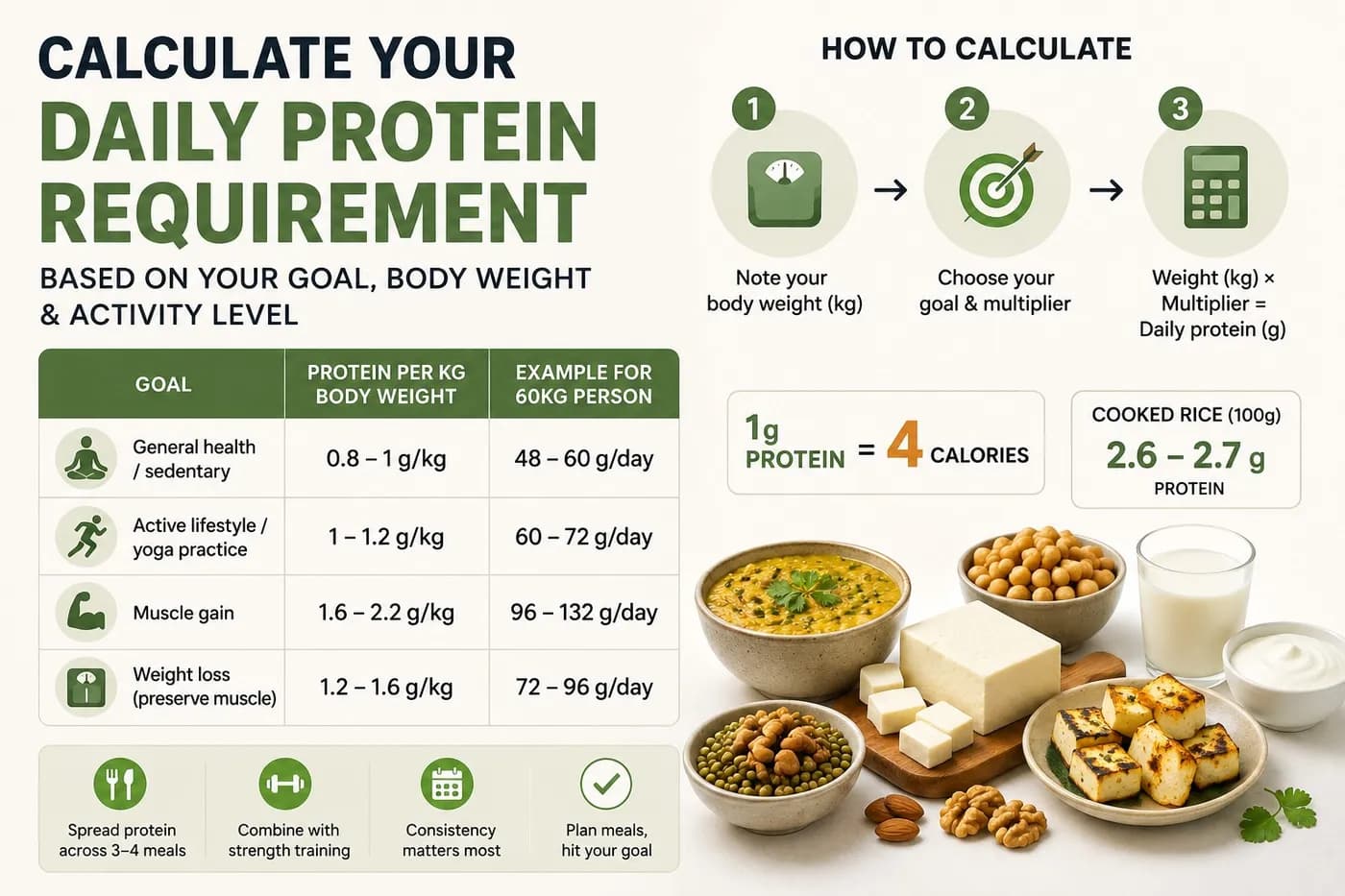
Key Takeaways
- Protein needs range from 0.8g/kg for general health to 2.2g/kg for muscle gain.
- Calculate yours: body weight (kg) x multiplier for your specific goal.
- Weight loss needs slightly less protein (1.2-1.6g/kg) than muscle gain, but more than sedentary.
- Protein provides 4 calories per gram, same as carbs and less than fat’s 9.
- Cooked rice provides only about 2.7g protein per 100g – not a meaningful protein source.
Your daily protein requirement isn’t a fixed number — it depends on your body weight, activity level, and goal, whether that’s general health, muscle gain, or weight loss. This guide shows you exactly how to calculate protein requirement for yourself, without relying on generic advice.
How Much Is Daily Protein Requirement, By Goal
As a starting point, here’s how much is daily protein requirement across common goals, based on grams per kilogram of body weight:
| Goal | Protein per kg body weight | Example for 60kg person |
| --- | --- | --- |
| General health/sedentary | 0.8-1g/kg | 48-60g/day |
| Active lifestyle/yoga practice | 1-1.2g/kg | 60-72g/day |
| Muscle gain | 1.6-2.2g/kg | 96-132g/day |
| Weight loss (preserve muscle) | 1.2-1.6g/kg | 72-96g/day |
These ranges are backed by sports nutrition research and apply to everyone, regardless of diet type, though vegetarians may need to plan meals more deliberately.
How to Calculate Protein Requirement for Your Body
To calculate protein requirement accurately, follow these three steps:
- Note your body weight in kilograms. If you know it in pounds, divide by 2.2.
- Pick your multiplier based on your goal from the table above.
- Multiply weight (kg) × multiplier to get your daily protein requirement in grams.
For example, a 70kg person aiming for muscle gain would target 70 × 1.8 = 126g of protein per day. Someone at 70kg simply maintaining general health would need closer to 56-70g per day. This is a far more reliable method than guessing “how many protein should I eat a day” based on generic charts alone.
How Much Protein for Muscle Building vs Weight Loss
The amount of protein for muscle building is higher than for general maintenance because your body needs extra amino acids to repair and grow muscle tissue after strength training. Aim for 1.6-2.2g/kg, spread across 3-4 meals, alongside resistance training — protein alone won’t build muscle without the training stimulus.
For how much protein per day weight loss actually requires, the target is slightly lower (1.2-1.6g/kg) but still meaningfully above sedentary needs. Higher protein during weight loss helps preserve lean muscle while you’re in a calorie deficit, and it also keeps you fuller for longer, which makes the deficit easier to sustain.
Photo: Sonja Pauen, CC BY 2.0 DE, via Wikimedia Commons
Protein and Calories: The Numbers You Should Know
A useful reference point: 1gm protein how many calories is a common question, and the answer is 4 calories per gram — the same as carbohydrates, and less than fat’s 9 calories per gram. This matters when you’re calculating your total daily calories alongside your protein target.
It also helps to know your carb sources’ protein content. For how much protein in 100 gm rice, cooked white rice provides only about 2.7g, and cooked brown rice about 2.6g — rice is a carbohydrate source, not a meaningful protein contributor, so don’t count on it to meet your daily protein requirement.
Since rice and other grains fall so short, most of your daily protein requirement still needs to come from dedicated sources — our high protein vegetarian foods list breaks down what actually delivers. If you’re weighing a scoop of powder against whole food, our whey vs plant protein comparison covers the trade-offs, and if soya chunks are already a staple in your kitchen, our protein in soya chunks breakdown shows exactly how much they contribute.
Common Mistakes When Estimating Protein Needs
- Using body weight in pounds instead of kilograms without converting, which inflates the target.
- Applying a “muscle gain” multiplier when your actual goal is general health, leading to unnecessary supplementation.
- Ignoring meal timing — spreading protein across the day helps your body use it better than one large serving.
- Forgetting that cooked weight lowers protein-per-100g for grains and dals compared to their dry weight.
Does Your Daily Protein Requirement Change If You’re Vegetarian?
The gram target for daily protein requirement doesn’t change based on diet type — a 60kg vegetarian and a 60kg non-vegetarian both need roughly the same total grams for their goal. What changes is digestibility: plant proteins like dal and rajma are typically 70-90% digestible compared to 90-99% for dairy and soy, meaning vegetarians may want to aim 10-15% above the standard calculation to comfortably meet their daily protein requirement in practice. Combining grains with legumes — rice and dal, roti and rajma — also improves the overall amino acid profile, since no single plant food contains all nine essential amino acids in ideal proportions the way dairy and soy do.
How to Spread Your Daily Protein Requirement Across Meals
Hitting your daily protein requirement in one or two large meals is far less effective than spreading it evenly, since the body can only use a limited amount of protein for muscle repair at a time — typically 20-30g per meal for most adults. If your daily protein requirement is 90g, for example, aim for roughly 20-25g at breakfast, lunch, an evening snack, and dinner, rather than 10g at breakfast and 50g at dinner. This also makes hitting your daily protein requirement far less of a chore, since you’re not relying on one enormous meal to make up for three light ones. A simple way to check: if your first meal of the day has little more than tea and toast, you’re almost certainly under-eating protein at breakfast relative to the rest of your day.
Frequently Asked Questions
Related Articles
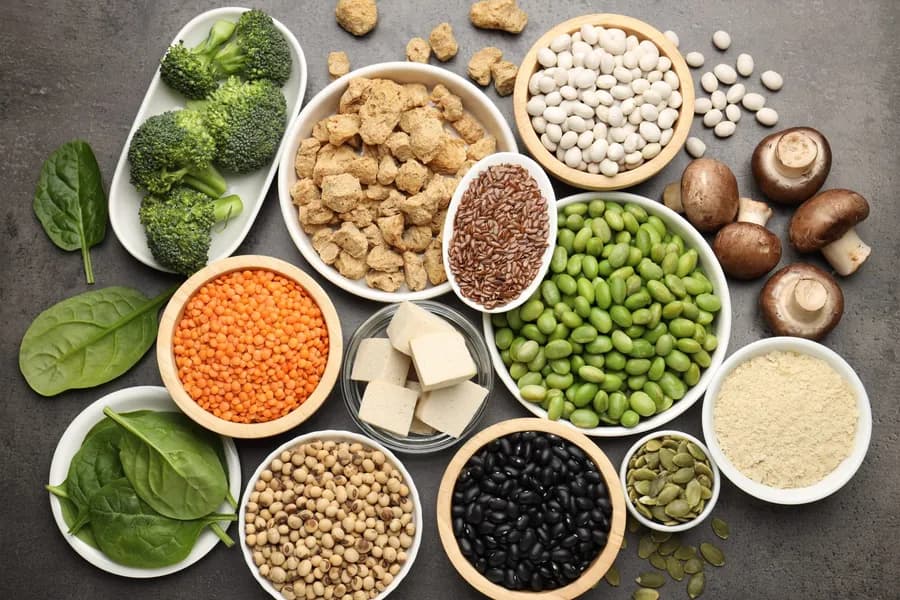
Daily protein intake: why your body needs protein every day
Daily protein intake matters because your body uses protein every day for repair, recovery and daily function. Learn simple vegetarian protein habits.

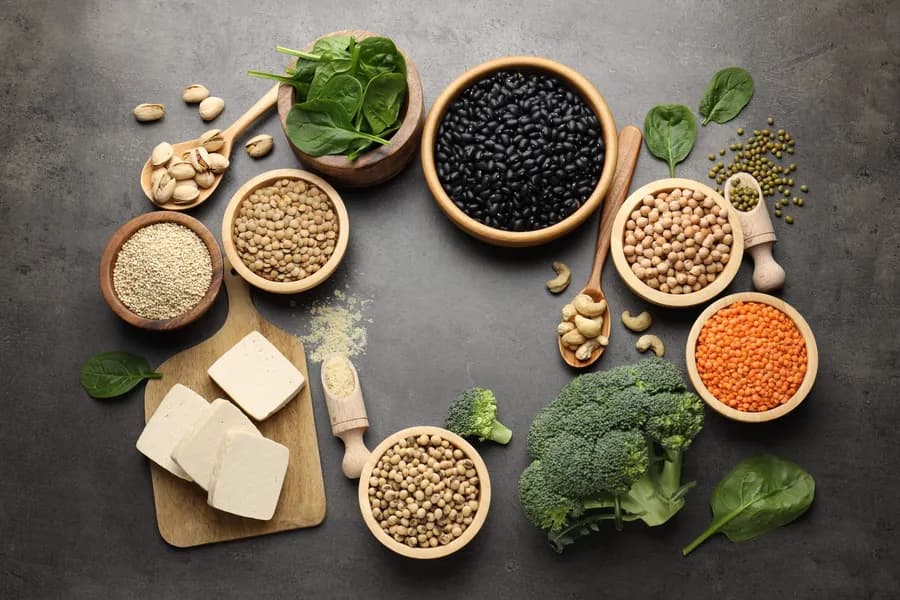
Protein rich vegetarian foods: the perfect plate habit
Learn how protein rich vegetarian foods support energy, strength and fullness. Use the perfect plate habit with greens, grains and protein.

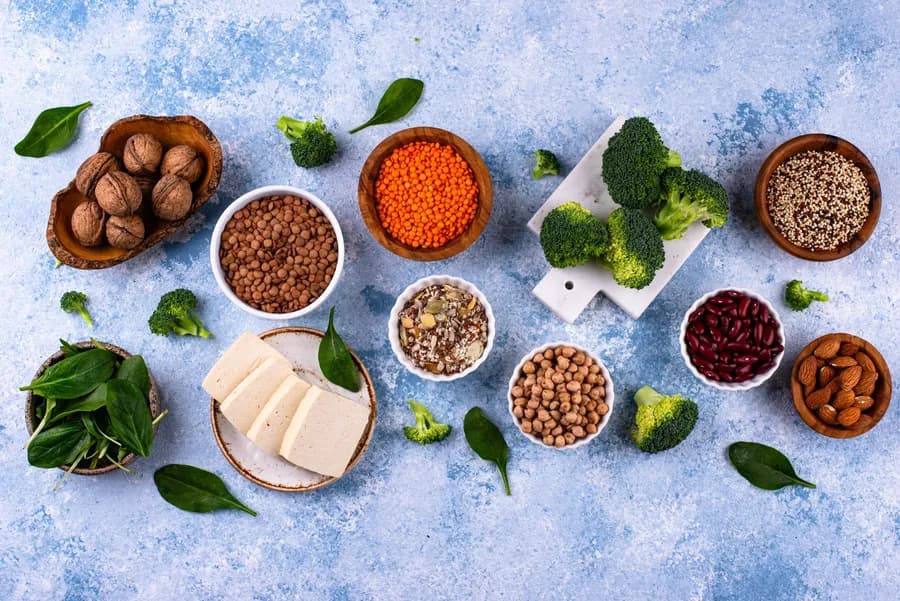
Iron rich foods need protein: 1/4th plate habit
Eating iron rich foods is important, but protein helps your body use iron better. Learn the 1/4th plate protein habit with simple vegetarian foods.