
Does Tea Contain Caffeine? Types, Amounts and Timing
Most tea made from the Camellia sinensis plant contains caffeine, although the amount changes with the leaf, serving size and brewing method.

Key Takeaways
- Black, green, oolong and white tea naturally contain caffeine.
- Herbal infusions are usually caffeine-free, but the ingredient list still matters.
- A longer brew, hotter water and more leaves can increase caffeine in the cup.
- Late tea may disturb sleep, and tea with meals can reduce non-haem iron absorption.
Most tea made from the Camellia sinensis plant contains caffeine, although the amount changes with the leaf, serving size and brewing method. Herbal infusions are usually caffeine-free unless they include tea leaves or another stimulant. This guide answers the question "does tea contain caffeine?" in practical terms and explains how timing, medicines and personal sensitivity affect the choice.
Which teas naturally contain caffeine
Black, green, oolong, white and pu-erh tea come from the same plant. Their processing differs, but all can provide caffeine. Matcha may deliver more because the powdered leaf is consumed rather than removed after steeping. When someone asks "does tea contain caffeine?", the name on the front of the pack is only the starting point.
Peppermint, chamomile, ginger and hibiscus are plant infusions rather than true teas. They are generally caffeine-free on their own. Blends can still contain black or green tea, guarana, yerba mate or added caffeine, so read the ingredients. Decaffeinated tea is not always completely caffeine-free; it usually contains a small residual amount.
Why the amount varies from cup to cup
There is no single caffeine number for every cup. Tea type, leaf quantity, water temperature, steeping time and cup size all matter. Tea bags and loose leaves can also differ. A large mug brewed strongly may provide much more caffeine than a small, lightly brewed cup, even when both are described as black tea.
Colour and bitterness are imperfect guides. A pale drink can still contain caffeine, and a dark brew may owe some colour to spices or milk. Product labels or manufacturer information are more useful when precise intake matters. The question "does tea contain caffeine?" should therefore be followed by: what tea, how much and how was it prepared?
Caffeine sensitivity and the best time for tea
Caffeine can improve alertness for a few hours, but it may also cause restlessness, tremor, a racing heartbeat, headache or stomach discomfort. Sensitivity differs widely. People who rarely use caffeine, are pregnant, have anxiety or certain heart rhythm problems, or take interacting medicines may notice effects at lower amounts.
Caffeine can remain active for several hours. If sleep is difficult, move caffeinated tea earlier and compare how you feel for one or two weeks. Switching the last cup to a genuinely caffeine-free infusion may help. Do not assume that adding milk, lemon or spices removes caffeine; these additions change flavour, not the stimulant already extracted.
Tea, hydration and added ingredients
Tea contributes fluid and can count towards daily hydration. Plain water remains a convenient main drink because it is caffeine-free and does not stain teeth or interfere with sleep. Unsweetened tea can fit a balanced routine, but bottled teas, bubble tea and cafe drinks may contain substantial sugar, syrup or cream.
Look at the whole drink rather than treating tea as automatically healthy. Frequent sweet tea can add more sugar than expected, while very hot beverages may irritate the mouth and oesophagus. Allow a freshly made cup to cool to a comfortable temperature.
Tea with meals and iron absorption
Tannins and other polyphenols in tea can reduce absorption of non-haem iron from plant foods when tea is taken with the meal. This matters more for people with iron deficiency, heavy menstrual losses, pregnancy or diets relying mainly on plant sources. It does not mean everyone must stop drinking tea.
A practical option is to leave a gap between tea and iron-rich meals or iron tablets, following professional advice. Pair dal, beans or leafy vegetables with a vitamin C source such as lemon, guava or capsicum. Do not use tea to explain persistent tiredness without testing; fatigue has many possible causes.
Medicines, pregnancy and other cautions
Pregnancy guidance usually recommends limiting total caffeine from all sources, including tea, coffee, cola, chocolate and energy products. Children and teenagers can also be more sensitive. Someone managing reflux, migraine, palpitations or urinary urgency may find that strong tea worsens symptoms, although individual responses vary.
Caffeine may interact with some medicines and supplements. Tea can also affect the absorption of certain medicines when taken at the same time. Ask a pharmacist about timing if the label gives a warning. Sudden severe palpitations, chest pain, fainting or breathing difficulty needs prompt medical care rather than another home drink.
A sensible way to choose your cup
Start with the reason for drinking tea: taste, warmth, alertness or a social break. Choose a serving and time that support that purpose without disturbing sleep or meals. If caffeine is the concern, change one variable at a time: brew it more lightly, use a smaller cup, drink it earlier or select a verified caffeine-free infusion.
The clearest answer to "does tea contain caffeine?" is yes for true tea, usually no for pure herbal infusions, and a small amount for many decaffeinated products. Labels and brewing habits explain the rest.
Keeping a caffeine diary and cutting back
Keep a simple caffeine diary if symptoms are unclear. Record the type of tea, approximate cup size, brewing time, added ingredients and time consumed. Compare this with sleep, palpitations or stomach symptoms for one week. This is more informative than assuming every cup has the same effect, and it makes a pharmacist or clinician discussion more specific.
If you are reducing caffeine, tapering may be more comfortable than stopping suddenly because withdrawal can cause headache, tiredness or irritability. Replace one cup at a time and keep meals and fluid regular. A product labelled decaf or herbal should still be checked when even a small amount of caffeine matters.
Editorial sources
Frequently Asked Questions
Related Articles
Coffee Benefits: Caffeine, Timing, Portions and Safety
Coffee contains caffeine and many plant compounds, and brewing method, cup size, milk and sugar all change the drink. Learn safe timing.
Green Tea Benefits: Evidence, Timing and Safety
Learn what green tea can realistically do, how to brew it, caffeine timing, weight-loss evidence and supplement safety notes.

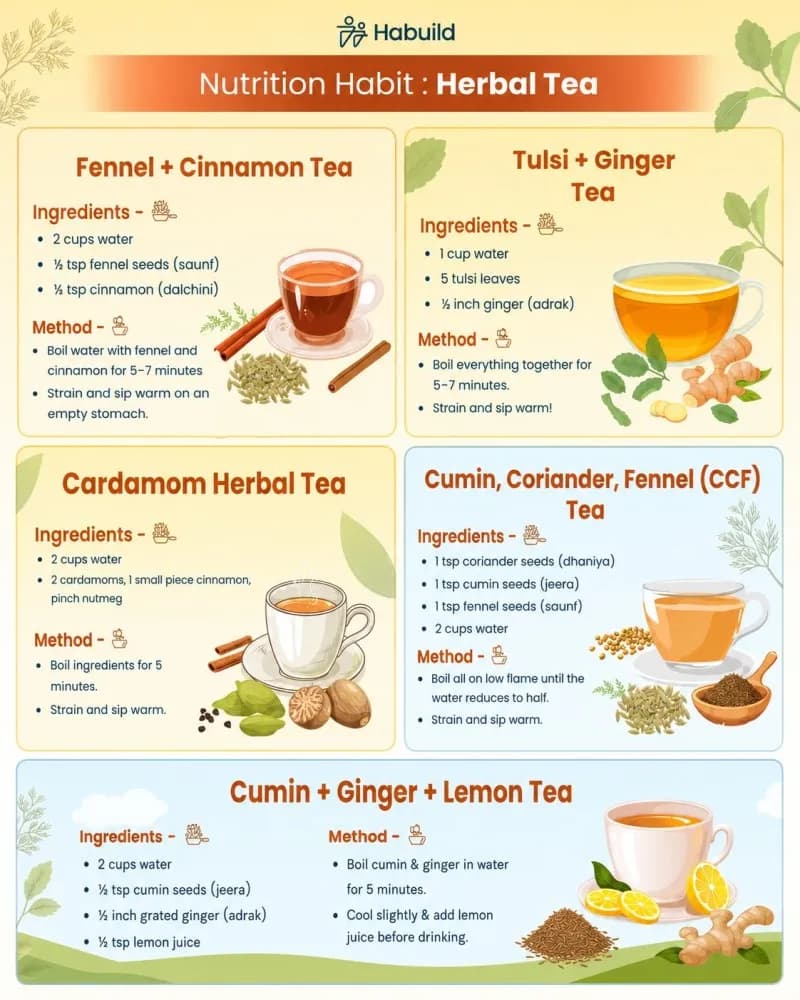
Herbal Tea Recipes: 5 Simple Blends for Daily Routine
These five herbal tea blends use common Indian kitchen ingredients like fennel, cinnamon, tulsi, ginger, and cardamom — light, warm drinks, not medicine..
