
Dried Coconut Benefits: Nutrition, Fibre, and How to Use It
Dried coconut, or copra, is a denser, more calorie-rich food than fresh coconut once the water is removed — a completely different ingredient from.
Key Takeaways
- Drying removes water, concentrating fat, fibre, and calories into a smaller portion.
- A 100g serving has roughly 660 calories – nearly double fresh coconut meat’s 350.
- Contains MCTs, medium-chain triglycerides the body can use relatively quickly for energy.
- Distinct from coconut water or fresh coconut – a completely different ingredient (copra).
- Easy to overeat calories if treated like a low-calorie snack rather than portioned.
Dried coconut benefits come mainly from its concentrated fibre and fat content, since removing the water from fresh coconut leaves behind a denser, more calorie-rich food. Known in Indian kitchens as copra or kopra, dried coconut is a completely different ingredient from coconut water or fresh coconut, and it’s worth understanding that difference before deciding how often to use it. Knowing exactly where these dried coconut benefits come from makes it much easier to use the ingredient sensibly instead of overdoing it.
Dried Coconut Benefits at a Glance
- Concentrated dietary fibre: supports digestion and helps you feel full for longer
- Rich in saturated fats, including MCTs: medium-chain triglycerides that the body can use relatively quickly for energy
- Good source of manganese and copper: trace minerals involved in bone health and metabolism
- Far more calorie-dense than fresh coconut: drying removes water and concentrates calories, fat, and fibre into a smaller portion
- Widely used in Indian cooking: chutneys, curries, sweets, and garnishes across many regional cuisines — one of the more practical dried coconut benefits for everyday meals
What Dried Coconut Actually Is
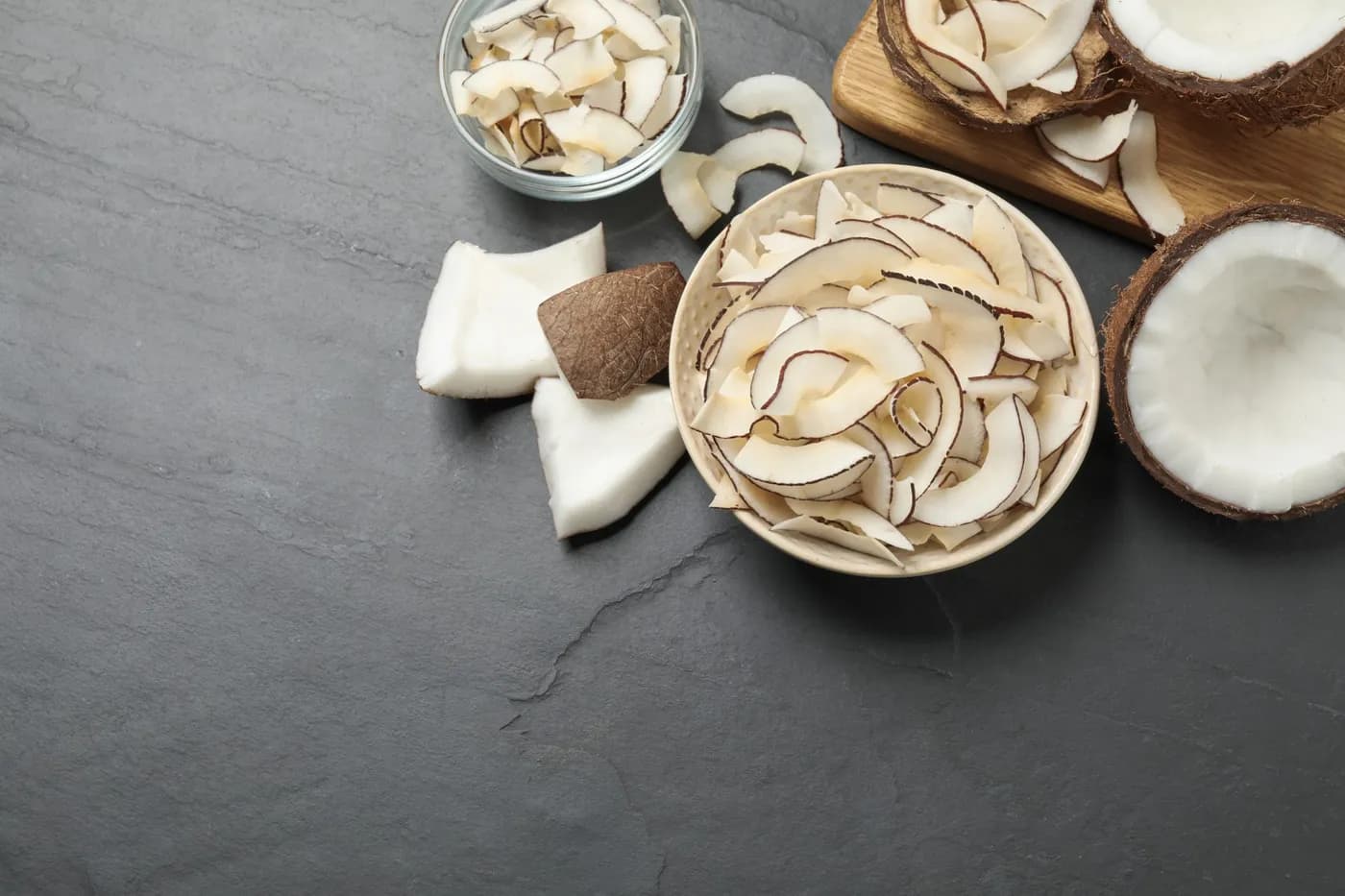
Dried coconut, also called desiccated coconut or copra, is made by removing the meat from a mature coconut and drying it until most of the moisture is gone. This is a distinct product from coconut water, which is the liquid inside a young, green coconut, and from fresh grated coconut, which still retains its natural moisture. Copra can be sold as flakes, shredded coconut, coconut flour, or ground into coconut oil, and each form is used differently depending on the recipe.
Because the drying process removes water, everything else in the coconut — fat, fibre, and minerals — becomes more concentrated by weight. This is the key thing to understand before comparing it to fresh coconut. That concentration effect is really the whole story behind dried coconut benefits.
Dried Coconut Benefits: Nutrition Profile
A 100-gram serving of dried, unsweetened coconut has roughly 660 calories, about 65 grams of fat (mostly saturated, including MCTs), close to 16 grams of dietary fibre, and small amounts of protein, iron, and manganese. By comparison, the same weight of fresh coconut meat has around 350 calories, since it’s roughly half water. This is one of the clearest dried coconut benefits and drawbacks in the same breath: it packs in fibre and healthy fats efficiently, but it’s easy to eat far more calories than you intend to if you treat it like a low-calorie snack.
The fibre content is genuinely useful for digestion and can support steady blood sugar levels when eaten in reasonable amounts. The fat is largely saturated, but a portion of it comes as medium-chain triglycerides, which the body metabolizes somewhat differently from long-chain saturated fats found in other foods. That said, dried coconut isn’t a food to eat freely just because of its MCT content — portion size matters given how calorie-dense it is. Even with these dried coconut benefits, portion control decides whether the ingredient helps or hurts your overall calorie intake.
If you’re comparing coconut in its different forms, Coconut Water Benefits covers the very different, much lower-calorie side of the same fruit, and if the MCT content here has you wondering about a metabolism boost, Metabolism Boosting Foods covers what actually moves the needle there.
Photo: Vegan Photo, CC BY 2.0, via Openverse
Using Dried Coconut in Everyday Cooking
Dried coconut shows up across Indian cooking in coconut chutney, as a base for curries and gravies in South Indian and coastal cuisines, sprinkled over poha or upma, and worked into sweets like ladoo and barfi. A tablespoon or two added to a dish adds texture, natural sweetness, and fibre without much extra effort. That’s the everyday scale at which dried coconut benefits show up in real meals, not by the handful. Because it’s so calorie-dense, it works best as a flavour and texture ingredient in measured amounts rather than something eaten by the handful, the way you might snack on nuts.
If you’re watching your saturated fat intake for heart health reasons, dried coconut is fine in moderate, occasional amounts as part of a varied diet, but it shouldn’t become a daily staple in large quantities. Pairing it with fibre-rich vegetables and lean proteins in the same meal keeps the overall plate balanced.
Common Mistakes People Make With Dried Coconut
A handful of habits quietly undo the dried coconut benefits people are hoping for. Eating it by the handful like a regular snack is the biggest one, since a small volume of copra packs in far more calories than the same volume of fresh coconut or nuts. Assuming “healthy fat” means “eat freely” is another — the MCT content is genuinely useful, but it doesn’t cancel out the calorie load of a generous serving. Buying sweetened desiccated coconut without checking the label is a third, since added sugar stacks on top of what’s already a calorie-dense food. And using it only for garnish while ignoring portion size in cooked dishes like ladoo or barfi can add up over a week of regular indulgence.
Who Should Be Cautious With Dried Coconut
Most people can enjoy dried coconut in normal cooking amounts without concern, but a few groups should be more careful. Anyone managing weight or watching daily calorie intake should treat it as an ingredient, not a snack, given how calorie-dense it is compared to almost anything else in a typical Indian kitchen. People with high cholesterol or heart conditions should moderate portions because of its saturated fat content, even though a portion of that fat comes as MCTs — this is really the one caveat worth remembering alongside the dried coconut benefits described above. And anyone with a coconut allergy, while rare, should avoid it in all forms, since dried coconut carries the same allergenic proteins as fresh coconut and coconut water.
Frequently Asked Questions
Related Articles
Healthy fats: why your body needs fat
Healthy fats help your body absorb vitamins and support brain, hormones, joints, cells and daily meals. Learn simple vegetarian sources and habits.

Good fats vs bad fats: choose fats wisely
Understand good fats vs bad fats in simple words. Learn which vegetarian fats to choose, what to reduce and how to read food labels better.
