
Gluten Free Desserts: Naturally Gluten-Free Sweets to Try at Home
Indian sweet-making has long relied on rice flour, besan, ragi, and coconut rather than wheat, so many traditional desserts are naturally gluten-free.
Key Takeaways
- Indian sweets often rely on rice flour, besan, ragi, or coconut, not wheat.
- Rice flour sets firm and chewy; besan brings a dense, fudgy texture in small portions.
- Ragi halwa adds calcium and fibre that refined-flour desserts typically lack.
- Some bakery-style mithai use maida as a binder – worth asking before assuming gluten-free.
- Jaggery-based sweets are still added sugar nutritionally, even if naturally gluten-free.
Finding gluten free desserts doesn’t mean settling for a specialty product from a health food aisle. Indian sweet-making has long relied on rice flour, besan, ragi, and coconut rather than wheat, so many traditional desserts are naturally gluten-free without any substitution at all. Whether you’re avoiding gluten for celiac disease, a sensitivity, or simply want to try something different, there’s a wide, genuinely satisfying range to choose from.
Gluten Free Desserts at a Glance
- Rice flour based — rice kheer, ariselu, and rice flour ladoos
- Besan based — besan ladoo and mysore pak, made from gram flour, ghee, and jaggery or sugar
- Ragi based — ragi halwa and ragi ladoo, with an earthy, nutty flavour
- Coconut based — coconut ladoo and coconut barfi, needing just coconut, jaggery, and cardamom
- Jaggery based — til (sesame) and jaggery chikki, and gud ke ladoo
- Fruit and dairy based — fruit custard (with cornflour instead of wheat-based thickeners), shrikhand, and kheer made with rice or sabudana
- Caution needed — some bakery-style Indian sweets and mithai use maida (refined wheat flour) as a binder, so it’s worth asking before assuming a sweet is automatically gluten-free
Rice Flour and Besan: The Backbone of Gluten Free Desserts
Rice flour and besan do most of the heavy lifting in gluten free desserts across Indian kitchens. Rice flour is used for its ability to set into a firm, slightly chewy texture, which is why it works so well in ariselu, rice ladoos, and certain steamed kheer-style puddings. Besan, made from ground chickpeas, brings a dense, fudgy quality that makes besan ladoo and mysore pak satisfying in small portions. Both flours are widely available, inexpensive, and don’t require any special “gluten-free” labeling since they’re gluten-free by nature rather than by processing. That’s part of why rice flour and besan show up in so many gluten free desserts across different Indian states, not just one regional cuisine.
Ragi, Coconut, and Jaggery: Building More Variety
Once you move past rice and besan, ragi (finger millet), coconut, and jaggery open up more variety in gluten-free desserts. Ragi halwa has a distinct nutty flavour and pairs well with ghee and jaggery, while also adding calcium and fiber that refined-flour desserts typically lack. Coconut based sweets like coconut ladoo or coconut barfi need very few ingredients — grated coconut, jaggery or sugar, and a touch of cardamom — and come together in under twenty minutes. Jaggery itself, used in chikki, gud ke ladoo, or as a sweetener in payasam, adds warmth and a deeper flavour than refined sugar, along with small amounts of iron and minerals, though it should still be treated as an added sugar and enjoyed in moderation rather than as a health food. These ingredients are why the range of gluten free desserts extends well beyond the rice-and-besan basics.
Jaggery shows up often enough in this list that it’s worth knowing it’s still sugar nutritionally — Jaggery vs Sugar breaks down that comparison in more depth. And for the fuller picture of gluten-free eating beyond dessert, Gluten Free Foods: A Practical Guide covers the grains and staples that make up the rest of a gluten-free plate.
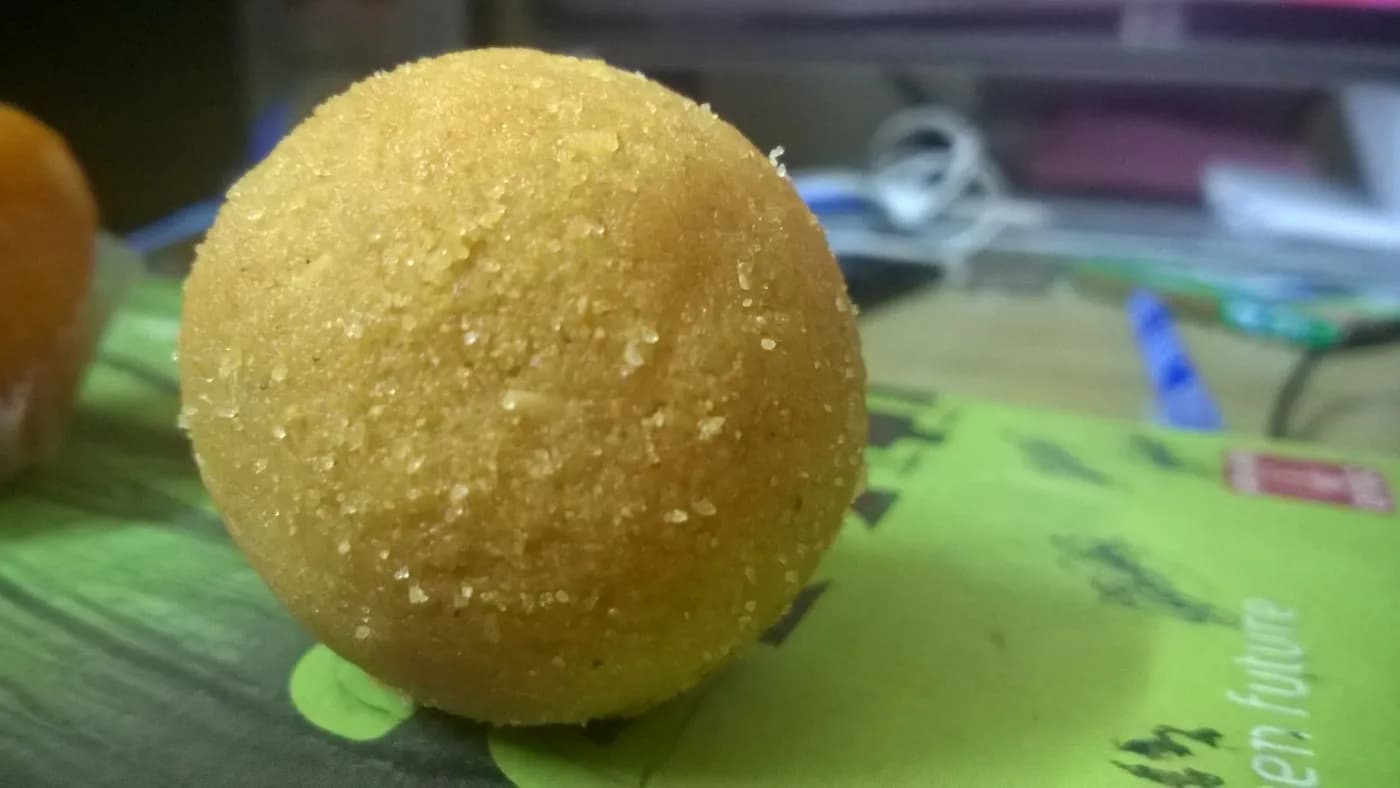
Photo: Gaurav Dhwaj Khadka, CC BY-SA 4.0, via Wikimedia Commons
What to Watch For When Choosing Gluten Free Desserts
Not every Indian sweet is automatically gluten-free. Some bakery-style mithai, biscuits sold alongside sweets, and certain stuffed or layered desserts use maida as a binder or coating, so it’s worth checking or asking rather than assuming. When buying packaged gluten free desserts, it also helps to check the sugar and fat content — “gluten-free” on a label describes the absence of wheat, barley, and rye, not the overall nutritional quality of the dessert. A homemade coconut ladoo and a packaged gluten-free brownie can carry very different amounts of added sugar despite both being technically gluten-free.
Common Mistakes When Making or Buying Gluten Free Desserts
A few habits trip people up when they go looking for gluten free desserts. Assuming every mithai shop sweet is automatically safe is the biggest one — some bakery-style items and stuffed sweets use maida as a binder or coating, so asking directly still matters even in an all-Indian sweet shop. Reading “gluten-free” on packaging and assuming it also means low-sugar or low-fat is another common slip; the label only speaks to the absence of wheat, barley, and rye, nothing else. Cross-contamination is often overlooked too — using the same rolling pin, tawa, or storage container for wheat-based and gluten-free items can undo careful ingredient choices if you’re baking for someone with celiac disease. And skipping the fresh, ingredient-simple options in favour of expensive packaged gluten-free desserts means missing out on traditional sweets that were gluten-free all along, at a fraction of the cost.
Myths vs Facts About Gluten Free Desserts
- Myth: Gluten-free desserts are always healthier. Fact: many gluten free desserts made with rice flour, jaggery, or coconut still carry meaningful sugar and fat — “gluten-free” isn’t the same as “low-calorie.”
- Myth: You need special gluten-free flour blends to bake Indian sweets. Fact: rice flour, besan, and ragi have always been naturally gluten-free — no substitution or specialty product required.
- Myth: All Indian mithai is naturally gluten free. Fact: some bakery-style sweets and biscuit-adjacent items use maida, so it’s worth checking rather than assuming every sweet on the counter qualifies.
- Myth: Gluten-free desserts taste noticeably different or “worse.” Fact: coconut ladoo, besan ladoo, and rice kheer are long-standing favourites in their own right, not compromises made for a dietary restriction.
Who Should Be Cautious With Gluten Free Desserts
Most people can enjoy both traditional and packaged gluten free desserts without any issue. But anyone with celiac disease needs to be more careful than the average dessert-lover — even small amounts of cross-contamination from a shared kitchen surface, oil, or storage container can trigger a reaction, so homemade options where you control every ingredient are often the safer choice. People managing diabetes or watching their sugar intake should treat gluten free desserts the same as any other sweet, since jaggery and sugar both raise blood glucose regardless of the flour used. And anyone managing weight should remember that “gluten-free” says nothing about calorie density — a rich coconut barfi can carry as many calories as its wheat-based counterpart.
Frequently Asked Questions
Related Articles
Healthy fats: why your body needs fat
Healthy fats help your body absorb vitamins and support brain, hormones, joints, cells and daily meals. Learn simple vegetarian sources and habits.

Good fats vs bad fats: choose fats wisely
Understand good fats vs bad fats in simple words. Learn which vegetarian fats to choose, what to reduce and how to read food labels better.
