
Guava: nutrition, benefits and easy ways to eat it
Guava is an affordable fruit rich in vitamin C and fibre. Learn what research says, whether to eat the peel and simple ways to add it to your day.
Key Takeaways
- Guava provides vitamin C, fibre and colourful plant compounds.
- Whole guava is more filling than juice.
- Wash the fruit well before eating the edible peel.
- Research is promising but does not make it a diabetes treatment.
Guava is an affordable fruit rich in vitamin C and fibre. Learn what research says, whether to eat the peel and simple ways to add it to your day.
What is guava?
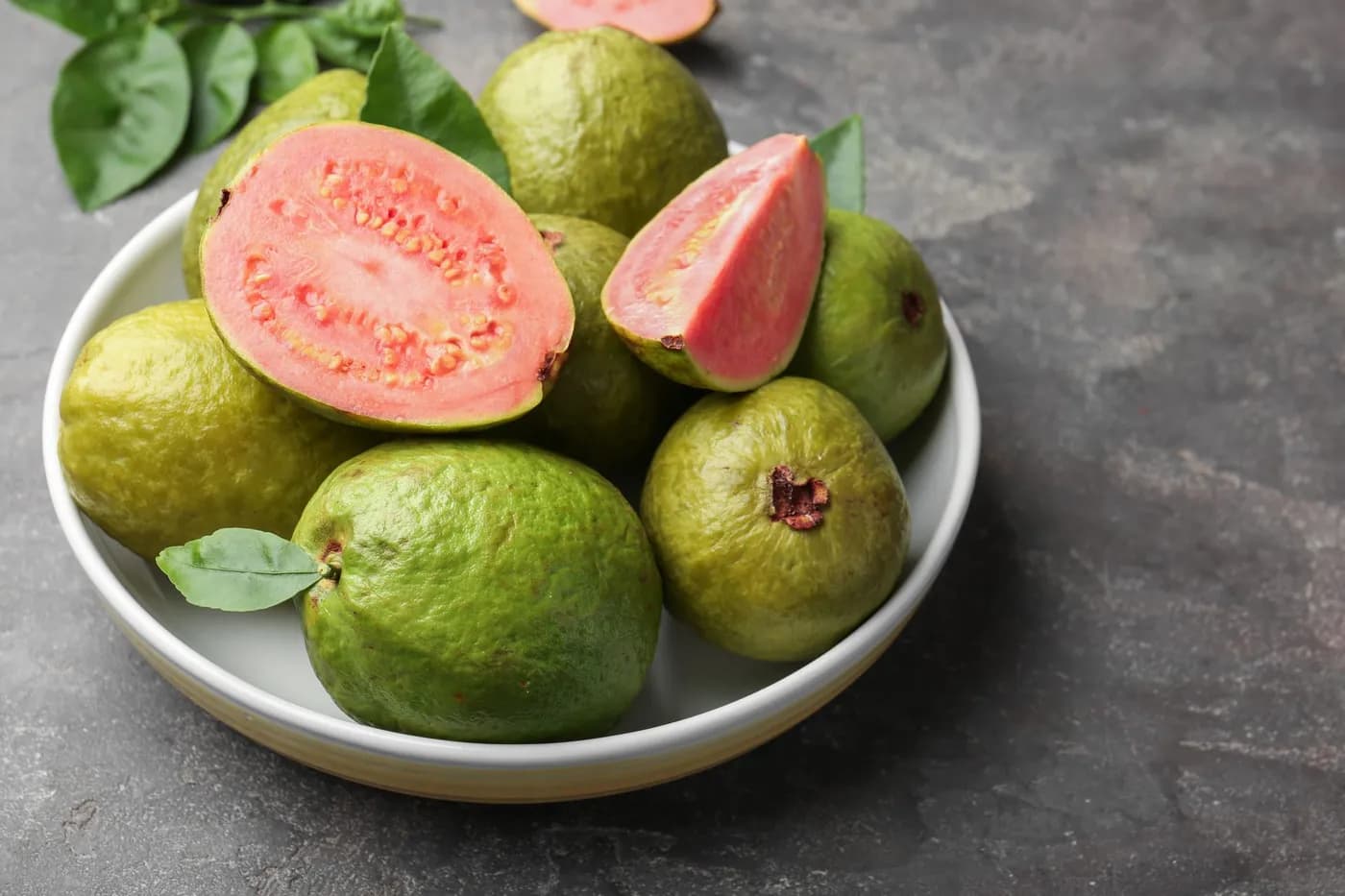
It is a tropical fruit from the Psidium guajava tree. Common varieties have green or yellow skin and white, pink or red flesh.
Ripe it can be soft and sweet, while less-ripe fruit is firmer and more tart. The peel and seeds are edible for most people.
USDA nutrient data show that raw it provides fibre, vitamin C, folate, potassium and other nutrients. Exact values vary with variety, ripeness and portion. (1)
Why is guava known for vitamin C?
Guava is one of the richer common fruit sources of vitamin C. Vitamin C supports collagen formation, normal immune function and absorption of iron from plant foods.
Eating it with a meal that contains dal, beans or leafy greens can help your body absorb non-heme iron. It does not replace iron treatment if you are deficient.
Vitamin C falls with long storage and heat. Fresh fruit is a simple choice, but there is no need to chase an exact number.
Fibre and digestion
It provides both soluble and insoluble fibre. Fibre supports regular bowel movements and helps a fruit snack feel more filling.
A sudden large amount can cause gas or discomfort, especially if you eat many hard seeds. Start with a smaller portion and chew well.
Whole it gives more fibre than strained juice. Juice is also easier to drink quickly and may contain added sugar.
What does research say?
A small randomized study gave 45 healthy young adults a large daily amount of it for six weeks. Some blood-fat, blood-pressure and glucose measures changed, but results differed between fruit with peel and without peel. The study was small and cannot prove that guava treats disease. (2)
Another crossover study compared it and papaya in whole pieces and purée. Both fruits produced a lower blood-sugar response than a glucose drink, although the study included only 19 people. (3)
These trials are useful clues, not a prescription. If you have diabetes, count it as fruit carbohydrate and follow your personal meal plan.
Should you eat guava peel and seeds?
The peel is edible and adds fibre and plant compounds. Wash it under clean running water and cut away damaged areas.
Some people dislike the hard seeds or find them uncomfortable. You can choose a soft variety, scoop out part of the seed centre or cut the fruit into small pieces.
If you’re also curious about 50 healthy vegetarian foods for everyday eating or Blueberries: nutrition, benefits and easy ways to eat them, both are worth a read.
Do not peel it only because an old small study reported a better blood marker without peel. One trial is not enough to make that a general rule.
Easy ways to eat guava
- Eat ripe it plain.
- Add slices to a fruit bowl.
- Mix chopped guava with plain curd.
- Add it to a salad with cucumber and mint.
- Sprinkle with a little chaat masala, not excess salt.
- Blend a small amount with curd instead of straining it.
- Pair it with nuts or seeds for a fuller snack.
Avoid turning it into a high-sugar jam, syrup or packaged drink if your goal is everyday fruit.
How to choose and store guava
- Choose firm fruit for later and slightly soft, fragrant fruit for eating soon.
- Avoid mould, leaking juice or deep damaged spots.
- Leave firm it at room temperature to ripen.
- Move ripe fruit to the fridge and use it soon.
- Wash only just before eating.
- Keep cut fruit covered and chilled.
A simple 7-day guava habit
Pick two days when you usually reach for biscuits or sweets. Keep washed it ready and pair a practical portion with curd, peanuts or another protein food.
Notice whether the snack is filling and easy to repeat. If it is out of season, use another local whole fruit.
For more simple fruit habits, read Habuild’s Diet and Nutrition guide.
Who should be careful?
Guava allergy is uncommon but possible. Get urgent help for breathing trouble, facial swelling, fainting or widespread hives.
People with diabetes can often eat it, but portions and glucose response differ. Avoid relying on it leaves, extracts or juice as a substitute for medicine.
If you have irritable bowel symptoms, diverticular disease or trouble chewing, the hard seeds may be uncomfortable. Choose a softer texture and ask a clinician if symptoms persist.
Children need it cut into an age-safe size and texture.
Frequently Asked Questions
Related Articles
Healthy fats: why your body needs fat
Healthy fats help your body absorb vitamins and support brain, hormones, joints, cells and daily meals. Learn simple vegetarian sources and habits.

Good fats vs bad fats: choose fats wisely
Understand good fats vs bad fats in simple words. Learn which vegetarian fats to choose, what to reduce and how to read food labels better.
