Gujarati Food List: A Nutritional Breakdown of the Staples
Gujarati thalis are built around variety and a distinctive sweet-savory balance, with fermented, steamed, and roasted preparations doing most of the.
Key Takeaways
- Gujarati thalis favor several small dishes and a distinctive sweet-savory balance.
- Naturally vegetarian, leaning on steaming, roasting, and fermentation over deep-frying.
- Dhokla is steamed and fermented, making it light and easy to digest.
- Dal and kadhi often carry a subtle sweetness from jaggery alongside salt and sour notes.
- The added sugar in savory dishes is easy to underestimate if you’re tracking intake closely.
A gujarati food list looks different from most other regional Indian cuisines the moment you sit down to eat, because Gujarati thalis are built around variety — several small dishes rather than one or two large ones — and a distinctive sweet-savory balance that shows up even in dishes that read as “savory” on the surface. It’s also one of the most naturally vegetarian cuisines in India, with fermented, steamed, and roasted preparations doing a lot of the everyday cooking rather than deep-frying. If you’re putting together a gujarati food list for the week, you’ll notice how much of it leans on steaming, roasting, and fermentation rather than oil.
The Gujarati Food List: Staples at a Glance
- Dhokla — a steamed, fermented gram flour (besan) cake that’s naturally low in fat, easy to digest, and a genuinely light snack or breakfast option.
- Khakhra — a thin, roasted whole wheat cracker, low in oil since it’s cooked dry on a griddle rather than fried, often eaten with chutney or as a light meal.
- Thepla — a spiced, whole wheat flatbread mixed with fenugreek (methi) or other greens, pan-cooked with a small amount of oil; a good source of fiber and iron from the greens.
- Kadhi — a yogurt-and-besan-based curry, typically lightly sweetened, that adds probiotics and protein to the meal.
- Undhiyu — a mixed-vegetable preparation, especially popular in winter, that packs in a wide range of seasonal vegetables and legumes in one dish.
- Dal — Gujarati dal is usually thinner and sweeter than North Indian dal, often flavored with jaggery, kokum, or a touch of tamarind.
- Fafda-jalebi and other snacks — fried items reserved mostly for weekends or festive mornings rather than daily eating.
The Sweet-Savory Signature, Explained
If there’s one thing that sets any gujarati food list apart from other regional Indian cuisines, it’s the routine use of jaggery or sugar in dishes that aren’t desserts — dal, kadhi, and even some vegetable preparations often carry a subtle sweetness alongside salt, chili, and souring agents like tamarind or kokum. Nutritionally, this doesn’t automatically make the food unhealthy; the quantities used per serving are typically small, and the sweetness is balanced against the sour and spicy elements rather than dominating the dish. That said, it’s a real source of added sugar that’s easy to underestimate simply because the dish tastes savory overall — something worth being mindful of if you’re tracking sugar intake closely or eating out at a restaurant that tends to sweeten more heavily than a home kitchen would. It’s one of the first things to flag on any gujarati food list if you’re watching sugar closely.
If you’re curious how this sweet-forward style stacks up against a more savory-only regional cuisine, the north Indian food guide is a useful comparison point. And if it’s the steamed, low-oil breakfast items like dhokla and khakhra you’re after, our high-fiber breakfast recipes roundup has more options in that vein.
Photo: Dvivektx, CC BY 4.0, via Wikimedia Commons
Why Gujarati Cuisine Tends to Be Well-Rounded
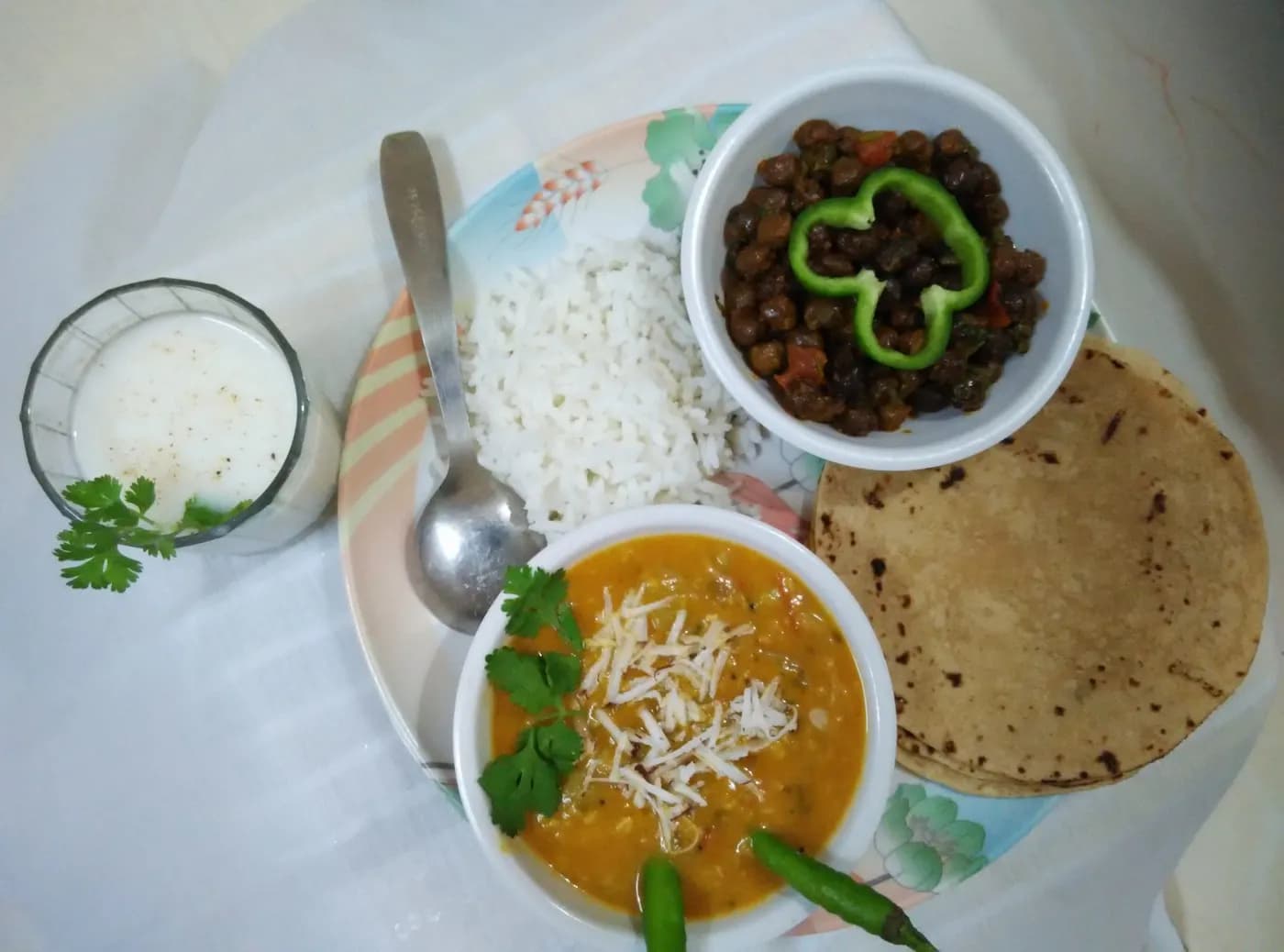
Gujarati meals are traditionally served as a thali with many small components — a dal, a kadhi, one or two vegetable dishes, rice, roti or thepla, a farsan (snack item), and a sweet in small quantity. This structure naturally encourages variety and portion control, since no single dish dominates the plate — it’s why a gujarati food list rarely looks repetitive, even across a full week of meals. The frequent use of steaming (dhokla, khaman) and roasting (khakhra) instead of frying keeps a good share of daily eating relatively light, while legumes and gram flour show up often enough to provide a steady stream of plant protein and fiber. Peanuts, sesame, and a wide range of vegetables — including gourds, beans, and root vegetables in dishes like undhiyu — round out the micronutrient profile across the week far more than a two-dish meal would. Scan any complete gujarati food list and this variety is the throughline: few regional cuisines pack this many distinct vegetables and legumes into a single everyday thali.
What to Watch: Fried Snacks and Sugar Load
The caveats on any gujarati food list are fairly specific rather than sweeping. Farsan — the snack category that includes items like fafda, gathiya, and various fried namkeens — is a genuine part of the cuisine, but it’s also fried and salty, and easy to eat in larger quantities than intended because it’s often served as an accompaniment rather than the main event. Similarly, because sugar appears in so many savory dishes, a full Gujarati thali can carry more added sugar across the meal than it appears to at first glance, even without a dedicated dessert. Neither of these is a reason to avoid the cuisine — they’re just useful to know if you’re eating from a gujarati food list regularly and want to keep the sweeter, fried components as the smaller part of the plate rather than the larger one.
Frequently Asked Questions
Related Articles

How to Digest Food Fast: 7 Natural Methods That Work
Slow digestion produces bloating, fatigue, and discomfort — movement, position, and dietary tweaks speed up digestive transit. See 7 natural methods that


List of Cardio Exercises at Home
Jumping jacks, high knees, burpees, mountain climbers, and squat jumps need only bodyweight and a small patch of floor. See the full list and how to build a routine.