
Hair Growth Tablets: What Helps and What to Skip
Choose hair-loss care for a clear purpose rather than relying on a general beauty supplement.
Key Takeaways
- Supplements and hair-loss medicines do different jobs.
- Find the cause of hair shedding before choosing a tablet.
- Biotin gets more attention than the evidence supports.
- Hair changes take time, so judge any plan over months.
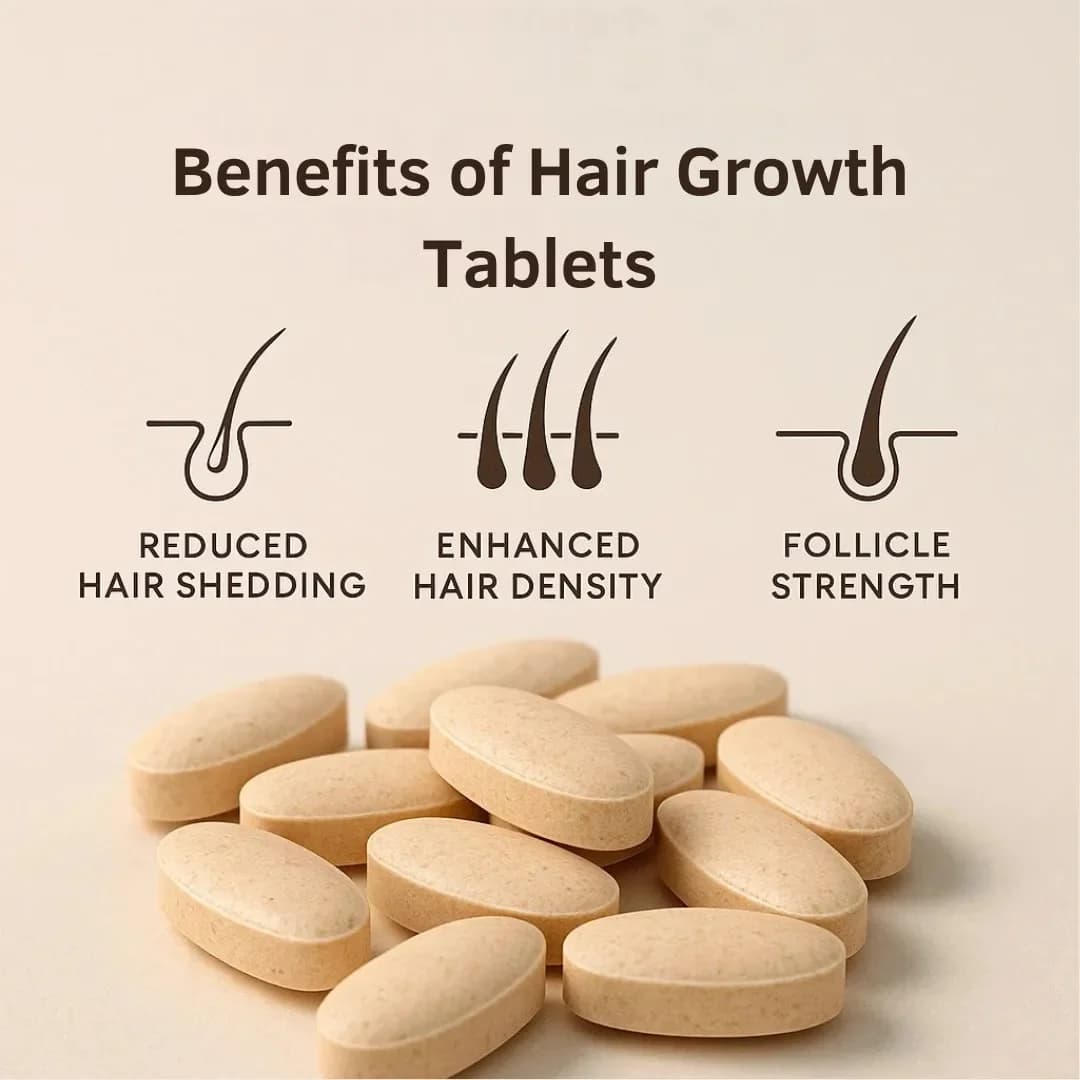
More hair in the shower can make a bottle promising stronger growth very appealing. But “hair growth tablets” covers two quite different things: nutritional supplements and medicines used for particular types of hair loss. Neither should be chosen only because the packaging mentions thick, shiny hair. The useful starting point is to understand why the hair is shedding or thinning, then choose care that addresses that cause.
Supplements and prescription medicines do different jobs
Hair supplements may contain biotin, iron, zinc, vitamins, amino acids or herbal ingredients. They are intended to supplement nutrition, although their marketing often suggests a much wider effect.
Medicines used for hair loss act differently and are selected for a diagnosis. Some require ongoing treatment and have important restrictions or side effects. A supplement and a prescription tablet are not interchangeable because both come in a bottle.
If you have been prescribed a medicine, judge it by the instructions and expected review period for that treatment. If you are shopping for a vitamin blend, first ask whether a nutrient gap is likely to be part of the problem.
Hair loss has several possible causes
Thinning can follow an inherited pattern, while increased shedding may occur after an illness, childbirth, major stress or rapid weight loss. Scalp conditions, some medicines and nutritional deficiencies can also contribute.
The pattern offers useful clues. A gradually widening part is different from a sudden smooth patch or a painful, inflamed scalp. A bottle designed for general wellness cannot make those distinctions.
Arrange an assessment for sudden, patchy or rapidly worsening loss, scalp pain or visible inflammation. Earlier attention is particularly useful when an inflammatory condition may damage follicles. Do not spend months trying successive supplements while the pattern changes.
When a nutrient supplement may help
A supplement can be useful when a relevant deficiency or inadequate intake has been identified. Iron, zinc or another nutrient may be part of a treatment plan when the evidence points to a gap.
That does not mean every person with hair fall needs iron. Taking it unnecessarily can cause problems and may distract from the real cause. Testing should be selected according to the history and examination rather than ordered as a compulsory large panel for everyone.
Correcting a deficiency supports normal growth, but it does not guarantee the density someone had years earlier. Another cause of thinning may be present at the same time.
Biotin gets more attention than the evidence supports

Biotin is necessary for normal body function, but deficiency is uncommon. There is little evidence that extra biotin improves hair growth in people who already obtain enough.
High doses can interfere with some blood tests, including certain thyroid and heart-related tests. This matters even when a supplement is sold casually as a beauty product.
Tell the clinician and laboratory if you take biotin before testing. The appropriate pause, if needed, depends on the dose and the test; do not assume one universal waiting period. In an emergency, mention it promptly without delaying care.
More ingredients do not mean better results
A long blend can look comprehensive while making it harder to know what you are taking. Separate hair, skin and multivitamin products may also repeat the same nutrients.
Excess amounts of some nutrients, including vitamin A or selenium, can themselves contribute to hair problems. Adding more because shedding continues is therefore a poor strategy.
You do not need to study every supplement on the market. If there is no clear reason to take one, it is reasonable to skip it. If a deficiency is being treated, a targeted product and a defined plan are often simpler than several overlapping beauty supplements.
Keep food adequate during weight loss
Crash diets can leave too little energy and protein for normal functions, including hair growth. A routine that removes several food groups and replaces meals with drinks deserves attention even if the scale is falling.
Build regular meals with protein foods such as dal, beans, soy, paneer or curd, according to your preferences. Include vegetables, fruit and enough carbohydrate and fat to make the meals sustainable.
For example, add a substantial dal or tofu component to lunch rather than eating only salad. A filling breakfast is more useful than relying on a hair tablet while skipping food. Nutrition supports the body as a whole; it is not a special diet that sends all nutrients directly to the scalp.
Hair changes take time
Hair grows in cycles, so a change in shedding or density is not judged well over a few days. Even an appropriate treatment may need months before its effect can be assessed.
Avoid inspecting the drain after every wash as your only measure. Washing frequency and styling can change how much shed hair you notice at once.
If you want to track progress, occasional photographs of the same area under similar lighting can be useful. Keep the review schedule appropriate to the treatment rather than changing products each week because a photograph looks different.
Gentle care can reduce avoidable damage
Hair breakage and hair loss from the root are different, although they may occur together. Tight hairstyles, repeated heat and harsh handling can add to breakage or traction.
Detangle gently and avoid styles that repeatedly pull on the same areas. Choose a washing routine that suits the scalp rather than avoiding washing because loose hairs appear afterwards.
These steps do not treat every medical cause, but they address a practical source of damage without another purchase. A tablet cannot protect hair from constant pulling or excessive heat by itself.
Choose a plan with a clear purpose
The best next step depends on the pattern: assess a changing scalp problem, treat a confirmed deficiency or follow an appropriate hair-loss treatment. Not every plan includes a tablet.
You should know what the treatment is intended to change and roughly when its effect will be reviewed. That makes it easier to continue useful care and stop an unnecessary expense. Hair deserves attention, but worry about it should not leave you indefinitely taking products with no clear job.
Editorial sources
Frequently Asked Questions
Related Articles
Biotin Rich Foods: Vegetarian Sources and Supplement Facts
Biotin is a B vitamin involved in energy metabolism. It occurs in nuts, seeds, legumes, mushrooms, sweet potato and cooked eggs.

Yoga for Hair Fall
Chronic cortisol elevation, poor scalp microcirculation, and hormonal shifts are the three most common and most correctable drivers of hair fall. See how.

How to Stop Hair Fall — Causes, Exercises, and the Honest Daily Routine That Actually Works
Hair fall has multiple drivers — stress, nutritional deficiency, hormonal imbalance, poor scalp circulation, and genetics — and the right approach addresses these root causes systematically. See the exercises and daily routine.


How to Apply Castor Oil to Hair: What Helps and What Doesn’t
Castor oil can condition dry hair ends, but there is no good evidence that it speeds growth or stops hair fall. Here is how to use it safely.