
How to Apply Castor Oil to Hair: What Helps and What Doesn’t
Castor oil can condition dry hair ends, but there is no good evidence that it speeds growth or stops hair fall. Here is how to use it safely.

Key Takeaways
- Castor oil can condition dry hair, but it is not proven to speed growth.
- Patch-test first and use only a small amount.
- Occasional use is enough; daily use can cause buildup.
- Sudden, patchy or fast hair loss needs a doctor.
Castor oil has a long place in Indian hair care. Many of us grew up with a grandmother insisting a good oil massage fixes everything. Today it’s all over social media, promising thicker hair, faster growth and even a cure for hair fall. The truth is more modest. Here’s what castor oil can do, how to use it safely and when it’s time to see a doctor instead.
What it can do
Castor oil is a thick plant oil. When you smooth it over dry hair, it coats the strands, reduces friction and helps hold in moisture. That can make dry ends feel softer and look shinier for a while.
That’s the real benefit: conditioning. It’s a pleasant, low-cost treat for dry lengths, and nothing more needs to be claimed for it.
What it can’t do
You’ll often hear that castor oil makes hair grow faster or reverses hair loss. There’s no good human evidence for this. Talk about ricinoleic acid “waking up” follicles sounds scientific, but it hasn’t been confirmed in good clinical trials.
Hair loss has many possible causes, from stress and nutrition to thyroid problems and genetics. An oil can’t sort out any of those, and relying on it may delay finding the real reason. If hair fall is your main worry, our guide on how to stop hair fall looks at causes and daily routines that actually help.
Patch-test first
Even natural oils can irritate some skin. Before using it on your head, do a quick test:
- Put a drop on your inner forearm.
- Leave it for 24 to 48 hours.
- If you see redness, itching or a rash, don’t use it.
If your skin is fine, you can go ahead. This small step saves you from a bad reaction on your scalp.
How to apply it
Keep it simple. A little goes a long way.
- Warm about a teaspoon between your palms.
- Smooth it over slightly damp mid-lengths and ends.
- Comb gently with a wide-tooth comb to spread it.
- Leave it on for a short time, then wash it out well with shampoo.
If you want to use it on your scalp, mix a small amount with a lighter carrier oil, like coconut or sesame oil, since castor oil on its own is very sticky. Avoid broken or sore skin, and don’t massage it in hard. There’s no proven treatment time. A common starting point is 20 to 30 minutes before washing, and you should stop at once if your scalp gets irritated.
More oil isn’t more effective. A heavy hand just makes it harder to rinse out.
How often should you use it?
Occasionally is enough. Daily use is usually unnecessary, and it can leave buildup on your scalp and hair. Start with once a week or even less, and see how your hair responds. Occasional use on dry lengths is more practical than a daily routine.
When it goes wrong
Castor oil is very thick, so a few problems can show up:
- Buildup and heaviness: hair can feel greasy, flat or coated.
- Difficult washing: you may need two rounds of shampoo.
- Tangling or matting: this is rare, but heavy use on long hair can lead to stubborn knots.
To avoid these, use only a little, shampoo gently and thoroughly, and don’t combine it with tight hairstyles like high braids or buns straight after oiling. Keep it away from your eyes, and rinse well if it gets in.
Stop using it and rinse it off if you notice itching, burning, a rash, swelling or worsening dandruff. Severe tangling is also a reason to stop.
What your hair really needs
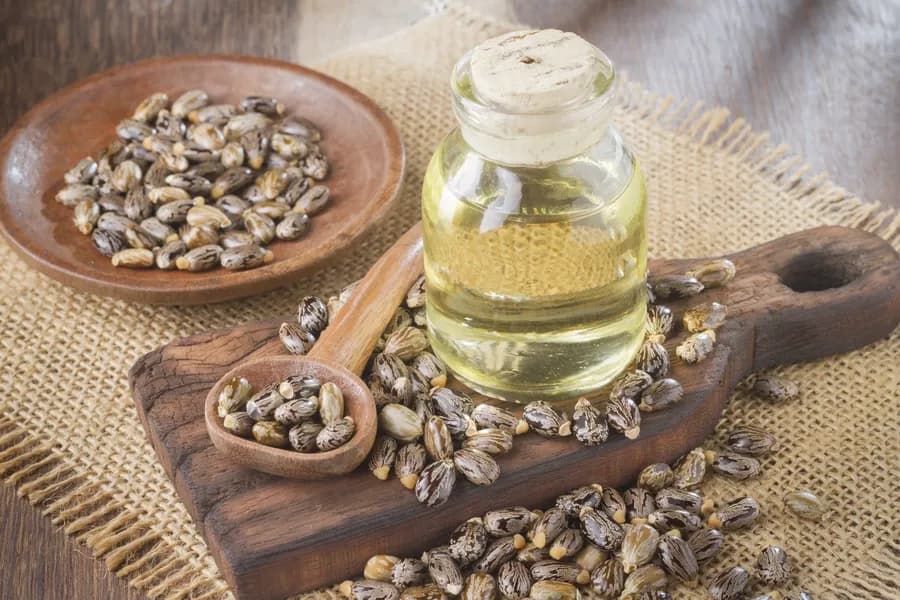
Strong hair starts from the inside. You can’t oil your way out of a diet that’s short on protein or iron. Meals with dal, rajma, chana, curd, paneer, nuts, seeds and leafy greens give your body what it needs to make healthy hair. Our guide on complete protein foods and vegetarian meals shows easy ways to build more protein into your day.
Gentle handling matters too. Go easy on heat styling, harsh chemicals and tight hairstyles, and comb wet hair carefully, since it breaks more easily.
Stress, sleep and your hair
Hair is sensitive to what’s going on in your body. Long periods of stress, poor sleep or sudden illness can make you shed more hair a few months later. Looking after your sleep and stress levels often does more than any oil. Our article on how to reduce stress naturally is a good place to begin, and a beginner-friendly online yoga class can help you build a calming routine.
When hair loss needs a doctor
An oil massage can’t tell you why your hair is falling. Please see a doctor or dermatologist if you notice:
- Bald patches
- Scalp pain, pus or scaling
- Eyebrow loss
- Very fast shedding
- Signs of anaemia, like constant tiredness, pale skin or breathlessness
- Hair loss that started after you began a new medicine
A doctor can look for causes such as pattern hair loss, thyroid problems, nutritional deficiencies, infection or autoimmune conditions, and suggest tests and treatment if needed. The earlier you check, the more options you usually have.
Choose the product wisely
If you buy castor oil, look for a clearly labelled product from a maker you can trace, in a sealed pack. Check the ingredients, since some “castor oil hair oils” are blends with fragrance or other additives that can irritate. Store it away from heat and sunlight, and replace it if it smells off.
Remember that a product sold as natural isn’t automatically safe for everyone. If you’re pregnant or have a skin condition, ask your doctor before trying a new scalp treatment. For more everyday reading, browse our Habitology health guides.
A simple habit to try
Try castor oil once on dry hair ends after a patch test, wash it out well, and keep up your routine for two weeks. Notice how your hair feels and how easy it is to use. Keep it only if it’s comfortable and useful for you.
Editorial sources
Frequently Asked Questions
Related Articles
Castor oil: uses, evidence and safety
Castor oil is used for constipation, hair and skin care. Learn which use has medical support, which claims are unproven and why oral use needs caution.
Rosemary Oil for Hair: Evidence, Use and Safety
Rosemary essential oil is a concentrated aromatic product used on the scalp after dilution. It is not a cooking oil and should not be swallowed.

Vegetarian Foods for Hair Growth
Food supports normal hair growth but cannot fix every type of hair loss. Learn key vegetarian nutrients, supplement risks and when to seek care.

Argan Oil Benefits for Skin and Hair: Uses and Safety
Argan oil can soften dry skin and tame frizzy hair. Learn how to use it, what the research shows and how to patch-test safely.