
How to Make ORS at Home: The Correct Salt-Sugar-Water Ratio
Making ORS at home is useful during dehydration from diarrhoea or vomiting — but the salt-sugar-water ratio has to be exact. See the standard formula and.

Key Takeaways
- Standard ratio: 6 teaspoons sugar, 1/2 teaspoon salt, 1 litre clean water.
- Too much salt can pull water out of cells instead of rehydrating them.
- Always measure with proper spoons – ‘a pinch’ or ‘a spoonful’ varies too much.
- Sip slowly and frequently rather than gulping, especially if vomiting is a risk.
- Seek medical care if urination stops, vomiting continues, or confusion sets in.
Knowing how to make ORS at home is a genuinely useful skill during dehydration from diarrhoea, vomiting, or excessive sweating — but the ratio has to be exact, because too much salt can be dangerous. Here’s the standard formula, why the proportions matter, and when to reach for a packet instead.
How to make ORS at home: the standard ratio
- 6 level teaspoons of sugar
- 1/2 level teaspoon of salt
- 1 litre of clean drinking water (boiled and cooled, or safe filtered water)
Mix thoroughly until the sugar and salt fully dissolve. This is essentially how to make ORS at home using ingredients most kitchens already have — the solution mirrors the basic principle behind commercial ORS, replacing water, sodium, and glucose together, since glucose helps the body absorb sodium and water more efficiently than water alone.
Why the proportions matter so much
This is the part people get wrong most often when learning how to make ORS at home:
- Too much salt is dangerous — it can pull water out of the body’s cells instead of rehydrating them, worsening dehydration and, in extreme cases, causing hypernatremia (dangerously high blood sodium), especially risky in young children
- Too little salt or too much sugar makes the solution less effective at actual rehydration and can even worsen diarrhoea due to excess sugar
- Always measure with proper spoons, not estimate by eye — “a pinch” or “a spoonful” varies too much to be safe
- Use clean, boiled-and-cooled water — contaminated water defeats the purpose of rehydration
If you’re at all unsure about how to make ORS at home safely, a commercial ORS sachet (mixed exactly per the packet instructions) is the safer, more reliably measured option — especially for infants, young children, and elderly people.
When you actually need ORS
- During and after episodes of diarrhoea or loose motions — this is exactly when knowing how to make ORS at home is most useful; see our best food for loose motion guide for what to eat alongside it
- After vomiting from food poisoning — paired with the bland diet covered in what to eat after food poisoning
- During heavy sweating from heat, fever, or intense exercise
- Any time you notice early signs of dehydration — dry mouth, reduced urination, dizziness, or fatigue
Sip ORS slowly and frequently rather than gulping it down — small, steady sips are absorbed better and are less likely to trigger more vomiting. Once you know how to make ORS at home, keeping the ingredients on hand means you’re never caught without a rehydration option.
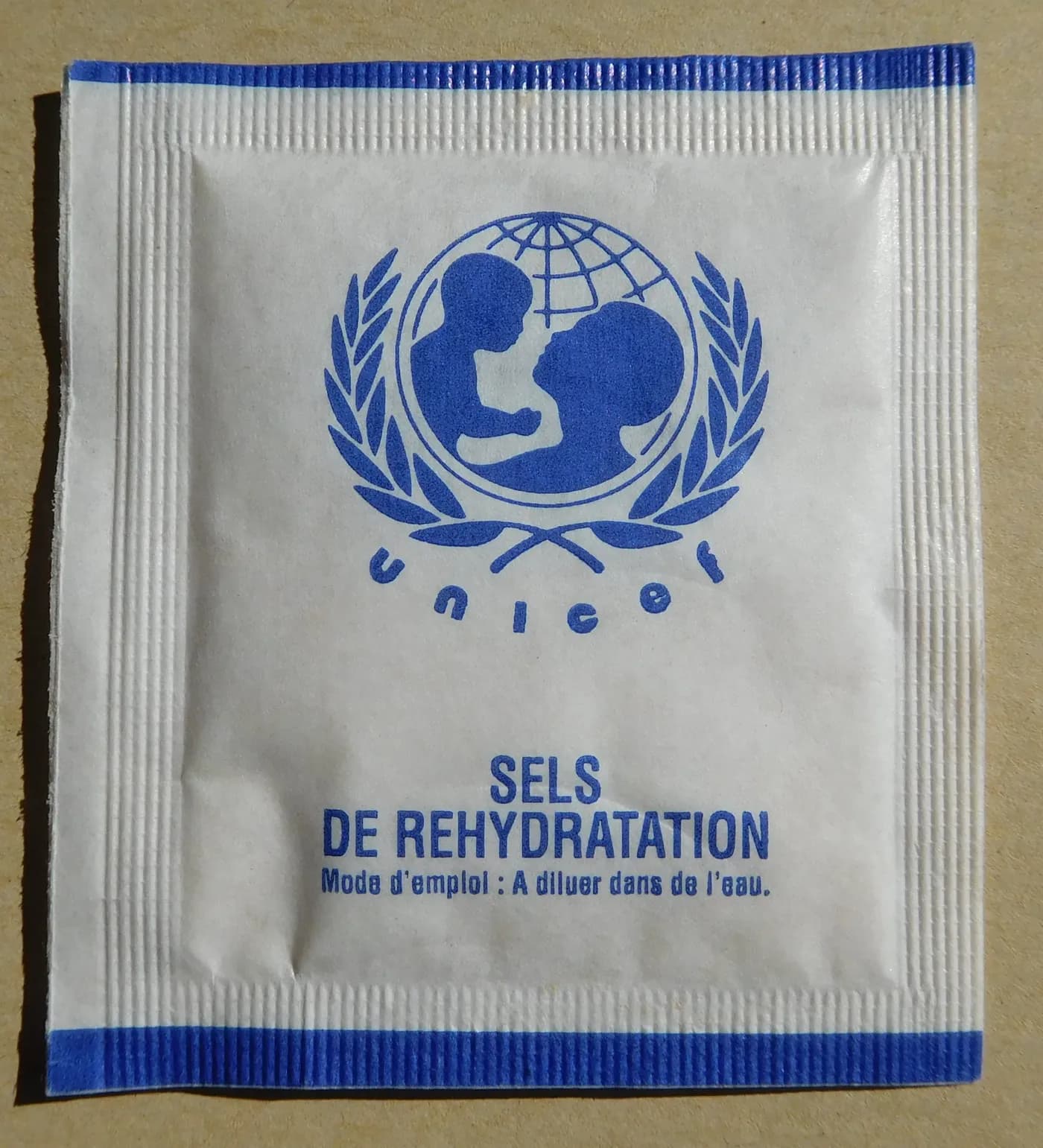
Photo: Olle Gustavsson, CC BY-SA 4.0, via Wikimedia Commons
When knowing how to make ORS at home isn’t enough
Home ORS is meant for mild to moderate dehydration. Seek medical care if there’s no improvement, if vomiting prevents keeping any fluids down, if urination stops almost completely, or if the person becomes confused, unusually drowsy, or has sunken eyes — these need proper medical rehydration, not just a home solution.
Dehydration isn’t the only digestion-related issue worth sorting out through diet — if straining and piles are also part of the picture, our guide to diet for piles covers the food choices that help with that specifically.
Myths vs Facts About Making ORS at Home
- Myth: Any sugar-salt-water mix works as ORS. Fact: knowing how to make ORS at home correctly means following the exact 6:½:1000 ratio — random proportions can be ineffective or, with too much salt, genuinely harmful.
- Myth: Adding more sugar makes it more effective. Fact: extra sugar can worsen diarrhoea rather than help rehydration; the ratio is deliberately balanced, not something to eyeball generously.
- Myth: Fruit juice or a sports drink is a fine substitute. Fact: these are usually too sugary and too low in sodium for real rehydration — they don’t replace properly made ORS.
- Myth: Homemade ORS lasts indefinitely once mixed. Fact: it should be made fresh and used within 24 hours, discarding any leftover solution after that window.
Common Mistakes When Making ORS at Home
- Guessing measurements instead of using proper spoons — this is the single biggest risk when learning how to make ORS at home, since even a slightly heavy hand with salt changes the safety of the solution.
- Using untreated water — tap water that hasn’t been boiled and cooled can introduce the very contamination you’re trying to recover from.
- Making a large batch and storing it for days — freshly prepared solution is safest; discard anything left after 24 hours rather than reusing it.
- Giving it too fast — gulping large amounts at once can trigger more vomiting; slow, steady sips work better than a large glass all at once.
- Skipping it because symptoms feel mild — early, consistent rehydration is what prevents mild dehydration from becoming a bigger problem, which is exactly why how to make ORS at home is worth knowing before you need it urgently.
Who Should Be Extra Careful
Infants, young children, elderly people, and anyone with kidney disease or heart conditions affecting fluid balance should be more cautious with homemade solutions. For these groups, a commercial ORS sachet mixed exactly to the packet instructions is the safer default, since it’s manufactured to a precise, tested formulation. If you’re at all unsure how to make ORS at home safely for a vulnerable family member, err on the side of the packet version or a doctor’s guidance rather than improvising.
Frequently Asked Questions
Related Articles

How to Get Fit at Home: A Complete Guide for Beginners
Getting fit at home doesn’t require a gym membership, expensive equipment, or hours of free time — a structured routine can gradually build strength and.

How to Make Kidney Strong: Exercises, Yoga & Daily Habits
Keeping kidneys strong comes down to consistent movement, good hydration, and managed stress, not a single supplement or shortcut. See the exercises.

How to Get Bigger Forearms at Home: 10 Best Exercises
Forearms are one of the most visible and most neglected muscle groups — no gym or heavy dumbbells needed to build them. See 10 best exercises to train.