
Keto Macaroni Recipe: Low-Carb Mac and Cheese You Can Actually Make
This keto macaroni recipe swaps wheat pasta for shirataki noodles or paneer, so you get creamy mac and cheese without the carb load. Full ingredients.
Key Takeaways
- Swaps wheat pasta for shirataki noodles or paneer to cut the carb load.
- One serving runs about 6-9g net carbs versus 40-45g for regular mac and cheese.
- Dry-toasting shirataki noodles first firms up the texture so they don’t taste rubbery.
- The cheese sauce is built from full-fat cheese, cream, and butter – standard keto fats.
- Takes about 20 minutes start to finish and scales easily for meal prep.
A keto macaroni recipe swaps regular wheat pasta for a low-carb substitute — usually shirataki (konjac) noodles or paneer cut into macaroni-like pieces — so you get the creamy, cheesy comfort of mac and cheese without the carb load of durum wheat. This recipe uses shirataki noodles as the base, with a paneer variation for anyone who can’t find them, plus full ingredients, method, and an honest breakdown of the carb count so you know exactly what you’re eating.
Keto Macaroni Recipe: Quick Facts
- Uses shirataki (konjac) noodles or cubed paneer instead of wheat macaroni to keep net carbs low
- One full serving comes in at roughly 6-9g net carbs, compared to 40-45g for regular macaroni and cheese
- Cheese sauce is built from full-fat cheese, cream, and butter — standard keto fat sources
- Shirataki noodles have almost no calories or carbs on their own; the nutrition here comes almost entirely from the sauce
- Takes about 20 minutes start to finish
- Works for keto, low-carb, and diabetic-friendly eating patterns, though portion and cheese quantity still matter
- This keto macaroni recipe scales easily — double the batch for meal prep without losing texture
Ingredients (Serves 2)
Here’s everything you need for this keto macaroni recipe — most of it is likely already in your kitchen, aside from the shirataki noodles.
For the “macaroni” base: – 1 packet (200g) shirataki noodles, macaroni or elbow shape (or substitute: 200g paneer, cut into small cubes) – Water, for rinsing
For the cheese sauce: – 2 tbsp unsalted butter – 1/2 cup heavy cream – 1 cup grated cheddar cheese – 1/4 cup grated parmesan – 1/4 tsp mustard powder (optional, adds depth) – 1/4 tsp garlic powder – Salt and black pepper, to taste – A pinch of nutmeg (optional) – 1 tbsp cream cheese, for extra creaminess (optional)
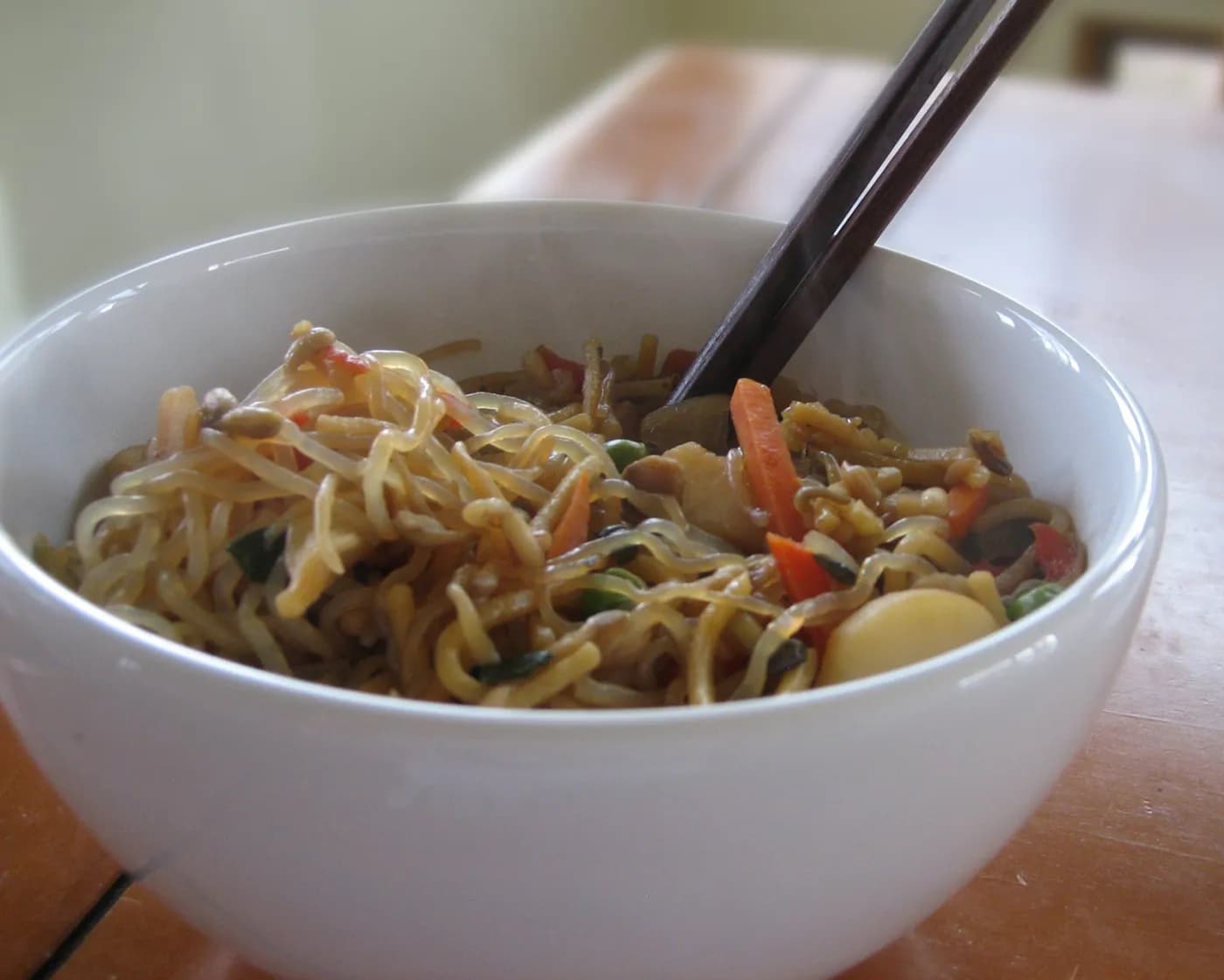
Photo: Sumeet Jain, CC BY-SA 2.0, via Wikimedia Commons
Method
Follow these steps in order to bring this keto macaroni recipe together in about 20 minutes.
- Prepare the shirataki noodles: Drain the noodles and rinse thoroughly under cold running water for 1-2 minutes — this removes the natural odour they’re packed in. Pat dry with a clean towel.
- Dry-toast the noodles: Heat a non-stick pan on medium and add the noodles without any oil. Dry-toast for 3-4 minutes, stirring occasionally, until most of the residual moisture evaporates. This step matters — it firms up the texture so the noodles don’t taste rubbery. Set aside.
- Paneer variation: Skip this step. Instead, lightly pan-sear the paneer cubes in 1 tsp butter for 2-3 minutes until just golden, then set aside.
- Make the cheese sauce: In the same pan, melt the butter over low-medium heat. Add the heavy cream and bring to a gentle simmer, stirring frequently — don’t let it boil hard.
- Add the cheese: Reduce heat to low. Add the cheddar and parmesan a handful at a time, stirring continuously until fully melted and smooth. Stir in the cream cheese if using.
- Season: Add mustard powder, garlic powder, a pinch of nutmeg, salt, and black pepper. Taste and adjust — cheese varies in saltiness, so add salt gradually.
- Combine: Add the toasted shirataki noodles (or seared paneer) to the sauce and toss gently until every piece is coated. Simmer for 1-2 minutes so the “macaroni” absorbs some of the sauce’s flavour.
- Serve immediately, topped with extra black pepper or a few sprigs of chopped parsley if you like.
If you’re folding this keto macaroni recipe into a broader keto routine rather than a one-off dinner, Indian Keto Diet Meal Plan lays out a full day-by-day structure, and Low-Carb Foods List is handy for swapping out other high-carb regulars in your kitchen.
Nutrition Notes: How “Keto” Is This Keto Macaroni Recipe?
| Nutrient (per serving) | Shirataki Version | Paneer Version |
| --- | --- | --- |
| Calories | ~420-460 kcal | ~480-520 kcal |
| Net Carbs | ~6-7 g | ~8-9 g |
| Protein | ~14-16 g | ~22-25 g |
| Fat | ~38-42 g | ~40-44 g |
| Fiber | ~2-3 g | ~1 g |
Compare that to a standard serving of macaroni and cheese made with wheat pasta, which typically runs 40-45g of carbohydrate before you’ve even added the cheese sauce — the swap is doing almost all the work in keeping this keto macaroni recipe low-carb. Shirataki noodles are made from glucomannan, a soluble fibre extracted from the konjac plant, so they contribute close to zero digestible carbs. Paneer contains a small amount of natural carbohydrate from residual lactose, which is why that version sits slightly higher on the carb count, though it does add more protein.
Where this recipe isn’t a free pass: the fat content is high by design, which fits a ketogenic macronutrient split but isn’t automatically appropriate for everyone. If you’re keto for a specific medical reason, run any new recipe by whoever is supervising your plan. And if you’re doing keto for general low-carb eating rather than therapeutic ketosis, there’s no requirement to eat this rich a sauce every time — you can scale back the cheese and cream and still land in a reasonably low-carb range.
Frequently Asked Questions
Related Articles
Veg Daliya Recipe: A Simple High-Fibre Meal
Veg daliya recipe made with broken wheat or millet daliya, mixed vegetables, jeera and ghee. A simple high-fibre meal for breakfast or lunch.


Healthy fats: why your body needs fat
Healthy fats help your body absorb vitamins and support brain, hormones, joints, cells and daily meals. Learn simple vegetarian sources and habits.