
Veg Daliya Recipe: A Simple High-Fibre Meal
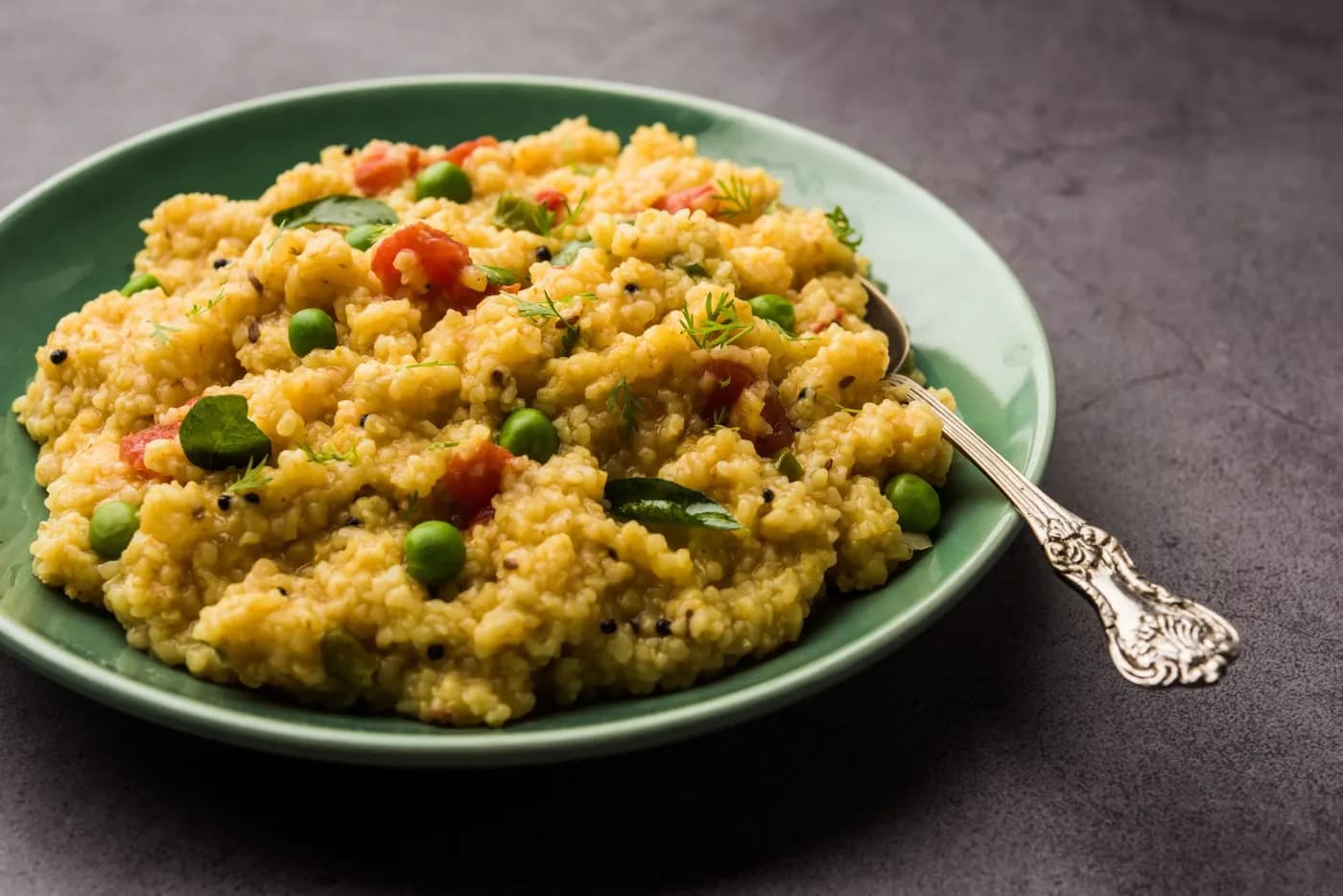
Veg daliya recipe made with broken wheat or millet daliya, mixed vegetables, jeera and ghee. A simple high-fibre meal for breakfast or lunch.

Key Takeaways
- Works with broken wheat or millet daliya like jowar, bajra, or foxtail.
- Flexible enough to be breakfast, lunch, or a light dinner depending on thickness.
- Adding vegetables like carrot, beans, or lauki turns it into a fuller meal.
- Roasting the daliya briefly in ghee before adding water improves the final flavour.
- Start with broken wheat or little millet if new to daliya – the taste is milder.
Veg daliya recipe is a simple way to make a warm, filling and high-fibre meal with everyday ingredients. You can make it with broken wheat, jowar, bajra, little millet or foxtail millet daliya. Add mixed vegetables, a light jeera tadka and enough water to cook it soft.
This is a practical recipe for busy mornings, light lunches or early dinners. It does not need fancy sauces or heavy masalas. The comfort comes from soft grains, vegetables and simple Indian seasoning.
Indian dietary guidance talks about eating a variety of foods instead of depending on one grain or one type of meal all the time. Veg daliya fits that idea because it can bring grains, vegetables and a little healthy fat together in one bowl. Source: ICMR-NIN My Plate
Why veg daliya is a useful everyday meal
Daliya is easy to cook, easy to digest for many people and easy to adjust. The same recipe can be made thicker like khichdi or thinner like porridge. You can keep it mild for kids or add more spices for adults.
It adds fibre through grains and vegetables
Fibre helps make a meal feel more filling. When you add vegetables like carrot, beans, peas, capsicum or lauki, the daliya becomes more than just a grain bowl. It becomes a simple meal with colour, texture and better fullness.
It can be made with different grains
Broken wheat is common, but you can also use millet daliya. Jowar, bajra, little millet and foxtail millet daliya are good ways to bring variety to the plate. Keep rotating based on taste, season and what is available at home.
It works for breakfast, lunch or dinner
Some recipes belong only to one mealtime. Veg daliya is flexible. It can be breakfast when cooked soft, lunch when served with curd, and dinner when made light with more vegetables.
Ingredients for veg daliya
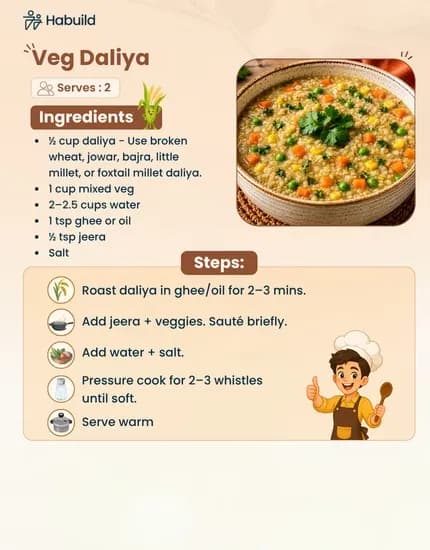
This recipe serves 2 people.
- 1/2 cup daliya: broken wheat, jowar, bajra, little millet or foxtail millet daliya
- 1 cup mixed vegetables such as carrot, beans, peas, capsicum or lauki
- 2 to 2.5 cups water
- 1 teaspoon ghee or oil
- 1/2 teaspoon jeera
- Salt to taste
Optional: ginger, turmeric, coriander leaves or lemon
Choosing the grain
If you are new to daliya, start with broken wheat or little millet daliya because the taste is familiar and mild. Bajra and jowar have stronger flavours. Foxtail millet gives a nice grainy texture.
Choosing vegetables
Use vegetables that cook quickly. Carrot, peas, beans and capsicum work well. Lauki makes the daliya softer and lighter. Avoid adding too many vegetables at once if you are making it for the first time.
How to make veg daliya
- Heat ghee or oil in a pressure cooker.
- Add jeera and let it crackle.
- Add the daliya and roast for 2 to 3 minutes on low flame.
- Add chopped vegetables and sauté briefly.
- Add water and salt. Add a little haldi or ginger if you like.
- Pressure cook for 2 to 3 whistles, or until soft.
- Let the pressure release naturally.
- Open the cooker and stir well. Add hot water if you want a softer texture.
- Serve warm with coriander, lemon or curd.
Texture tip
Use less water for a thick khichdi-like texture. Use more water for soft breakfast daliya. Millet daliya may need a little more water and resting time than broken wheat.
Best ways to serve veg daliya
Veg daliya is good on its own, but pairing it well makes it more satisfying. You can serve it with curd, chaas, pickle in a small amount or a simple salad.
For breakfast
Keep it soft and mild. Add peas, carrot and coriander. Serve with curd if you want the meal to feel fuller.
For lunch
Make it slightly thicker and add more vegetables. A bowl of curd on the side works well. If you need more protein, add sprouts or a small bowl of dal separately.
For dinner
Keep the spices light. Add softer vegetables like lauki or carrot. Avoid making it too oily at night.
Tips, variations and storage
Make it protein-friendlier
Daliya gives fibre and energy, but it is not very high in protein by itself. Add curd, dal, sprouts, paneer or roasted chana on the side if you want a more balanced meal.
Try a millet version
Use little millet, foxtail millet or jowar daliya instead of broken wheat. Millets add variety and can help people move beyond only rice and wheat. The FAO also highlighted millets during the International Year of Millets because they are traditional grains with food and farming value. Source: FAO Millets
Store it safely
Eat daliya fresh when possible. If there are leftovers, refrigerate them and use within one day. Add hot water while reheating because daliya thickens after cooling.
Who should be careful
People who need a gluten-free diet should avoid broken wheat daliya and choose a gluten-free millet option, while also checking for cross-contamination. People on medical diets should follow professional advice.
Related reads: Fibre rich foods: what fibre does for your gut · Best millet for your meal: simple millet guide
A high-fibre bowl of daliya keeps you steady through a busy morning, and pairing it with some movement helps carry that steadiness further into the day. Broken wheat or millet daliya digests slowly, giving you time and energy rather than a quick spike and crash — yoga works on a similar slow-and-steady principle. Once daliya becomes a regular breakfast, Habuild's free yoga challenge is an easy next step to round out your mornings.