
Kothavarangai Benefits: Nutrition and Blood Sugar Value of Cluster Beans
Kothavarangai, or cluster beans, is rich in soluble fibre — the real reason behind its reputation as good for blood sugar. See its full nutrition profile.
Key Takeaways
- Cluster beans are rich in soluble fibre, the real reason behind their blood sugar reputation.
- Guar gum in cluster beans has been studied for moderating post-meal glucose spikes.
- Distinct from avarakkai (hyacinth bean), despite similar poriyal-style cooking.
- Around 30-35 calories and 5-6g fibre per 100g cooked – low-calorie, high-fibre.
- Most commonly prepared as kothavarangai poriyal or added to sambar.
Kothavarangai benefits are worth understanding beyond its reputation as “the vegetable good for sugar patients” — a phrase common in many South Indian households. Known in English as cluster beans or guar beans (Cyamopsis tetragonoloba), kothavarangai is a slender, ridged green pod that’s genuinely rich in soluble fibre, and that fibre is the real reason behind its association with blood sugar management. It’s a distinct vegetable from avarakkai (hyacinth bean or broad bean), even though the two are often cooked in similar poriyal-style preparations across South Indian kitchens.
Kothavarangai Benefits at a Glance
- High in soluble fibre: cluster beans are one of the richer vegetable sources of soluble fibre, which slows digestion and the release of sugar into the bloodstream.
- Studied for blood sugar response: the guar gum found in cluster beans has been researched for its role in moderating post-meal glucose spikes, though it isn’t a treatment for diabetes.
- Low in calories: a filling vegetable that adds bulk to a meal without contributing significant calories.
- Contains protein and minerals: modest amounts of protein alongside calcium, iron, and magnesium.
- Supports digestive health: the fibre content aids regular bowel movement and feeds beneficial gut bacteria.
- Common in everyday South Indian cooking: most often prepared as kothavarangai poriyal or added to sambar and curries.
What Is Kothavarangai?
Understanding what kothavarangai actually is helps make sense of where its benefits come from. Kothavarangai, called cluster beans or guar beans in English, is the pod of a legume plant that’s also the source of guar gum, a thickening agent used widely in the food industry. The pods are long, thin, and slightly ridged, distinct from the flatter, broader avarakkai pod. Both are staples of Tamil and South Indian vegetable cooking, but they come from entirely different plants and have different textures, flavours, and nutrient profiles — worth remembering since the two are sometimes mixed up simply because they’re both green pod vegetables cooked in similar ways, even though the specific kothavarangai benefits come from a different plant entirely.
Photo: Aparna Balasubramanian, CC BY-SA 4.0, via Wikimedia Commons
Nutritional Profile of Cluster Beans
Per 100g of cooked kothavarangai, you’re generally looking at around 30-35 calories, 3g of protein, and a notably high 5-6g of dietary fibre — a large share of which is soluble fibre, more than most other common vegetables. It also provides useful amounts of calcium, iron, magnesium, and vitamin C. This fibre-heavy, low-calorie profile is where most kothavarangai benefits come from, making it a practical everyday vegetable for anyone paying attention to digestion or steady energy levels through the day.
If you’ve been mixing up kothavarangai with its lookalike, avarakkai benefits lays out exactly how the two pods differ nutritionally, and for a wider list of options besides cluster beans, low glycemic index foods is a useful next read for steadier blood sugar.
Kothavarangai and Blood Sugar: What the Evidence Actually Suggests
The most talked-about kothavarangai benefits centre on blood sugar, so it’s worth looking at what’s actually behind that reputation. The soluble fibre and guar gum in cluster beans have been studied for their potential to slow gastric emptying and moderate the rise in blood sugar after a meal, since soluble fibre forms a gel-like substance in the digestive tract that slows how quickly glucose is absorbed. This is likely where kothavarangai’s popular reputation as a “good vegetable for diabetics” comes from, and there is a reasonable nutritional basis for it. That said, it’s important to frame this accurately: eating kothavarangai may help support a steadier post-meal glucose response as part of an overall balanced diet, but it is not a substitute for medical management, medication, or a doctor’s guidance if you have diabetes or prediabetes. No single vegetable reverses or cures a metabolic condition, and treating kothavarangai that way oversells what the evidence supports — the honest version of the kothavarangai benefits story is supportive, not curative.
Common Kothavarangai Preparations, and Which Ones Preserve the Kothavarangai Benefits
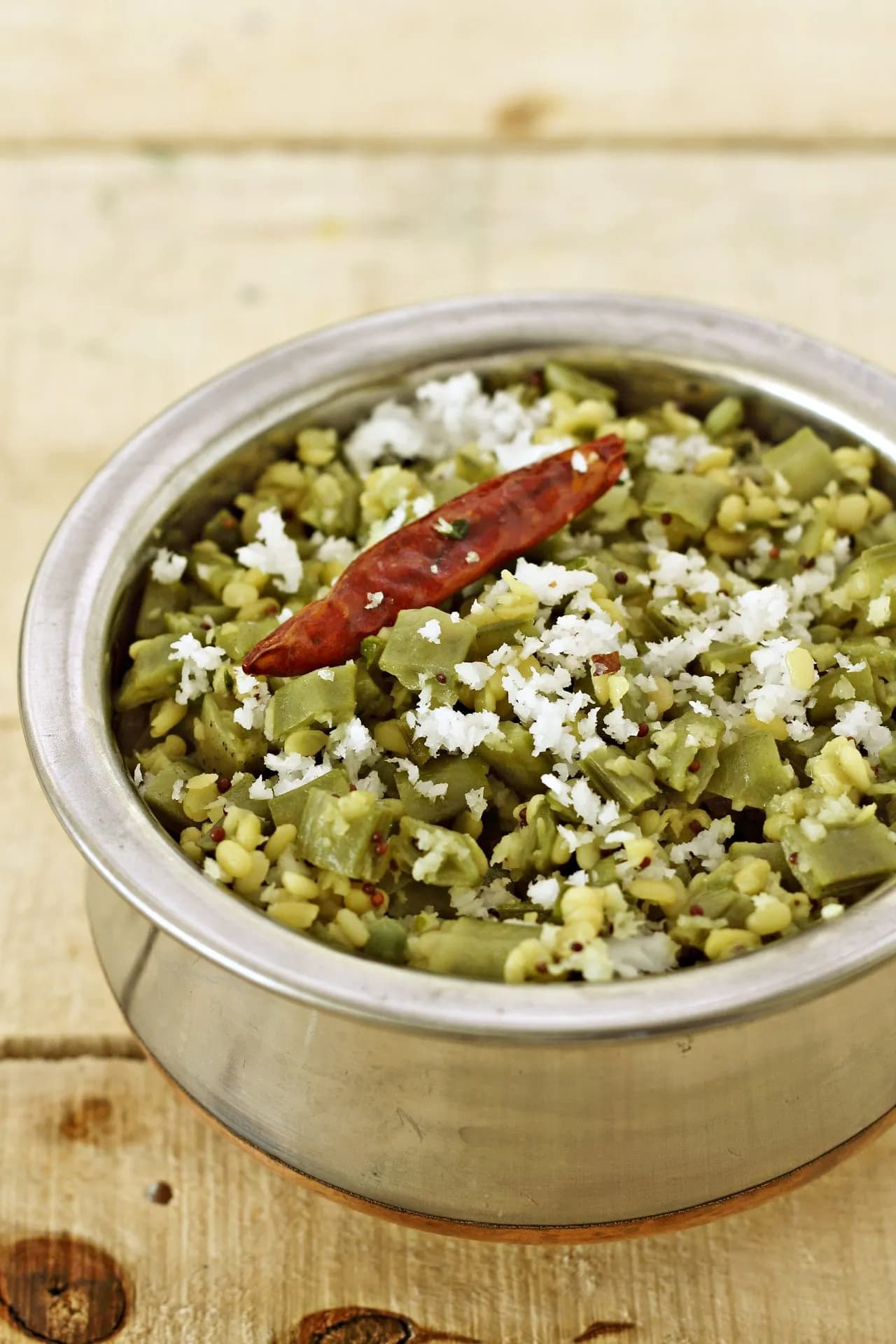
Kothavarangai poriyal is the most familiar preparation — the beans are finely chopped, stir-fried with mustard seeds and curry leaves, and finished with grated coconut for a light, textured side dish. It’s also commonly added to sambar, where it holds its shape well and adds a slightly crunchy bite, or cooked into a simple stir-fry with minimal spices to let its natural flavour come through. Because the pods can be a little tough when overmature, choosing younger, tender kothavarangai generally gives the better result, both in texture and in cooking time, and simple, lightly-cooked preparations tend to preserve the kothavarangai benefits best.
Frequently Asked Questions
Related Articles

Healthy fats: why your body needs fat
Healthy fats help your body absorb vitamins and support brain, hormones, joints, cells and daily meals. Learn simple vegetarian sources and habits.

Good fats vs bad fats: choose fats wisely
Understand good fats vs bad fats in simple words. Learn which vegetarian fats to choose, what to reduce and how to read food labels better.
