
Macadamia Nuts Benefits: Nutrition, Portions and Safety
Macadamias provide mostly monounsaturated fat, along with fibre and minerals, and are rich and energy-dense. Learn portions and easy uses.

Key Takeaways
- Macadamias contain mostly monounsaturated fat.
- They provide fibre, thiamine and minerals in varying amounts.
- A small handful is a practical serving.
- Plain or dry-roasted varieties are generally better everyday choices than sugar-coated options.
- They cannot independently lower cholesterol or cause weight loss.
- People with tree-nut allergies must avoid them.
- Macadamia nuts are unsafe for dogs.
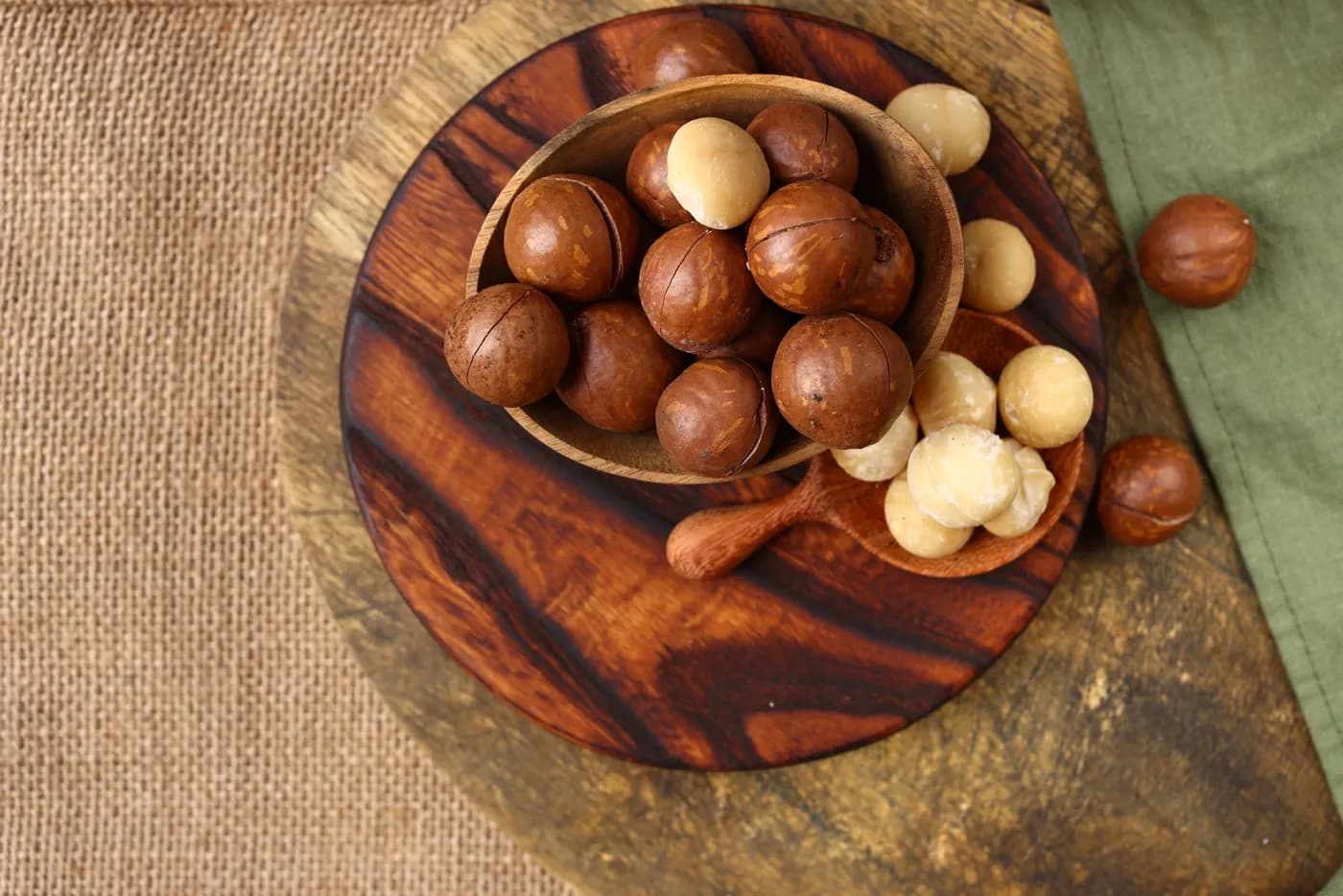
Macadamia nuts are creamy, mildly flavoured tree nuts originally associated with Australia and now grown in several warm regions. They contain mostly fat, along with fibre, protein, vitamins and minerals.
Most macadamia nuts benefits come from their unsaturated fats and their ability to add flavour and satisfaction to meals. However, they are energy-dense, so a small portion is usually enough.
Macadamia nuts nutrition
Macadamias provide fat, carbohydrate, fibre and a modest amount of protein. They also contain nutrients such as thiamine, manganese, magnesium and copper.
Most of their fat is monounsaturated. This is the type of unsaturated fat also found in foods such as olive oil, peanuts and avocados.
Although nutritious, the nuts contain a substantial number of calories in a small portion. Eating directly from a large packet can make it easy to consume more than intended.
They are also not a particularly high-protein nut. People seeking vegetarian protein should include pulses, beans, tofu, soy foods, dairy or other suitable foods.
Habuild’s protein-rich vegetarian foods guide provides practical meal ideas.
Possible macadamia nuts benefits
Unsaturated fats and heart health
Replacing some saturated fat with unsaturated fat can support a heart-friendly eating pattern. Macadamias may therefore be used instead of foods such as fried snacks, butter-heavy biscuits or certain processed desserts.
This does not mean that unlimited nuts improve cholesterol. Portion size and the overall diet still matter.
Heart health also depends on vegetables, fruit, pulses, whole grains, activity, sleep, smoking status, blood pressure and prescribed treatment.
Fibre and digestion
Macadamias provide some dietary fibre. Fibre supports bowel regularity and contributes to fullness.
However, one small serving cannot meet the entire daily requirement. Combine nuts with vegetables, fruit, pulses and whole grains.
Eating a large quantity at once may cause heaviness, gas or diarrhoea in some people. Increase the portion gradually if nuts are not already part of your diet.
Fullness and weight management
The fat and fibre in macadamia nuts may make a small serving satisfying. They can work as an alternative to less nourishing snacks when portions are considered.
Macadamia nuts benefits do not include directly burning fat. Adding nuts to the diet without adjusting anything else may increase total energy intake.
For weight management, measure a portion rather than repeatedly eating from the packet.
Vitamins and minerals
These nuts contribute thiamine and several minerals. Thiamine helps the body release energy from food, while minerals perform different roles in normal body functions.
The amounts depend on the serving and product. Macadamias should be part of a varied diet rather than treated as a supplement or deficiency treatment.
Plant compounds
Macadamias contain naturally occurring plant compounds with antioxidant activity. Laboratory findings do not prove that eating them prevents cancer, reverses ageing or cures disease.
The most reliable approach is to obtain plant compounds from varied vegetables, fruits, pulses, nuts, seeds, herbs and spices.
What is a sensible portion?
A practical portion is approximately a small handful, or around 25–30 grams. Depending on their size, this may equal roughly 10–12 kernels.
This is a flexible guide, not a compulsory daily serving. Individual needs vary according to appetite, activity, body size and the rest of the diet.
Choose smaller portions when the nuts are combined with other energy-dense ingredients such as chocolate, coconut, seeds or dried fruit.
Raw, roasted or flavoured?
Raw and dry-roasted macadamias have broadly similar basic nutrition. Roasting changes their texture and flavour and may cause small changes in certain nutrients.
Check the label on flavoured products. Salted varieties may contribute considerable sodium, while honey-roasted, caramel-coated or chocolate-covered versions may contain added sugar.
For regular use, choose:
- Plain raw nuts
- Unsalted dry-roasted nuts
- Lightly salted products with a clear nutrition label
- Nut butter without excessive sugar or added fats
Flavoured varieties can still be enjoyed occasionally, but they should be considered different from plain nuts.
How to eat macadamia nuts
Simple vegetarian options include:
- Add chopped nuts to oats or porridge.
- Sprinkle them over plain curd and fruit.
- Mix a small amount into homemade muesli.
- Add them to a vegetable or grain salad.
- Blend them into a homemade nut butter.
- Use crushed nuts as a topping for soup.
- Add a measured amount to whole-grain baking.
- Pair them with fruit for a convenient snack.
Their mild flavour also works in both sweet and savoury dishes.
Habuild’s everyday nutrition guide can help place nuts within a balanced eating pattern.
Are macadamia nuts good for protein?
They provide some protein, but less than several other nuts and many pulses or soy foods.
A small handful should be viewed mainly as a source of unsaturated fat, energy and some fibre—not as the primary protein source in a meal.
To make a snack more complete, combine a modest serving with curd, an unsweetened fortified soy drink or roasted chana.
Macadamia nut oil
Macadamia oil is pressed from the nuts and contains mainly fat. It does not provide the fibre or protein found in whole nuts.
It may be used in dressings or suitable cooking methods, but all oils are energy-dense. Measure the amount rather than pouring freely.
Using more oil does not increase macadamia nuts benefits. The complete balance of fats in the diet matters more than relying on one speciality oil.
Tree-nut allergy
Macadamias are tree nuts and can cause an allergic reaction. A person allergic to one tree nut may not necessarily react to all tree nuts, but only an allergy professional should guide testing or reintroduction.
Symptoms may include:
- Hives
- Vomiting
- Facial or throat swelling
- Wheezing
- Breathing difficulty
- Faintness
Seek urgent medical help for a severe or widespread reaction. Do not test a suspected allergy at home.
Check labels on chocolates, biscuits, desserts, granola and mixed-nut products for macadamias and cross-contact warnings.
Pregnancy and children
Macadamia nuts can fit during pregnancy when there is no relevant allergy and the portion suits the overall diet.
There is no need to avoid nuts during pregnancy solely to prevent allergy unless a clinician recommends doing so for an individual reason.
Whole nuts can be a choking hazard for young children. Offer only an age-appropriate texture, such as finely ground nuts or smooth nut butter, and follow paediatric feeding guidance.
Keep macadamia nuts away from dogs
Macadamia nuts are toxic to dogs. Even a relatively small quantity may cause weakness, vomiting, tremors, difficulty walking or increased body temperature.
Store them securely and do not intentionally feed macadamias or foods containing them to a dog. Contact a veterinarian promptly if accidental consumption occurs.
Buying and storage
Choose sealed products with a clear ingredient list and best-before date. Nuts should smell mild and fresh rather than stale, sour or paint-like.
Because of their fat content, they can become rancid. Store them in an airtight container away from heat and light. Refrigeration can help preserve opened packs for longer.
Discard nuts that show mould, insect damage or an unusual odour.
What macadamia nuts benefits cannot do
Macadamias cannot cure heart disease, lower cholesterol immediately, detoxify the body or produce weight loss by themselves.
Their realistic role is to provide unsaturated fat, fibre, flavour and variety. A modest portion can fit comfortably within a balanced vegetarian diet.
Sources
Frequently Asked Questions
Related Articles
Protein-rich vegetarian foods: 1/4th plate habit
Explore protein, carbohydrates, healthy fats and meal planning for strength training, muscle building and recovery.

Healthy fats: why your body needs fat
Healthy fats help your body absorb vitamins and support brain, hormones, joints, cells and daily meals. Learn simple vegetarian sources and habits.