
Mango Benefits: Nutrition and Sensible Portions
Mango provides vitamin C, fibre and carotenoids. Learn its real benefits, sensible portions, diabetes tips and safe ways to enjoy it.
Key Takeaways
- Mango provides vitamin C, fibre and plant pigments.
- It contains natural sugar, so portion size still matters.
- People with diabetes can often plan mango benefits into a meal.
- Whole mango is more filling than juice or sweetened shakes.
Mango benefits is a naturally sweet fruit with vitamin C, fibre and carotenoids. Learn its real benefits, useful portions and easy ways to enjoy it.
What does mango benefits provide?
Mango is a tropical fruit with many varieties, including Alphonso, Kesar, Dasheri, Langra and Totapuri. Size, sweetness, colour and texture differ.
Ripe mango provides carbohydrate, vitamin C, folate and fibre. Orange and yellow pigments include carotenoids. Nutrient amounts vary by variety and ripeness. USDA FoodData Central is a useful reference for food composition. (1)
Possible benefits of mango benefits
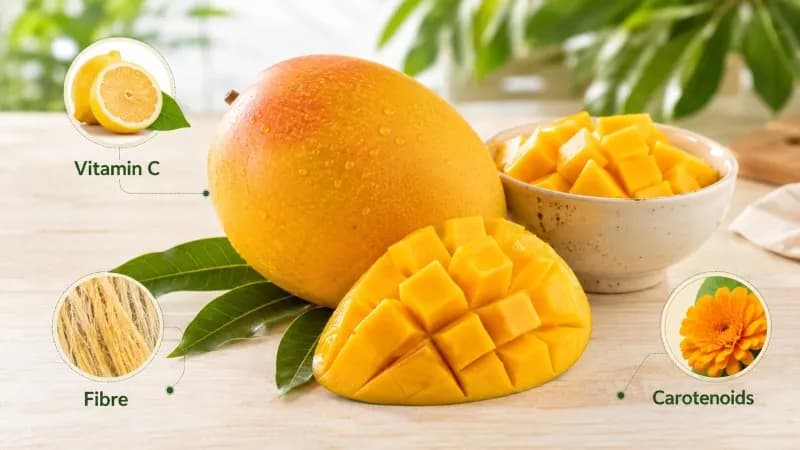
Vitamin C
Vitamin C supports collagen formation, wound healing and normal immune function. It also helps the body absorb iron from plant foods.
Mango can contribute vitamin C, but guava, amla, citrus and capsicum are other useful sources. You do not need one special fruit every day.
Fibre and digestion
Whole mango benefits contains fibre that supports digestion and adds fullness. Mango juice loses much of this structure and is easier to drink quickly.
A large amount may cause gas or loose stools in some people. Start with a smaller portion if your digestion is sensitive.
Carotenoids and other plant compounds
Mango contains carotenoids and polyphenols that show antioxidant activity in laboratory studies. This does not prove mango benefits prevents cancer or other diseases.
Does mango boost immunity?
Mango benefits supplies nutrients used by the immune system, but it does not prevent infections on its own. Sleep, vaccination, hygiene, adequate food and medical care still matter.
How much mango should you eat?
There is no perfect portion for everyone. A practical starting amount is about half to one cup of cut mango, depending on the size of the fruit and the rest of the meal.
Put the portion in a bowl rather than eating directly from a large container. Pair it with curd, milk, nuts or roasted chana for a more filling snack.
Mango benefits and diabetes
Mango contains carbohydrate and can raise blood glucose. Diabetes does not automatically mean it must be avoided.
Use a planned portion of whole fruit, avoid adding sugar and count it within the meal. The NIDDK recommends individual carbohydrate and meal planning rather than judging one food alone. (2)
Mango benefits juice, aamras with added sugar and sweet lassi can deliver much more carbohydrate quickly. Personal glucose response and medicine also matter.
Whole mango, juice or shake?
Whole pieces keep the fruit’s fibre and require chewing. Juice is less filling and makes it easy to consume several mangoes at once.
This connects well with Guava: nutrition, benefits and easy ways to eat it and Papaya Benefits: Nutrition and Simple Serving Ideas if you want the fuller picture.
A homemade shake can fit occasionally, but milk, ice cream, sugar and large mango benefits portions can make it a heavy meal. Try milk or curd, a small fruit portion and no added sugar.
How to choose a ripe mango
- Smell near the stem; ripe mango often has a fruity aroma.
- Press gently; some varieties soften slightly when ripe.
- Do not judge only by colour, because varieties differ.
- Avoid leaking fruit, deep mould or a fermented smell.
- Ripen firm mangoes at room temperature.
- Refrigerate ripe cut fruit promptly.
Wash mango benefits under running water before cutting, even though you do not eat the peel. A knife can carry dirt from the skin into the flesh. FDA produce-safety guidance recommends washing produce before preparation. (3)
Simple ways to eat mango
- Add cubes to plain curd.
- Serve it with oats and seeds.
- Mix a small portion into a fruit bowl.
- Add raw mango benefits to dal or chutney with little salt.
- Blend ripe mango with curd and no added sugar.
- Freeze small cubes for a cold snack.
For more balanced snack ideas, read Habuild’s Diet and Nutrition guide.
Allergy and other cautions
Mango allergy is uncommon but possible. The peel and sap can also irritate some people, especially those sensitive to poison ivy or related plants.
Use gloves or ask someone else to peel it if the skin causes a rash. Seek urgent help for breathing trouble, throat swelling, fainting or widespread hives.
People with kidney disease who must limit potassium should ask about a safe portion. Those with digestive conditions may need a smaller serving.
Mango benefits is not a treatment for anaemia, diabetes, constipation or cancer. Use it as one fruit in a varied diet.
A simple seasonal habit
During mango season, choose a planned whole-fruit portion three times in one week. Pair it with a protein food and skip added sugar.
Notice hunger and enjoyment. If mango benefits is expensive or unavailable, choose guava, papaya, orange or another seasonal fruit.
Frequently Asked Questions
Related Articles

Healthy fats: why your body needs fat
Healthy fats help your body absorb vitamins and support brain, hormones, joints, cells and daily meals. Learn simple vegetarian sources and habits.

Good fats vs bad fats: choose fats wisely
Understand good fats vs bad fats in simple words. Learn which vegetarian fats to choose, what to reduce and how to read food labels better.
